
A top FHRS score isn’t just about cleaner kitchens; it’s about consistent systems you can prove to inspectors. This guide shows a practical, priority-driven path from a low rating to a 5 by focusing on hygiene, structure, and management confidence—and it explains how day-to-day records back inspection decisions.
Understanding FHRS scoring: what officers look for in each element
Important: The score reflects not just what you have in place, but how reliably you carry it out day in, day out.
FHRS scoring rests on three linked elements: hygiene, structure, and confidence in management. Officers assess whether you routinely perform critical tasks, maintain facilities to a safe standard, and demonstrate control through clear, traceable records.
- Hygiene: cleanliness, preventing cross-contamination, pest control, personal hygiene, and correct storage practices.
- Structure: premises, layout, equipment condition, lighting, ventilation, drainage and waste segregation.
- Confidence in Management: HACCP-like thinking, staff training, written procedures, corrective actions, and ongoing verification.
How these elements translate into inspections
- If cleaning slips occur during busy service, inspectors will look for timely follow-up and records showing the issue was addressed.
- If the kitchen layout creates cross-contamination risk, they’ll expect practical controls and documented checks.
- If staff aren’t trained and records don’t show competency, confidence in management drops regardless of physical cleanliness.
Remember: consistent records are evidence of control, even in a hectic service.
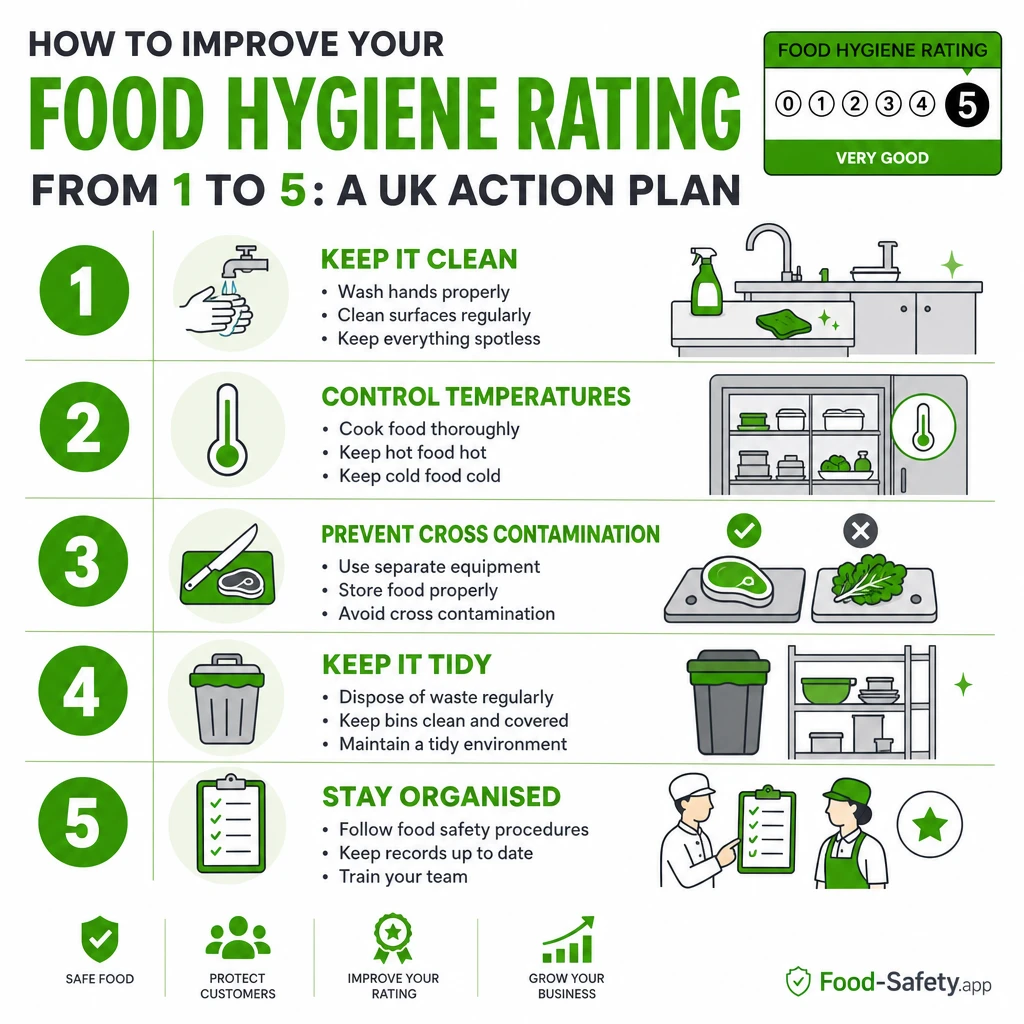
Why businesses get stuck at 1 or 2: common issues
Caution: It’s the absence of action—or the failure to record it—that consistently drags scores down.
Many low scores come from repeated gaps rather than a single big fault. Common causes include:
- Poor temperature control without logged corrective actions.
- Incomplete or missing cleaning records and routine checks.
- Unsafe handling and cross-contamination risks that aren’t routinely tested or logged.
- Pest activity or weak pest monitoring and action records.
- Paperwork gaps: supplier checks, allergen management, and staff training records.
Practical examples that derail scores
- A fridge running above safe temperature with no logged corrective action or follow-up checks.
- A missed cleaning task during a busy evening service and no record of when it was completed.
- A delivery arriving warm or damaged, accepted without a pre-delivery check or notes.
- A new team member not trained on allergen controls or proper probe use.
- A pest sighting in the dry store without timely investigation and records of treatment or monitoring.
A practical action ladder
- Create or refine opening and closing checks that cover fridge temperatures, door seals, waste disposal, and cleanliness.
- Introduce a single, simple cleaning schedule with clearly defined tasks and owners.
- Implement a pre-delivery check and a post-delivery acceptance record.
- Ensure every temp-controlled task has a log and a responsible person.
- Schedule regular staff training refreshers and keep notes of who trained whom.
Tip: The safest procedure is the one you can follow consistently during a busy service.
Priority order for improvement: fix the highest-risk issues first
Tip: The safest procedure is the one you can follow consistently during a busy service.
When sharpening your FHRS score, triage by risk. Tackle what inspectors see as the biggest hazards before addressing lower-risk tasks.
- Stabilise temperature control across chilling, cooking, reheating, and hot holding.
- Eliminate cross-contamination risks in storage and handling.
- Close gaps in core documentation (opening/closing checks, cleaning logs, delivery checks).
- Implement or refresh allergen controls and staff training.
- Address pest issues with documented monitoring and treatment records.
- Improve housekeeping and maintenance records to show ongoing oversight.
Takeaway: In practice, confidence comes from reliable documentation plus demonstrable staff competence and accountability.
Building evidence of control through records
Important: Exportable, timestamped records make audits quicker and less stressful, and they keep you on the right side of good practice even on busy days.
Strong records are the backbone of inspector confidence. They show what you do, when you did it, and what happened as a result.
Key record types to establish and maintain
- Opening and closing checks: date, time, person, and status of critical controls (temperature, waste, cleanliness).
- Cleaning schedules and task logs: which tasks, when, by whom, and the verification of completion.
- Delivery checks: supplier, date, item, condition on receipt, and any actions taken for non-conforming stock.
- Probe calibration and equipment maintenance: dates, results, and next due checks.
- Corrective actions: issue description, root cause, actions taken, and verification of effectiveness.
- Training records: onboarding completion, refresher sessions, and competency signs-off.
- HACCP tools and key control plan notes: CCPs identified, critical limits, monitoring frequency, and verification results.
Practical examples to illustrate how records support inspection readiness
- A fridge is found to be above a safe temperature during a check. The log shows a follow-up check every 30 minutes and an escalation to maintenance within the same shift.
- A crowded dinner service misses a cleaning task in the rush. A promptly updated post-service cleaning log records the overdue task, who completed it, and the checks that confirmed it was finally done.
- A delivery arrives warm. The record shows a hold, a re-inspection, and notes about supplier communication and disposal of affected items if necessary.
- A new team member hasn’t had allergen training. The training record notes the onboarding date and the allergen controls module completed before handling food.
- A pest sighting occurs in dry storage. A pest log records the sighting, actions taken, waste removal, and a follow-up inspection.
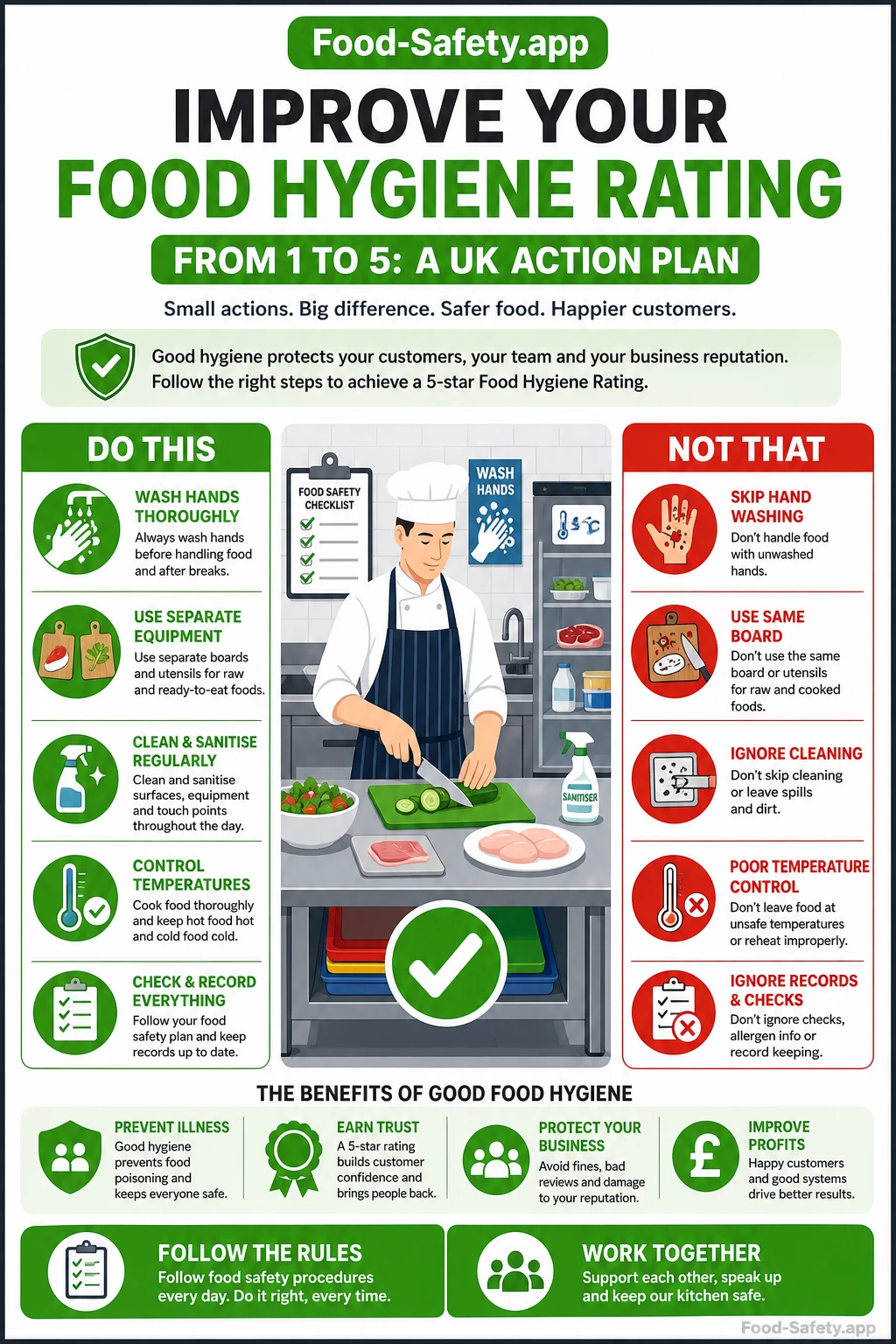
How management confidence is judged
Inspectors assess whether the leadership demonstrates consistent, deliberate control rather than ad hoc responses.
- Consistency: routines are performed in the same way each day, not just when inspectors are due.
- Traceability: every action has a record, and records can be traced back to individuals and dates.
- Staff understanding: a workforce that can explain why checks exist and how to act when something goes wrong.
- Follow-through: issues are closed with documented verification of effectiveness.
Takeaway: In practice, confidence comes from reliable documentation plus demonstrable staff competence and accountability.
Using a simple compliance system to stay inspection-ready
Note: A simple system is often more effective than an elaborate one. Start with the essentials, then build.
A practical, scalable approach keeps FHRS-ready status achievable for kitchens, cafés, pubs, takeaways and caterers alike.
- Start with a handful of core documents: opening/closing checks, a single cleaning schedule, delivery checks, and a basic allergen-control plan.
- Create simple templates that are quick to fill and easy to audit.
- Use a lightweight calendar or checklist system to assign owners and due dates.
- Record all corrective actions and verify completion with a time-stamped note.
- Calibrate and log probes regularly; keep calibration certificates accessible.
- Maintain pest monitoring records and quick-action logs.
- Ensure every new team member completes essential training and that records are kept.
- Make it easy to export records for inspection; keep digital copies alongside paper copies.
Quick-start template ideas
- Opening/closing checks: date, shift, responsible manager, pass/fail, notes.
- Cleaning log: task, area, time, who did it, verification.
- Delivery check: supplier, item, condition, action taken if not acceptable.
- Allergen controls: training date, staff, allergen handling steps.
- Training record: course, date, trainer, attendee, assessment outcome.
Final practical notes for achieving a 5
- Focus on the three FHRS elements, but prioritise actions that address the highest risk first.
- Build a habit of recording every action the moment it happens; retrospective notes are much harder to defend.
- Use practical, kitchen-friendly language in records so staff clearly understand what’s expected.
- Regularly review records with the team to reinforce learning and maintain consistency.
- Periodically test your system with a mock inspection to identify gaps before the real thing.
Bottom line: A disciplined, well-documented approach that foregrounds safety and consistency is the quickest route to a 5.