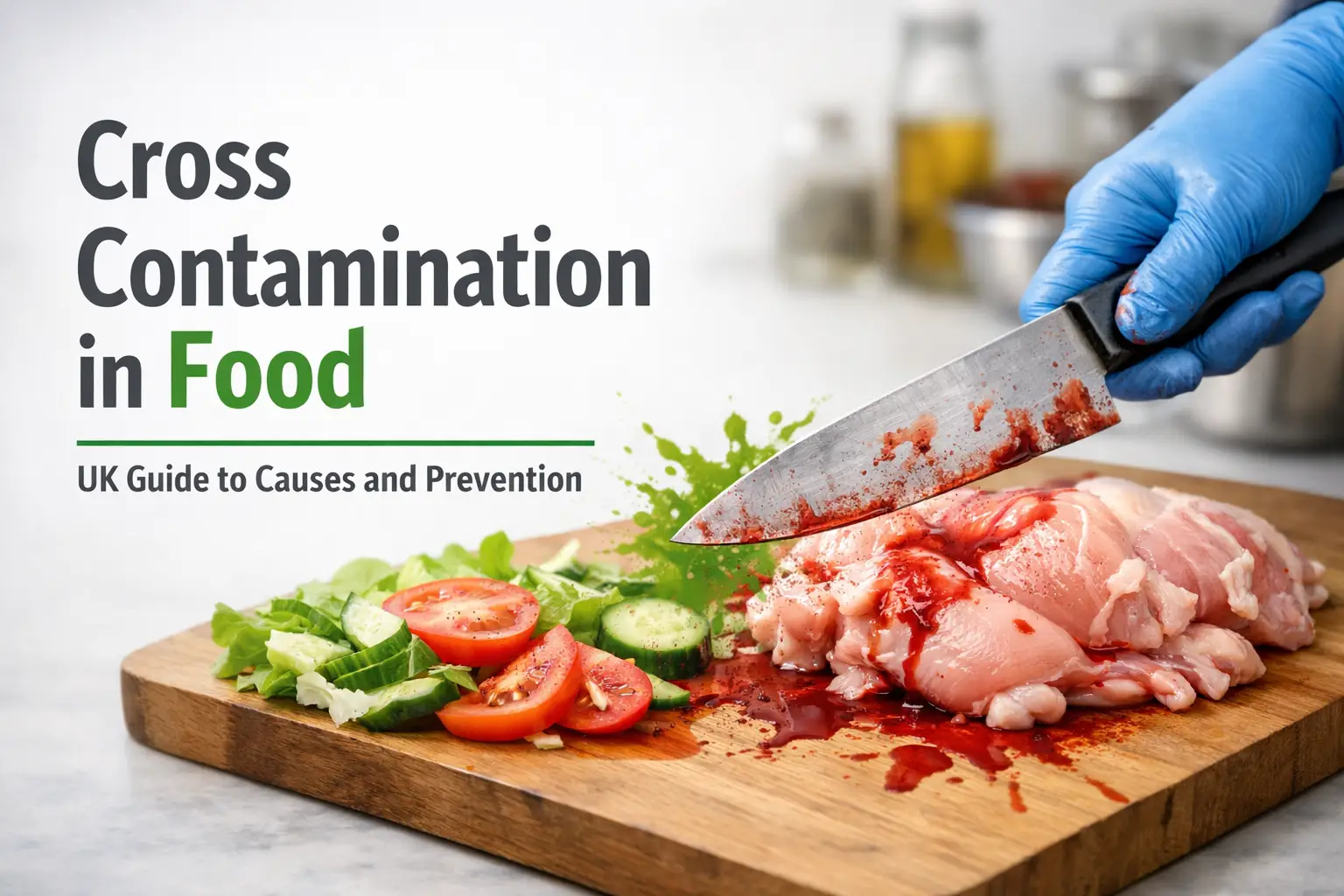
Cross-contamination is a leading cause of avoidable food safety issues in catering. In a UK kitchen it means harmful microbes, chemicals or allergens being moved from one surface, utensil or person to food. This guide explains what it is, how it happens in busy service, and practical controls you can apply daily to reduce risk, support HACCP-based hygiene and meet inspection expectations. Real-world scenarios and simple checks help keep customers safe.
What cross-contamination means in UK catering
Cross-contamination is the transfer of harmful agents from one surface, utensil or person to food by contact or proximity.
Cross-contamination is a leading cause of transmission of contaminants from one item to another during preparation, handling or service. In a kitchen this can involve microbes, chemical residues or allergen proteins moving into foods that should be safe to eat. It isn’t only about dirty surfaces; clean-looking surfaces can still spread hazards if controls aren’t in place.
Allergen cross-contact is a related concept: an allergen can be transferred to a product that doesn’t contain it originally, through shared equipment, containers or mislabelled ingredients. That subtle distinction matters for prevention and for communicating risk to customers.
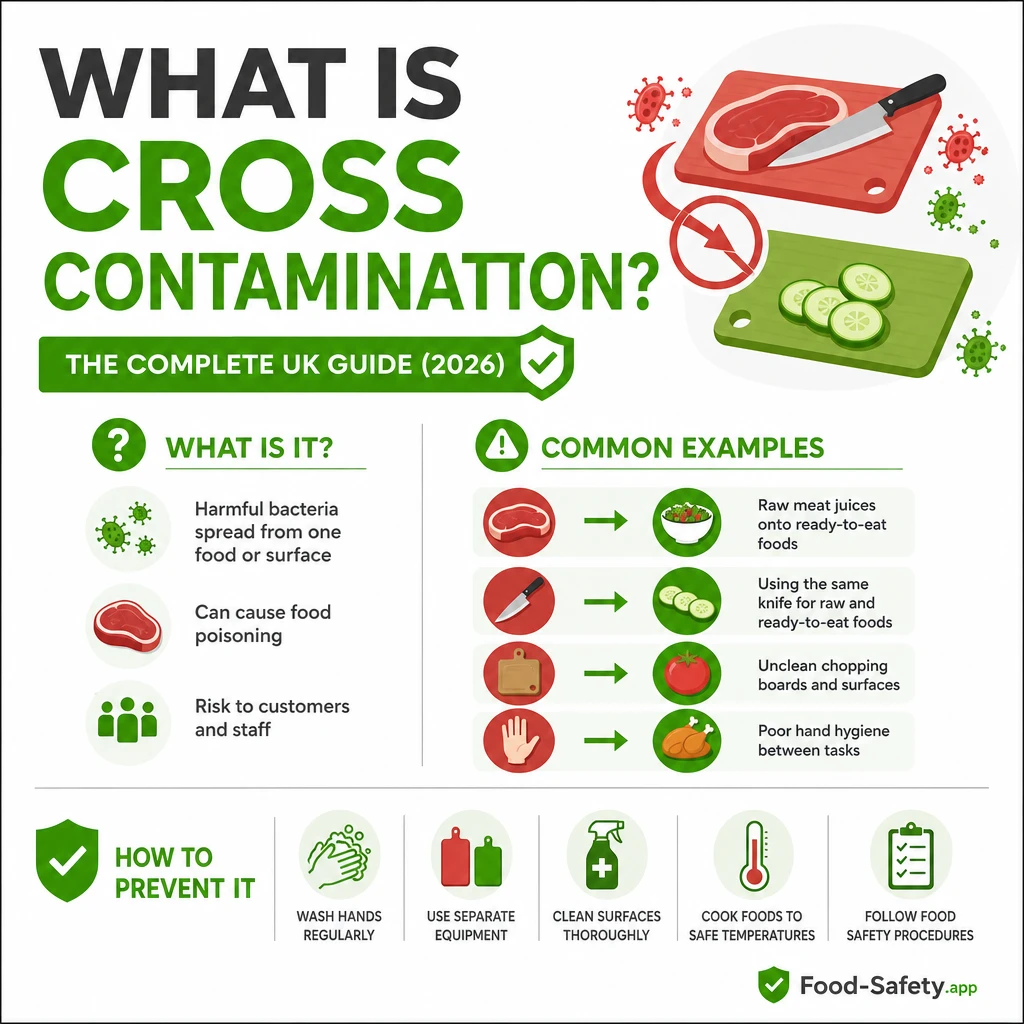
The four routes of cross-contamination biological chemical physical and allergens
Allergen cross-contact may occur even when a product doesn’t contain the allergen—it’s contamination from shared equipment or mislabelled containers.
Cross-contamination occurs via four main routes in a UK kitchen:
- Biological: bacteria, viruses, yeasts or parasites that can multiply if foods are mishandled.
- Chemical: cleaning products, sanitisers, pesticides or residues that contact food surfaces or utensils.
- Physical: foreign bodies such as glass, plastic fragments, hair or metal shards entering food.
- Allergens: proteins from one ingredient (e.g., nuts, dairy, gluten) transferred to another food, triggering reactions.
Preventing each route relies on clear separation, correct handling and effective cleaning and disinfection practices.
How contamination spreads in kitchens hands surfaces utensils equipment storage and workflow
The safest procedure is the one you can consistently follow during a busy service.
In a busy service, contaminants travel via several interconnected pathways:
- Hands and gloves: microbes or allergens move from raw foods to ready-to-eat items if handwashing or glove changes are skipped.
- Surfaces and utensils: chopping boards, knives and bowls become a conduit when used for multiple functions without cleaning.
- Equipment: mixers, slicers and food processors can transfer residues between batches.
- Storage: raw products drips or air movement can deposit hazards onto other foods in open refrigerated spaces.
- Workflow: a poorly designed sequence (e.g., prepping salads near raw poultry) increases contact risk.
Concrete scenarios commonly seen in UK kitchens include raw chicken juices dripping onto a ready-to-eat salad in a fridge, or using the same chopping board for raw meat and sandwich prep without cleaning between tasks.
Hidden sources and risky practices in practice
Dirty cloths, fridge drips and mislabelled chemicals quietly drive risk if left unchecked.
Many risks hide in plain sight in everyday operations. These practices are easy to overlook but can have real consequences.
- Dirty cloths and rags reused across stations without proper laundering or colour-coding.
- Fridge drips from raw products landing on ready-to-eat foods or on clean surfaces.
- Shared prep areas and containers used by multiple teams without clear separation.
- Poorly labelled or stored chemicals that sit near food-contact surfaces.
- Staff habits, such as not washing hands after handling raw foods or wearing gloves too long.
- Gloves moved from raw to ready-to-eat tasks without changing.
- Damaged equipment or surfaces (worn seals, grooves, cracks) that trap dirt and bacteria.
Linking risk to UK duties, HACCP controls and enforcement expectations
Regulators expect that risks are controlled in real service, not just on paper.
In the UK, businesses are expected to manage cross-contamination as part of general food hygiene duties. This means identifying hazards, implementing practical controls at critical points, and keeping records that prove controls are being followed. Inspectors look for visible separation of raw and ready-to-eat foods, effective cleaning regimes, correct storage, and evidence that staff have adequate training and supervision.
Key concepts include:
- HACCP-based controls: perform hazard analysis, set critical points, monitor and verify controls, and take corrective actions when needed.
- Prevention over cure: stop contamination at source rather than relying on end-of-service cleaning.
- Documentation: daily temperature logs, cleaning records, allergen controls and corrective actions support traceability and accountability.
Common inspection findings include poor separation of raw and cooked foods, use of shared utensils without cleaning between tasks, lack of effective cleaning records, and insufficient staff training after near misses.
Practical controls: daily management, training and checks
Build cross-contamination checks into opening, service and closing routines to keep risk visible.
Adopting practical, repeatable controls makes cross-contamination prevention part of normal operations. Key measures include:
- Separate raw and ready-to-eat foods wherever possible; use dedicated zones in the prep area.
- Use colour-coded equipment and clear, written prep routines to minimise cross-use.
- Strengthen handwashing, ensure gloves are changed when moving from raw to ready-to-eat tasks, and keep utensils separate for raw and cooked foods.
- Store raw foods, chemicals and allergens separately and clearly labelled; keep chemicals away from food storage areas.
- Build cross-contamination checks into opening, service and closing routines, and include quick spot checks during shifts.
- Record hygiene checks, identified defects and corrective actions for traceability and accountability.
- Use temperature logs, cleaning records and allergen controls as part of daily food safety management.
- Review staff training and supervision after near misses or hygiene failures to close gaps.
A practical daily checklist can help teams stay on top of these controls:
- Are raw and ready-to-eat areas physically separated?
- Are colour-coded tools used consistently?
- Have gloves been changed when moving between raw and ready-to-eat tasks?
- Are chemical storage and labels correct and away from foods?
- Are cleaning and temperature logs updated and signed off?