Keeping pests out isn’t just about comfort or aesthetics; it’s a core food safety duty. This article explains what UK catering and hospitality businesses must do to control pests, stay inspection-ready, and build a simple, practical routine. You’ll learn how to spot issues early, prevent infestations, and keep clear records that support HACCP-based operations.
Legal duties under food safety law
Important: The safest approach is a documented pest-control plan with clear responsibilities, routine checks and timely corrective actions.
Pests pose a clear contamination risk, so premises must be kept clean, maintained, and protected from access and harbourage. Staff should follow documented procedures for cleaning, waste handling, storage, and maintenance; any gaps can undermine safety and product integrity. Local environmental health officers (EHOs) expect evidence of a proactive pest-control programme, not just reactive cleaning after a sighting.
Key expectations include: regular cleaning and sanitising, waste and drainage management to remove attractants, and physical proofing to reduce entry points. Regular reviews of building maintenance—seals, doors, gaps around utilities—are part of keeping the site resistant to pests. Clear reporting routes for staff sightings and rapid response are essential to demonstrate control.
A proactive pest-control routine supports HACCP principles by reducing prerequired hazards and providing verifiable evidence of control.
Common pests in catering settings
When pests are present, it’s not enough to react; you must prevent recurrence with practical controls and timely reporting.
Catering environments typically contend with a handful of familiar pests that can threaten stored food and service areas. Being aware helps you target prevention and monitoring.
- Rats and mice: accessible water, food remnants, and shelter in wall voids or deliveries can sustain populations.
- Cockroaches: thrive in warm, moist zones behind equipment, drainage areas and cracks.
- Flies: often drawn to waste and drains; can quickly contaminate surfaces and foods.
- Stored product insects: beetles and moths can infest dry goods and packaging.
- Other pests: occasionally, birds or signs of larger wildlife near loading bays indicate entry points that need addressing.
Scenario: A damaged delivery box arrives with signs of chewing. Inspect for entry points and report immediately, separating the item from stock and logging the sighting for follow-up.
Early warning signs of pest activity
Early signs are your first alert that a control plan needs tightening. Record and escalate promptly.
Spotting issues early helps prevent bigger problems and protects your HACCP plan. Look for both direct signs and indirect indicators of activity.
- Droppings or gnawed packaging near stocked items
- Grease trails or smudges along walls or behind equipment
- Nesting material or hair-like fibres in dark corners
- Dead insects in corners, near drains, or under counters
- Unusual odours around refuse or vermin-tunnels
- Damage to stock or packaging, unexplained holes or bite marks
- Increased activity around waste areas or after service peak
Scenario: Flies increasing near the wash-up area in warm weather. The wash-up area is a known hotspot in hot spells. Improve drain hygiene, seal gaps around doors, and review bin containment. If activity persists, escalate to your pest-control contractor for targeted treatment and a review of activity patterns.
Prevention basics
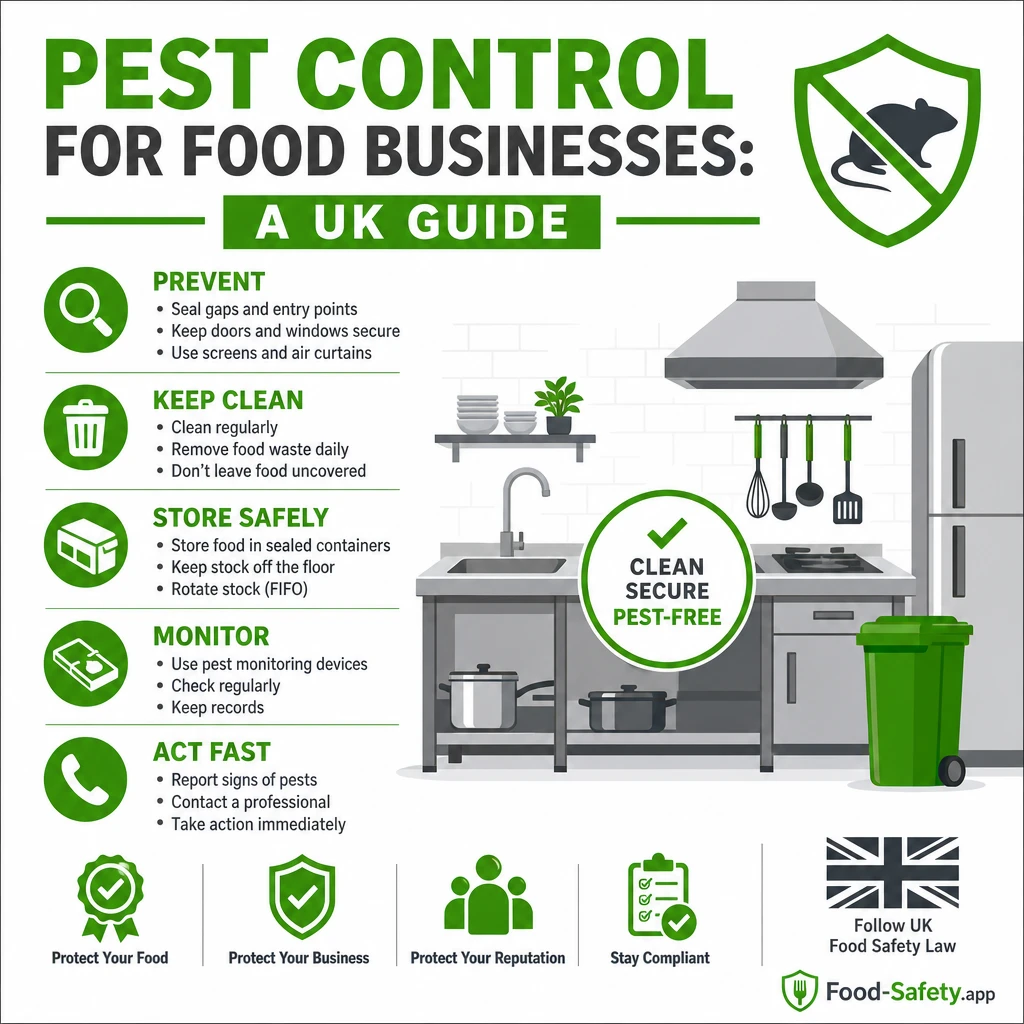
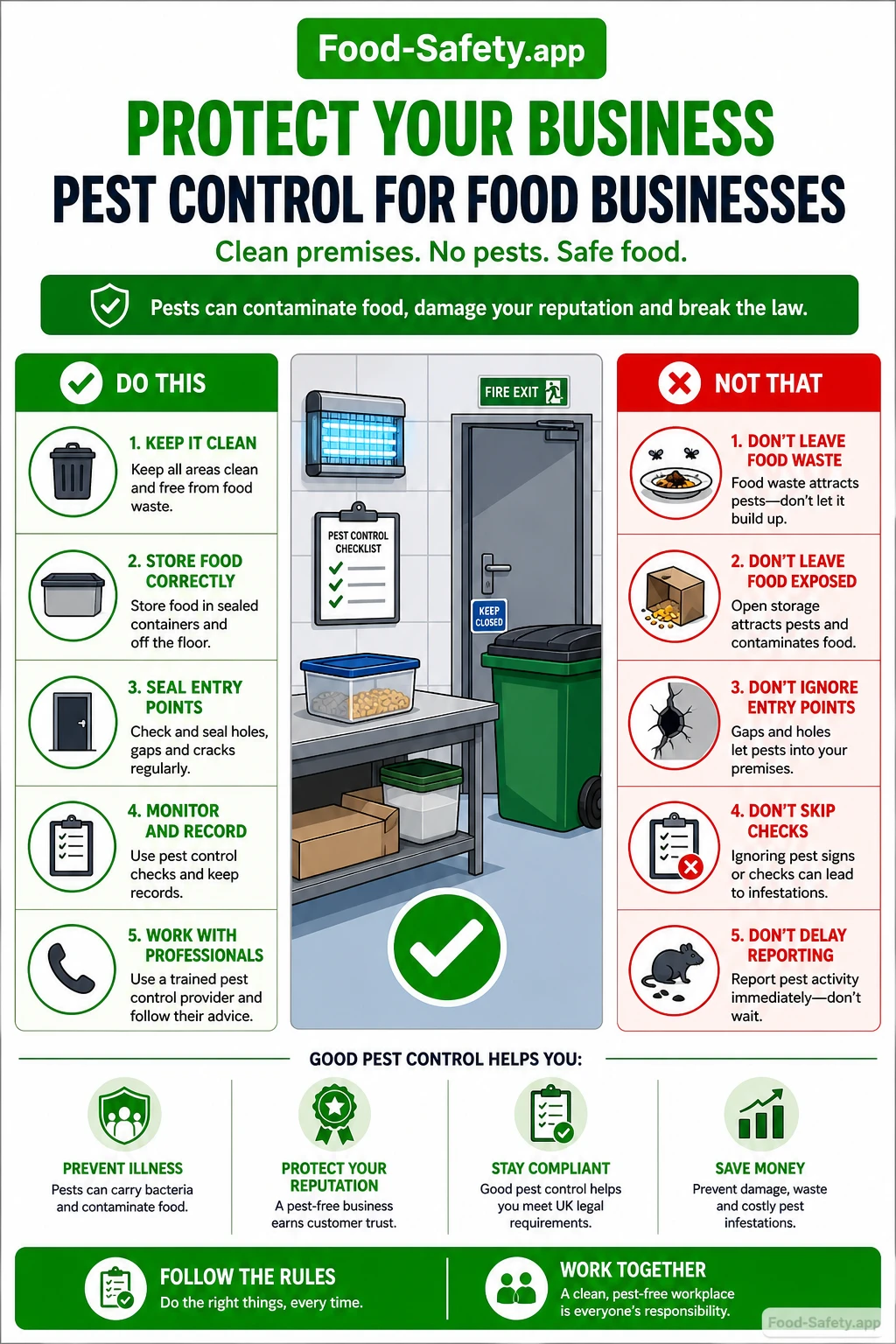
- Waste control and refuse management: secure, covered bins; remove waste promptly; maintain a clean refuse area away from food stores.
- Food storage: use sealed, pest-resistant containers; rotate stock (FIFO) and inspect packaging on arrival.
- Proofing gaps: seal cracks, gaps around pipes, and entry points; fit door sweeps and screens where possible.
- Door discipline: keep doors closed or on tight auto-close; avoid propping doors open during busy periods.
- Cleaning standards: implement a clear schedule with responsible staff; use visible checklists and corrective actions for non-conformances.
- Drain care: keep drains clean and odour-free; repair leaks and ensure trap seals are functional.
- External checks: clear vegetation away from walls, keep yard areas tidy, and control attractants like standing water or compost near the building.
A consistent prevention routine reduces the likelihood of an infestation taking hold and makes inspections smoother.
Scenario: A delivery box arrives damaged with signs of chewing. Quarantine the box, inspect the contents, and log the incident. Notify your pest-control contractor to assess whether there’s an active infestation nearby and adjust storage practices to minimise future risk.
Monitoring and routine inspections
Documentation is a robust defence in case of an inspection. Keep logs easy to audit and attach contractor reports wherever possible.
Regular monitoring turns prevention into a managed, traceable process. Clear roles, documented visits, and straightforward checks help you stay inspection-ready.
- Who checks: responsibility typically lies with a designated supervisor or the kitchen/housekeeping team, supplemented by regular visits from a pest-control contractor.
- How often: daily opening checks of key areas (stores, kitchens, refuse zones), plus periodic formal inspections (weekly or monthly) depending on risk and activity.
- Areas to cover: dry stores, refrigerated storage, food prep zones, waste and drainage areas, loading docks, and external perimeters.
- What to note: signs of pests, conditions of stock, cleanliness, and any corrective actions taken. Ensure dates, times, and responsible persons are recorded.
| Area | Key signs to observe | Frequency | Responsible |
|---|---|---|---|
| Dry store | Droppings, gnawed packaging | Daily | Supervisors |
| Wash-up area | Fly activity, drains, odours | Daily | Staff on duty |
| External perimeter | Gaps, waste exposure | Weekly | Facilities team |
Documentation is a robust defence in case of an inspection. Keep logs easy to audit and attach contractor reports wherever possible.
Scenario: A chef finds mouse droppings in a dry store before service
Cease use of the affected stock, segregate it, and log the discovery. Notify the supervisor and pest-control contractor for immediate inspection and remediation. Review storage layouts to prevent recurrence.
Working with pest control contractors and record keeping
Engaging a pest-control contractor is appropriate when there are persistent signs, inaccessible areas, or during outbreaks. A good service visit should be thorough and documented, with practical, actionable outputs.
- When to use a contractor: recurring sightings, significant contamination risk, or specialised treatments (as advised by your team or EHOs).
- What a good visit includes: site inspection, treatment plan if needed, implementation of non-chemical controls, recommendations for facility improvements, a formal written report, and a planned follow-up check.
- Record keeping: maintain sighting logs, monitoring records, contractor reports, actions taken, and verification checks. Use these to demonstrate control measures, trends, and corrective actions.
- What EHOs expect to see: evidence of a proactive monitoring system, timely action on sightings, and a clear audit trail linking observations to corrective steps.
A contractor’s report should be specific, dated, and linked to your internal records and HACCP plan.
Regular contractor visits should close the loop with written outcomes and agreed follow-up targets.
Scenario: Pest activity found after a weekend closure or after refuse build-up
Review all waste handling and food-storage practices, inspect for entry points, and schedule an urgent contractor visit. Log findings and actions, and adjust the routine to prevent a repeat after closures.
Extra practical takeaways
- Create a simple pest-control routine as part of daily opening checks to keep signs visible and actionable.
- Establish a clear, staff-driven reporting route for sightings, with immediate actions logged.
- Schedule regular monitoring and contractor visits, with outcomes documented and reviewed.
- Routinely review waste handling, stock rotation, and building maintenance for hidden attractants.
- Use pest records to show control measures, trends, and corrective actions during EHOs’ visits.
The most effective pest control is a lived-in routine that’s understood by every team member, not a one-off intervention.
Final thoughts for inspection-readiness
Staying compliant with UK food-safety expectations means integrating pest control into everyday operations, not treating it as a separate task. With clear duties, practical prevention, consistent monitoring, and robust record-keeping, your catering team can reduce risk, streamline inspections, and protect both people and product.
The goal is consistent, evidence-based action that supports HACCP principles and keeps customers safe.