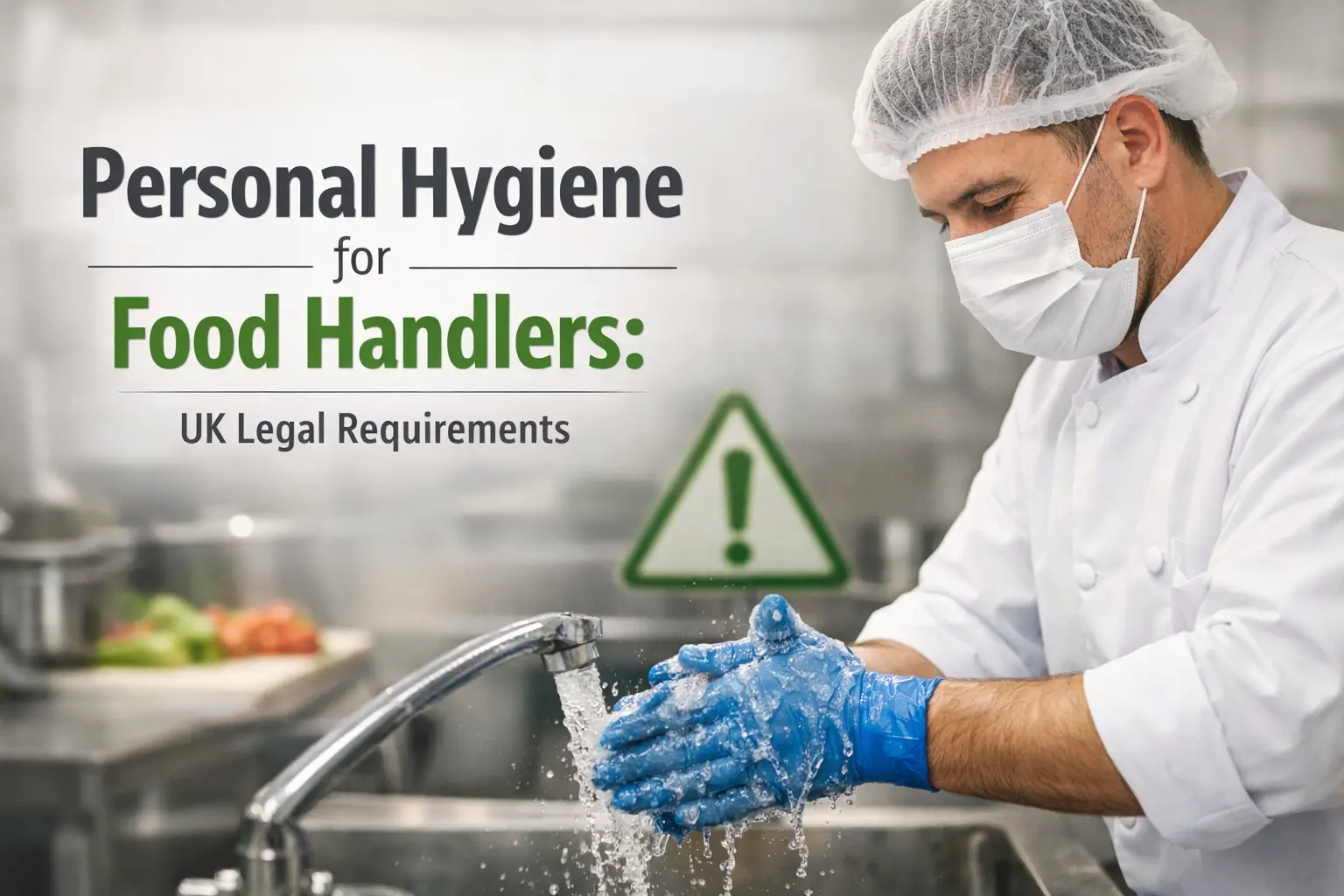
Establishing clear personal hygiene rules helps busy kitchens stay compliant and safe.
This guide explains the UK context, what food businesses must do, and how managers can apply practical hygiene standards day to day. You’ll find legal framing, concrete handwashing steps, illness and return-to-work rules, and sensible policies for clothing, habits and supervision.
In the UK, the business bears the legal duty to keep food safe, and that duty includes supervising staff hygiene and providing training and clear personal hygiene policies.
Legal duties and supervision for safe food handling
Handwashing is non-negotiable in kitchens—follow the full 20-second rule and don’t rush the wash.
British food law expects employers to prevent harm from unsafe practices and to supervise staff hygiene appropriately. Management should translate that duty into practical, written rules and daily habits, with clear lines of accountability. Key actions for supervisors include:
- creating a concise personal hygiene policy and ensuring it’s accessible
- delivering induction and refresher training on hygiene rules
- conducting regular spot checks and addressing failures promptly
- documenting illness, training and hygiene checks for audit readiness
Handwashing standards: when, how and common failings
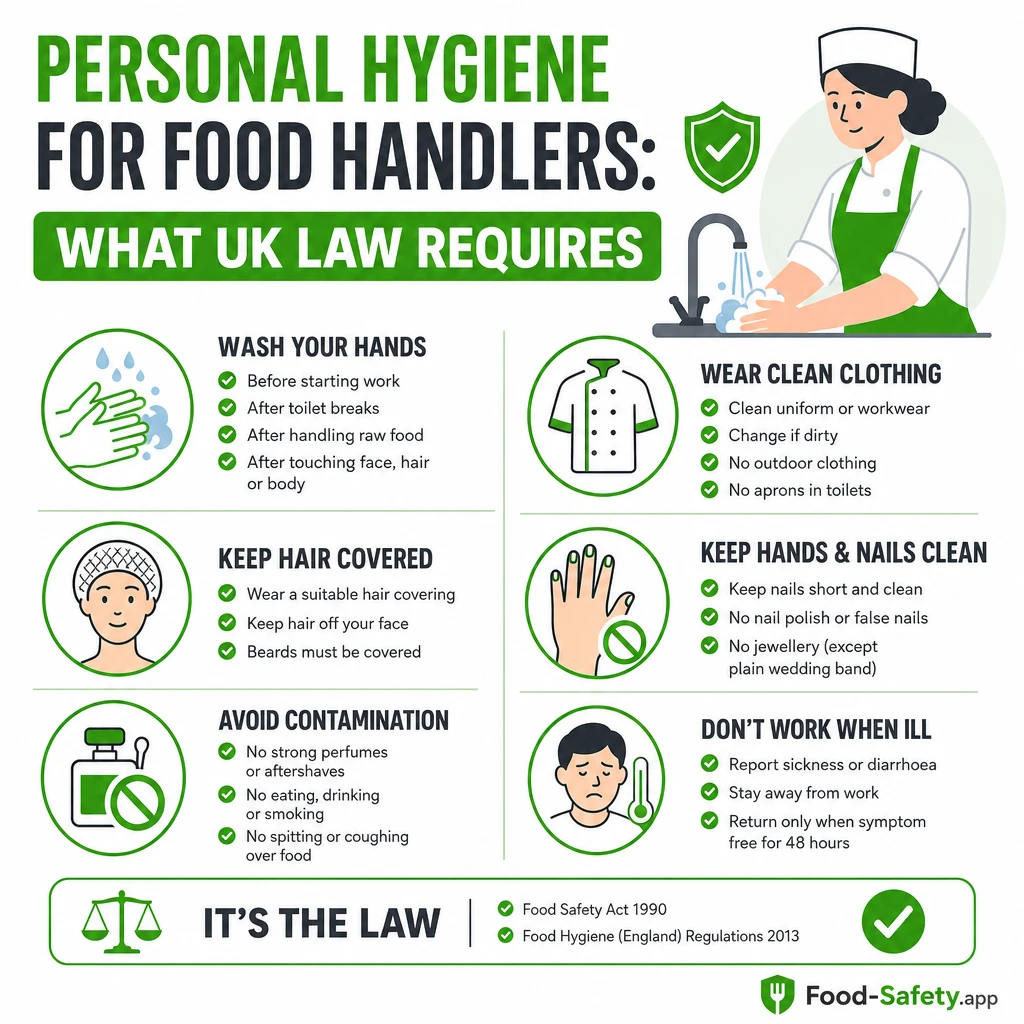
Wash hands for the full 20 seconds with soap and warm water, dry thoroughly, and don’t substitute with a quick splash.
Hand hygiene is the single most effective control against foodborne illness. Typical practice includes:
- When to wash: on arrival, after breaks, after using the toilet, after handling waste, after touching raw foods or cleaning, and before touching ready-to-eat items.
- How to wash: wet hands, apply soap, scrub all surfaces including between fingers and under nails for at least 20 seconds, rinse, and dry with a single-use towel or air-dryer if clean and readily available.
- Common failure points: washing too briefly, neglecting under-nail cleaning, touching face or hair during prep, sharing towels, or re‑using dirty cloths.
Illness reporting and return-to-work principles
Staff with vomiting or diarrhoea should stay away from food handling until they’re symptom-free and cleared by policy.
A clear illness policy helps protect customers and staff. Practices typically include:
- Prompt reporting to a supervisor when any illness or symptom arises that could affect safety.
- Excluding staff with vomiting, diarrhoea, fever, or contagious symptoms from food work until medically cleared or until policy criteria are met.
- Defined return-to-work criteria, such as being symptom-free for a defined period and following the workplace’s sickness policy.
- Maintaining a simple illness log so managers can track patterns and respond quickly.
Fitness to work: managing cuts, wounds, vomiting, diarrhoea and skin conditions
Proper wound management, including blue waterproof dressings and gloves, minimises contamination risk in high-touch tasks.
Know when someone is fit to work in food preparation. Practices often include:
- Cuts or skin infections: cover with a blue waterproof dressing and wear appropriate gloves when handling exposed foods or contact with ready-to-eat items.
- Vomiting or diarrhoea: stay off the line until recovery and allowed by the illness policy.
- Skin conditions (e.g., rashes, boils): seek guidance from a supervisor; restrict handling if contamination risk exists.
- Daily checks help catch issues early and reduce cross-contact risks.
Protective clothing and personal hygiene rules
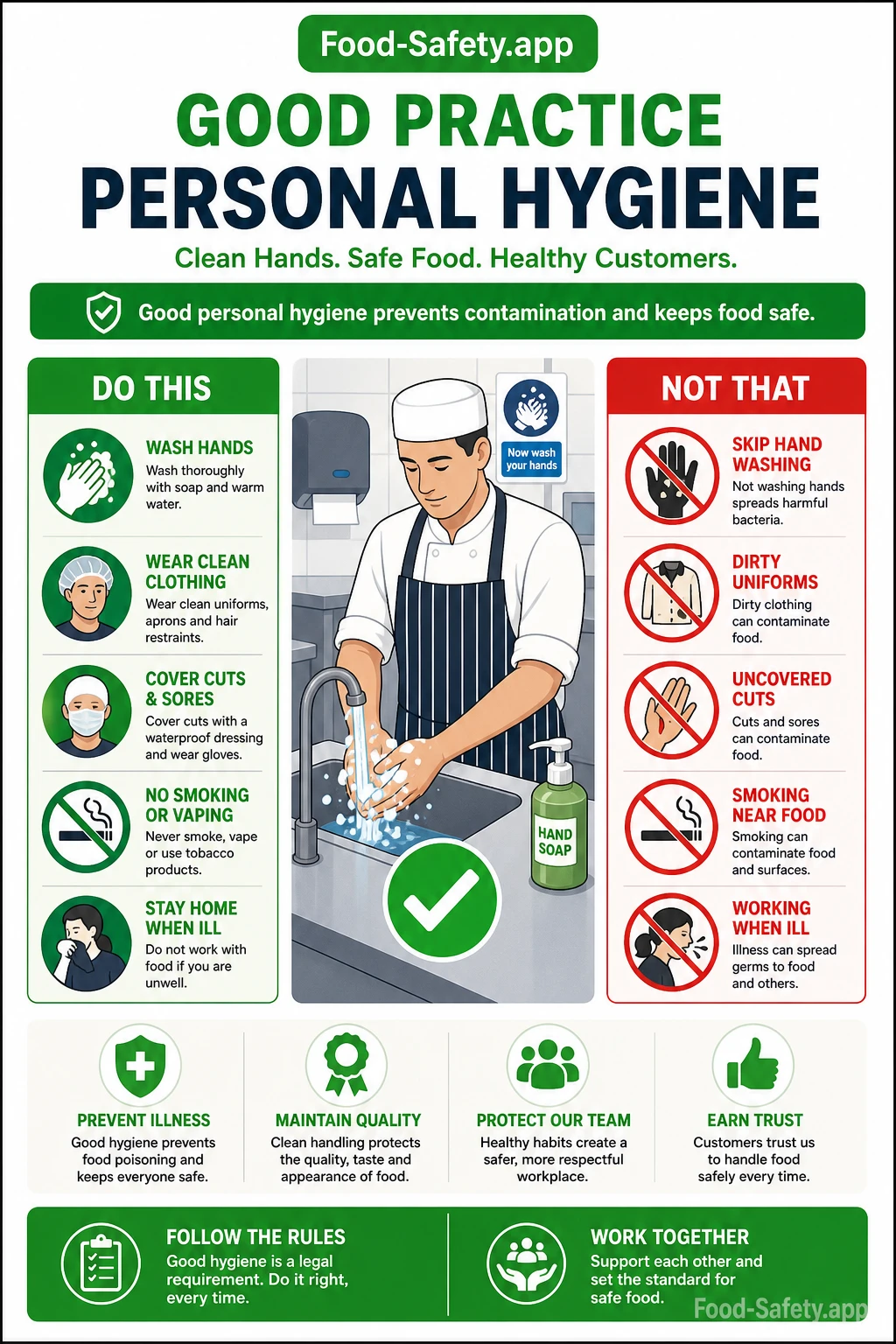
Clean uniforms, hair restraints and dedicated protective clothing are the visible line between safe and risky food preparation.
Clothing and grooming standards are part of controlling contamination. Expectations typically include:
- Clean uniform or chef whites, maintained daily
- Hair restraints (hats, nets or tied-back hair) and no loose accessories
- Gloves where appropriate, changed regularly or when moving between tasks
- Aprons and protective clothing that are clean and kept in good repair
- Procedures for changing contaminated clothing and removing protective gear before leaving prep areas
Training, monitoring and record-keeping for personal hygiene
Documenting training, illness logs and hygiene checks creates an auditable trail that supports inspections and day-to-day confidence.
A sustainable hygiene framework combines policy, training and ongoing oversight. Essential elements:
- A clear written personal hygiene policy, accessible to all staff
- Regular induction and refresher training on hygiene basics and why it matters
- Visible handwashing rules at sinks and prep stations
- An illness reporting procedure with manager sign-off
- Daily checks on uniforms, wounds and cleanliness standards
- Linked records for HACCP, cleaning schedules and corrective actions where hygiene failures are found