
If you’re planning to serve food to the public in the UK, registering with your local authority is usually a must before you start trading. This guide explains who must register, when to do it (28 days before opening), how to complete the registration, what happens afterward, and common mistakes to avoid. It also covers special cases like home kitchens, vans, and pop-ups, with practical examples to help you stay compliant from day one.
What counts as a food business under UK law
Important: A food business isn’t limited to brick‑and‑mortar sites. If you handle food for sale or service to the public, you’re in scope.
A food business is any organisation involved in handling food for human consumption, whether you cook, store, prepare, or serve it to customers. This includes cafes, restaurants, takeaways, catering companies, mobile traders, market stalls, pop-ups, and even home-based ventures that sell to the public. The key is that you’re involved in any step of the food chain where the public purchases, consumes, or uses food.
Practical note
If you’re unsure whether your activity counts as a food business, it’s safer to assume registration is needed and check with your local Environmental Health team.
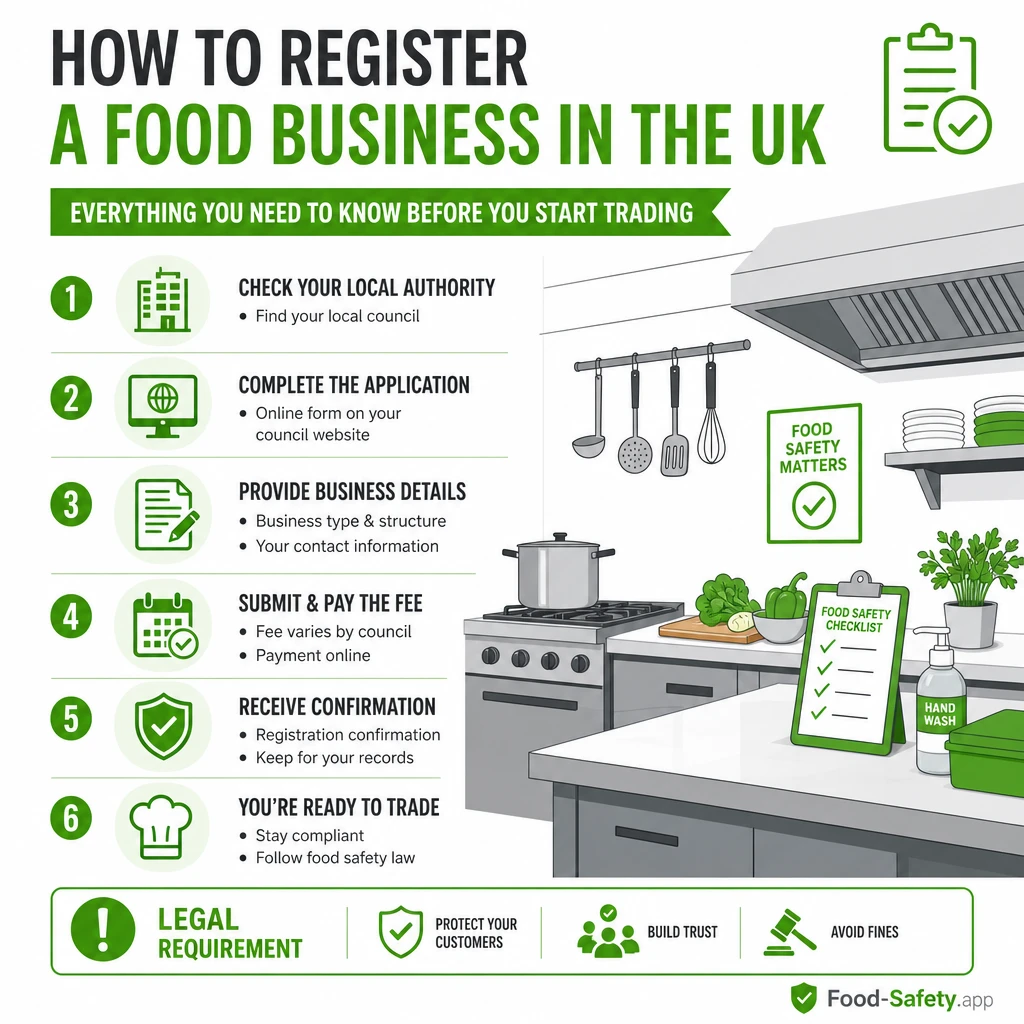
Who needs to register
Registration helps ensure all operators meet baseline hygiene standards before guests are served.
In practice, most organisations that handle, prepare or sell food to the public must register. This includes:
- Restaurants, cafés, pub kitchens and takeaways
- Caterers and event suppliers
- Home-based food businesses selling to the public
- Mobile traders such as vans and food carts
- Market stalls and pop-ups
- Seasonal or occasional traders (even if only part of the year)
Registration is typically required regardless of business size, ownership structure, or whether you operate from a fixed premises or a temporary site.
A practical example demonstrates how a home baker who regularly supplies local cafes and sells at weekend markets would usually need to register with the local authority prior to trading.
Practical example
A home baker who regularly supplies local cafes and sells at weekend markets would usually need to register with the local authority prior to trading.
When to register
The 28‑day lead time isn’t a trap; it’s there to give you and the regulator time to establish safe practices from the outset.
Registration should happen before you start trading, and many authorities expect a lead time of at least 28 days. This window allows Environmental Health to review your plans, assess the kitchen layout, and identify any potential risks before you serve your first customer. If you’ve already begun trading without registering, contact your local authority promptly to discuss next steps.
Practical tip
If you’re moving premises, changing the type of foods you handle, or taking on new partners, re‑register or update your details with the local authority as needed.
How to register
Make sure your business details reflect what actually happens on site; inconsistencies can slow the registration and inspection process.
Registration is usually with the local authority’s Environmental Health department. Many LA websites offer online forms, but you can also be asked to complete a paper form or call to discuss your plans. The information you’ll typically be asked to provide includes:
- Business name and contact details
- Premises address and a description of your activity
- The proposed opening date and hours
- Ownership structure and key personnel
- A sketch of the kitchen layout and storage areas
- Types of food you’ll handle and how you’ll keep it safe
- Your food safety management approach (HACCP or equivalent)
- Estimated staff numbers and supplier arrangements
Registration is usually with the local authority’s Environmental Health department. Many LA websites offer online forms, but you can also be asked to complete a paper form or call to discuss your plans.
Practical example
A new pop‑up opening for two weeks would still need to register before it starts, and you may be asked to provide a short description of the event, a layout plan, and how food safety will be controlled during that period.
What happens after registration
Remember, the rating reflects actual conditions and practices on site, not just the paperwork.
After submitting registration details, the local authority will usually schedule an inspection or provide guidance on what they’ll review. Inspections focus on hygiene practices, food handling, storage, cleaning, pest control, and temperature control. Following a visit, you’ll typically receive a Food Hygiene Rating (FHRS) reflecting the level of compliance. You’ll also have ongoing duties such as maintaining records, updating supplier information, and keeping equipment, premises, and procedures in good order.
Maintain clear, traceable records for deliveries, temperatures, cleaning schedules, and corrective actions. These records support a confident inspection and ongoing compliance.
Practical tip
Maintain clear, traceable records for deliveries, temperatures, cleaning schedules, and corrective actions. These records support a confident inspection and ongoing compliance.
Special cases and common mistakes
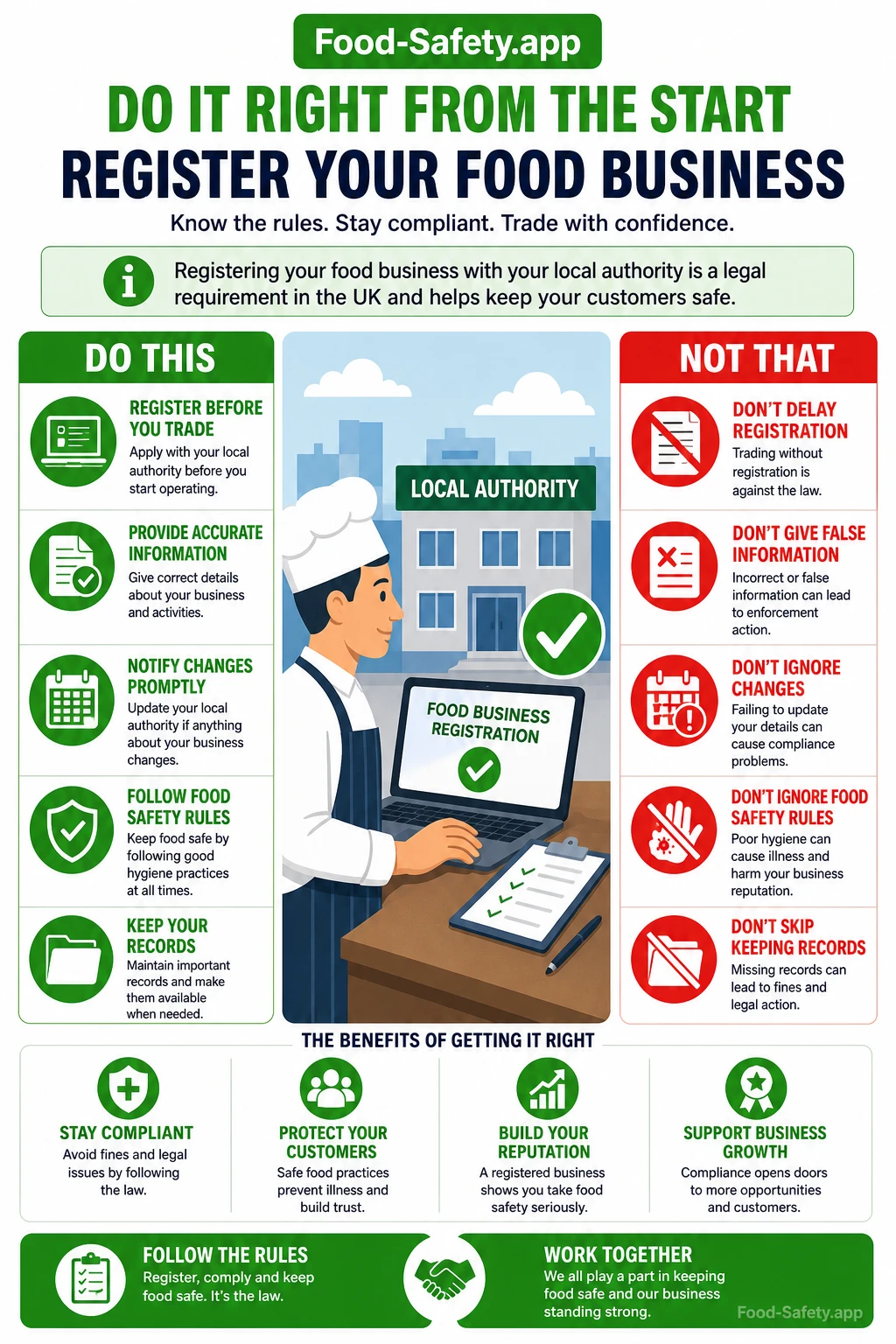
The safest approach is to treat registration as a proactive risk‑management step, not a box to tick.
Registration is a foundation, but depending on your setup you may need additional permissions (planning, leases, market rules) or adjustments to your operation. Consider these common scenarios:
- Home kitchens and shared spaces: If you cook at home or in a shared kitchen, you’ll usually need registration and may face rules about separate food prep areas and equipment.
- Mobile vans and street traders: Vans must have a verified layout, refrigeration and handwashing arrangements, and safe waste disposal plans.
- Temporary events and pop-ups: Short‑term traders still need registration and may be checked during events.
- Seasonal trading: Even intermittent activity requires clear plans for safe storage, cleaning, and allergen controls.
Registration is a foundation, but depending on your setup you may need additional permissions (planning, leases, market rules) or adjustments to your operation. Consider these common scenarios:
Practical scenarios
Practical scenario: a home baker supplying local cafes and weekend markets
A registered home bakery that delivers to cafés and sells at markets should document ingredients, allergen controls, and a simple temperature log for perishable items. It’s wise to keep a basic HACCP plan even for small operations.
Practical scenario: a mobile burger van starting trade at a new site
Before you start, confirm registration, ensure the vehicle has a functioning handwash station, correct cold storage, and a safe waste plan. Have a simple chase plan for recalls or supplier issues.
Practical scenario: a catering business moving into a commercial kitchen
Moving to a dedicated kitchen often requires updating your registration details and providing a revised layout and equipment list. Expect a higher level of scrutiny on storage, cross‑contamination controls, and staff hygiene.
Practical scenario: a chef opening a pop‑up event for two weeks only
Treat it like a temporary site: register, map out the setup, and prepare a concise loss‑prevention and cleaning schedule. Document supplier arrangements and any allergen controls for the event.
Important: Registration is just the start. Ongoing compliance means routine hygiene checks, accurate records, and timely corrective actions.
Common mistakes to avoid
- Late or incomplete registration
- Ambiguous description of activities or site
- Missing allergen control measures or ingredient records
- Poor record keeping for temperatures, cleaning, and deliveries
- Assuming a low‑risk setup is exempt from registration
If you’re preparing to register a food business, start with a clear startup checklist that covers registration, allergens, cleaning, temperature control, and supplier records. Ensure your on‑site practice matches the details you provide, and be ready to show traceable records during inspections. With a solid plan, you’ll enter trading with confidence and a stronger foundation for ongoing compliance.