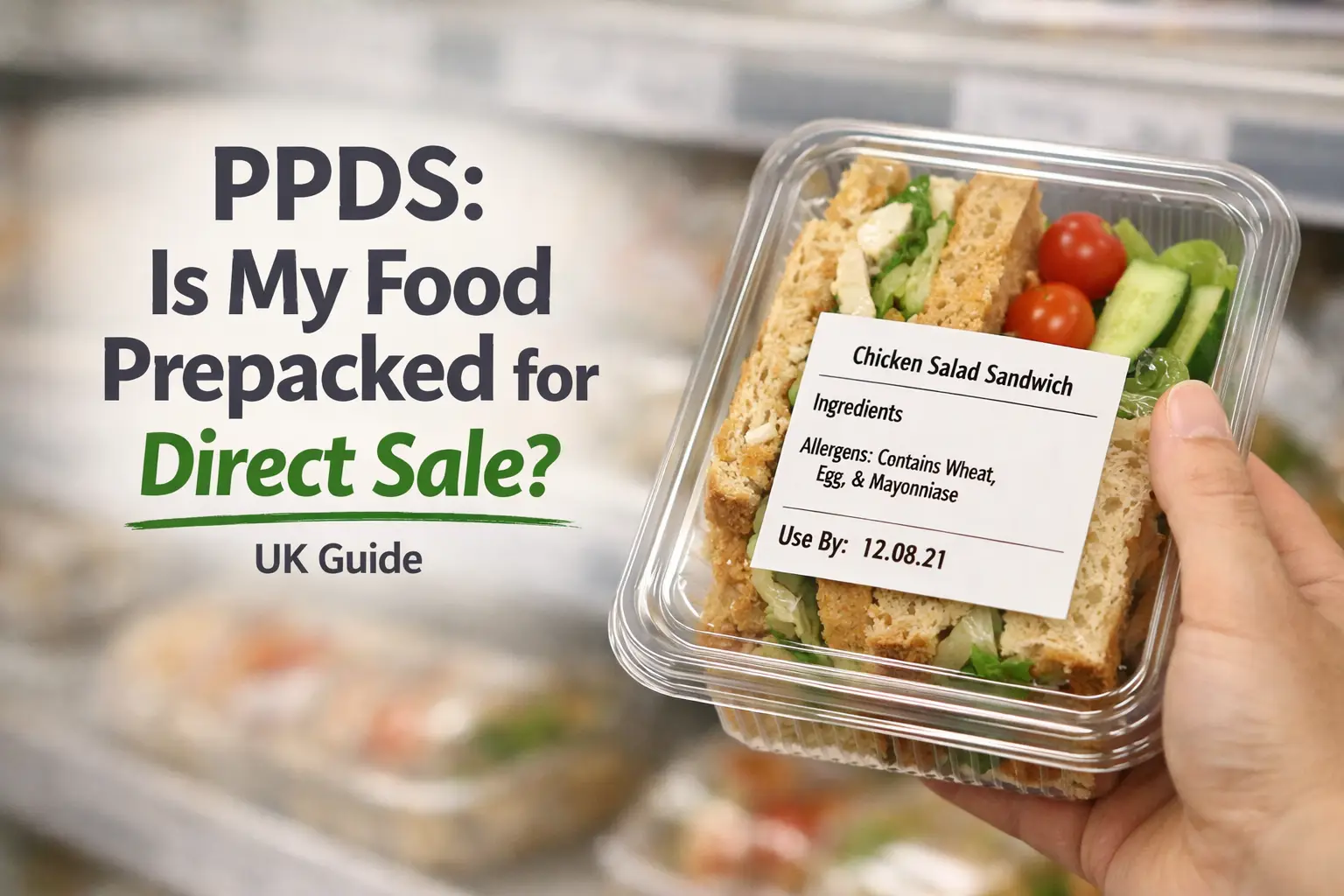
Is your product PPDS? In the UK, PPDS affects allergen labelling, traceability and who is responsible for information on the pack. This guide translates the rules into practical checks for cafés, bakeries and catering sites, with real-world packaging scenarios. You’ll learn the three tests for PPDS, how it differs from other formats, common missteps, and how to set up reliable labelling and records across sites.
What PPDS means in UK law
The same premises rule is a central criterion for PPDS. If packing happens away from the selling site, the item is usually not PPDS.
PPDS stands for prepacked for direct sale. In practice, it means the item is packaged before sale and presented to the customer in that packaging, without the customer having to unpack or repackage it. For allergen control, this packaging must carry clear information on ingredients and allergens and reflect how the item is sold. The key distinction is whether the item is packed for sale or packed after the customer has chosen it.
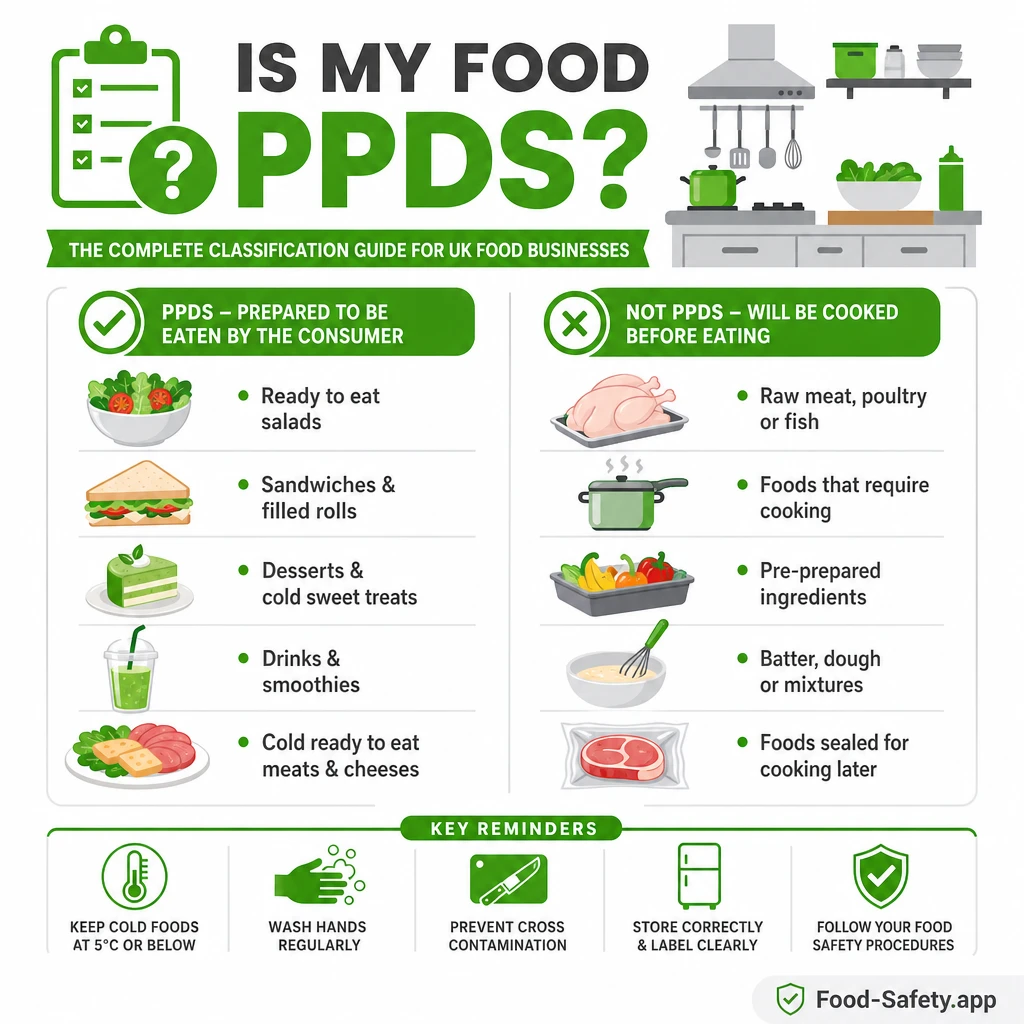
The three tests for PPDS
To determine if a product is PPDS, use these three tests. All must be satisfied for PPDS classification.
- Food is prepared and packed on the same premises.
- Packed before being offered for sale.
- Offered directly to the customer without further packing by another business.
If any of these steps happen elsewhere or after the customer has chosen the item, the product may not be PPDS. In satellite operations or shared facilities, the location and timing of packing are especially important to classification.
If any packaging occurs after the customer has chosen the item, check whether the product is still PPDS.
Common scenarios: PPDS vs non-PPDS
Real-world examples help teams decide quickly how to classify items.
- Sandwiches made in-house, packed for the next day and sold from a fridge: PPDS.
- Bakery items packed on site for counter sale: PPDS.
- Salads portioned and sealed in a prep kitchen for local sale: PPDS.
- Ready meals made in one site and delivered to another site for sale: Not PPDS.
- Cakes packed at the point of sale versus packed for later sale: Not PPDS when packaging happens at the counter as part of the sale; PPDS if packing occurred in advance for direct sale.
- takeaway items boxed after the order is placed: Not PPDS when packing is specifically tied to the act of taking the order at the counter; PPDS if packaging happens before sale in the same premises.
- Bulk containers repacked into smaller portions: Not PPDS unless the repacking happens on the selling premises and the item is offered for sale in its packed form.
- Products with labels added at the end of service versus before sale: Not PPDS if the final label is added after sale has begun or after the product is presented for sale; PPDS if the packaging and labeling are completed before sale.
- Shared kitchens, concession units, and multi-site operations: Classification depends on where the item is packed and how it’s presented to the customer. If packing occurs on the selling site, PPDS is more likely; if packing happens elsewhere, it’s less likely.
Common misclassification pitfalls
Consistent labeling with how the product is sold reduces allergy risks and misclassification.
Misclassification often arises from ambiguous packaging flows or unclear responsibility. Watch for:
- Packing after customer selection but before sale, particularly in takeaway lines or drive-thru counters.
- Repackaging bulk containers into smaller portions without updating the label or batch records.
- Moving PPDS items between sites without transferring the corresponding label and allergen information.
- Selling items pre-packed at one site but finishing packaging, labeling or portioning at another site.
- Labels that bear outdated ingredients or allergen information after suppliers change or after seasonal adjustments.
- Shared kitchens that cook in one place but market the same items in several satellite units without harmonizing labeling.
Allergen labelling and traceability
Traceability isn’t optional — it’s essential for allergen safety and potential recalls.
Allergen information must match exactly how the food is sold. If a product is packed for direct sale, the label should reflect all ingredients and present allergens as declared on the pack. When items are repacked, portioned, or re-packaged, the allergen information must stay accurate for the final packaged unit sold to the customer.
- Maintain a clear trail of recipes, ingredients, and packaging steps so you can confirm what allergens are present in every packaged item.
- If packaging takes place off-site or in a different unit, ensure the label and the purchase flow still represent the same product and allergen information delivered to the customer.
- Keep records of supplier ingredients and any substitutions or changes that could affect allergen declarations.
How to implement PPDS compliance in practice
If in doubt, treat items as PPDS until you can confirm how they’re packed and sold.
A practical, small-step approach helps teams keep up with PPDS requirements across multiple sites.
- Create a simple internal decision process for new menu items and seasonal products.
- Check whether packing happens before the customer chooses the item.
- Confirm the same premises rule, especially for satellite units and central production kitchens.
- Review labels for required allergen information and business details.
- Train staff to recognise PPDS vs non-PPDS products.
- Keep clear records of recipes, packaging steps, and product lines.
- Apply the same rules across cafés, bakeries, delis, canteens and contract catering sites.
Starting with a simple decision tree in your SOPs helps avoid misclassification when new products or seasonal offers come in. Regularly review packaging flows and cross-check with the sales process, ensuring the label, ingredients, and supplier data stay aligned. That alignment is what keeps allergen risks under control and reinforces consistent compliance across every site.