Delivery platforms increasingly gate access to customers with hygiene ratings.
If your rating is out of date or paperwork isn’t in order, you can lose visibility and orders.
This guide explains what platforms expect, how regional schemes differ, how multi-brand setups are assessed, what happens when a rating drops, and which records prove you’re in control. It’s written for catering and hospitality teams aiming to stay compliant and recover quickly.
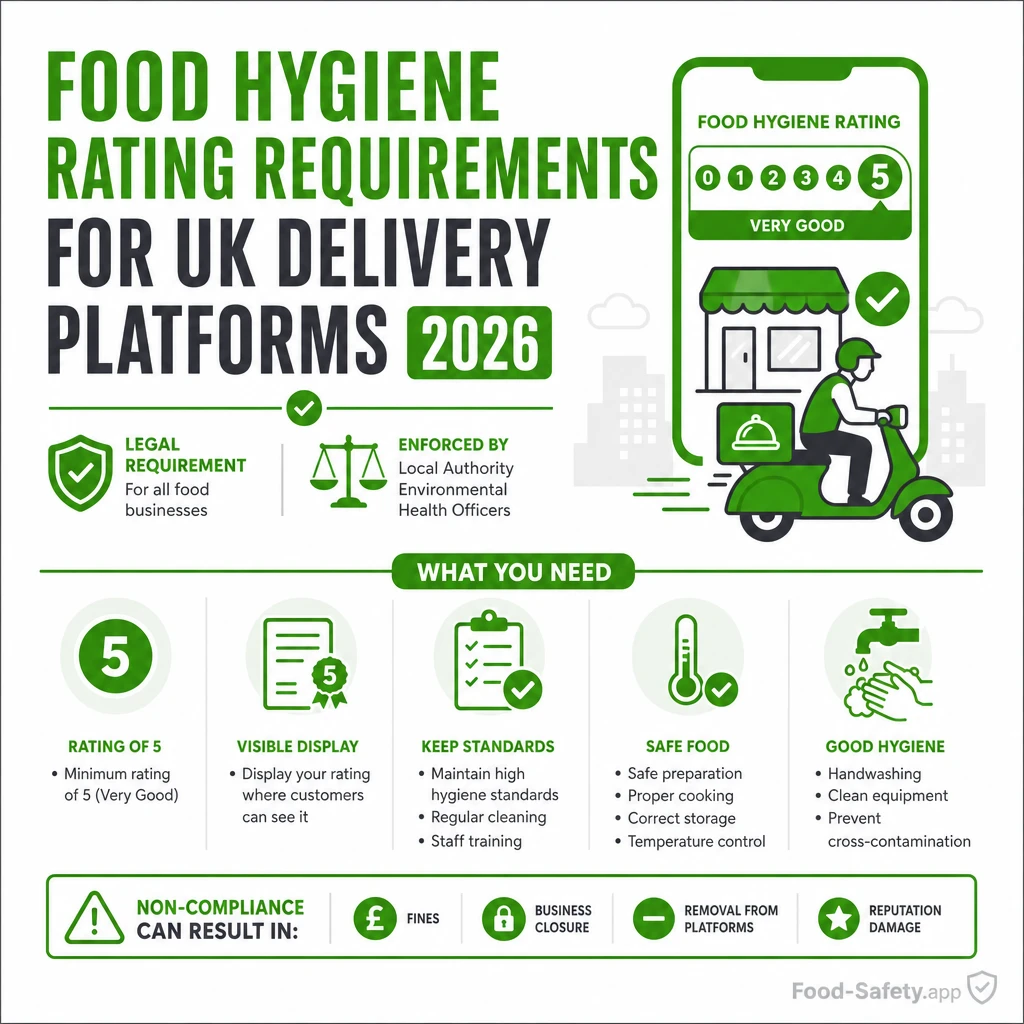
What Platforms Typically Ask For
Important: Platforms will expect you to keep these documents accessible for audit or onboarding, often in a digital pack.
Most platforms look for three things to onboard a venue and keep listings current:
- A current hygiene rating or certificate from the applicable local scheme.
- Proof of registration with the local authority.
- Up-to-date records that demonstrate ongoing compliance, including food safety management, allergen procedures and staff training.
In practice, you’ll be asked to provide a compact compliance pack: the latest FHRS/FHIS/NI equivalent rating, a current registration number, HACCP plan, cleaning schedules, temperature monitoring logs, and a recent inspection report or formal confirmation of good practice. Having these ready speeds onboarding and any future audits.
A simple, well-organised repository saves time and reduces the risk of suspension or loss of listing.
Regional Variations Across the UK
Inconsistent timings across jurisdictions can cause gaps in platform listings, so keep a ready plan to present evidence even if your local rating isn’t yet updated.
England, Wales, Scotland and Northern Ireland each operate slightly different regulatory landscapes, which can affect how and when ratings appear on platforms.
- England and Wales commonly reference the national FHRS as part of local authority activity. Platforms may rely on the FHRS rating shown to customers, and updates can depend on local inspection cycles.
- Scotland uses the Food Hygiene Information Scheme (FHIS) in many areas, with its own presentation of hygiene information. Platforms may accept FHIS as evidence of hygiene controls, but the exact display or timing can differ from FHRS.
- Northern Ireland operates its own local authority framework that aligns with the broader UK approach but may have separate inspection timings and data refresh cycles.
Regional differences also mean that the timing of inspections and the way ratings are posted can influence how quickly a platform can onboard or refresh a listing. Always verify with the platform whether it accepts the specific regional scheme and what documentation is preferred.
Assessing Dark Kitchens, Shared Kitchens and Multi-brand Setups
For multi-brand sites, platforms look for clear traceability and separation to avoid cross-contact.
Dark kitchens, shared facilities and multi-brand sites pose extra challenges for platform screening. Key focus areas include traceability, separation, cleaning and allergen control.
- Brand separation: Show that each concept has distinct records for allergen controls, cleaning schedules, goods-in checks, and cooking processes where relevant.
- Allergen control: Maintain clear, separate allergen records for each brand, including dedicated equipment or clearly marked zones if shared spaces are used.
- Traceability: Demonstrate end-to-end traceability for ingredients and batches per brand. This includes supplier certificates, lot codes and a clear flow from delivery to kitchen to customer.
- Cleaning and equipment: Use clearly defined cleaning schedules and colour-coded tools or dedicated equipment where practical to prevent cross-contact.
- Documentation: Provide concise, brand-specific SOPs, checklists and logs that can be quickly exported to satisfy platform checks.
A well-prepared recovery package for these sites should include a per-brand risk assessment, separate allergen matrices and a unified but auditable cleaning calendar.
What Happens When a Rating Drops
A quick, proactive plan and transparent communication with the platform can minimise downtime.
If a rating falls, platforms may suspend or limit visibility until you restore trust. Expect some or all of the following steps:
- Listing checks and possible temporary suspension while you address gaps.
- A requirement to demonstrate corrective actions and updated records.
- Re-inspection or a fresh evidence review window before the listing is refreshed.
- A formal opportunity to communicate with the platform about the steps you’ve taken and the expected timeline.
Proactive action helps. Identify gaps quickly, isolate affected processes, implement corrective actions, and prepare updated documentation to share with the platform and, if needed, the local authority.
In practice, you’ll want a targeted recovery plan with responsible owners, due dates and a clear way to show closure of each finding. Do not wait for the platform to chase you; lead the recovery process.
Key Records and Evidence Platforms Expect
The most persuasive evidence demonstrates control across high‑risk stages and critical points of the operation. Core records to maintain and readily export include:
- Temperature logs for chilled and frozen storage, cooking, hot holding and cooling.
- Opening and closing checks showing conditions at start and end of service.
- Cleaning records covering all high-risk areas and equipment (cookers, slicers, fridges, seals).
- Allergen controls, including brand-specific allergen matrices, dedicated tools and separation where applicable.
- Goods-in checks with supplier deliveries, traceability, and shelf-life verification.
- Defect reports and corrective actions, with dates, owners and verification of completion.
Keeping these records up to date and in a readily exportable format is essential for platform onboarding, ongoing checks and any potential local authority audits.
Temperature control failures must be detected and corrected with documented corrective actions.
A practical approach is to maintain a single, up-to-date digital pack that can be shared in a few clicks, whether for platform checks or an unexpected local authority visit.
Recovery and Compliance Planning for Onboarding and Ongoing Listings
The best recovery plan is to identify gaps quickly and close them with clear ownership and dates.
A robust plan focuses on preparation, visibility and continuous improvement.
- Create a simple onboardingCompliance Pack: list the latest hygiene rating, registration, and essential records per brand.
- Appoint a compliance lead: a named person responsible for keeping records current and coordinating with platforms and auditors.
- Build a one-page spotlight: a concise summary of rating status, key controls, and contact points for quick platform review.
- Develop a rating recovery plan: identify gaps, assign actions, set review dates, and document completion.
- Strengthen daily controls in high-risk areas: chilled storage, cooking, cooling, reheating, hot holding.
- Make allergen and cleaning systems visible to all staff: train front-line teams on brand-specific allergen handling and cleaning schedules.
- Use opening, closing and delivery checklists: ensure consistent control, even on busy service days.
A well-structured plan reduces the risk of repeat issues and speeds recovery when problems arise. It also supports smoother onboarding for new sites or additional brands sharing the same delivery platforms.
If you’d like, I can tailor this outline into a ready-to-use compliance pack checklist or a one-page onboarding brief for your specific platform mix and regional setup.