An allergen matrix is a practical tool for UK catering teams to map every dish to its ingredients and the 14 recognised allergens. This article explains what it is, why it matters in day-to-day service, how to build one, and how to keep it accurate for staff, EHOs and audits.
What an allergen matrix is
Important: A matrix should reflect the exact formulation used in your kitchen, not a generic recipe. It’s a live document that changes with recipes, suppliers and menus.
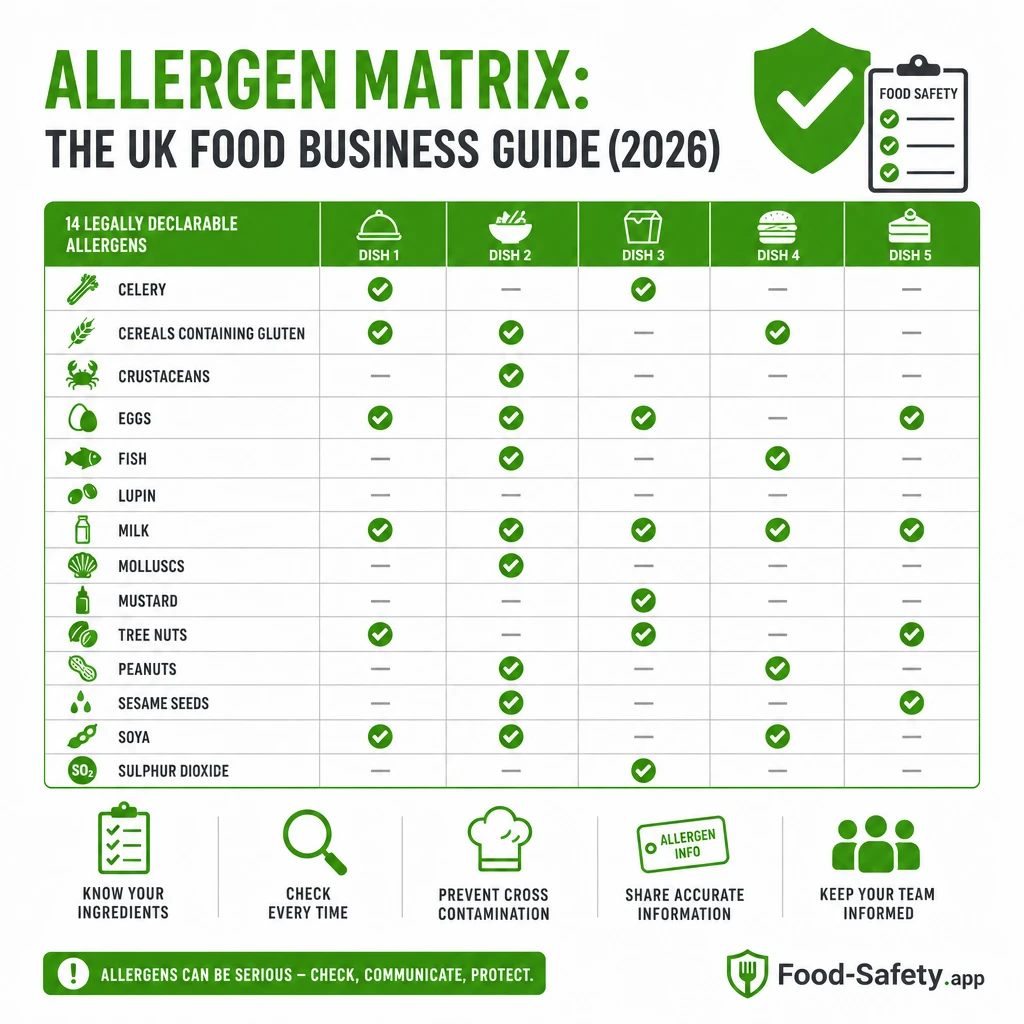
An allergen matrix is a simple document that links each menu item to its ingredients and to the presence or absence of the 14 recognised allergens. In small businesses it acts as a single source of truth, helping staff communicate accurately with customers and during checks.
The 14 recognised allergens (in UK practice) are:
- gluten-containing cereals
- crustaceans
- eggs
- fish
- peanuts
- soybeans
- milk
- tree nuts
- sesame
- celery
- mustard
- sulphites
- lupin
- molluscs
The allergen matrix differs from other records in a kitchen:
- Recipe sheets focus on quantities and preparation steps.
- Menu specs describe dishes for customers and front-of-house.
- The matrix concentrates on allergen disclosures linked to each dish.
Keeping these tools aligned is essential for accurate communication and safe service.
Why it matters in real catering operations
In busy service, clarity about what’s in each dish isn’t optional; it’s essential for guest safety and team efficiency.
A well-maintained allergen matrix reduces cross-contact risk by making allergen information visible to the right people at the right time. It supports staff confidence when answering customer questions and provides clear evidence during Environmental Health Officer (EHO) visits. It also keeps records tidy for audits, customer complaints and inspections.
How to build an allergen matrix
The matrix works best when it’s concise, searchable and kept where staff actually access it.
Follow a practical, kitchen-friendly process:
- List every menu item and its main ingredients
- Check supplier specs and labels for every ingredient
- Mark all 14 allergens present in each dish
- Include recipe variations, substitutions and garnishes
- Keep the matrix in a format staff can use quickly at point of service
Worked example: one menu item
A practical matrix flags allergens by dish and by variation, so service staff know what’s in the current version of a dish.
Dish: chicken curry with rice
Ingredients and potential allergens:
- Chicken — none
- Rice — none
- Curry sauce — gluten (in some paste), may contain dairy, sulphites
- Onion — none
- Garlic — none
- Cooking oil — none
- Spices (prepared blend) — may include mustard, sesame, soy
- Garnish (coriander) — none
Matrix marking (example):
- Gluten: Yes
- Dairy: Possible (depends on sauce)
- Soy: Possible (depends on spice blend)
- Sesame: Possible (depends on spice blend)
- Mustard: Possible (depends on blend)
- Celery, Nuts, Fish, Crustaceans, Eggs, Lupin, Molluscs: No (based on this version)
Variations:
- If naan is served with the dish, add gluten (and check naan ingredients)
- If yoghurt is added or used in a side, add dairy
- If a different sauce is used, re-check all ingredients for allergen presence
A practical matrix flags allergens by dish and by variation, so service staff know what’s in the current version of a dish.
Hidden allergens to look out for
Cross-contact can occur even when ingredients are allergen-free if utensils, surfaces or equipment are shared without proper cleaning.
- Sauces, gravies, stock cubes, spice mixes, breadcrumbs
- Dressings, marinades, desserts, and ready-made components
- Cross-contact risks from shared equipment and prep areas
How to keep the matrix up to date and what ehos check
A lived, accessible matrix supports safer service and smoother EHOs’ checks.
6.1 How to keep the matrix up to date
- Review whenever suppliers, recipes or menus change
- Assign one person to own updates and communicate them
- Store version-controlled records (e.g., dated PDFs or a shared log)
- Ensure front-of-house and kitchen teams use the same information
6.2 What Environmental Health Officers typically check
- The matrix aligns with the menu in use
- Staff understand and can communicate allergen information
- Evidence of training and regular review
- Clear records available on request
6.3 Operational focus for better compliance
- Keep matrix printed and digital where useful
- Link it to training, menu reviews and allergen notices
- Use a simple, reliable system that suits a busy kitchen
- Make updates part of opening checks or menu change procedures
If you implement a clear allergen matrix with regular reviews and visible links to training and menus, you’ll have a practical tool that protects guests and streamlines everyday operations.