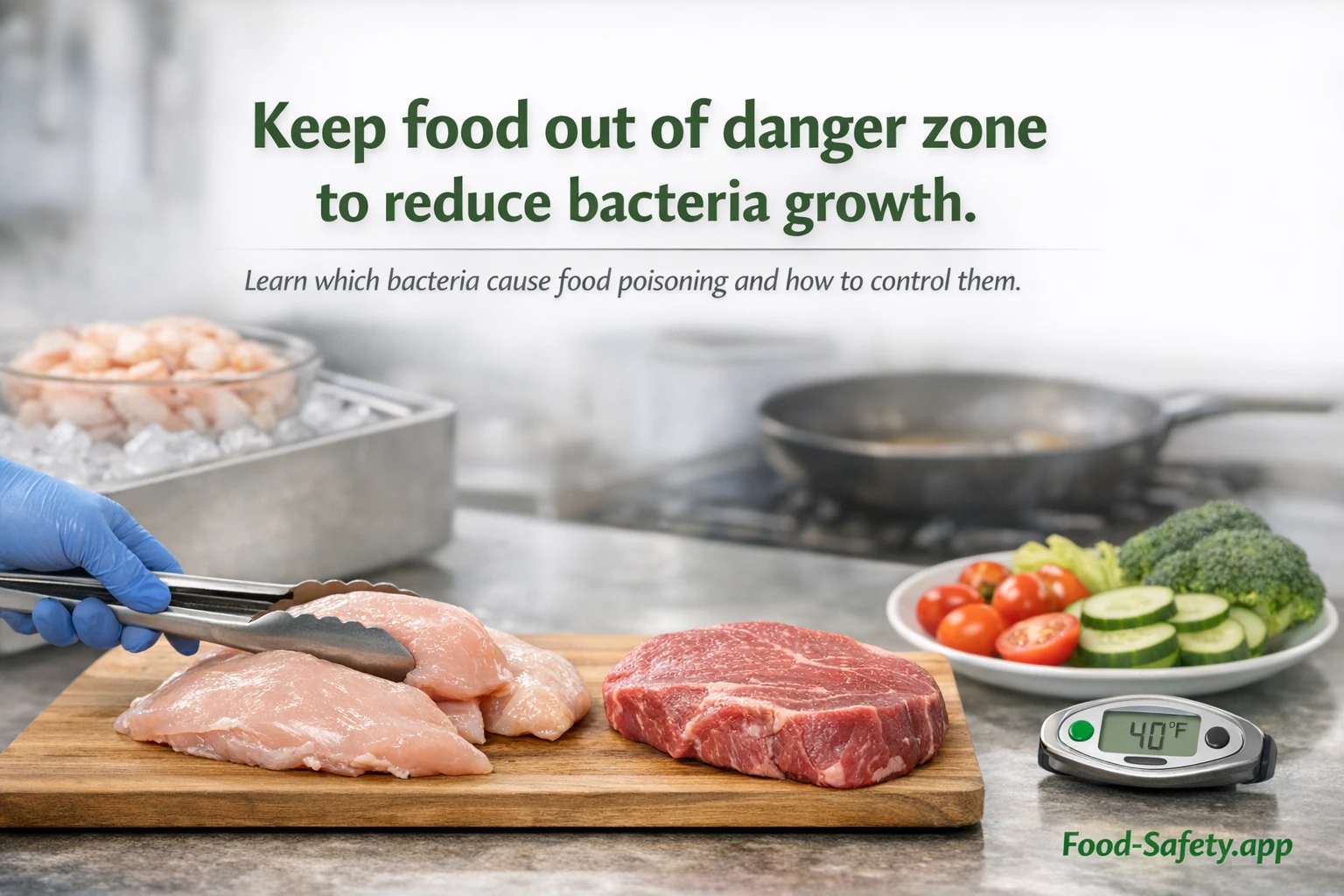
Learn which food poisoning bacteria cause illness in kitchens and how to control them with simple, practical steps that protect your customers and business.
Table of contents
- Types of food poisoning bacteria
- How bacteria spread in kitchens
- Common symptoms of food poisoning
- High-risk foods to watch
- Preventing food poisoning bacteria
- Effective control measures in catering
Types of food poisoning bacteria
Food poisoning bacteria are microorganisms that can contaminate food and cause illness if eaten. The most common types found in kitchens include Salmonella, often linked to raw poultry and eggs, and E. coli, which can be present in undercooked beef or contaminated produce. Listeria is particularly dangerous because it can grow at refrigeration temperatures, while Campylobacter is frequently associated with raw chicken. Staphylococcus aureus can spread from handlers to food through poor hygiene, making staff practices just as important as food handling.
How bacteria spread in kitchens
Food poisoning bacteria spread easily in busy kitchen environments, especially where controls are inconsistent. Cross-contamination is a major cause, such as using the same chopping board for raw meat and ready-to-eat foods. Poor handwashing, unclean surfaces, and incorrect storage can all transfer bacteria. Temperature abuse also plays a key role, as bacteria multiply quickly in the danger zone. Understanding these risks is part of strong cleaning and cross-contamination control practices, which help prevent harmful bacteria moving between foods and surfaces.
Common symptoms of food poisoning
Symptoms caused by food poisoning bacteria can vary depending on the organism and the individual. Most people experience nausea, vomiting, diarrhoea, and stomach cramps within hours or days of consuming contaminated food. In more serious cases, symptoms can include fever, dehydration, or longer-term complications. For vulnerable groups such as the elderly, young children, and pregnant individuals, the effects can be severe. Recognising symptoms early is important, as it can help identify potential issues in kitchen processes and prevent further cases.
High-risk foods to watch
Certain foods are more likely to carry food poisoning bacteria, particularly those that support bacterial growth. Raw and undercooked meats, especially poultry, are high risk, along with seafood, eggs, and unpasteurised dairy products. Ready-to-eat foods like salads, cooked meats, and sandwiches can also become dangerous if contaminated after preparation. Cooked rice is another known risk when left at room temperature. Food businesses must pay close attention to how these items are stored, handled, and served to reduce the chance of contamination.
Preventing food poisoning bacteria
Preventing food poisoning bacteria relies on consistent, everyday practices. Staff should follow strict personal hygiene rules, including proper handwashing and avoiding food handling when ill. Food must be cooked to safe temperatures, chilled promptly, and stored correctly to limit bacterial growth. Cleaning schedules should be followed closely to ensure all equipment and surfaces remain safe. Guidance from authorities such as the World Health Organization highlights the importance of safe cooking, separation, chilling, and cleaning as the foundation of food safety.
Effective control measures in catering
Controlling food poisoning bacteria in a catering setting requires structured systems and reliable records. This includes monitoring cooking, cooling, and storage temperatures, as well as maintaining clear cleaning routines and staff training logs. Digital tools like Food-Safety.app, a food safety management system for catering businesses, can simplify these tasks by keeping accurate, timestamped records and highlighting risks early. Many businesses also benefit from improving their digital food safety record keeping, making it easier to stay compliant and inspection-ready.
By understanding how food poisoning bacteria behave and putting practical controls in place, kitchens can significantly reduce risk. Consistency, training, and clear systems are key to protecting both customers and business reputation.