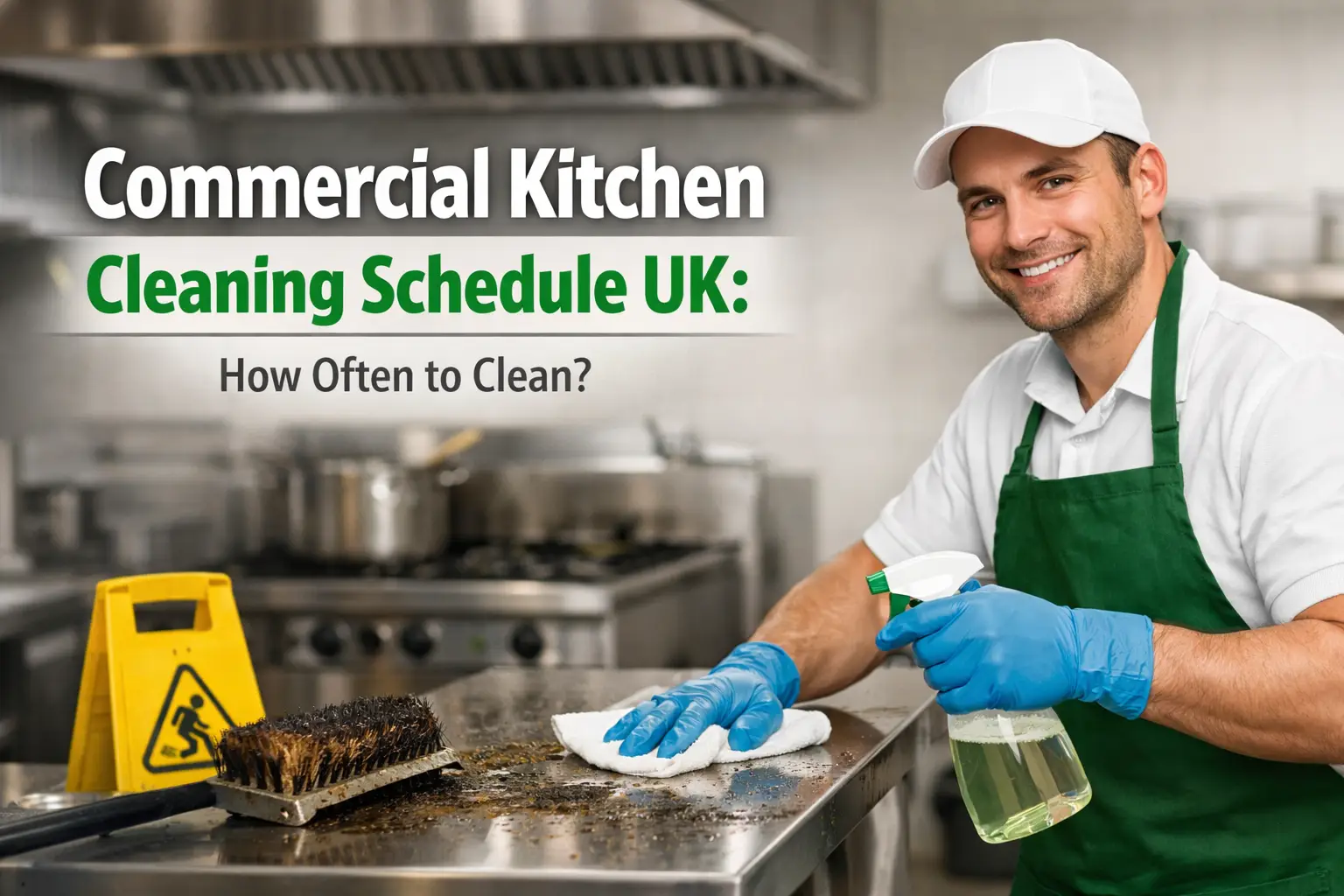
Maintaining a clean, safe commercial kitchen is essential for health, service and inspection readiness.
This guide explains how often UK kitchens should clean, what the guidance implies, and practical daily, weekly and deep-clean tasks to reduce cross‑contamination and support a robust food safety management system.
What the law expects
In the UK, cleaning isn’t optional. Cleaning must be suitable for the risk, applied consistently, and integrated into a HACCP‑based food safety management system. It should cover all potential contamination points, both during service and in between shifts. The aim is to keep hazards under control and demonstrate due diligence in audits and inspections.
Cleaning is not a one‑off task; it must be suitable for risk and consistently applied as part of your food safety management system.
A practical approach is to pair cleaning with your opening and closing checks, so nothing is left unchecked when the kitchen goes from busy to quiet. Records that show who did what and when are essential for environmental health visits and internal reviews.
If you can’t show regular cleaning records, inspectors will question whether controls are truly in place—even if food looks fine.
The FSA two stage clean and disinfect method
Dirt removal first, then disinfection, is essential for the disinfectant to work effectively.
The Food Standards Agency recommends a two‑stage approach: remove visible dirt first, then apply a suitable disinfectant to reduce microorganisms to safe levels. Cleaning and disinfection are distinct steps; one won’t compensate for the other.
- Stage 1: Remove dirt, grease and food debris with an appropriate detergent and thorough wiping.
- Stage 2: Apply a disinfectant as directed on the label, ensuring correct contact time and complete coverage.
Always follow product instructions for dilution, contact time and any required rinsing. Label guidance is there to protect both staff and customers, and to keep high‑risk areas compliant.
The safest procedure is the one that can be followed consistently during a busy service.
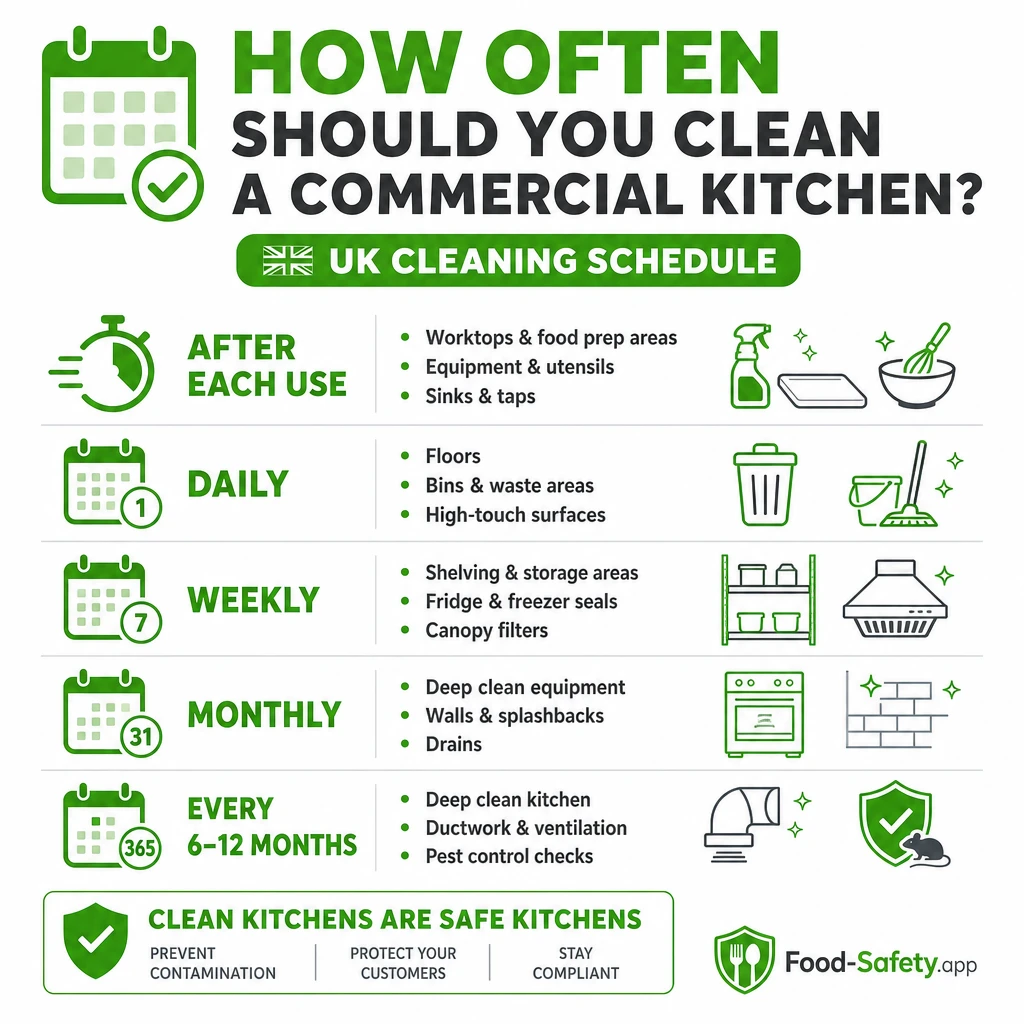
Daily cleaning tasks
End‑of‑shift reset after raw meat prep prevents cross‑contamination between raw and ready‑to‑eat areas.
End‑of‑shift resets after raw meat prep are especially important to prevent cross‑contamination into ready‑to‑eat stations. Daily cleaning should be practical, repeatable and clearly connected to risk. Typical daily tasks include:
- Clean and sanitise food contact surfaces and prep benches, cutting boards, utensils, and equipment exteriors
- Wash and sanitise sinks, taps, and drain areas; dry and air‑wipe
- Wipe door handles, fridge and freezer handles, switches and other touch points
- Sweep and mop floors; manage waste bins and lids
- Remove edible waste from prep areas promptly and discreetly
Situations may require mid‑service wipe‑downs when allergen orders are prepared or when tasks temporarily increase cross‑contamination risk. Keep a simple log or sign‑off for these quick cleans to support traceability.
Weekly cleaning tasks
Weekly focus catches hidden grime and reduces pest risk.
Weekly tasks tackle grime that builds up in less visible places and prepare the kitchen for the week ahead. Focus areas include:
- Fridge seals and shelving; wipe interiors and door gaskets
- Drains, traps and visible piping; clear any blockages or odours
- Extractor surrounds, hoods and fans; remove grease buildup
- Storage areas, shelving and non‑food contact surfaces
- Equipment casings and external housings; check for dust and residue
- Behind and underneath movable equipment when safely accessible
A consistent weekly cadence helps reduce pest risk and keeps equipment functioning more reliably.
Deep clean schedule
Deep cleans should be planned for quieter periods to minimise service disruption.
Deep cleans require removal or relocation of heavy equipment and often fall outside normal service hours. Plan in advance and coordinate with supervision and maintenance. Key areas include:
- Ovens, fryers and hot holding equipment; interior and exterior surfaces
- Ducting, hood interiors, and internal ductwork where feasible
- Behind and under equipment, and hard‑to‑reach corners
- Rarely moved storage units and low‑traffic zones
- Cleaning of high‑risk zones that can’t be practically addressed during daily or weekly tasks
Deep cleans are most effective when scheduled during quieter periods so normal service isn’t disrupted.
Recording and evidence for audits
A simple, signed cleaning rota with dates, areas and initials improves accountability.
Good records demonstrate that cleaning is systematic and traceable. A signed cleaning rota with named tasks and completion times helps accountability. Link cleaning activities to broader checks, defect reports and corrective actions so audits have a clear trail.
- Maintain a central log with date, area, task and initials
- Keep records accessible for environmental health visits and internal reviews
- Use opening and closing checks to confirm completed tasks; escalate issues as needed
Operational focus for compliance includes matching cleaning frequency to risk, keeping high‑risk area records, and clarifying responsibilities for chefs, supervisors and porters.