Concerned about egg safety in your kitchen? This guide explains risks, rules, and how a food safety management system helps UK catering businesses stay compliant.
Table of Contents
- What are the main risks of eggs?
- Are eggs safe to eat raw in the UK?
- How should eggs be stored and handled?
- How do you prevent cross-contamination?
- How does food safety management apply to eggs?
- Common egg safety mistakes to avoid
What are the main risks of eggs?
Eggs are a staple ingredient across catering, but they’re also classed as a high-risk food. The main concern is contamination with bacteria such as Salmonella, which can cause foodborne illness if not controlled properly.
The risk comes from two sources:
- Inside the egg, especially if raw or undercooked
- On the shell, which can transfer bacteria to hands, surfaces, or other foods
Even though UK egg safety has improved significantly, eggs still need careful handling as part of your food safety management approach.
For food businesses, this isn’t just about safety. It’s also about maintaining your food hygiene rating and meeting legal responsibilities.
Are eggs safe to eat raw in the UK?
In the UK, eggs carrying the Lion Mark are generally considered safe to eat raw or lightly cooked, including for vulnerable groups.
This is due to strict controls, including vaccination of hens against Salmonella. You can read more in the official Food Standards Agency guidance on eggs.
However, there are important conditions:
When raw eggs may be acceptable
- Using Lion Mark eggs
- Following a documented risk assessment
- Preparing food for the general population
When eggs must be fully cooked
- Using non-Lion eggs, such as imported or backyard eggs
- Serving high-risk groups without assurance
- When safety controls are unclear
If you’re unsure, using pasteurised egg products is often the safer option.
How should eggs be stored and handled?
Correct storage is essential to reduce risk and maintain quality.
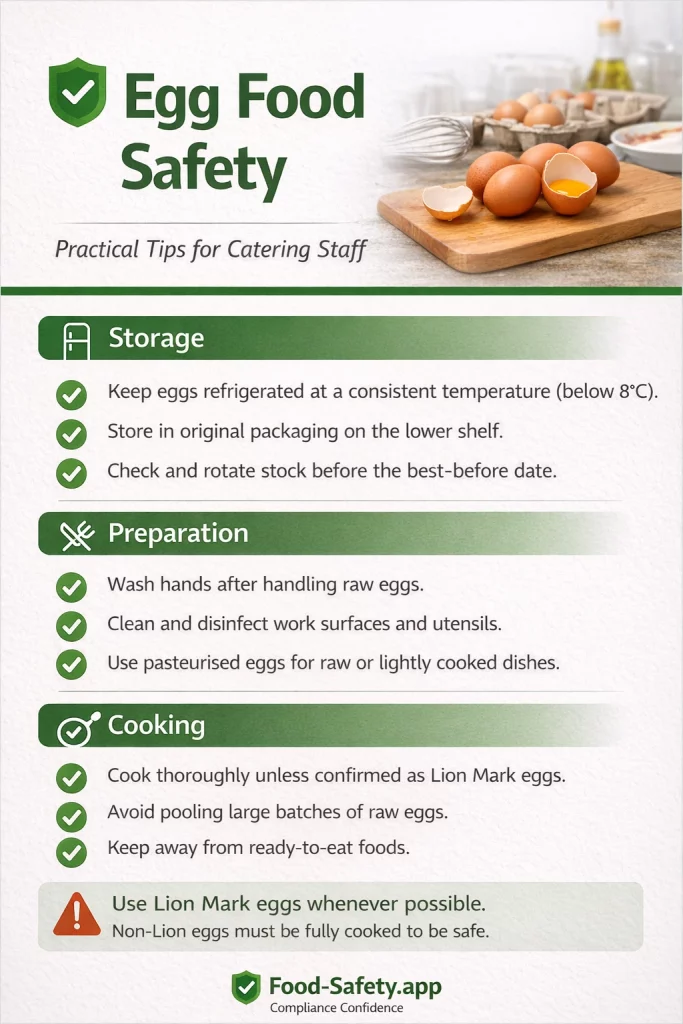
Best practice for egg storage
- Keep eggs refrigerated at a consistent temperature
- Store in original packaging for traceability
- Avoid temperature fluctuations that cause condensation
- Keep away from ready-to-eat foods
Temperature control plays a key role in preventing bacterial growth. Understanding the temperature danger zone helps ensure eggs remain safe throughout storage.
Handling guidance
- Don’t wash eggs before storage, as this damages the shell’s natural barrier
- Check best-before dates and rotate stock
- Discard cracked or visibly dirty eggs
These steps should form part of your daily kitchen routine and be recorded where appropriate.
How do you prevent cross-contamination?
Egg shells can carry bacteria, making cross-contamination a common issue in busy kitchens.
Key prevention steps
- Wash hands after handling raw eggs
- Clean and disinfect surfaces and utensils
- Avoid contact between egg shells and ready-to-eat food
- Use separate equipment where possible
Effective cleaning and cross-contamination controls are essential for compliance and protecting customers.
How does food safety management apply to eggs?
Egg safety should be clearly addressed within your HACCP records and wider food safety management system.
This includes:
- Identifying eggs as a potential hazard
- Setting control measures, such as sourcing Lion eggs and defining cooking standards
- Monitoring storage temperatures
- Keeping records of checks and corrective actions
Many UK businesses follow SFBB (Safer Food Better Business), but managing paperwork manually can be time-consuming.
That’s where digital systems help. Using digital food safety records makes it easier to:
- Track temperature logs
- Record delivery checks
- Document cleaning schedules
- Maintain consistency across shifts
Food-Safety.app is a food safety management system for UK catering businesses designed to simplify these tasks and support compliance without adding extra admin pressure.
Common egg safety mistakes to avoid
Even experienced teams can overlook simple risks when working quickly.
Frequent non-compliance issues
- Using non-Lion eggs in raw dishes
- Poor fridge temperature control
- Cracking eggs directly onto preparation surfaces
- Not washing hands between tasks
- Using eggs past their best-before date
- Failing to document controls in HACCP records
Eggs are also a regulated allergen, so clear communication and procedures are essential. Strong allergen management practices help avoid serious risks to customers.
For broader guidance, the NHS food poisoning advice highlights how easily illness can occur when controls slip.
Conclusion
Eggs are a versatile and widely used ingredient, but they come with specific food safety responsibilities. From sourcing and storage to preparation and record keeping, small details make a big difference.
A clear, consistent food safety management approach helps reduce risk, protect customers, and maintain compliance. Digital tools can support this by keeping records organised, accessible, and easy to manage during busy service periods.
Food-Safety.app is a food safety management system for UK catering businesses that helps teams stay on top of daily checks, simplify HACCP records, and build confidence in their food safety processes.