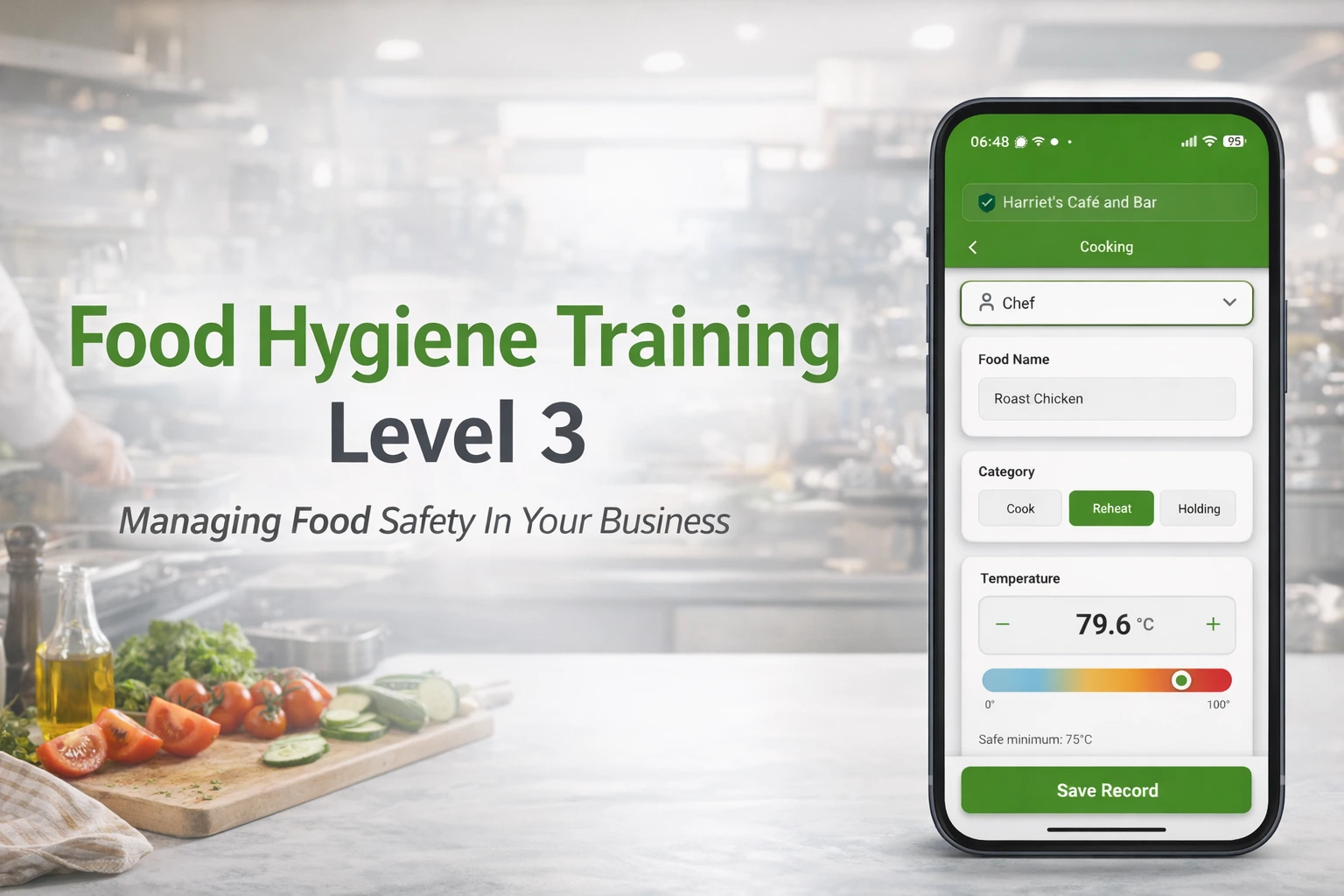
Learn how Level 3 food hygiene training supports food safety management and how Food-Safety.app helps UK catering businesses stay compliant.
Table of Contents
- What is Level 3 food hygiene training?
- What does Level 3 training cover?
- How does HACCP fit into training?
- What are the legal requirements?
- Why does training matter in practice?
- Common food safety training mistakes
- What does good training look like?
What is Level 3 food hygiene training?
Level 3 food hygiene training is aimed at supervisors, managers, and anyone responsible for overseeing food safety in a business.
It focuses on managing risk, not just following instructions. In a busy kitchen, that means making sure staff are doing things properly, spotting issues early, and taking action when something is not right.
UK law does not require a specific qualification, but it does require that staff are properly trained and supervised. Level 3 is widely accepted as the right standard for those in charge of day-to-day food safety management.
Most importantly, it is about competence. Environmental Health Officers will look at what your team actually does, not just the certificates on file.
What does Level 3 training cover?
Level 3 training builds the knowledge needed to run a safe operation and manage others effectively.
Supervising staff and standards
Supervisors are responsible for:
- Making sure staff follow safe working practices
- Monitoring hygiene during service
- Stepping in when standards slip
For example, if a chef skips handwashing during a busy shift, it is the supervisor’s job to correct it immediately.
Understanding hazards in real kitchens
Training covers:
- Bacterial risks from poor temperature control
- Chemical risks from cleaning products
- Physical risks like foreign objects
The key is applying this knowledge in your own setting, whether that is a café, takeaway, or catering kitchen.
The 4Cs of food hygiene
Supervisors must manage the basics consistently:
- Cleaning
- Cooking
- Chilling
- Cross-contamination
If you need a refresher, see what are the 4Cs of food hygiene and how they apply in everyday operations.
Allergen management responsibilities
Handling allergens correctly is a legal requirement.
Supervisors need to ensure:
- Accurate allergen information is available
- Staff can answer customer questions confidently
- Cross-contact risks are controlled
More detail can be found in this guide to allergen management.
Records and checks
Level 3 training explains why HACCP records matter.
Typical examples include:
- Temperature logs
- Cleaning schedules
- Delivery checks
These are not just paperwork. They are proof that your system is working.
How does HACCP fit into training?
HACCP is the foundation of food safety in the UK. It is a legal requirement for all food businesses.
In simple terms, it is about identifying risks and controlling them before they cause harm.
Level 3 training helps supervisors apply HACCP in real life, including:
- Identifying critical control points, such as cooking or chilling
- Checking limits are met, such as safe cooking temperatures
- Taking action when something goes wrong
If you are using Safer Food Better Business, this guide to SFBB explains how it supports compliance.
For official guidance, the Food Standards Agency SFBB guidance sets out what is expected.
What are the legal requirements?
Food hygiene training is directly linked to legal compliance.
Food businesses must:
- Sell food that is safe to eat
- Ensure staff are trained and supervised
- Put in place HACCP-based procedures
- Provide accurate allergen information
- Keep records and ensure traceability
Training helps demonstrate due diligence if something goes wrong.
It also plays a big role in your food hygiene rating. Inspectors look at how well staff understand and follow procedures, not just what is written down.
You can learn more about inspections in this guide to food hygiene rating expectations.
Why does training matter in practice?
Good training makes a real difference in day-to-day operations.
Without it, common issues include:
- Fridges running above safe temperatures
- Raw and ready-to-eat foods being mixed
- Staff giving incorrect allergen information
With proper supervision, these problems are spotted early and corrected before they become serious.
Strong training also helps:
- Protect customers from foodborne illness
- Improve inspection outcomes
- Reduce the risk of enforcement action
Common food safety training mistakes
Many businesses fall into the same traps:
- Treating training as a one-off task
- Relying on certificates instead of real competence
- Not supervising new or temporary staff closely
- Keeping records that do not reflect reality
- Failing to update procedures when things change
These issues can undermine even a well-designed system.
What does good training look like?
Effective Level 3 training is practical and ongoing.
It includes:
- Role-specific instruction for staff
- Hands-on coaching in the workplace
- Regular refreshers and updates
- Clear procedures that staff understand
- Active supervision during service
It is also supported by accurate, consistent records. Many businesses now use digital food safety records to make this easier and more reliable.
Conclusion
Level 3 food hygiene training gives supervisors the knowledge and confidence to manage food safety properly. But training alone is not enough. It needs to be backed up by consistent systems, clear processes, and accurate records.
Food-Safety.app is a food safety management system for UK catering businesses designed to support this in practice. It helps teams manage food safety management, maintain HACCP records, and keep everything organised in one place.
If you are reviewing your current approach, it is worth considering how digital tools could make training, supervision, and compliance easier to manage day to day.