Learn what happens during an EHO inspection and how to prepare, so you can feel confident, organised, and ready to meet food safety standards.
Table of contents
- What is the EHO inspection process?
- What do inspectors check?
- How is a food hygiene rating decided?
- What questions will be asked?
- Possible inspection outcomes
- How to prepare for an EHO inspection
What is the EHO inspection process?
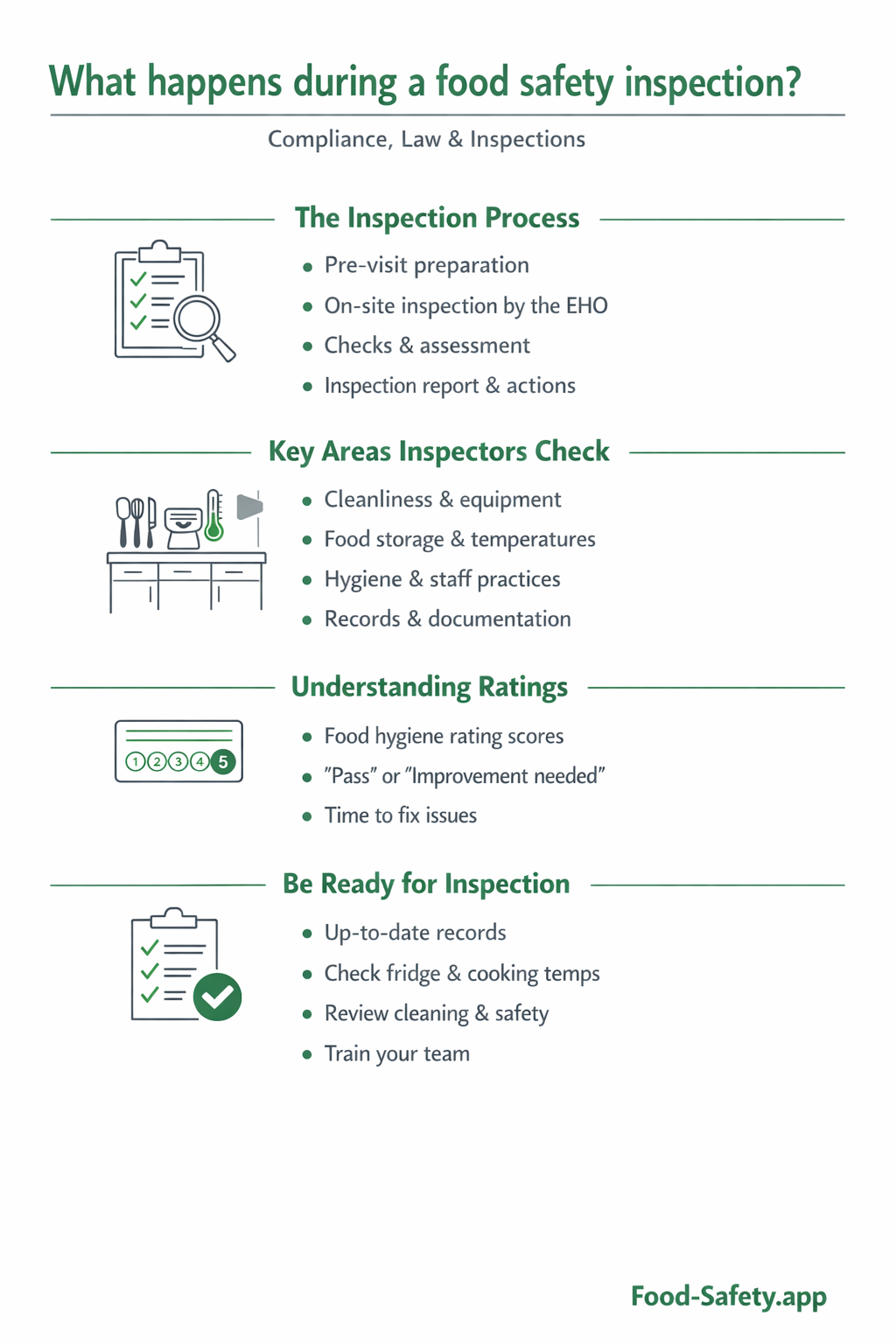
An EHO inspection is usually unannounced and carried out by an Environmental Health Officer to assess how safely your food business operates. The inspector will arrive during normal working hours and begin with a quick overview of your premises. They’ll observe how food is handled in real time, rather than relying only on paperwork. This gives a clear picture of your day-to-day practices, including hygiene standards, staff behaviour, and how risks are managed across your operation.
The visit typically includes a walk-through of food preparation areas, storage spaces, and cleaning facilities. Inspectors will also review your documentation, including HACCP plans and monitoring records. You may be asked questions throughout, and the inspection often ends with immediate feedback. For an overview of official expectations, the Food Standards Agency provides useful guidance on how inspections are carried out.
What do inspectors check during an EHO inspection?
During an EHO inspection, several key areas are assessed to determine whether your business is managing food safety risks effectively. Inspectors focus on practical controls as well as documented procedures. This includes checking food storage temperatures, cleaning standards, and how cross-contamination is prevented. They’ll also assess personal hygiene practices, such as handwashing and protective clothing, which are critical in reducing foodborne illness risks.
- Food storage, preparation, and cooking practices
- Temperature control and monitoring records
- Cleaning schedules and sanitation standards
- Staff training and food safety knowledge
- Allergen management and labelling
- Condition and maintenance of premises and equipment
Understanding core principles like safe temperature control and preventing cross contamination can make a noticeable difference during inspection.
How is a food hygiene rating decided after an EHO inspection?
After the inspection, your business will usually receive a food hygiene rating based on several factors. These include how hygienically food is handled, the condition of your facilities, and how well your food safety management system is implemented. Inspectors are not just looking for written procedures—they want to see consistent, real-world application of those systems across your team and processes.
Scores are typically grouped into categories ranging from high compliance to urgent improvement required. Even small gaps, such as incomplete records or inconsistent cleaning, can affect your rating. This is why maintaining accurate, up-to-date documentation and ensuring staff follow procedures daily is essential for achieving a strong outcome.
What questions will be asked during an EHO inspection?
Inspectors will often ask questions to assess staff understanding and verify that procedures are followed consistently. These questions are usually practical rather than technical. For example, a chef might be asked how they check cooking temperatures, or a manager may need to explain how allergens are controlled. The aim is to confirm that food safety knowledge is applied correctly in everyday tasks.
Common questions may include how you handle food deliveries, what actions are taken if temperatures fall outside safe limits, and how cleaning is monitored. Staff should be able to answer confidently and accurately. If answers don’t match your documented procedures, it can raise concerns about how well your system is implemented in practice.
Possible inspection outcomes
Following an EHO inspection, you’ll receive feedback outlining any issues found and what actions are required. In many cases, businesses will simply be advised on improvements. However, more serious concerns can lead to formal action, including improvement notices or, in extreme situations, closure until risks are controlled. The outcome depends on the level of risk and how quickly issues can be addressed.
Inspectors are generally focused on helping businesses comply rather than penalising them. Clear communication and willingness to act on feedback can positively influence the outcome. Keeping organised records and demonstrating proactive management often reassures inspectors that your business takes food safety seriously.
How to prepare for an EHO inspection
Preparation for an EHO inspection should be part of your daily routine, not something done at the last minute. Consistency is key. This means keeping records up to date, maintaining high cleaning standards, and ensuring staff are trained and confident in their roles. Regular internal checks can help identify issues before they become problems during an inspection.
Using digital tools like Food-Safety.app, a food safety management system for catering businesses, can make preparation easier. Features such as automatic record keeping, cleaning schedules, and temperature logs help ensure everything is inspection-ready at all times. This reduces the stress of inspections and helps you stay compliant without relying on paperwork alone.
Ultimately, an EHO inspection is about verifying that your food safety practices are working effectively. By staying organised, training your team, and maintaining clear records, you can approach inspections with confidence and achieve strong results.