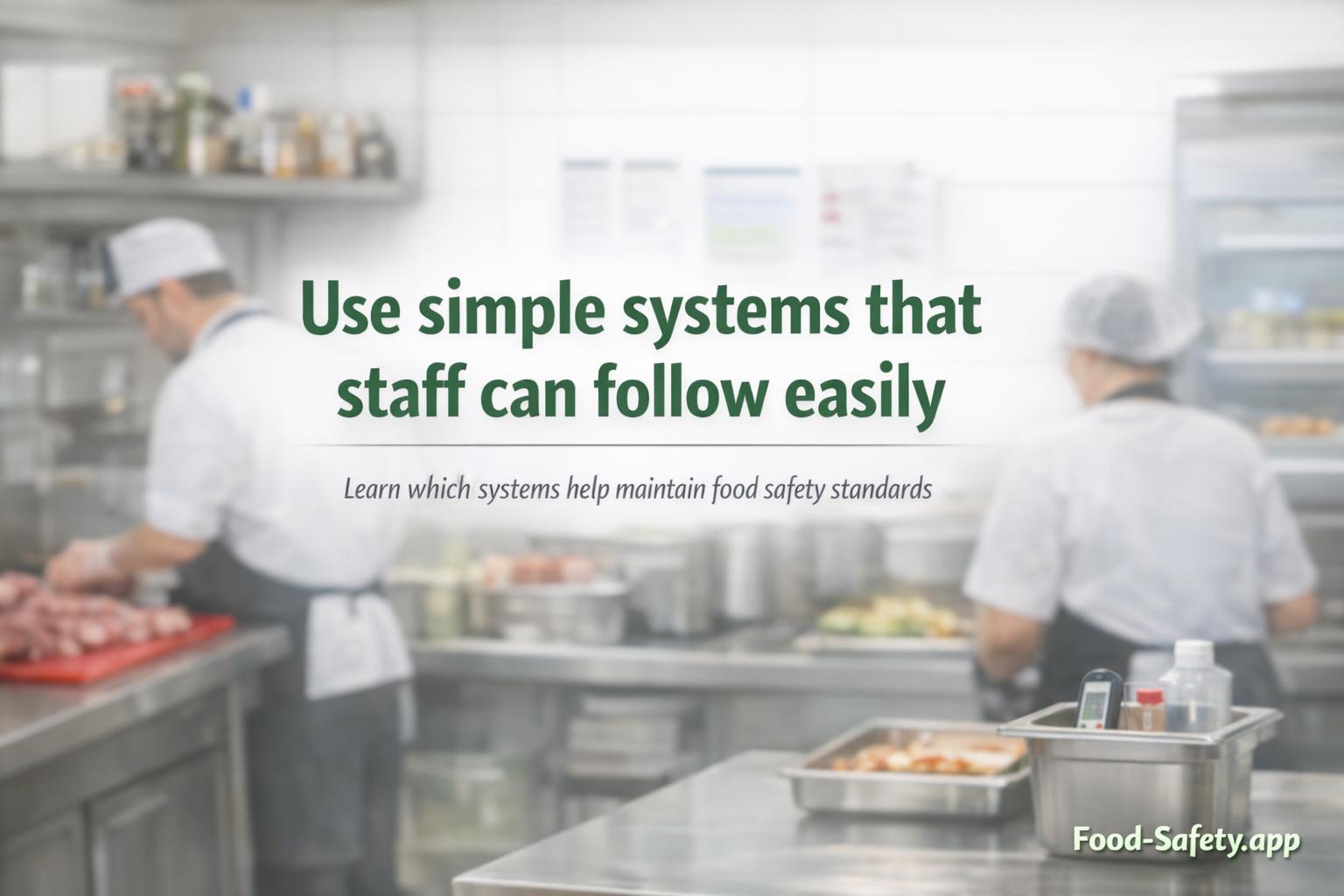
Food safety systems are the routines, checks and records that stop small mistakes turning into customer risk. This guide shows what catering businesses need in place, what records prove control and where systems usually fail when kitchens get busy.
What a food safety system actually includes
A food safety system is not just a folder full of paperwork. It is the full set of controls that help a kitchen receive, store, prepare, cook and serve food safely every day. In practice, that usually includes HACCP-based procedures, delivery checks, chilled storage checks, cooking and reheating controls, cleaning routines, allergen controls, staff training, corrective actions and records that show the checks actually happened.
Good systems are simple enough to use during a busy shift. A chef on breakfast service should know what to do if the milk fridge is reading high. A supervisor on lunch service should know who checks probe calibration, who signs off cleaning and what happens if hot-held soup drops below target. The point is not to create more admin. The point is to make safe decisions easier to repeat.
If you need the wider foundations first, read food safety made simple and UK food safety law explained for everyday practice. Those pages give useful context, but this page focuses on what a working system looks like in day-to-day catering operations.
The 7 core systems most catering businesses need
Most catering businesses do not need a complicated system. They need clear control over the same core risk areas every day.
1. Deliveries and supplier checks
Food safety starts before prep begins. Deliveries should be checked for temperature, packaging condition, date coding and obvious contamination. A real-world example is a café receiving yoghurt and sliced ham at 9:15am after the delivery van has been stuck in traffic. The outer boxes look fine, but the chilled products are warmer than expected. A working system tells staff exactly what to do: check, record, reject if needed and escalate to the manager. This is where deliveries and receipt of food becomes part of your daily control, not just a policy on paper.
2. Temperature control and chilled storage
Fridges, freezers and cold rooms need routine checks because small temperature failures build into bigger problems. In one realistic scenario, a sandwich bar opens on a warm Friday and finds the under-counter fridge at 10°C because the door seal has split overnight. Without an opening check, high-risk fillings could sit there through the morning rush. Clear monitoring linked to the temperature danger zone and how poor fridge checks lead to food safety failures helps staff act before stock becomes unsafe.
3. Cooking, cooling, reheating and hot holding
These are the control points where food can quickly move from safe to risky. A hotel kitchen preparing curry for an evening function might cook it safely at noon, but if the trays are left too deep to cool properly, the danger comes later. The same applies to reheating cooked rice or holding gravy on a service counter for too long. A strong system covers cooking checks, rapid cooling, reheating limits and hot-holding rules, supported by pages like cooling food safely for busy kitchens and the risks with reheating cooked rice.
4. Cross-contamination prevention
Cross-contamination is one of the easiest ways for a good kitchen to fail. It often happens through workflow, not carelessness. Think of a small bistro during prep: raw chicken is trimmed on one board, a member of staff gets pulled to plate salad, and the handwashing step gets missed because service is already starting. Systems need designated storage, clear separation, colour-coded equipment where appropriate and routines that support how cross-contamination happens and how to stop it.
5. Cleaning and chemical control
A clean kitchen is not just about appearances. It is about reducing microbial risk and using chemicals safely. In a real catering unit, a sanitiser bottle with no label left near prep can create confusion fast, especially when agency staff are on shift. A practical system covers what gets cleaned, when, by whom, with what chemical and how this is checked. Supporting pages such as chemical safety and sanitisers and COSHH made simple for food businesses strengthen that control.
6. Staff hygiene, training and supervision
Food safety systems break down when staff are guessing. New starters should know handwashing, illness reporting, protective clothing, allergen awareness and key temperature controls before they are left alone with food. One real-world example is a weekend pop-up using temporary staff: everyone is helpful, but nobody is fully sure when gloves should be changed or where to report diarrhoea symptoms before shift. That is how easy failures start. Build clear routines around why hand washing is so important, personal hygiene in food business and protective clothing and illness.
7. Allergen control, records and corrective action
A food safety system also needs clear communication around allergens and a record of what happened when something went wrong. Imagine a customer asks whether a soup is dairy-free, front of house checks verbally, the garnish is changed, but the base was finished with cream earlier in prep. That kind of gap is rarely caused by one mistake alone. It usually comes from a weak system. Your records should show checks, decisions and corrective action, especially when there is a near miss.
If you want the HACCP side broken down further, link this page with HACCP food safety systems so readers can move from the overview into deeper control planning.
What records prove your system is working
Records are not there to make life harder. They prove that the system is real. The useful records in most catering businesses are opening fridge and freezer checks, cooking and reheating records, cooling logs, hot-holding checks, cleaning sign-off, delivery checks, allergen updates, pest reports, staff training records and corrective action notes.
The important thing is accuracy, not volume. For example, if a fridge shows a high reading at 7:00am and the only note says “checked later”, that record has not really proved control. A better entry would show the reading, what stock was moved, who was informed and whether the unit was taken out of use. That is what inspectors and managers can actually work with.
This is also where paperwork often falls apart in busy kitchens. Logs get backfilled, sheets go missing, and managers only discover recurring issues when an inspection is close. For a deeper look at that problem, link to why food safety paperwork fails in busy kitchens and preparing for official inspections and your food hygiene rating.
Common gaps that cause food safety failures
Most food safety failures do not start with dramatic negligence. They start with small gaps that become normal.
- Checks happen late: the breakfast rush starts, the opening checks are postponed and nobody notices the fridge is running warm until service is underway.
- Records are written after the event: staff remember roughly what happened, but not accurately enough to prove control.
- Responsibilities are vague: everybody assumes someone else checked the buffet hot hold or the allergen folder.
- Menus change but systems do not: a new chicken wrap is added, but the cooling, storage and allergen controls are never updated.
- Training is treated as one-off: new starters get shown something once, then copy whatever the busiest person on shift is doing.
These failures are common because they are operational problems, not theory problems. The best systems are written around the pressure points of real service, not around ideal conditions.
Example of a simple daily food safety workflow
Here is what a practical daily workflow might look like in a medium-sized catering kitchen serving lunch and private events:
- Opening checks at 7:00am: fridges, freezers, probe thermometer, handwash stations, cleaning status from the night before.
- Deliveries at 8:00am: chilled goods checked for temperature, packaging, dates and separation of raw and ready-to-eat items.
- Prep period at 9:00am: allergen ingredients labelled, raw meat kept separate, sanitiser bottles checked and correctly labelled.
- Cooking and service from 11:30am: high-risk foods probed, hot holding monitored, buffet times controlled, leftovers assessed properly.
- Mid-shift corrective action: if the dessert fridge rises above target, stock is moved immediately, the issue is logged and the unit is checked by maintenance.
- Closing checks: cleaning signed off, waste removed, stock covered and labelled, next-day risk notes handed over to the opening team.
This is the kind of structure that keeps standards steady when the kitchen gets busy, when agency staff are covering, or when one experienced team member is off sick.
Paper vs digital systems
Paper systems can work well in small, stable kitchens where the same team follows the same routine every day. The problem is that paper tends to fail under pressure. Sheets go missing, handwriting is unclear, managers cannot spot trends quickly and multi-site oversight becomes difficult.
Digital systems are not automatically better, but they are often easier to manage when you need timestamped checks, cleaner records and quicker visibility of missed tasks. This is the point where it makes sense to introduce Food-Safety.app naturally. If your team is already doing the right checks but paperwork is inconsistent, digital tools can help standardise routines, reduce backfilling and keep records easier to review across shifts or sites.
For readers comparing both approaches, send them to why food safety paperwork fails in busy kitchens and what to do instead. That internal link is more relevant here than a generic product push.
How to review and improve your system
A food safety system should change when the business changes. Review it when you add new menu items, bring in new equipment, switch suppliers, change kitchen layout or see the same issue more than once. A quarterly review is a good baseline, but some risks need attention much faster.
For example, if you reject three chilled deliveries from the same supplier in two weeks, that is not just a delivery issue. It may mean your supplier approval process needs tightening. If handwashing compliance drops every time the kitchen is short-staffed, the problem may be workflow and supervision, not just staff attitude. That is how useful reviews work: they look for patterns, not just isolated mistakes.
If inspection readiness is part of your goal, point readers to what affects your food hygiene rating and preparing for official inspections and your food hygiene rating. Those links make the page more useful and reinforce the wider topic cluster.
Food businesses that stay safe do not rely on memory, good intentions or one experienced person carrying the whole team. They rely on clear systems, practical checks, realistic training, accurate records and regular review. When those parts work together, food safety becomes easier to manage and easier to prove.
If you want one place to manage checks, training, HACCP planning and records, you can try Food-Safety.app for free. By this point in the page, the product fits naturally because the problem has already been explained properly.