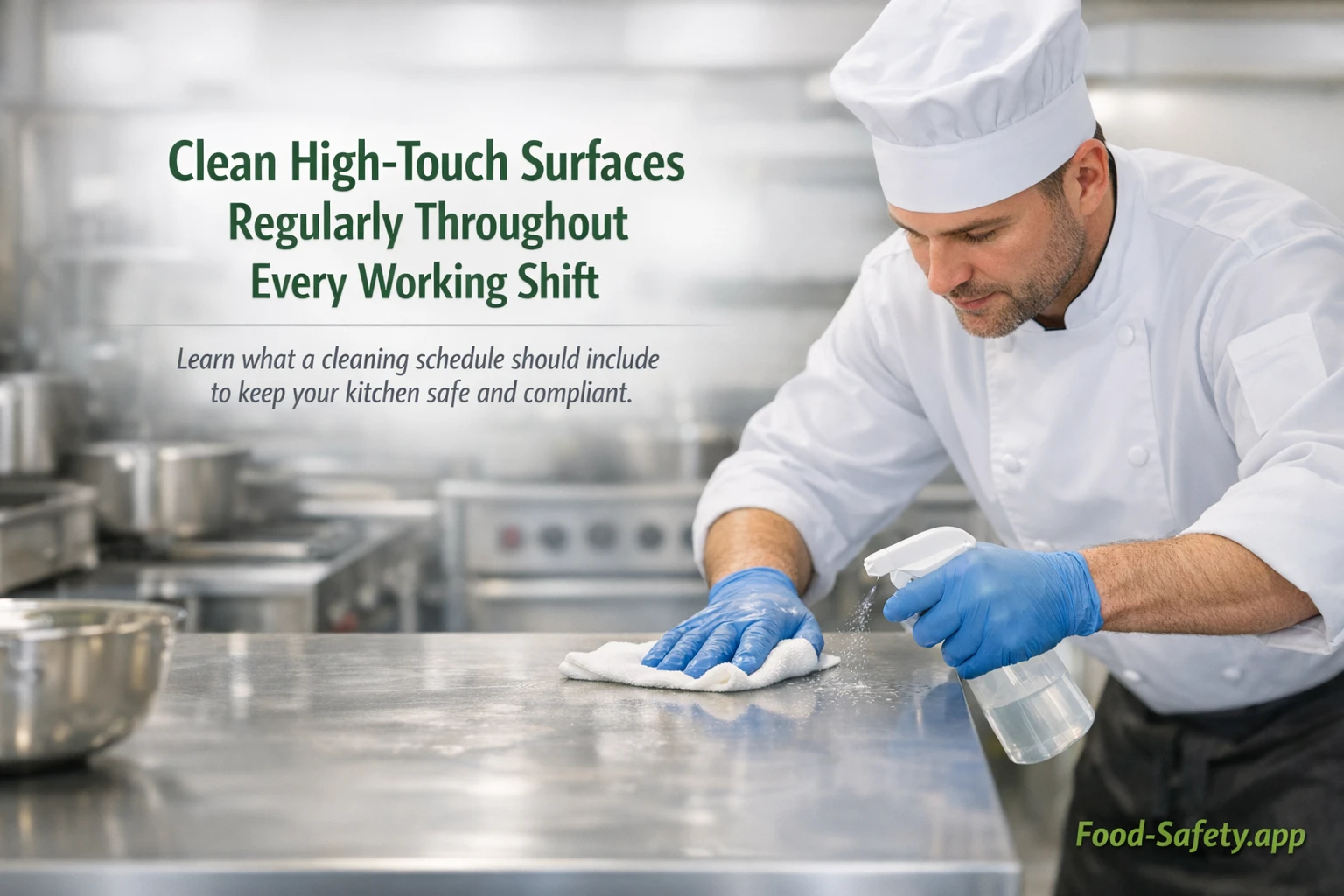
Learn what cleaning schedules should include to keep your kitchen safe and compliant, with clear steps to help you stay organised and inspection-ready.
Table of contents
- Purpose of cleaning schedules
- What tasks should be included
- High-risk areas in the kitchen
- Assigning roles and responsibilities
- Keeping cleaning records
- Digital tracking and management
Purpose of cleaning schedules
Cleaning schedules are a core part of any food safety system, helping businesses maintain hygiene standards and prevent contamination. At their simplest, they set out what needs cleaning, how often, and how it should be done. But beyond that, they provide structure and accountability, ensuring nothing is missed during busy service periods. Regulators and inspectors expect to see evidence that cleaning is planned and consistently carried out, not done reactively.
Well-designed cleaning schedules also support compliance with broader food safety principles such as HACCP. They reduce risks from bacteria, allergens, and physical hazards, while helping staff work more efficiently. For a deeper understanding of how cleaning fits into wider safety systems, you can explore HACCP food safety systems and how they underpin daily kitchen operations.
What tasks should be included in cleaning schedules
A complete cleaning schedule should clearly define every cleaning task required in your kitchen. This includes routine daily cleaning, as well as weekly, monthly, and deep cleaning tasks. Each task should specify what needs to be cleaned, the method to use, and the frequency. Without this level of detail, tasks can be interpreted differently by staff, leading to inconsistent results.
Typical tasks included in cleaning schedules might cover:
- Work surfaces, chopping boards, and utensils after each use
- Cooking equipment such as ovens, grills, and fryers
- Floors, walls, and drains at set intervals
- Fridges and freezers, including handles and seals
- Waste bins and disposal areas
It’s also important to include cleaning chemicals and instructions, ensuring staff use the correct products and contact times. This reduces the risk of ineffective cleaning or chemical contamination. Clear, written procedures make it easier to train new staff and maintain consistency across shifts.
High-risk areas in the kitchen
Some areas in a kitchen carry a higher risk of contamination and should be prioritised within cleaning schedules. These include surfaces that come into direct contact with raw foods, especially raw meat, poultry, and seafood. Cross-contamination risks are particularly high in these areas, so cleaning frequency and methods must be strict and clearly defined.
High-touch points such as fridge handles, taps, switches, and door handles are also critical. These are often overlooked but can spread bacteria quickly between staff and food preparation areas. Similarly, equipment that is difficult to clean, such as slicers or mixers, should be dismantled and cleaned thoroughly according to manufacturer guidance.
Guidance from authorities such as the World Health Organization highlights the importance of maintaining clean food environments to prevent foodborne illness. You can refer to their advice here: https://www.who.int/news-room/fact-sheets/detail/food-safety.
Assigning roles and responsibilities
Cleaning schedules are only effective if responsibilities are clearly assigned. Each task should have a named role or individual responsible for completing it. This avoids confusion and ensures accountability, particularly in larger kitchens where multiple staff work across shifts. Without clear ownership, tasks can easily be missed or duplicated.
Managers should ensure staff are properly trained in cleaning procedures and understand why each task matters. This links closely to broader staff development, which you can explore further through training staff development resources. When staff understand the risks involved, they’re more likely to follow procedures correctly.
Supervision and verification are also important. A senior team member should regularly check that cleaning tasks have been completed to the required standard. This adds an extra layer of assurance and helps identify any gaps in the schedule.
Keeping cleaning records
Accurate record keeping is a key part of demonstrating that cleaning schedules are being followed. Records provide evidence during inspections and help identify patterns or recurring issues. At a minimum, records should show what was cleaned, when it was done, and who completed the task.
Paper-based systems are still common, but they can be difficult to manage. Sheets may go missing, be completed incorrectly, or lack detail. In busy kitchens, it’s easy for records to become a tick-box exercise rather than a meaningful safety tool. This can weaken your overall compliance and make it harder to prove due diligence.
Consistent, well-maintained records not only support inspections but also help businesses review and improve their cleaning practices over time. They allow managers to spot missed tasks, identify training needs, and ensure standards remain high across all areas of the kitchen.
Digital tracking and management
Many food businesses are now moving towards digital systems to manage cleaning schedules more effectively. Digital tools can automate reminders, standardise task lists, and ensure records are completed accurately. They also reduce paperwork and make it easier to access information during inspections.
Using a system like Food-Safety.app, a food safety management system for catering businesses, allows teams to create and manage cleaning schedules alongside other daily checks. Features such as automatic timestamps and inspection-ready records help ensure nothing is missed and provide clear evidence of compliance.
Digital tracking also improves visibility across teams. Managers can quickly see which tasks have been completed and identify any gaps in real time. This is particularly useful for multi-site operations or businesses with high staff turnover. By integrating cleaning schedules into a wider digital system, businesses can strengthen their overall food safety approach while saving time and reducing errors.
Ultimately, effective cleaning schedules are about consistency, clarity, and accountability. When tasks are clearly defined, responsibilities are assigned, and records are maintained, kitchens are better equipped to prevent contamination and meet regulatory expectations. Whether managed on paper or digitally, a well-structured schedule is an essential tool for keeping food safe and operations running smoothly.