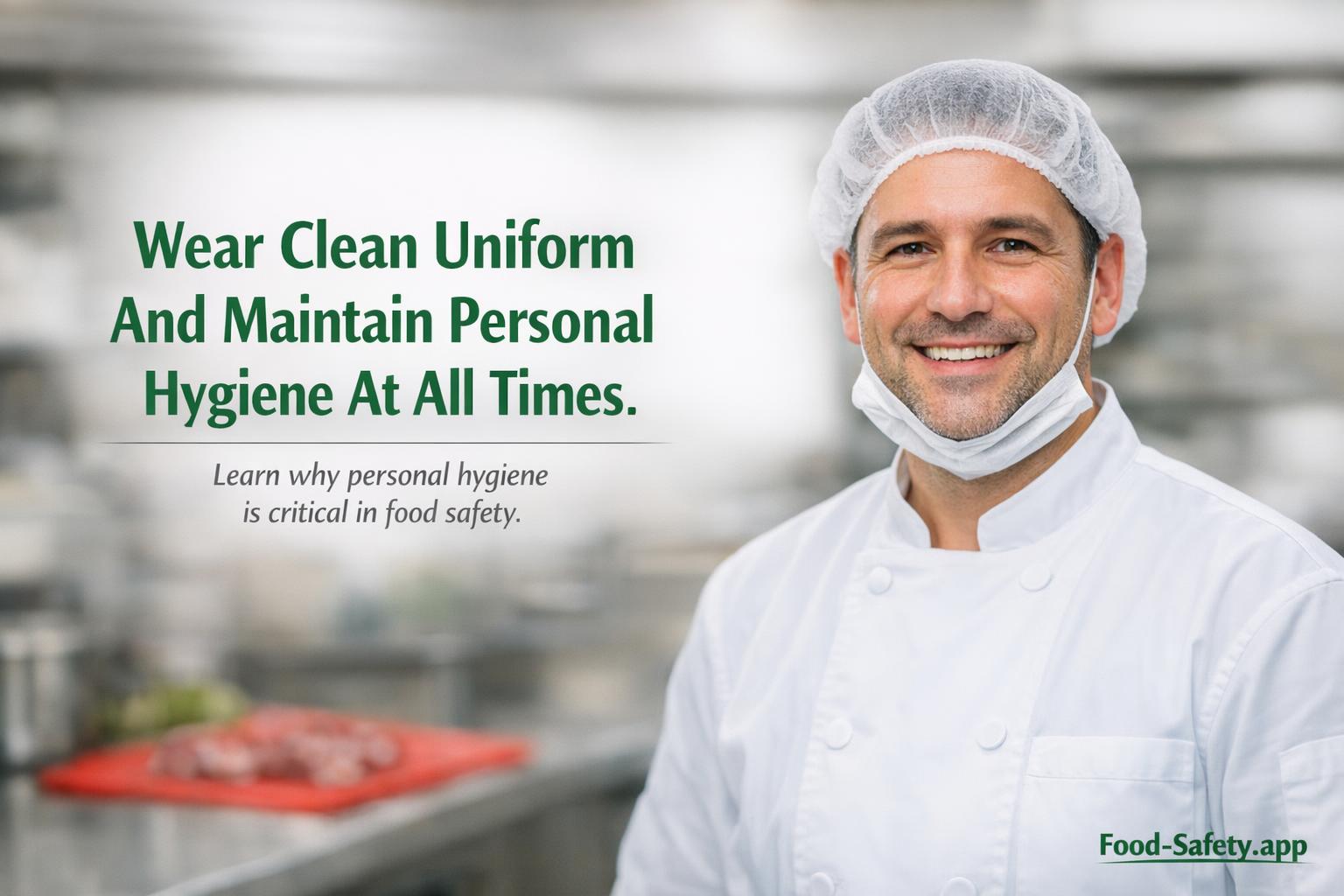
Mastering personal hygiene in professional kitchens: A practical compliance guide
Personal hygiene in food safety is the most effective way to prevent foodborne illness and protect your business reputation. In a professional kitchen, human error is the leading cause of contamination. A single lapse—unclean fingernails, a missed illness report, or a dirty apron—can introduce pathogens like E. coli, Norovirus, or Staphylococcus aureus into ready-to-eat food. By establishing clear routines and high standards, food business operators can ensure safety remains consistent even during the highest pressure of a busy service.
Table of contents
Handwashing protocols for professional chefs
Handwashing is not just a routine; it is a critical control point. In a commercial kitchen, alcohol-based gels are never a substitute for soap and water because they do not remove physical grease or kill certain spores and viruses as effectively as scrubbing.
When handwashing is mandatory
- On arrival at the premises and before touching any food equipment.
- Immediately after handling raw meat, poultry, fish, or unwashed vegetables.
- After touching the face, hair, or clothing.
- After handling waste, cleaning chemicals, or dirty “wash-up” items.
- After taking a break, smoking, eating, or using a mobile phone.
- After using the toilet (the “double wash” rule: once in the staff toilets and again upon entering the kitchen).
The 20-second technique
To be effective, handwashing must follow a specific sequence:
- Wet hands under warm running water.
- Apply liquid anti-bacterial soap.
- Rub palms together, then interlace fingers to clean the gaps.
- Scrub the backs of hands, thumbs, and wrists.
- Clean under fingernails (nails must be kept short).
- Rinse thoroughly.
- Dry with a single-use paper towel.
- Turn off the tap using the paper towel to avoid re-contaminating clean hands.
Managing staff illness and the 48-hour rule
An unwell food handler is a significant biological hazard. Pathogens shed by infected individuals can travel easily through the air or via touch, contaminating large batches of food rapidly.
The 48-hour exclusion rule
Any staff member suffering from vomiting or diarrhoea must be excluded from the food premises immediately. They cannot return to work until they have been symptom-free for at least 48 hours. This is a non-negotiable standard in food safety management.
Reporting requirements
Staff must report the following symptoms to a supervisor before starting their shift:
- Vomiting or diarrhoea.
- Fever or severe sore throat.
- Infected skin sores, boils, or cuts that cannot be completely covered.
- Discharge from the eyes, ears, or nose.
For more on documenting these requirements, see our guide on training records and compliance.
Workwear and personal appearance standards
Uniforms in a professional kitchen serve two purposes: they protect the food from the person and the person from the food. Clean workwear prevents “outdoor” bacteria and physical contaminants from entering the prep area.
Protective clothing rules
- Cleanliness: Always start a shift in a freshly laundered uniform. Change immediately if it becomes heavily soiled with raw juices or dirt.
- Laundering: Ideally, uniforms should be laundered by a professional service or at a high temperature (60°C+) to kill bacteria.
- Changing: Staff should change into their whites at work. Wearing kitchen whites on public transport increases the risk of bringing external contaminants into the kitchen.
- Hair and beards: Hair should be tied back or covered with a net or hat. Long beards should be contained within a beard snood.
Jewellery and nails
- No watches, bracelets, or rings with stones (these hide bacteria and can fall into food). A plain wedding band is usually the only exception.
- No nail varnish or false nails, as these can chip or break off into the food.
Correct use of gloves and blue waterproof plasters
Gloves provide a false sense of security if not managed strictly. They must be treated like a “second skin” and changed as frequently as you would wash your hands.
Glove management checklist
- Always wash hands before putting on a new pair of gloves.
- Change gloves between handling raw and ready-to-eat foods.
- Dispose of gloves after coughing, sneezing, or touching a surface.
- Never wash or reuse disposable gloves.
For a deeper dive into why gloves aren’t a shortcut, read why gloves don’t replace handwashing.
Cuts and dressings
All cuts must be covered with a blue, waterproof plaster. Blue is used because there are no natural blue foods, making the plaster easy to spot if it falls into a dish. If a cut is on the hand, a glove must be worn over the blue plaster for double protection.
Hygiene habits during a busy service
Peak service is when hygiene standards are most likely to slip. Managers should look out for these common “service-critical” mistakes:
- The phone trap: Mobile phones are often more contaminated than a toilet seat. They should never be used in food prep areas. If a chef touches a phone, they must wash their hands immediately.
- Tasting spoons: Always use a clean spoon for tasting. Never use your fingers or double-dip a spoon back into the pot.
- Cloth management: Using the same cloth to wipe a spill and then a plate is a high-risk behaviour. Use disposable blue roll for spills and colour-coded cloths for specific zones.
- Cleaning-as-you-go: Keep the station tidy. A cluttered station leads to cross-contamination between raw ingredients and plated meals.
For guidance on mapping these risks, see our article on hazard analysis in food safety management.
Setting up facilities to encourage compliance
If hygiene is difficult to perform, staff are less likely to follow the rules. A professional kitchen layout should make hygiene the “path of least resistance.”
The ideal handwash station
- Dedicated only to handwashing (never for rinsing veg or stacking dirty spoons).
- Located at the entrance to the kitchen and near high-risk prep stations.
- Equipped with non-hand-operated taps (knee or foot pedals).
- Stocked with liquid soap and disposable paper towels.
- Feature a foot-operated bin to prevent staff from touching the lid.
Corrective actions for hygiene failures
When a hygiene lapse is identified, immediate action is required to prevent a food safety incident. Following a HACCP-based approach helps structure these responses.
| Scenario | Immediate action | Preventative measure |
|---|---|---|
| Staff member seen touching face and then plating food. | Stop the staff member, discard the contaminated plate, and instruct them to wash hands. | On-the-spot retraining and increased supervision during service. |
| A blue plaster is missing from a chef’s finger. | Stop production in that area. Check the food. If the plaster isn’t found, discard the batch. | Mandatory glove use over all plasters; start-of-shift plaster checks. |
| Handwash basin is out of paper towels. | Restock immediately. Use blue roll as a temporary fix if needed. | Add “basin stock check” to the opening and midday manager checklists. |
Summary checklist for managers
- Do a “visual check” of all staff as they clock in (uniform, nails, jewellery).
- Verify that the 48-hour rule is understood and being followed.
- Ensure handwash basins are fully stocked before every service.
- Model the correct behaviour—if the Head Chef skips handwashing, the juniors will too.
Ensuring these standards are met is a daily task. For those managing multiple sites or looking to reduce paperwork, managing kitchen safety standards can be simplified with digital systems that track training and daily checks automatically.