Learn why supervision is key to maintaining food safety. Strong food safety supervision helps teams stay compliant, reduce risks, and protect customers every day.
Table of Contents
- The role of supervision in food safety
- How food safety supervision supports monitoring
- Why leadership matters in food safety supervision
- Building safe habits through supervision
- The importance of checks and verification
- Continuous improvement through supervision
The role of supervision in food safety
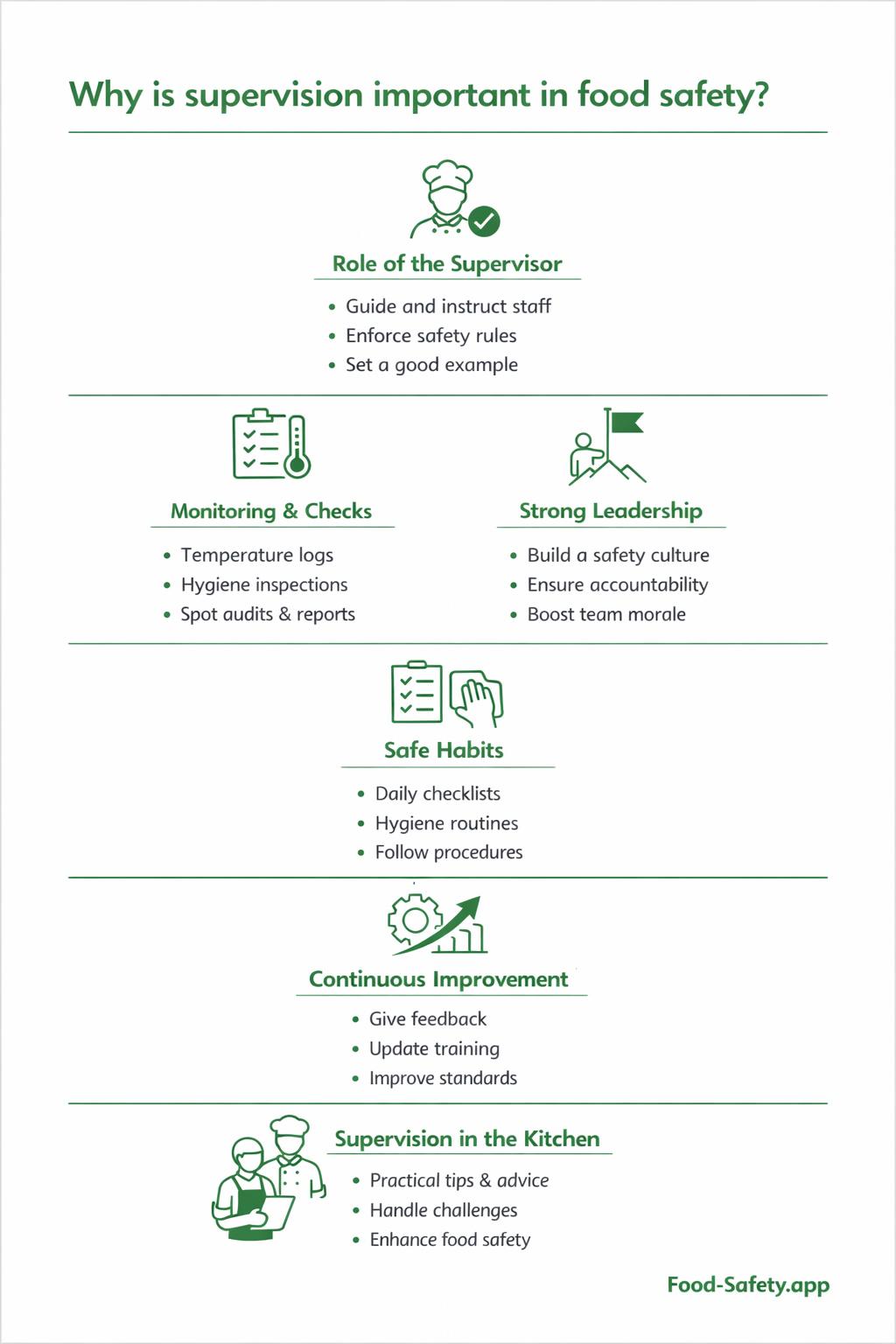
Food safety supervision plays a central role in making sure procedures are followed correctly and consistently. It’s not just about oversight—it’s about actively guiding staff to work safely. Supervisors help translate policies into daily actions, ensuring that tasks like cleaning, temperature control, and food handling are carried out properly. Without supervision, even well-trained staff can overlook steps, especially during busy periods. Clear supervision helps reduce human error and supports compliance with recognised standards such as HACCP, which you can explore further through HACCP food safety systems.
How food safety supervision supports monitoring
Monitoring is a key part of any food safety system, and effective food safety supervision ensures it actually happens. Supervisors check that critical control points are being tracked, such as fridge temperatures, cooking times, and cleaning schedules. This helps identify risks before they become serious problems. For example, spotting a fridge running above safe temperatures early can prevent food spoilage and potential illness. Supervisors also ensure records are accurate and up to date, which is essential for inspections and accountability.
Using digital tools like Food-Safety.app, a food safety management system for catering businesses, can make monitoring easier. Supervisors can review real-time records, track issues, and ensure corrective actions are completed without relying on paperwork alone.
Why leadership matters in food safety supervision
Good supervision is closely linked to strong leadership. Supervisors set the tone for how seriously food safety is taken in the workplace. When leaders demonstrate good practices—like proper handwashing or correct storage—staff are more likely to follow. On the other hand, poor leadership can lead to shortcuts and unsafe habits becoming normal. Effective supervisors communicate clearly, provide feedback, and address issues quickly. This creates a culture where food safety is part of everyday operations, rather than an afterthought.
Leadership also involves understanding legal responsibilities. According to the World Health Organization, safe food handling is essential to prevent foodborne illness globally, reinforcing the need for strong oversight at every level of a food business.
Building safe habits through supervision
One of the biggest benefits of food safety supervision is the development of consistent, safe habits among staff. Repetition and reinforcement help turn procedures into routine behaviour. Supervisors play a key role in correcting mistakes early and reinforcing good practices. For example, regularly reminding staff to avoid cross-contamination or to label food correctly helps embed these actions into daily routines. Over time, this reduces reliance on memory and lowers the risk of errors during busy service periods.
Supervision also supports training by ensuring that what staff learn is actually applied in practice. This is particularly important in fast-paced environments where new team members may need guidance to meet standards quickly.
The importance of checks and verification
Checks are essential in verifying that food safety systems are working as intended. Food safety supervision ensures that these checks are not skipped or completed incorrectly. Supervisors review records, inspect work areas, and confirm that procedures are followed consistently. This includes verifying cleaning standards, checking allergen controls, and ensuring temperature logs are accurate. You can learn more about managing risks like contamination through cleaning, hygiene, and cross-contamination.
- Daily opening and closing checks
- Equipment and temperature verification
- Review of cleaning schedules
- Spot checks on staff practices
These checks provide reassurance that systems are effective and help identify areas needing attention before they escalate.
Continuous improvement through supervision
Food safety supervision isn’t just about maintaining standards—it’s also about improving them. Supervisors can identify patterns, recurring issues, and opportunities to enhance processes. For instance, if temperature deviations happen frequently, it may highlight a need for equipment maintenance or staff retraining. Regular review and feedback help businesses adapt and strengthen their food safety systems over time.
Digital systems can support this by providing clear records and trends, making it easier to spot risks and take action. Continuous improvement not only helps with compliance but also builds customer trust and protects the business reputation.
Ultimately, food safety supervision ensures that standards are not just written down but actively followed. It connects training, monitoring, and daily operations into a consistent approach that keeps food safe and businesses running smoothly.