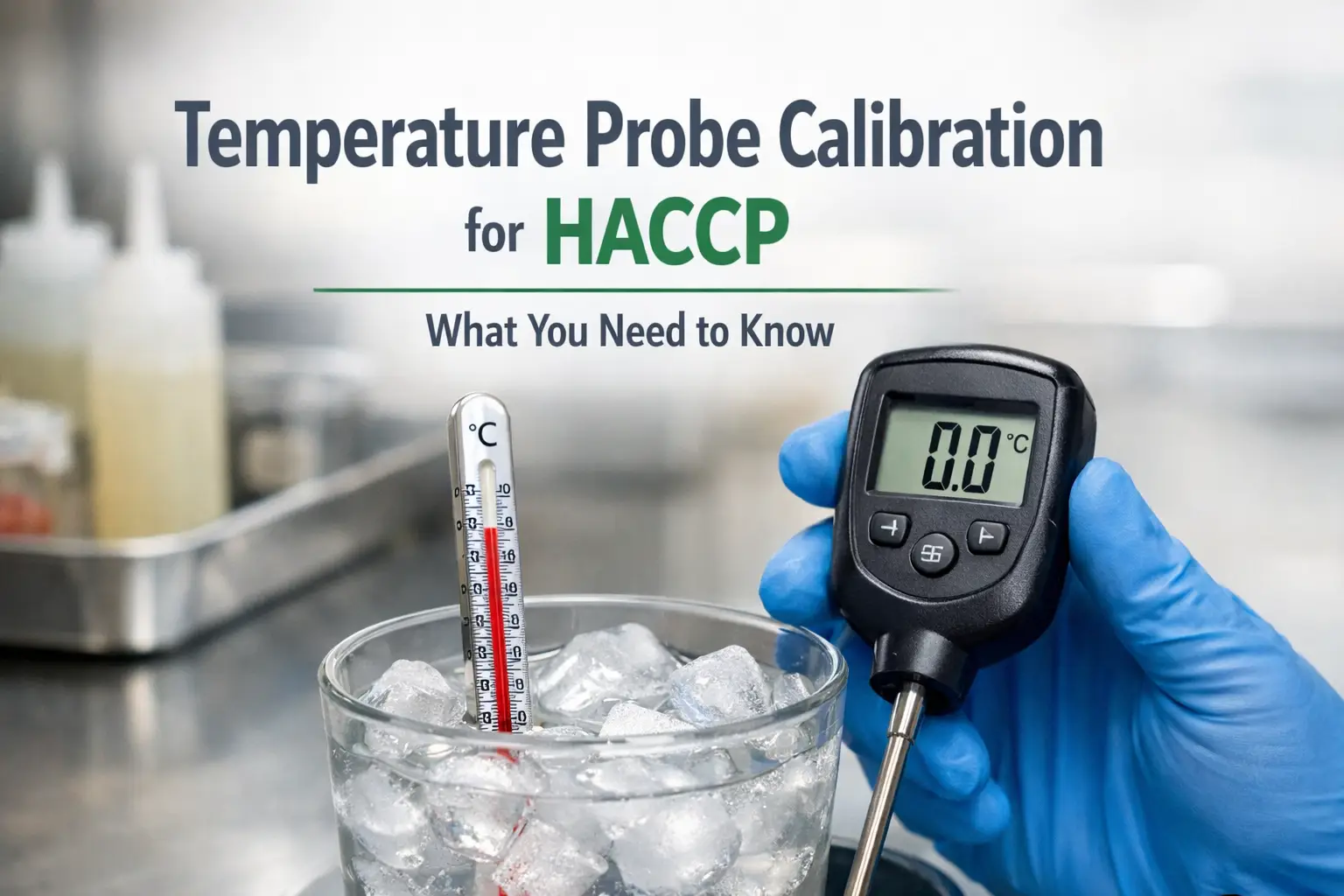
Calibrated temperature probes are a cornerstone of credible HACCP records in catering. This guide explains why calibration matters, how a simple check supports accurate temperature control, and how to embed a practical routine into opening or service. You’ll learn when to calibrate, a straightforward method, what to record, and how frontline staff keep probe accuracy front and center during busy service.
What calibration proves
A reliable reading is the backbone of timely corrective actions and accurate monitoring throughout service.
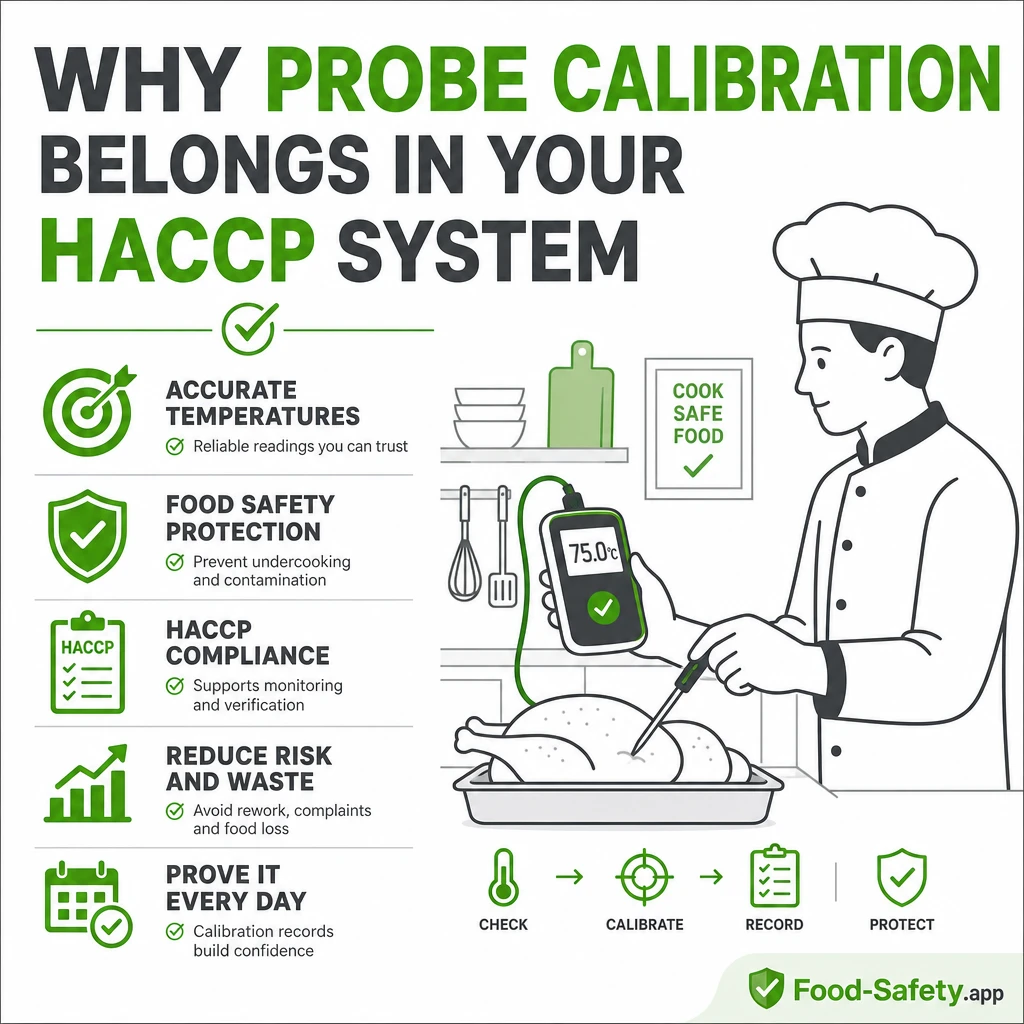
Calibration demonstrates that the probe is accurate, that temperature readings can be trusted for critical HACCP decisions, and that your monitoring records are defensible during inspections. It isn’t a one-off checkbox; it supports ongoing decisions about cooking, cooling, reheating and hot holding. A documented calibration establishes a baseline and a traceable history for audits.
Calibration also helps separate measurement quality from cooking results. Even a correctly cooked dish can become unsafe if a faulty probe reports a dangerous temperature as safe. With a consistent calibration program, you’re less likely to miss a storage or chilling issue that could compromise safety.
When to calibrate
Calibration should be planned and performed as part of your HACCP routine. Use a simple rule: calibrate on a set schedule, before periods of peak service, after cleaning or maintenance, after any impact or drop, and whenever readings seem inconsistent with expected temps.
- On a set schedule (for many small operations, weekly or monthly is practical).
- Before busy service periods to ensure the day starts with trustworthy readings.
- After a thorough cleaning or equipment maintenance, when probes may have been disturbed.
- After a drop, bump, or any impact that could shift sensor position.
- When readings drift or disagree with the known standard by more than your established tolerance.
Regular calibration keeps your monitoring program reliable, even when staff are rushed.
If your operation varies seasonally or by site, adapt the cadence but keep a single, shared standard process across teams to avoid missed checks.
Simple calibration method
Choose one consistent method and document the result. The two common, simple checks use known reference points: an ice-water bath near 0°C and a boiling-water reference near 100°C at sea level. Note: boiling-point can shift with altitude, so use the sea-level reference if your staff frequently works at home or in flat regions; otherwise, adjust your expectation accordingly.
Ice-water check (0°C reference)
- Fill a clean container with ice and add cold water to create a slush near 0°C.
- Insert the probe sensor into the ice bath, ensuring the sensing tip is submerged and not touching the container.
- Wait 1–2 minutes, then read and record the temperature.
- Compare to the known standard and decide if the reading falls within your internal tolerance. If not, follow your corrective action.
Boiling-point check (100°C reference at sea level)
- Bring a clean kettle or pot of water to a rolling boil.
- Submerge the probe as above and wait 1–2 minutes for stabilization.
- Read, record, and compare to the reference. Remember altitude affects the boiling point, so adjust expectations if you’re not at sea level.
Use one consistent method; mixing methods leads to confusion in records.
Document the method used, the environment (e.g., ambient air temperature), and whether the probe was fully calibrated or merely checked. If the probe fails the check, treat it as out of service and start the corrective action immediately.
Recording results
Keep a clear, tamper-evident record of every calibration check. Each entry should include enough detail to reproduce the check and justify any action taken. Key data to capture:
- Date and time
- Probe ID or location
- Reading (°C or °F)
- Reference method used (ice-water or boiling-point)
- Pass/Fail status and any adjustment or action
- Person completing the check
A practical way to log this is a compact log sheet or a digital record with fields for each data point. The aim is to make the record easily auditable and traceable.
| Date | Probe ID | Reading (°C) | Result / Adjustment | Completed by |
|---|---|---|---|---|
| 2026-08-26 | P-01 | 0.0 | Pass; no adjustment | J Smith |
A clean, timestamped log makes audits straightforward and reduces misinterpretation.
In day-to-day use, keep calibration records alongside other HACCP monitoring records so inspectors can see a complete picture of how you verify critical controls. If you’re managing multiple sites, a standardized form or digital template helps ensure consistency.
If you’re looking for a practical way to manage all calibration records, consider centralising them in a simple system that timestamps and stores the full history. For teams seeking an integrated solution, Food-Safety.app offers logging for probe calibration, straightforward corrective actions, and the ability to export PDFs for audits or inspections. It also supports offline use and automatic timestamps, helping busy kitchens stay compliant without added admin.
Food-Safety.app can help you log probe calibration records, store full history, and export PDFs for audits or inspections. This fits neatly with broader HACCP tools and corrective actions logs for stronger compliance documentation.
What to do if it fails
When a calibration check fails, act quickly and systematically. The goal is to protect safety while maintaining accurate records.
- Remove the probe from use and label it as out of service until fixed.
- Decide whether to repair the probe or replace it with a known-good unit.
- Re-test after the corrective action to confirm the issue is resolved.
- Record the corrective action taken, including date, time, and the person responsible.
- If repeated failures occur, escalate to a supervisor and consider updating your calibration schedule or equipment.
If a probe fails, escalate promptly and document every step taken.
A fail-safe approach is to have spare probes available and a known repair channel, so service isn’t interrupted. Also, review recent service conditions to identify whether a temporary bug or recurring drift is at play.
Staff habits to improve
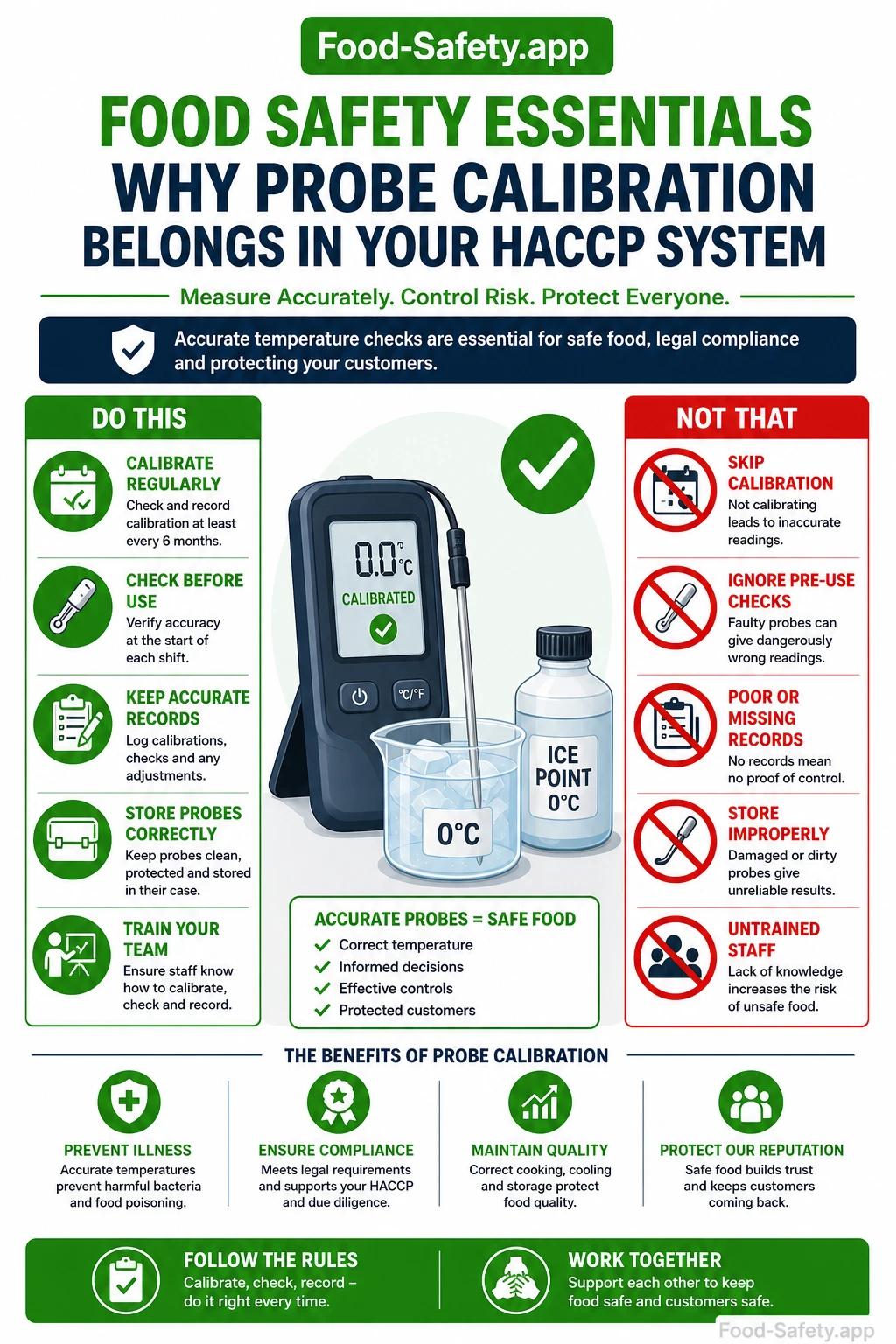
Building a culture of consistent calibration starts with small, daily habits. Integrate calibration into routine tasks so it becomes second nature, not a special project.
- Daily visual checks: inspect probes for cracks, lead wear, or weathering that could affect readings.
- Proper storage: keep probes dry, clean, and protected from impact when not in use.
- Cleaning between uses: sanitize probes between use pairs and ensure the sensing tip isn’t left in a contaminated location.
- Calibration as part of opening routines: schedule a quick check before service begins and log it in the same place every day.
- Use one standard process across sites: avoid multiple methods; consistency aids training and audits.
- Keep calibration records accessible: ensure the log is filed where staff can easily reference it during service or an inspection.
Practical scenarios
- A chef uses a probe to check temperatures before cooling freshly cooked rice for service, confirming rapid cooling targets are met.
- A supervisor checks a fridge probe after a busy delivery day, ensuring the unit remained within safe storage temperatures.
- A catering team spots a probe that reads higher than the ice-water test and removes it from service to prevent unsafe readings.
- A mobile kitchen or school canteen keeps calibration records ready for inspection, even when offline.
Calibration is a practical habit, not a paperwork burden. A simple routine often saves more time than it costs.
As you adopt these habits, you’ll see clearer HACCP monitoring results, improved confidence during inspections, and safer food across your service. Calibration supports accurate cooking, cooling, reheating, and hot holding records by ensuring the measurement tools themselves are trustworthy.
If you’re looking for a practical way to manage all calibration records, consider centralising them in a simple system that timestamps and stores the full history. For teams seeking an integrated solution, Food-Safety.app offers logging for probe calibration, straightforward corrective actions, and the ability to export PDFs for audits or inspections. It also supports offline use and automatic timestamps, helping busy kitchens stay compliant without added admin.
Food-Safety.app can help you log probe calibration records, store full history, and export PDFs for audits or inspections. This fits neatly with broader HACCP tools and corrective actions logs for stronger compliance documentation.