
Knowing which ingredients must be labelled and communicated is essential for safer menus and compliant service.
This guide covers the 14 regulated allergens in the UK, where they most often appear in everyday catering, and practical controls for labelling, communication and cross-contact. You’ll find real‑world examples, a concise compliance checklist and tips to keep menus accurate as recipes and suppliers change.
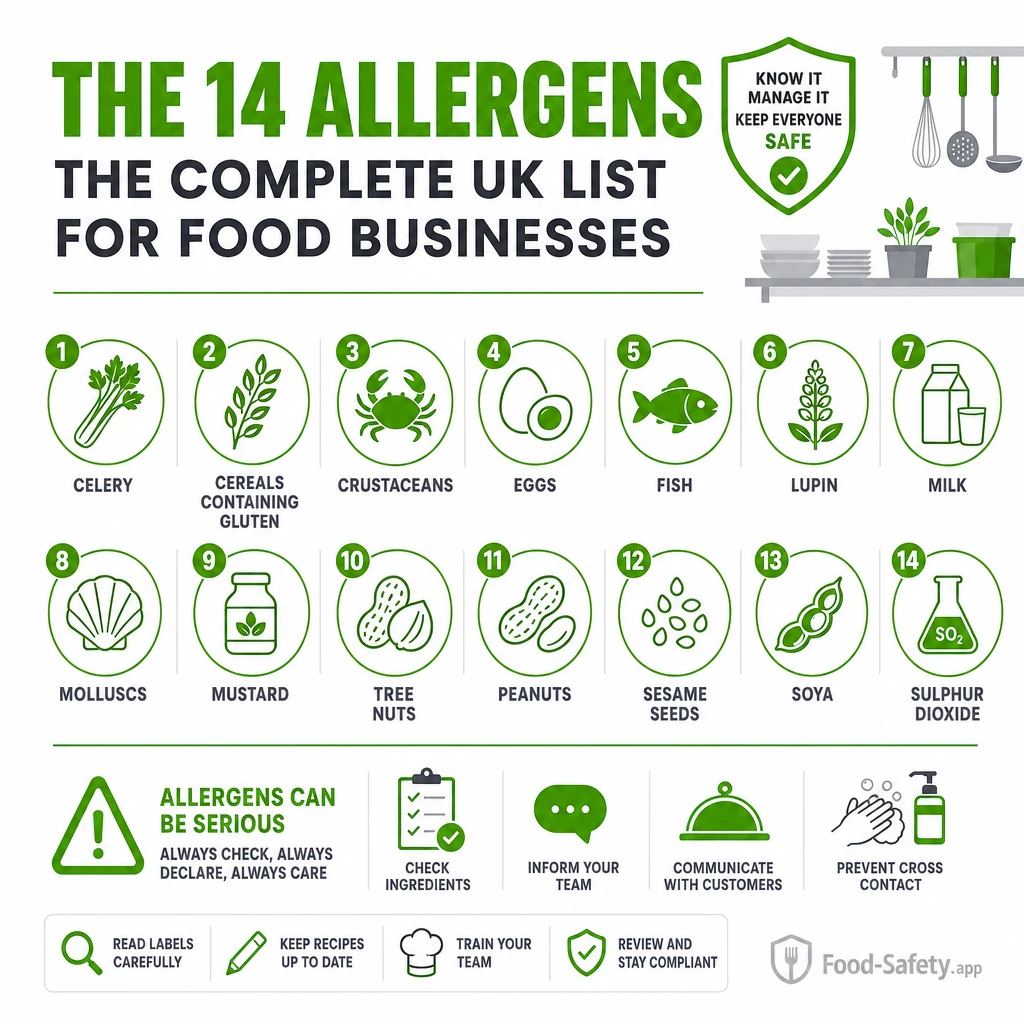
The 14 Regulated Allergens in the UK
Important: Even when an allergen isn’t obvious in the finished dish, it may be present via additives or cross‑contact. Always verify with supplier declarations and keep records.
The UK regulates a standard list of allergens that must be considered in every kitchen. The items are:
- Celery
- Cereals containing gluten (wheat, rye, barley, oats, etc.)
- Crustaceans
- Eggs
- Fish
- Lupin
- Milk
- Molluscs
- Mustard
- Peanuts
- Sesame
- Soybeans (soya)
- Sulphur dioxide and sulphites
- Tree nuts
Allergen management isn’t just about what’s listed on a label. It also means understanding where those ingredients might hide in stocks, sauces and ready‑to‑eat items, and preventing cross‑contact during preparation, service and storage.
Common Places Where Allergens Appear in Catering
Cross-contact risk increases when multiple dishes share prep equipment or storage space, especially in busy services.
Allergens can show up in surprising places. Planning for what’s typical helps reduce risk.
In sauces and dressings
Mustard and dairy commonly appear in mayonnaise, gravies, curry sauces and ready‑made dressings. Gluten can hide in thickeners or flour-based roux.
In baked goods, desserts and pastry
Nuts, sesame and milk frequently show up in cakes, mousses, fillings and toppings; eggs are common in many batters and custards.
In drinks, garnishes and stock
Sulphites are sometimes present in wines or preserved products; sesame or celery may appear in spice mixes or stock bases.
Ingredient Labelling, May Contain and Cross-Contact
If a product carries a “may contain” warning, staff should treat it as a potential risk and offer alternatives or introduce explicit controls.
Understanding the terminology helps you design safer controls.
- Ingredient presence: The allergen is an ingredient in the product.
- May contain: The product could contain traces of the allergen due to shared facilities or lines; this is a precautionary statement.
- Cross-contact: The allergen could be transferred to a product through contact with equipment, surfaces or handlers.
In practice, you should not rely on a “may contain” warning as the only safety net. Use clear controls and choices for customers, including alternatives or verified safe options.
When recipes change, supplier swaps occur or specials are introduced, reassess whether the allergen statements remain accurate. A single ingredient change can alter the risk picture for several dishes.
Communicating Allergen Information: Labelling, Menu and Verbal Advice
Clear, consistent allergen information improves safety and customer trust.
Clear communication is essential for guest safety and for confidence in your service.
- Prepacked foods: Allergen information must be declared in the ingredient list or in allergen labeling on the packaging. This helps guests identify risks before purchase.
- Non‑prepacked foods: Provide oral information, signage or digital menus with allergen details. Train staff to answer consistently and precisely.
- Menu information and updates: Keep menus current when recipes or suppliers change. Record any allergen changes and communicate them to food handlers and front‑of‑house staff.
- Verbal advice: Staff should confirm statements with guests when unsure and avoid assumptions based on appearance or flavour.
Documentation and routine checks support this. A simple allergen matrix that maps each dish to its known allergens helps front of house and kitchen staff stay aligned, especially during busy periods.
Practical Safety Scenarios and How to Manage Them
Reuse of utensils between allergen and non‑allergen foods is a common cause of exposure; dedicate equipment or implement strict cleaning protocols.
Real‑world scenarios illustrate common risks and practical controls.
-
Soup thickened with flour and finished with cream
- Potential allergens: gluten from flour; dairy from cream. Controls: use separate thickeners for gluten‑free versions; label soups clearly; wipe and change utensils between batches.
-
Dessert containing nuts, milk and eggs from a shared prep area
- Potential allergens: tree nuts; dairy; eggs. Controls: dedicated preparation area for nut‑containing items; clean equipment thoroughly; avoid shared bowls and spatulas.
-
Curry using mustard, celery and sulphites in sauces or stock
- Potential allergens: mustard; celery; sulphites. Controls: check all stock and sauces for allergen content; have a mustard‑free curry option; separate ladles and pans.
-
Sandwich counter with gluten, sesame and egg across multiple items
- Potential allergens: gluten; sesame; eggs. Controls: separate bread, spreads and fillings; colour‑code boards; dedicated tongs and knives.
-
Reusing utensils, boards or frying oil between allergen and non‑allergen foods
- Potential hazards: cross‑contact via surfaces or oil. Controls: colour‑coded utensils and dedicated fryers; routine cleaning between batches; staff training on transfer risks.
These scenarios show why written controls, staff training and ongoing verification matter. Real‑world risk always changes with menus, suppliers and service formats.
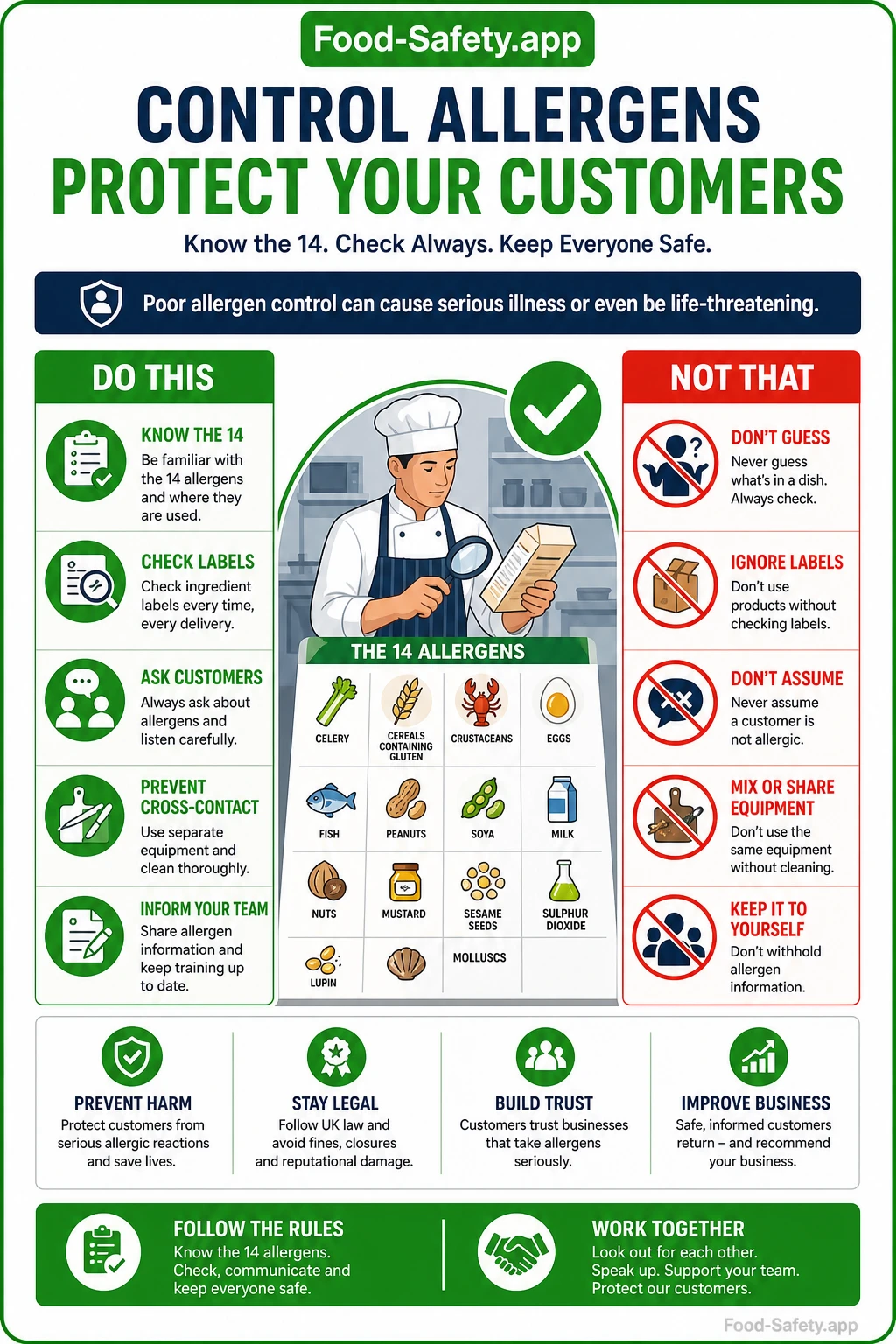
A Practical Allergen Compliance Checklist for Kitchens
The safest procedure is the one that can be followed consistently, even on busy days.
Regular reviews are vital. When a supplier changes a formulation or a menu item is updated, revisit your allergen declarations and customer communications. Keeping documentation accessible helps staff and managers act quickly and confidently.
If you’re looking for a straightforward way to manage this day‑to‑day, consider a simple central record where every menu item links to its allergen profile, supplier notes and staff training status. Consistency is the core of safer service.