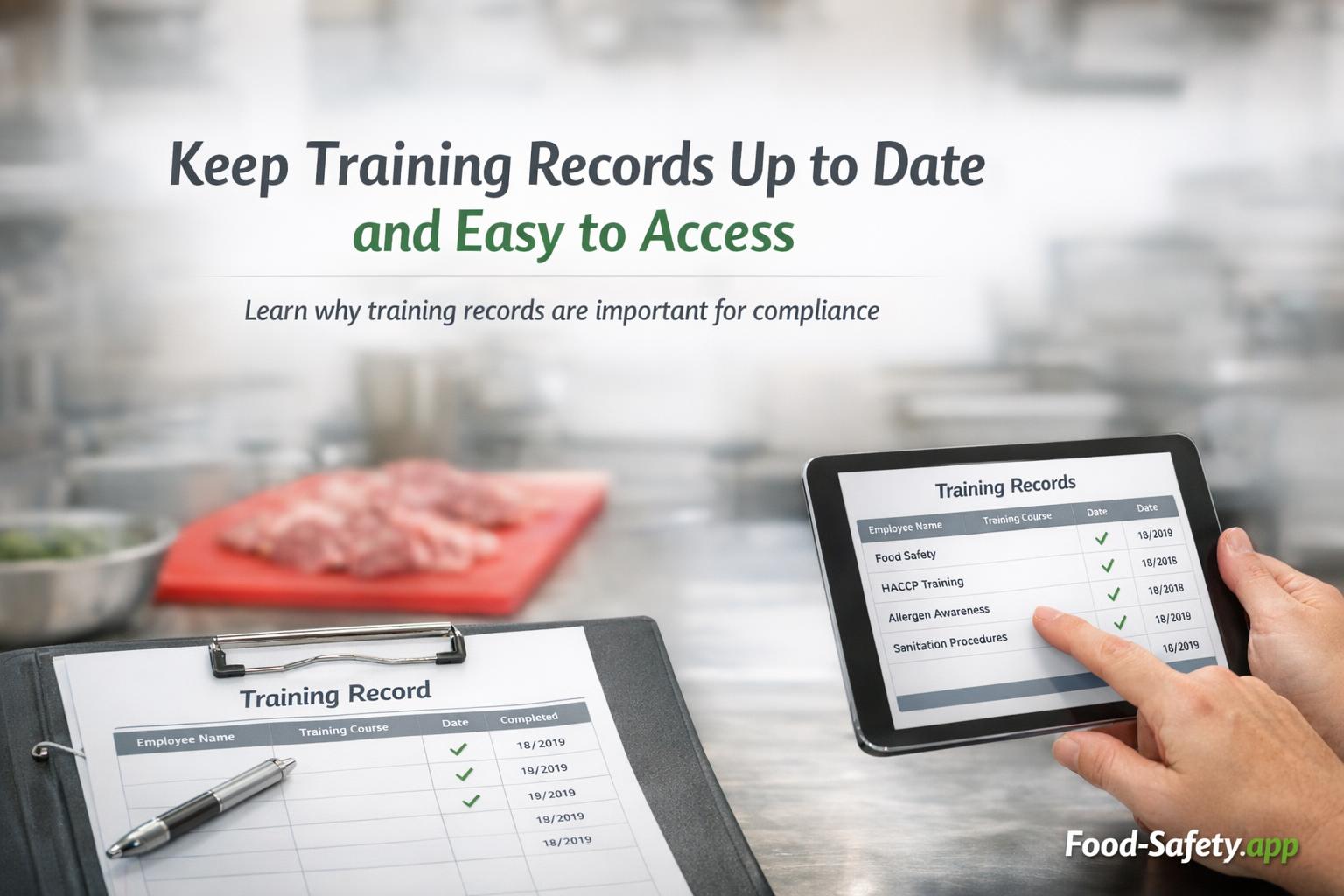
Learn why training records are important for compliance. Keeping staff training records helps protect your team and gives you peace of mind.
Why staff training records matter
In a busy kitchen, training can be easy to forget once service starts. That’s why staff training records are so valuable. They show who has been trained, what they were trained on, and when it happened. For a catering business, this matters because food safety depends on people doing everyday tasks correctly, from handwashing and allergen control to cleaning and temperature checks. Good records also help managers spot gaps before they become problems, such as a new starter handling chilled food without enough supervision.
Training records are also useful when staff move between roles, work across sites, or cover shifts at short notice. A front-of-house team member may suddenly need to support packing, labelling, or allergen queries, and you need to know whether they’ve been shown the right procedures. If an incident does happen, records help you demonstrate that training was given and refreshed. That’s helpful for customer confidence, team accountability, and day-to-day consistency. For businesses looking to organise food safety paperwork better, paperwork and digital food safety can make routine records easier to manage.
What the law expects from training records
Food businesses are generally expected to make sure staff are supervised, instructed, and trained in food hygiene matters appropriate to their work. In practice, that means you should be able to show that training has happened and that it is kept up to date. The exact legal wording varies by country, but the principle is the same: employees must be competent to carry out their tasks safely. For a simple official reference, the Food Standards Agency’s food hygiene guidance explains the need for suitable training and supervision.
That’s where staff training records become important evidence. They’re not just an internal admin file; they’re part of your compliance story. During an inspection, an officer may want to see how you trained staff on hygiene, allergens, cross-contamination, cleaning, or temperature control. Records help show that your procedures aren’t just written down, but actually taught. If your business follows a broader food safety system, training records should sit alongside other controls such as HACCP food safety systems and operational checks.
What should staff training records include?
A useful training record doesn’t need to be complicated. It should clearly show the staff member’s name, the date, the topic covered, and who delivered or approved the training. It’s also sensible to include the method used, such as induction, shadowing, toolbox talk, video module, or practical demonstration. For example, a café may record that a new barista was shown how to clean the milk wand, store allergens separately, and complete opening checks before working alone. Clear records make it much easier to prove competence later.
It’s also helpful to record refresher training and any follow-up actions. If a team member struggled with hot holding temperatures or cleaning chemical dilution, note what extra support was provided and when it was completed. This creates a practical history rather than a one-line checklist. You can also link training to related tasks, such as temperature monitoring and cleaning routines. For more on safe day-to-day controls, see temperature control and the danger zone and cleaning, hygiene and cross-contamination.
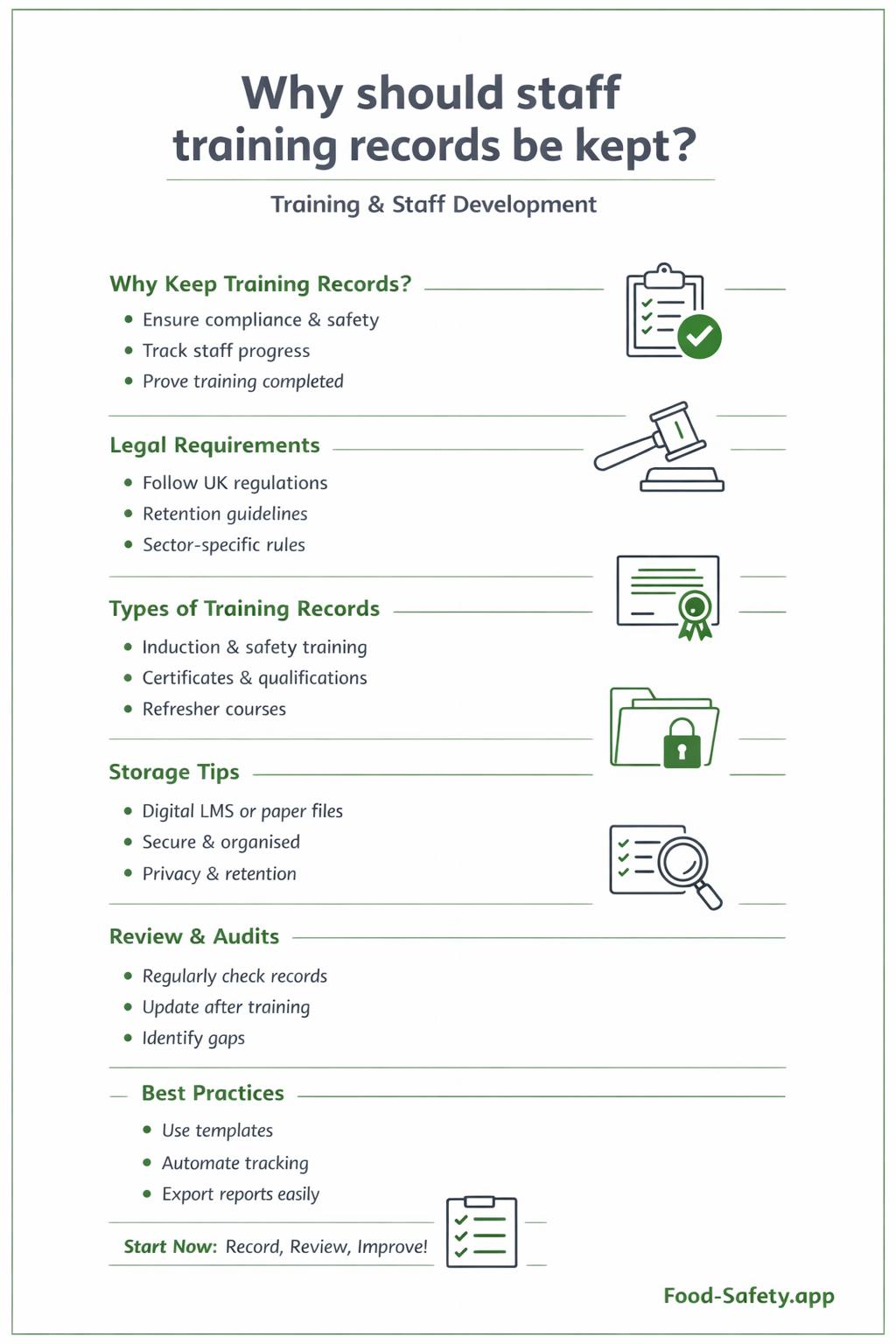
How should staff training records be stored?
Staff training records should be stored somewhere secure, organised, and easy to access when needed. That could be a locked cabinet with paper files, a shared digital folder, or a food safety system that keeps records in one place. The best choice depends on the size of your business, the number of locations, and how often records need updating. What matters most is that records are accurate, protected from loss, and easy to retrieve during an inspection or internal review. If you use a digital system, you can reduce the risk of missing signatures or misplaced forms.
Many businesses now prefer digital records because they save time and make it easier to keep a full history. A system like Food-Safety.app, a food safety management system for catering businesses, can help store training records alongside other checks and logs. That means managers can spot missing training, track renewals, and keep evidence ready without sorting through piles of paper. It’s especially helpful for busy sites, seasonal teams, or businesses with limited office space. Good storage also supports consistency if more than one manager is responsible for compliance.
When should training records be reviewed and updated?
Training records should be reviewed regularly, not just when an inspection is due. A new menu, equipment change, new allergen process, or staff promotion can all mean extra training is needed. It’s smart to review records during inductions, monthly checks, or management meetings so nothing slips through the cracks. If someone returns after a long absence, refresher training may be needed before they resume independent work. Review cycles also help you spot patterns, such as repeated mistakes in cooling, labelling, or opening procedures.
Refreshers are especially important in food businesses because even experienced staff can drift away from the correct process when the workplace gets busy. Records help you prove that retraining happened, which is useful if there’s a complaint or an investigation. They also support better team management because you can see who is due for updates and who is fully signed off. If you want more practical guidance on building safer systems, running a food business safely and food safety fundamentals are useful starting points.
How staff training records help during audits and inspections
During an audit or inspection, clear staff training records make life much easier. They allow you to show that your team has been trained in the right areas, that supervision is in place, and that refresher training is scheduled where needed. This can save time, reduce stress, and support a more positive outcome. Inspectors often look for evidence that procedures are understood, not just written. If training records are missing or incomplete, it may suggest that controls are weak even if your food is handled well day to day.
In a real-world catering setting, imagine a school kitchen, hotel buffet, or mobile food unit. A manager may be asked how staff were trained to manage allergens, check deliveries, or record temperatures. If the records are clear, dated, and easy to access, the answer is straightforward. If they’re scattered across emails, notebooks, and memory, it becomes harder to demonstrate control. For businesses that want a better way to keep inspection-ready evidence, allergen management and foodborne illness and bacteria resources can support wider training needs.
Well-kept records also help when you need to explain corrective action after a mistake. For example, if a team member forgets a cleaning step or misreads a label, you can show what retraining was given and when. That creates a useful paper trail and helps prevent repeat errors. It’s one of the simplest ways to build confidence in your systems, support your staff, and keep food safety visible every day. In short, training records aren’t just paperwork; they’re a practical part of running a safe and professional food business.