Knowing how to complete the SFBB diary properly matters because it turns everyday kitchen checks into clear, credible records that can stand up to an inspection. In a busy professional kitchen, the diary should not feel like paperwork for paperwork’s sake. It should be a simple, reliable record of what happened on site, what was checked, and what was done when something was not quite right. If you are rushing to fill it in at the end of service, guessing temperatures, or leaving gaps, the diary stops being useful. Done well, the SFBB diary helps restaurant owners, chefs, catering teams, café managers, hotel kitchens, school canteens and takeaways show that food safety is being managed properly day by day.
This aligns with HACCP principles explained, which emphasise critical control points and clear records.
Table of contents
What the SFBB diary is for
The SFBB diary is part of a Safer Food, Better Business style system used in UK food businesses to help record food safety checks in a straightforward way. It is designed for day-to-day use in a commercial kitchen, not for lengthy admin sessions. The diary gives you a written trail of the checks that matter most: temperatures, cleaning, opening and closing routines, and any problems that needed action.
For inspections, the value is simple. A well-kept diary shows that your team is consistent. It also helps you spot patterns, such as a fridge that keeps drifting warm during lunch service or a cleaning task that is often missed on late shifts.
It also supports allergen management and cross-contamination controls.
When to complete the SFBB diary
The best time to complete the SFBB diary is as you go, not after the event. In a busy service, waiting until the end of the day often leads to mistakes, missing details and guessed entries. Good practice is to build the diary into the shift routine.
Typical points to record include:
- Opening checks before food preparation starts
- Temperature checks at set times, where your system requires them
- Cleaning completed during and after service
- Any equipment faults or food safety issues
- Closing checks at the end of the shift
If your kitchen runs split shifts, the diary should clearly show who completed which part. That avoids confusion when a morning team, lunch team and evening team all use the same records.
It also supports allergen management and cross-contamination controls.
What to record in the SFBB diary
The diary should contain enough detail to show what was checked, what the result was, and what action was taken if anything was outside expected limits. Keep entries practical and relevant to the kitchen operation.
Useful records usually include:
- Fridge and freezer checks
- Cooking, cooling or hot holding checks where required by your system
- Cleaning tasks completed and any chemicals used correctly
- Staff sickness controls, if relevant to the day
- Pest sightings or signs of contamination
- Maintenance issues, such as broken seals or faulty thermometers
- Corrective actions taken when something was not right
Write clearly and use plain language. “Fridge checked” is not enough. “Walk-in fridge at acceptable working temperature, stock moved away from rear wall, manager informed” is much more useful. The point is to show what was done, not just that someone signed a box.
For practical cross-contamination prevention guidance, see cross-contamination prevention.
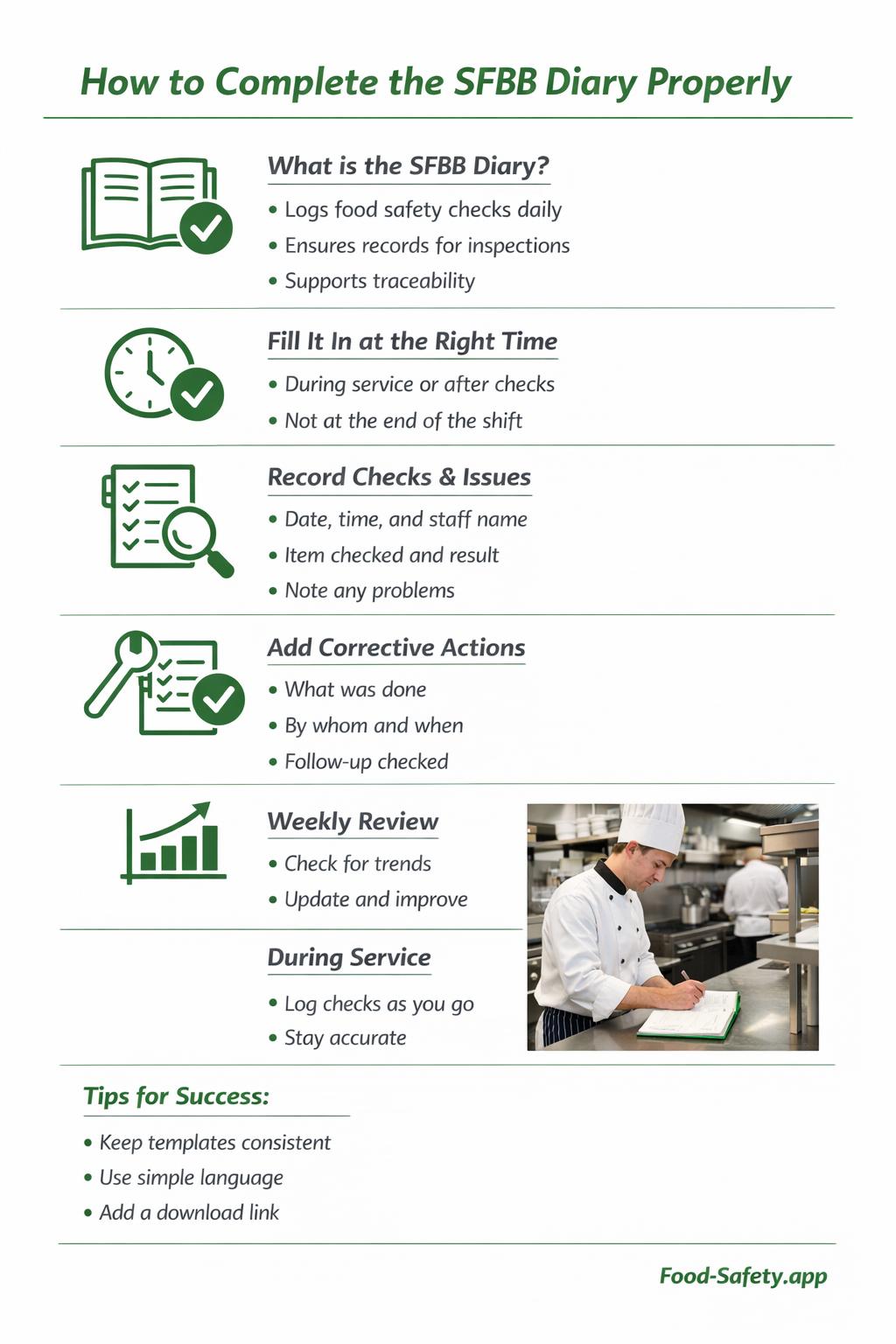
How to complete the SFBB diary properly
To complete the SFBB diary properly, make it part of the kitchen routine and keep the process consistent. A simple checklist approach works best in professional kitchens, especially when the team is under pressure.
Use a fixed routine
Decide who is responsible for each section. For example, the breakfast chef may complete the morning checks, the duty supervisor may review service issues, and the closing team may finish the end-of-day record. When responsibility is clear, records are far more likely to be complete.
Record facts, not guesses
If a temperature has not been checked, do not estimate it from memory. Check it properly and record the result. If you are not sure whether something was safe, say so and escalate it. A credible diary is based on actual observations, not assumptions.
Be specific about actions
If a fridge is not working as expected, note the action taken. For example: “Moved high-risk food to spare fridge, maintenance informed, fridge labelled out of use.” That gives an inspector confidence that the team responded quickly and sensibly.
Sign and date correctly
Every entry should be traceable. In a large catering operation, initials or signatures matter because they show who was responsible. Make sure dates are correct and that any corrections are clear rather than messy or overwritten.
Keep language simple and readable
You do not need long notes. Short, clear entries are better than vague paragraphs. Busy kitchens work best with records that can be completed in under a minute when the process is well organised.
For temperature control practices, see fridge temperature monitoring.
Common mistakes to avoid
Most problems with the SFBB diary come from poor routine, not bad intent. The most common mistakes are:
- Filling in the diary at the end of the week from memory
- Leaving blank spaces without explanation
- Using the same entry every day without checking the actual conditions
- Recording a problem but not saying what was done about it
- Using unclear shorthand that the rest of the team cannot understand
- Not keeping records in one agreed place
In a catering business, these mistakes create extra work later. If an issue is ever queried, weak paperwork can make a manageable problem look like poor control.
It also supports cross-contamination and food safety management when used with clear, consistent actions.
What to do when something goes wrong
The SFBB diary is most valuable when it shows a sensible response to problems. If a check is out of range, a cleaning task is missed, or there is a sign of contamination, record the issue and the corrective action straight away.
A good corrective action record should show:
- What was wrong
- What immediate action was taken
- Who was told
- Whether food had to be moved, held back or discarded
- What follow-up was needed
For example, if a freezer door has been left ajar, the correct response may be to secure the door, check product condition, move stock if needed, and flag the equipment for repair. The diary should show the full picture, not just the fault.
Paper diary or digital system?
Paper diaries can work well if the team is disciplined and the records are stored safely. Digital systems can be easier to standardise, especially across multiple sites, because they reduce missing entries and make it easier to review patterns.
Whichever format you use, the same principles apply: records need to be accurate, timely and easy to understand. UK food businesses should always follow the guidance relevant to their own operation, as requirements and best practice can vary in other countries.
For general food hygiene guidance, the Food Standards Agency is a trusted source for businesses in the UK.
For temperature control practices, see fridge temperature monitoring.
Final checks for busy kitchens
If you want the SFBB diary to work in a hectic service, keep it simple and visible. Put it where the relevant person will actually use it. Train new starters on how to complete it from day one. Review entries regularly so mistakes are spotted early, not after a problem has developed.
This supports food safety culture in your kitchen.
A practical kitchen checklist for better diary completion:
- Assign one person per shift to oversee records
- Keep pens, thermometers and diary sheets together
- Complete checks as part of opening, service and closing routines
- Review entries before the end of the shift
- Act immediately on anything unusual
If you run multiple sites, a food safety management system for catering businesses such as Food-Safety.app can help keep records consistent without adding unnecessary admin.
Conclusion
Knowing how to complete the SFBB diary properly is really about building a reliable habit. The best diaries are completed during the shift, written in clear language, and backed up by sensible corrective action when something changes. They should reflect what actually happened in the kitchen, not what someone hopes happened at the end of a busy day.
When your team treats the SFBB diary as part of normal kitchen control, the records become more useful, more credible and much easier to defend during an inspection. That protects the business, supports good food safety practice and takes a lot of stress out of paperwork.
Good training and induction support diary use. See training records.