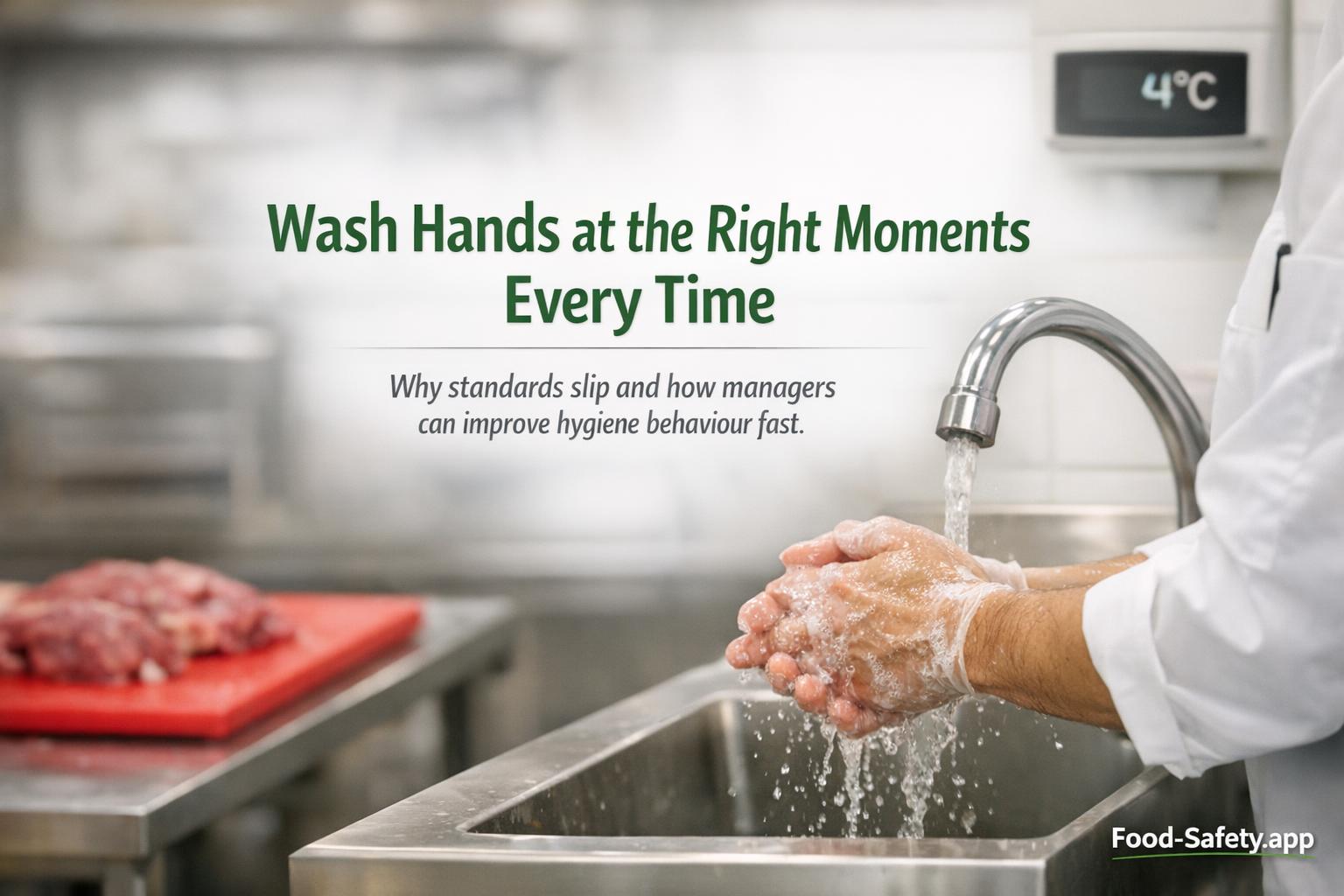
Many teams know handwashing matters, yet handwashing mistakes in commercial kitchens still happen during the busiest parts of service. In most professional kitchens, the issue is not knowledge. It’s usually pressure, poor setup, rushed habits, and inconsistent standards.
This guide explains why standards slip and what kitchen managers can do to improve hand hygiene in a realistic and practical way.
Quick takeaway
Handwashing problems usually happen when kitchens are under pressure. Busy service, awkward sink layouts, poor replenishment, glove misuse, and rushed workflows all increase the chance of shortcuts and contamination risks.
Why handwashing gets missed in busy kitchens
Handwashing mistakes in commercial kitchens are often a sign that the operation is under pressure, not that staff do not care. In restaurants, hotels, cafés, schools, takeaways and catering units, hygiene standards can slip when teams are trying to recover from a rush or keep service moving.
Handwashing can sometimes feel like a delay in the workflow. If a chef moves from raw chicken to salad prep, the proper handwash step may feel like it interrupts momentum.
If the handwash sink is blocked, poorly positioned, low on soap, or difficult to access, staff are more likely to rush or skip the process entirely.
In UK food businesses, hand hygiene guidance is clear and practical. Hands should be washed at the correct moments using soap and water, with enough time spent cleaning all areas properly.
For UK businesses, the Food Standards Agency provides useful hygiene guidance for food handlers and managers. Businesses may also wish to review the HACCP principles as part of their wider food safety management system.
The most common handwashing mistakes
Handwashing failures are usually simple, repeated behaviours that become normal during pressure. Staff may rinse quickly without soap, miss fingertips and thumbs, dry hands on aprons or cloths, or put gloves on without washing hands first.
Another common issue is moving between different tasks without stopping to reset. Handling raw meat, touching waste, using a phone, adjusting clothing, opening packaging, or touching cleaning equipment can all create contamination risks if handwashing is missed afterwards.
Gloves can also create false confidence. They are useful in some situations, but they are not a replacement for clean hands. If gloves are worn for too long, used across different tasks, or touched against contaminated surfaces, they can spread contamination in the same way as unwashed hands.
When staff should wash their hands
Kitchen teams need simple rules for when handwashing must happen. The aim is not to make the process complicated, but to make the key moments obvious and consistent across every shift.
- Before starting food preparation.
- After handling raw meat, poultry, fish, eggs, or unwashed vegetables.
- After using the toilet, coughing, sneezing, touching the face, or blowing the nose.
- After handling waste, cleaning chemicals, dirty cloths, packaging, or deliveries.
- Before handling ready-to-eat food, clean equipment, or allergen-sensitive orders.
These moments should be reinforced during induction, daily briefings, and supervision. If staff are unsure whether they should wash their hands, the safest answer is to wash them.
Why training alone does not fix the problem
Training is important, but training on its own will not fix poor handwashing habits if the working environment makes good hygiene difficult. Staff may know the right answer in a training session, then struggle to apply it during a full service when sinks are blocked, soap is missing, or the team is rushing.
Managers should treat hand hygiene as part of the kitchen system, not just an individual behaviour. That means checking sink access, stocking soap and disposable towels, building handwashing into task flow, and correcting shortcuts as they happen.
What managers can do to improve compliance
Managers can improve handwashing by making the right behaviour easy, visible, and expected. If handwashing facilities are easy to access, clearly stocked, and part of the rhythm of service, staff are much more likely to follow the correct routine.
Simple controls include checking soap and towel levels before service, keeping handwash sinks clear, placing reminders at key points, and making supervisors responsible for correcting missed handwashing in a calm and consistent way.
It also helps to link handwashing to specific food safety risks. For example, staff should understand how poor hand hygiene can affect ready-to-eat food, allergen control, and cross-contamination. This makes the rule feel practical rather than just procedural.
A practical handwashing checklist for daily use
A short daily checklist can help managers keep handwashing standards visible without making the process heavy or time-consuming.
- Check that handwash sinks are clear, accessible, and used only for handwashing.
- Confirm soap, warm water, and drying facilities are available before service.
- Watch key task changes, especially raw to ready-to-eat food handling.
- Correct missed handwashing immediately and record repeated issues if needed.
- Include hand hygiene reminders in briefings, induction, and refresher training.
How systems support better hygiene
Food safety systems help turn handwashing from a reminder into a repeatable routine. They can support induction records, cleaning checks, hygiene observations, corrective actions, and manager follow-up, so issues are easier to spot before they become normal practice.
A digital system can also help managers identify patterns. If hygiene checks are repeatedly missed during the same shift, on the same station, or by the same team, that gives the business something practical to fix.
Food-Safety.app can support hygiene routines by helping teams keep records of checks, training, corrective actions, and daily kitchen controls in one place. This is useful for busy kitchens that need simple evidence without relying on loose paper forms.
Final thoughts
Handwashing mistakes in commercial kitchens are rarely caused by one person not caring. They usually come from pressure, poor setup, inconsistent supervision, and routines that are not simple enough for busy service.
The best approach is to make correct handwashing easy to do and difficult to ignore. Keep sinks clear, stock facilities properly, train staff with real examples, correct shortcuts early, and make hygiene part of the daily kitchen culture.
When handwashing becomes a normal part of the workflow, rather than something staff remember only when the kitchen is quiet, the whole operation becomes safer, cleaner, and more consistent.
Make hygiene routines easier
Food-Safety.app helps catering teams keep hygiene checks, cleaning records, corrective actions, and daily food safety routines organised in one simple system.