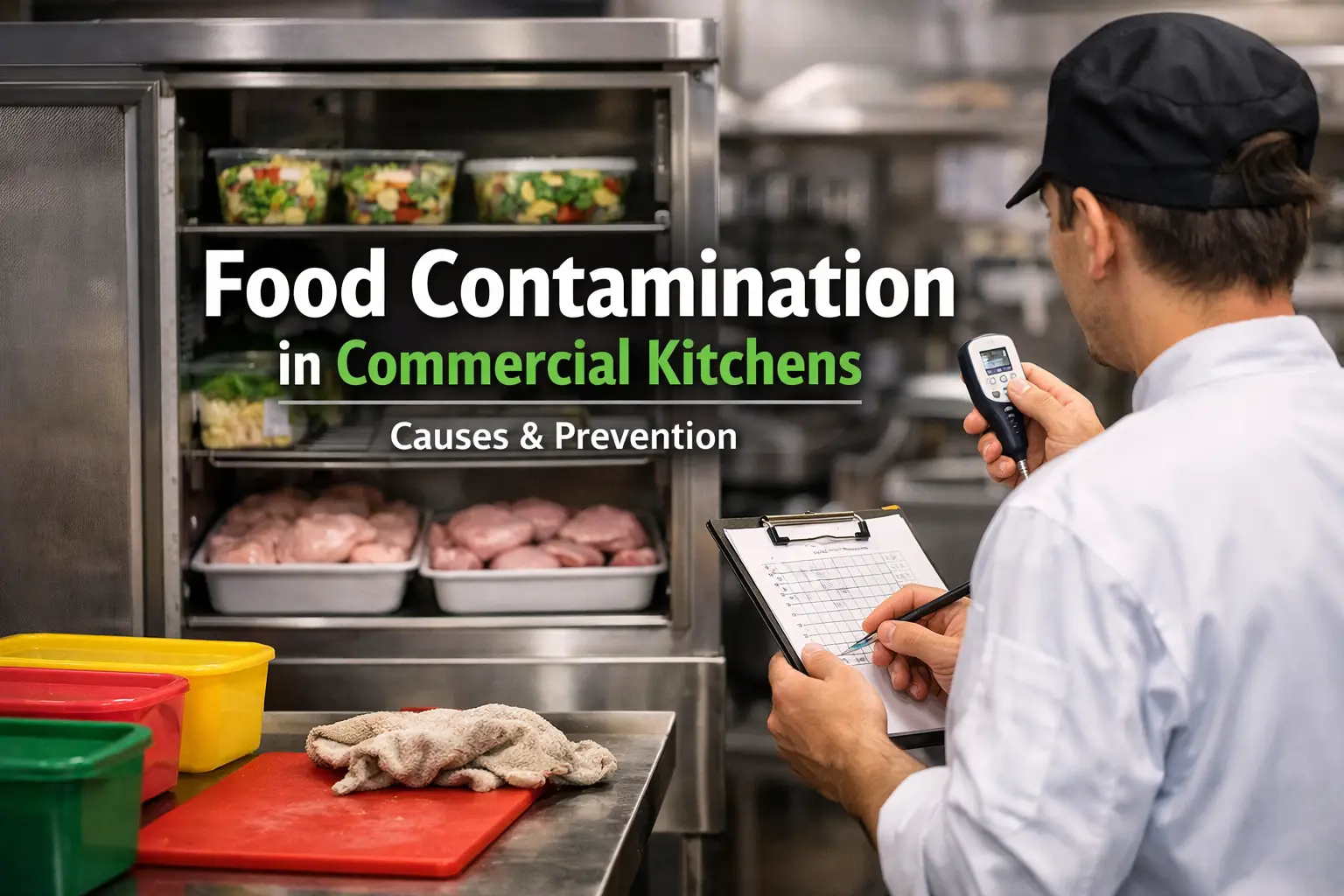
Food contamination in professional kitchens is a persistent risk that can derail service, harm customers and damage reputations. This article breaks down what contamination means in practical terms, where it most often originates in daily operation, and which simple, reliable controls can reduce risk for catering teams on the ground. By focusing on day-to-day habits, storage, cleaning and monitoring, managers can improve both safety and inspection readiness.
What food contamination is
When you understand the types of hazards you’re guarding against, you can tailor controls to the risk. For example, separating raw meats from ready‑to‑eat foods directly addresses both biological and allergen risks in one action.
Food contamination refers to the introduction or presence of hazardous substances or organisms in food that can cause illness or adverse reactions. It is useful to separate the main categories:
- Biological: bacteria, viruses, parasites or their toxins.
- Chemical: cleaning chemicals, sanitisers, contaminated water or residues from packaging.
- Physical: foreign bodies such as glass, metal shavings, plastic, hair or grit.
- Allergen: cross-contact where traces of an allergen end up in a dish that should be allergen-free.
Within a kitchen, “hazard” describes something with the potential to cause harm; “risk” reflects how likely that harm is to occur given current practices. The practical takeaway is to implement hygiene and flow controls that reduce both the likelihood and the potential impact of contamination, even when work is fast-paced.
Why this matters in catering environments
High-volume service increases the chance that small lapses accumulate into a safety incident. Clear responsibilities, simple rules and consistent record-keeping turn complex food-safety requirements into workable routines.
Practical approach to high-risk moments
- Use colour-coded cutting boards and utensils to separate raw and ready-to-eat work.
- Implement a simple “first in, first out” rule with labelled storage for ingredients.
- Keep separate cloths for different zones and change them regularly.
- Run a quick opening/closing checklist that includes a temperature check, a cleanliness check and a defect report.
Common kitchen sources
A single lapse (for example, using the same cloth on raw meat and salad) can undermine multiple safeguards and lead to contamination.
Many contamination risks arise from everyday kitchen practices. The most common sources include:
- Poor hand hygiene and poor handwashing technique
- Dirty or shared equipment and utensils
- Raw and ready-to-eat food cross-contact
- Unsafe or improper storage of food and chemicals
- Temperature abuse (poor cooling, overheated holding, or resisted rewarming)
- Pests and their attractants
- Chemicals and contaminated packaging
- Damaged packaging or broken seals
It is not enough to rely on a single precaution. Layering controls—hand hygiene, dedicated equipment, clearly labelled storage, and documented checks—creates a resistant system against multiple hazards.
Clear storage plans and dedicated tools reduce cross-contact, even when staffing is stretched.
Practical examples you might encounter day-to-day:
- A raw chicken container stored above salad ingredients in a fridge increases the risk of cross-contamination from drips.
- A delivery arriving too warm is accepted without checking temperature or paperwork, risking toxin growth or spoilage.
- A cleaning cloth is reused across food prep surfaces without being laundered, spreading contaminants.
- An allergen order is prepared with shared utensils, leading to cross-contact.
- A fridge runs warm overnight and there is no recorded action or corrective step.
Clear storage plans and dedicated tools reduce cross-contact, even when staffing is stretched.
High-risk moments in service
Always document routine checks and any deviations. A well-maintained log reduces uncertainty during inspections.
Certain moments in service carry a higher contamination risk. Addressing these moments with simple, reproducible checks helps keep safety front and centre.
- Delivery checks: verify temperature, packaging integrity and supplier documentation upon arrival.
- Prep: separate raw and cooked ingredients; use clean surfaces; prepare allergen-free dishes away from potential cross-contact zones.
- Cooling: cool hot foods rapidly and store in shallow, labelled containers to within safe time frames.
- Reheating: reheat to a safe temperature and maintain records of temperatures reached.
- Hot holding: ensure correct temperatures are sustained for service items and discard items if temperatures fall below safe thresholds.
- Cleaning: implement a routine that covers all surfaces, equipment and drains; avoid cross-use of cloths.
- End-of-shift close-down: check and log all temperatures, cleaning tasks completed, and any issues or defects seen.
Practical approach to high-risk moments
- Use colour-coded cutting boards and utensils to separate raw and ready-to-eat work.
- Implement a simple “first in, first out” rule with labelled storage for ingredients.
- Keep separate cloths for different zones and change them regularly.
- Run a quick opening/closing checklist that includes a temperature check, a cleanliness check and a defect report.
Why contamination happens in real kitchens
Rushed service should never override essential safety checks. Preparedness reduces risk when stress rises.
The gap between ideal procedures and everyday practice is where contamination often arises. Several factors contribute:
- Rushed service leading to skipped steps.
- Unclear responsibilities during shift handovers.
- Missed checks due to time pressure or fatigue.
- Poor record-keeping that obscures whether controls were actually performed.
- Staff members not strictly following routines or training gaps.
In many kitchens, it is not a lack of knowledge but a lack of reliable routines that creates risk. Building a culture where everyone understands their responsibility and where checks are quick and verifiable makes a substantial difference.
Turning insight into practice
- Define clear roles for each station and shift, with supervisors responsible for daily verifications.
- Use simple, repeatable procedures that staff can perform without supervision.
- Reinforce that a completed log is more valuable than a single spotless surface.
How to prevent contamination through simple controls
Print, post and rehearse daily procedures so staff can act confidently, even when short-staffed.
Preventive controls should be practical, visible and easy to audit. The following simple measures cover most routes to contamination in a busy kitchen.
- Separation of raw and ready-to-eat foods at all stages of handling and storage.
- Strict handwashing practices with readily accessible sinks and reminders.
- Colour-coded equipment and dedicated preparation zones for different food categories.
- Labelled storage with use-by dates and proper rotation.
- Regular, documented cleaning schedules for surfaces, equipment and drains.
- Routine probe checks and calibration for temperature-sensitive steps.
- Allergen controls, including dedicated utensils or clearly cleaned surfaces for allergen-free orders.
Practical controls in action:
- A kitchen calendar or pad that shows cleaning tasks and responsible person for each day.
- A simple thermometer checklist: target temperatures, recording method, and action thresholds.
- Allergen control plan: separate utensils and pans, validated cleaning steps, and a notice system for substitutions.
Monitoring habits that matter
Records that are timely and complete are their own form of risk control. They show inspections you’ve already passed in practice.
Effective monitoring creates evidence that procedures are actually working. It also helps during inspections by demonstrating a traceable safety culture. Focus on:
- Temperature logs for refrigerators, freezers, hot holding, and cooking processes.
- Opening and closing checks that confirm all tasks were completed and logged.
- Goods-in checks with supplier documentation and temperature readings where appropriate.
- Defect reporting and corrective actions for any equipment or product issues.
- Pest sightings and control measures with timely responses.
- Allergen management evidence, including cross-contact incidents and cleaning validation.
Structured records support continuous improvement and give inspectors confidence that the business is serious about safety.
How to implement a robust monitoring routine
- Use simple templates for each log: date, time, person, readings, and any action taken.
- Schedule a daily opening and closing check, and a weekly deeper review by a supervisor.
- Ensure corrective actions have due dates and are reviewed for effectiveness.
- Monitor environmental cues (odours, leaks, condensation) that could indicate temperature control issues.
Practical scenarios and quick fixes
The simplest fixes are often the most powerful: clear separation, simple logs, and consistent practice.
- Raw chicken stored above salad ingredients in a fridge: relocate raw proteins to the bottom shelf with secure, sealed containers; separate zone planning should be visible in the cold-room layout.
- A delivery arriving too warm and accepted without a check: establish a clear “receipt with checks” rule demanding temperature verification and documentation before any acceptance.
- A cleaning cloth used across food prep surfaces without changing: assign colour-coded cloths per zone and change or launder them after each shift.
- An allergen order prepared with shared utensils: dedicate utensils or ensure thorough cleaning and validation for each allergen-free order.
- A fridge running warm overnight with no recorded action: set up an automatic alert or daily morning check to verify temperatures and document any excursions.
Call to action and practical tooling
For catering teams seeking reliable, audit-ready records and simple workflow, consider adopting a structured digital solution that supports:
- Temperature checks, cleaning schedules, goods-in inspections, allergen controls and corrective actions
- Offline capability with automatic timestamps
- Customisable checks aligned to your operation
- PDF export for inspection-ready records
Food-Safety.app is designed to support daily routines in busy kitchens while creating verifiable evidence for inspections. A practical tool helps maintain consistency, reduces ambiguity during handovers, and builds staff confidence in safety processes.
Summary of key points
- Understand contamination types: biological, chemical, physical, allergen.
- Identify common kitchen sources and address them with layered controls.
- Target high-risk moments with simple, repeatable checks and clear responsibilities.
- Use practical, verifiable monitoring to build a safety culture and support inspections.
- Implement a clear governance plan for records, training and corrective actions.
Consistent routines, proper equipment, and transparent records dramatically reduce contamination risk in real kitchens.
Final thoughts
Contamination prevention is a daily discipline grounded in simple, reliable controls rather than heroic efforts. By separating raw from ready-to-eat foods, maintaining strict hand hygiene, and keeping thorough records of temperature, cleaning and corrective actions, catering teams can operate more safely and with greater confidence during inspections. The goal is practical safety that fits your service pace, not an idealised checklist.
If you’re looking for a practical way to embed these habits, explore how Food-Safety.app can help you record temperature checks, cleaning, goods-in inspections, allergen controls and corrective actions with offline capability, automatic timestamps, and PDF exports for inspection-ready records.