A clear, practical approach to fire safety in busy catering environments. This article explains what kitchen teams must do, highlights common fire hazards, and shows how to embed reliable controls into daily routines so EHOs see real compliance during visits.
Legal duties under fire safety law in catering premises
It is essential that risk assessments cover cooking processes, extraction risks and escape routes, and that they are reviewed whenever the layout or equipment changes.
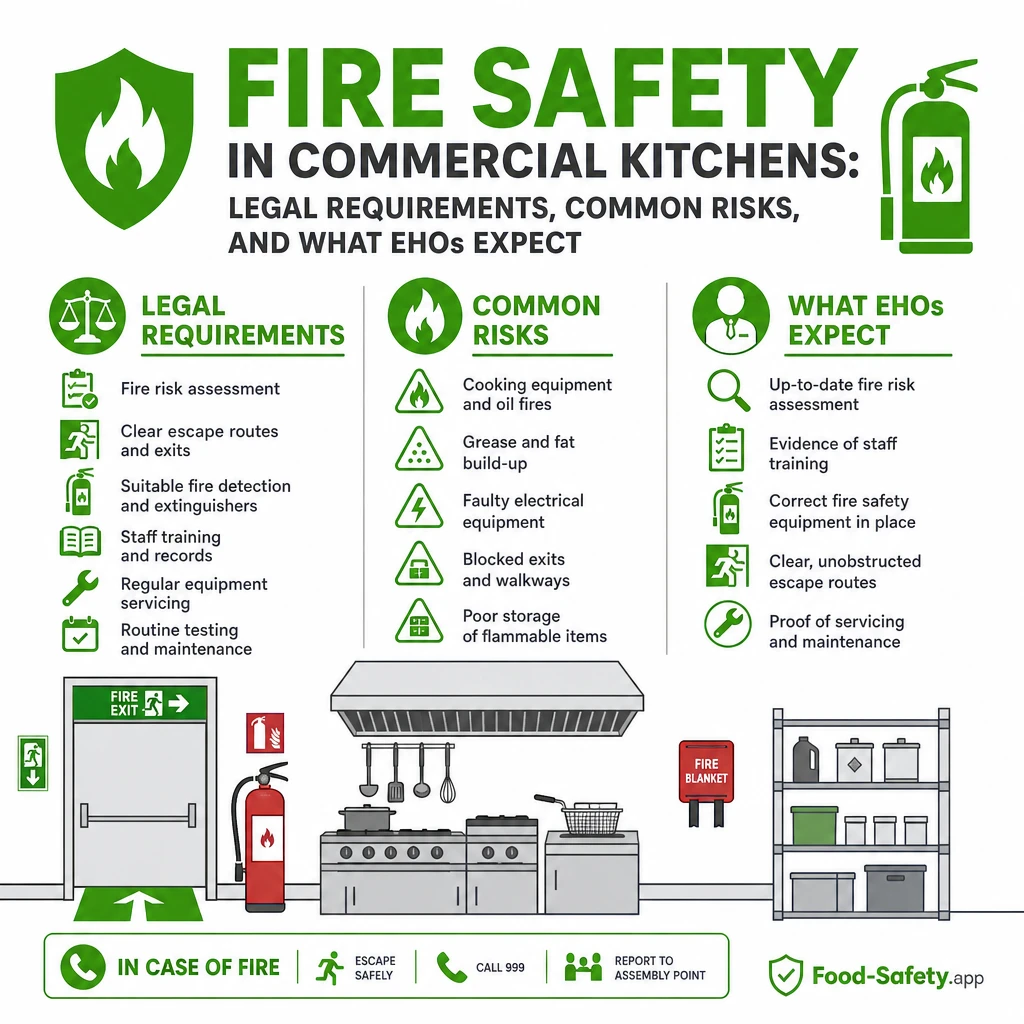
In commercial kitchens, fire safety isn’t an optional extra – it’s part of everyday operations. Your duties typically include carrying out a fire risk assessment for the premises, identifying high risk activities such as frying, and putting measures in place to reduce the risk. You should designate a responsible person, establish emergency arrangements, provide information, instruction and training to staff, and regularly review the plan as the kitchen evolves.
Reliable daily routines hinge on clear ownership: who is responsible for fire safety actions, who conducts drills, and who keeps records. Regular reviews help ensure new equipment, changes in menu or seating, and maintenance work don’t silently create gaps.
Common kitchen fire hazards
Grease build-up in a canopy can ignite if not cleaned regularly; a robust cleaning schedule is essential.
Kitchens concentrate heat, fats, gas and electricity in close quarters. Being aware of the main hazards helps you target controls where they’ll have the most impact.
- Deep-fat fryers: unattended oil can overheat, degrade, and ignite.
- Ovens and grills: fat and grease buildup increases flame risk.
- Extraction systems: greasy canopies and ductwork can smoke or ignite if not cleaned.
- Gas appliances: faulty connections or leaks raise the risk of ignition.
- Electrical overload: multi-plug daisy chains and damaged cables can overheat.
- Clutter and combustibles: rags, packaging and towels stored near heat sources.
In busy service periods, one overlooked hazard can have immediate consequences. For example, a deep-fat fryer left unattended during a lunch rush dramatically increases the chance of a serious fire, so dedicated fryer monitoring and automatic shutoff features are worth prioritising.
Maintaining clear escape routes and exits
Keep raw food and finished meals on separate paths to avoid confusion during an evacuation and prevent cross contamination while moving to safety.
Escape routes must be obvious, unobstructed and physically capable of supporting a rapid evacuation. This means:
- Corridors, doors and exits kept clear at all times; no stock, boxes or equipment blocking paths.
- Fire doors that operate freely, not wedged open or propped shut.
- Adequate emergency lighting and clearly visible exit signage.
- Regular checks at opening and closing to confirm exits are accessible, alarms operate, and routes aren’t blocked by cleaning gear or deliveries.
- A muster point and a plan for confirming everyone is accounted for after evacuation.
A practical moment: a staff member spots a blocked fire exit at opening check and immediately clears the way, then records the action. That kind of attentiveness is exactly what EHOs look for during inspections.
Fire suppression, extinguishers and alarm systems
The right extinguisher is only effective if staff know how to use it correctly during an incident.
Kitchens require a layered approach to fire protection. Most premises rely on a combination of suppression systems and portable extinguishers, with alarms to warn staff and occupants.
- Fire suppression systems: many canopies in professional kitchens are fitted with built-in suppression to automatically discharge within the canopy in event of a fire.
- Extinguishers: kitchens typically use a mix of extinguishers suited to cooking hazards; wet chemical extinguishers are common for frying areas, while multi-purpose dry powder or foam can cover other risk areas.
- Fire alarms and detection: an approved fire alarm system helps ensure prompt warning and orderly evacuation.
- Maintenance and checks: conduct regular visual checks on extinguishers, ensure suppression systems receive scheduled service by a qualified technician, and test alarms per manufacturer or regulatory guidance. Keep service certificates and test logs accessible.
To keep things simple, pair daily checks with professional annual service. Use a single, documented process to review alarms, extinguishers and suppression system status alongside daily kitchen procedures.
Extraction canopy, ducting and grease filters maintenance
Grease buildup is a common cause of kitchen fires; timely cleaning reduces the risk and helps your equipment run more efficiently.
The extraction system is central to kitchen safety. Regular cleaning and maintenance reduce fire risk and improve air quality.
- Grease filters: remove and clean or replace grease filters daily or per manufacturer guidance.
- Canopy cleaning: wipe down and degrease the canopy, burners and on-site grills as part of a routine cleaning schedule.
- Ducting: ducts should be inspected and cleaned by a licensed contractor at intervals appropriate for usage, oil load and local regulations.
- Access for maintenance: ensure panels and service access points are clear and safe to reach.
- Documentation: maintain a maintenance log for filters, canopy cleanings and duct checks.
This section connects directly to daily operations. A simple practice is to assign a responsible person for daily filter checks and a contractor-led schedule for duct and canopy cleaning, with sworn records kept in a central file.
Staff training and record keeping
Clear duties and records support compliance and quick action during an incident.
Training is the backbone of practical fire safety. It should cover how to respond during a fire, how to shut down gas and electrical appliances safely, and how to use the correct extinguisher.
- Induction and ongoing training: new staff receive fire safety training, with periodic refreshers for all team members.
- Drills and alarm response: run regular drills and review evacuation times, signals, and muster procedures.
- Safe shutdown procedures: outline how to isolate gas, switch off appliances and isolate electrical supplies during a fire or fault.
- Record keeping: keep checks, cleaning logs, defect reports, corrective actions and training records in one accessible place. Include fire drill reports, extinguisher servicing certificates, and canteen or takeaway kitchen reviews.
- Practical example: during opening checks, a staff member identifies a faulty extraction fan, reports it immediately, and a maintenance ticket is raised before service starts.
A well-maintained set of records helps both your team and EHOs verify that hazards are controlled and improvements are tracked over time. Link records to wider HACCP and health and safety routines so fire safety isn’t siloed.
Practical takeaways and quick-start checklist
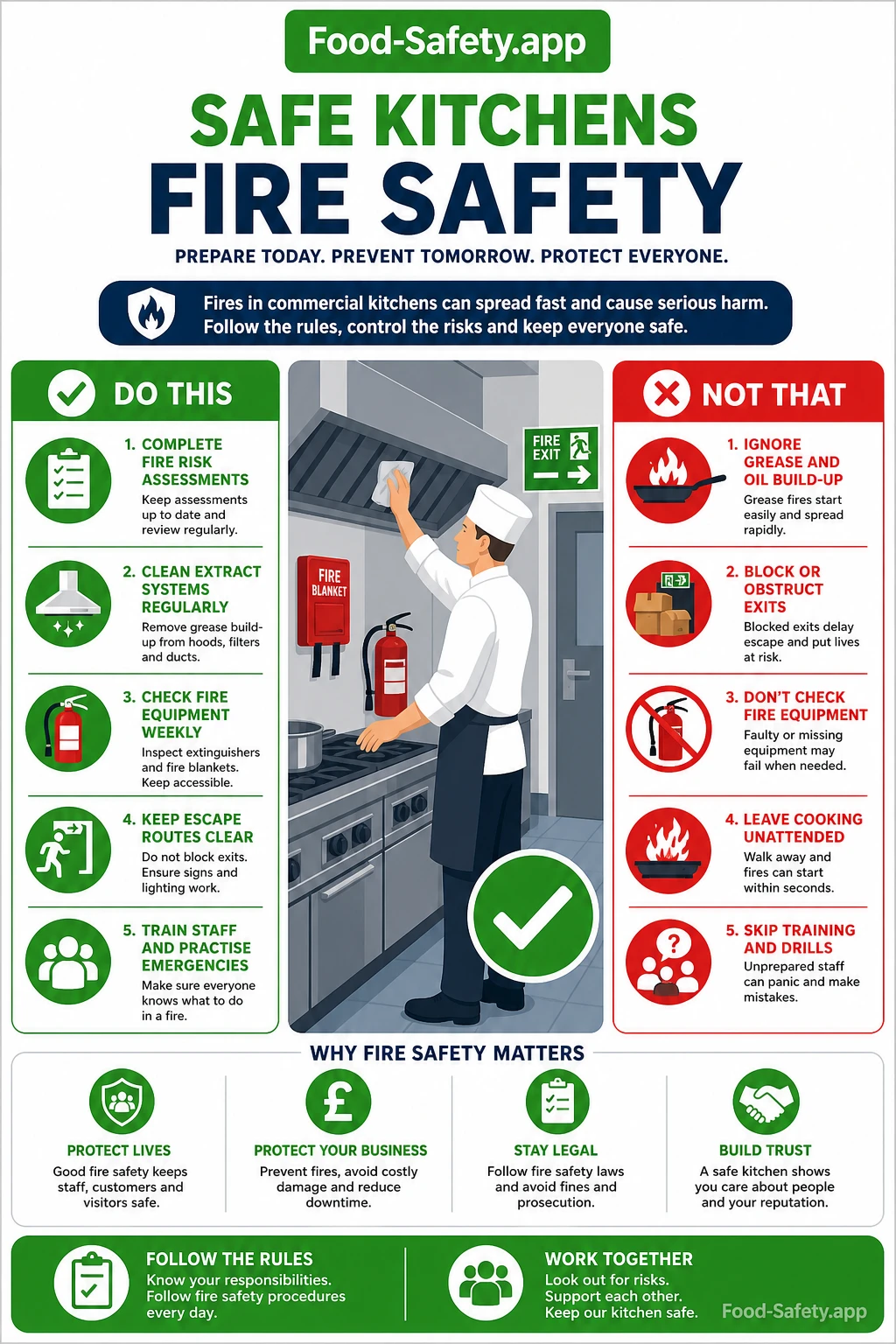
- Conduct or refresh a kitchen fire risk assessment that explicitly covers frying, gas appliances, electrical loads, and the extraction system.
- Clearly assign ownership for fire safety tasks and provide easy access to the emergency plan.
- Implement a daily opening/closing check that includes exits, high-risk cooking areas, and the condition of the extraction system.
- Schedule regular grease filter cleaning, canopy and duct cleaning, and ensure maintenance is documented.
- Train staff on alarm procedures, evacuation routes and extinguisher use; keep all training and maintenance records in one place.
- Review fire controls during broader health and safety rounds, not as a separate activity.