
A reliable opening check helps busy kitchens start service confidently, protect customers, and create auditable records. This guide shows a simple, practical UK catering checklist that covers high-risk areas, cleaning, stock, staff readiness, and how to capture actions for inspections.
What a good opening check should achieve
Important: A robust opening check is a live document, not a final tick-box. It should prompt action, not excuses.
A well-constructed opening check sets the standard for the day, helping staff act consistently from the first minute of service. It enables problems to be spotted before food is prepared, reducing the risk of contamination or temperature abuse. It also creates clear evidence that daily controls were completed, which is valuable for internal reviews and inspections.
The opening check should be concise but thorough, covering critical points that influence safety and compliance. Assign responsibility, define when the check should be done, and specify how results are logged and escalated. In practice, many teams use a single-page checklist that mirrors their HACCP plan, with sections aligned to high-risk areas, cleaning verification, stock status, staff readiness, and records.
A simple, repeatable format helps teams stay consistent across shifts and seasons.
By closing the loop with a corrective-action log, you turn findings into improvements rather than missed chances to protect customers. The record becomes a traceable artifact for regulators and a training aid for new staff.
Having a written trail helps demonstrate due diligence during inspections.
If you’d like a ready-to-use template, adapt your existing daily log to include sections for high-risk areas, cleanliness, stock, staff readiness, and action tracking. The benefits are practical: faster fault resolution, clearer accountability, and cleaner records for regulatory or customer inquiries.
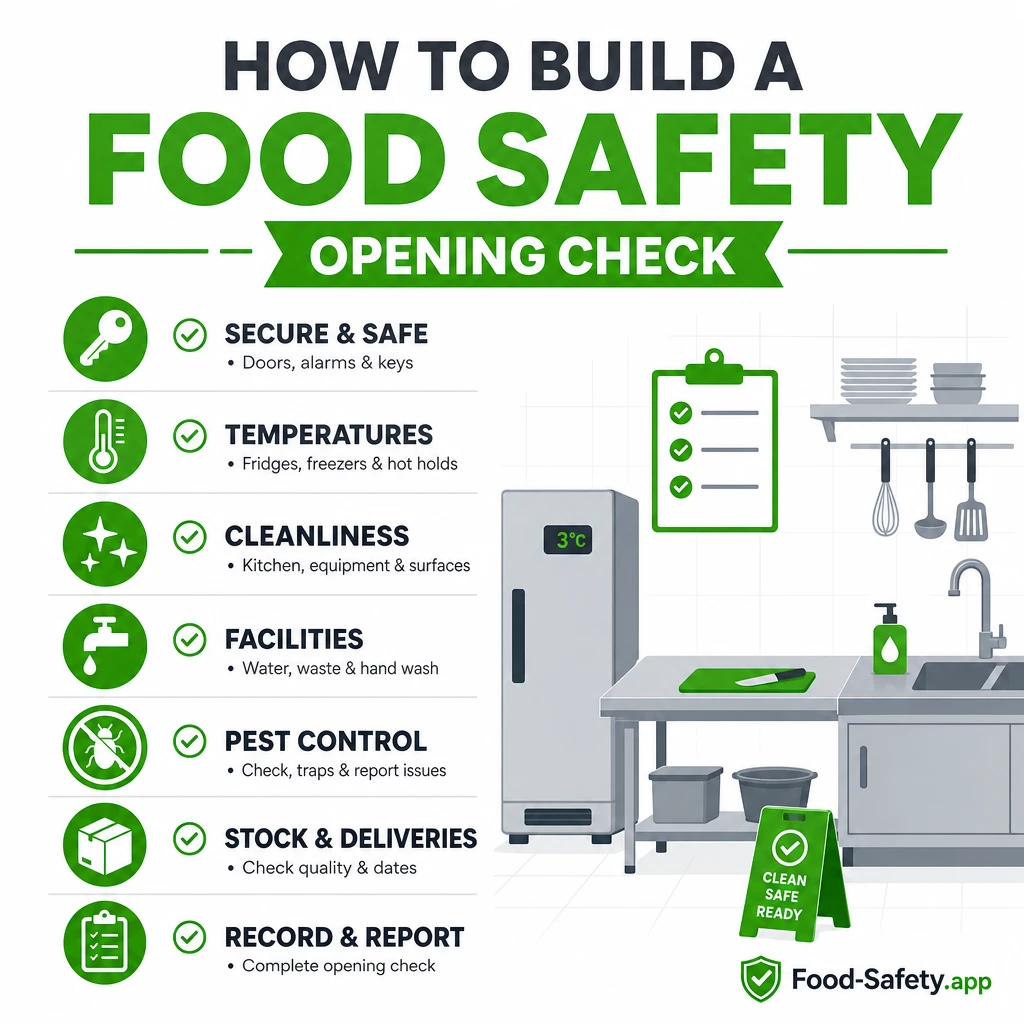
Start with high-risk areas first
Prioritising high-risk areas helps catch faults early and minimizes the chance of unsafe food reaching customers.
Begin the check with zones that influence safety most directly: fridges, freezers, cold rooms, and hot-holding units. The goal is to verify basic controls before any food is touched. Probe temperatures where relevant and perform quick visual checks for condensation, frost, or obvious damage. A few minutes spent here can prevent hours of waste or due to unsafe storage.
- Check fridge and freezer doors for proper closure and seals intact.
- Note temperatures with a calibrated probe and look for signs of thawing or overheating.
- Inspect hot holding units for adequate heat retention and clean, dry surfaces.
A common scenario to watch for is a fridge left open overnight or a freezer running warm. If these occur, document the issue, isolate affected products if needed, and escalate per your escalation path. Even if temperatures appear acceptable at the moment, record the observation and the decision taken.
Early identification prevents small faults from becoming big problems.
Check cleanliness and readiness of the prep areas
Cleanliness is a live control; even small spills require immediate action and re-cleaning if needed.
Cleanliness in prep zones is foundational to food safety. Verify work surfaces, sinks, utensils, drains, and floors are clean and in good condition. Confirm cleaning tasks have been completed before service and that there are no visible residues, cross-traffic contamination risks, or blocked drains. A spill on a prep bench can travel quickly if not addressed.
- Inspect surfaces for residue and ensure sanitiser contact time is observed.
- Check sinks and drain traps for blockages or foul odors.
- Confirm utensils and cutting boards are clean, dry, and correctly stored.
A clean station reduces cross-contamination risk and supports accurate temperature control.
Review stock and deliveries carried over from the previous day
Allergen awareness and accurate labeling are non-negotiable for safe dining experiences.
Stock status at opening affects both safety and traceability. Check date labels, packaging integrity, and storage conditions for items that rolled over from the previous day. Ensure ready-to-eat and raw foods are properly segregated to prevent allergen or cross-contact issues. Look for damaged packaging, leaks, and any suspect deliveries that require quarantine or a supplier query.
- Verify all items have intact date labels and correct product codes.
- Inspect packaging for leaks, bulging seals, or broken seals.
- Confirm that allergen-containing items are clearly segregated and correctly labelled.
A common issue is an opened ingredient stored without a label or an item kept in the wrong container. If spotted, label it, move it to appropriate storage, or discard if unsafe. Record any incidents and the corrective actions taken so they are traceable.
Clear labeling and proper segregation prevent inadvertent cross-contact.
Confirm staff and equipment are ready for service
The right tools and trained staff are as critical as the checks themselves.
Staff readiness and available equipment are essential for a safe, smooth service. Check that all team members are in appropriate uniforms, have access to handwashing supplies, and know where to find probes, sanitising products, and cleaning materials. Ensure equipment is set up and safe to use: correct temperatures, clean surfaces, and no obvious damage such as a broken door seal or missing wipe packs.
- Confirm handwashing facilities are stocked and accessible.
- Check that probes and thermometers are clean and functioning.
- Inspect key equipment for damage or missing parts before use.
If equipment isn’t ready, log the fault, arrange replacements or repairs, and re-check before service begins. This proactive step prevents delays and protects consumer safety.
A prepared team reduces the risk of reactive mistakes during busy service.
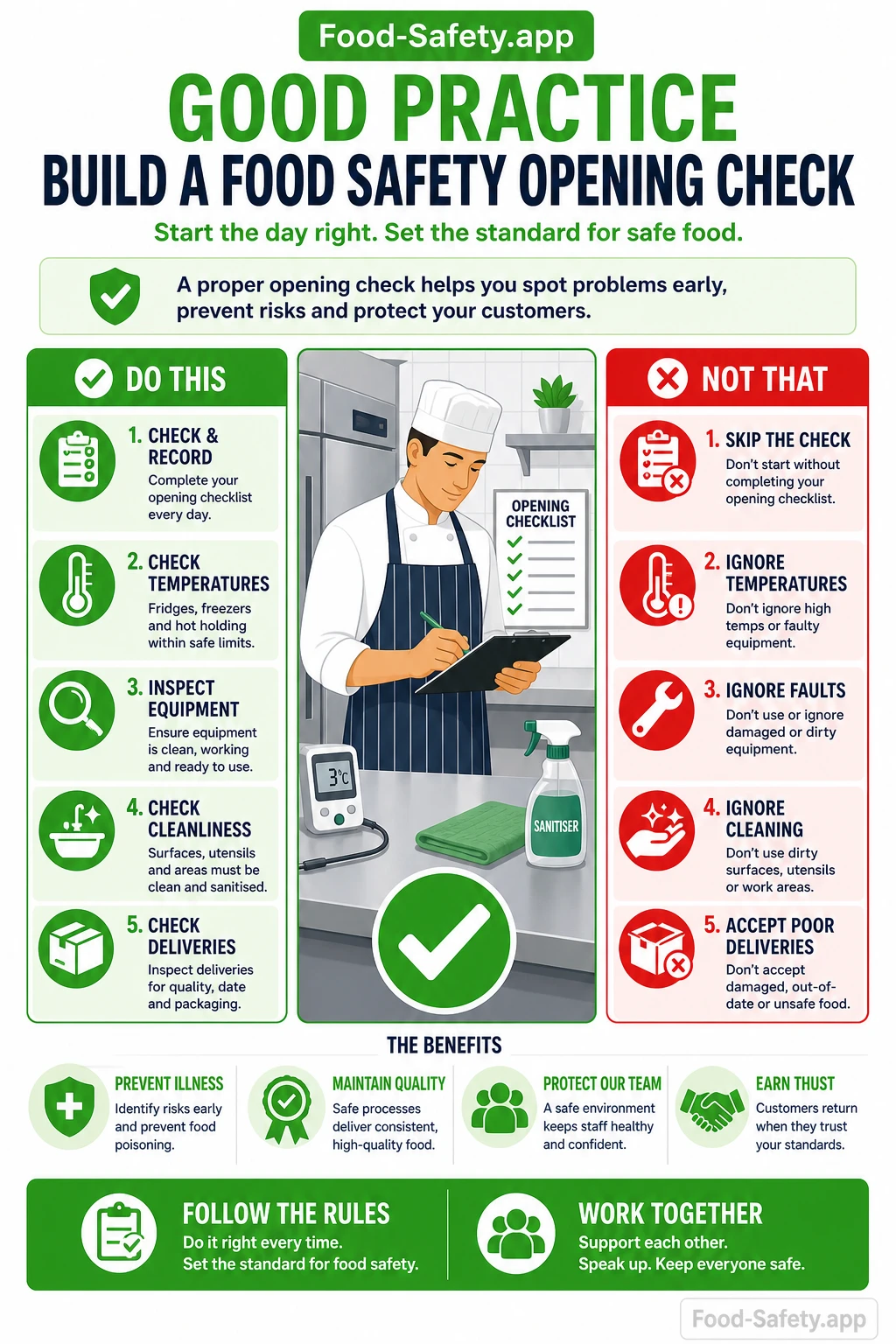
Record what was checked and what happened next
A precise, time-stamped log demonstrates due diligence and supports continuous improvement.
The final part of opening checks is recording what was verified and what followed. Use a structured checklist with timestamps for each item and a clear space to note defects, corrective actions, and escalation. This creates a transparent record you can audit or review quickly during a potential inspection.
- Note the exact time of the check and by whom.
- Log any deviations and the immediate actions taken (e.g., food moved, equipment repaired, temperatures reverified).
- Record follow-up actions and responsible persons, including target completion times and rechecks.
Remember to keep these records accessible for staff and management, and review them in daily huddles to close the loop on issues identified in the morning.
The quality of your opening records often correlates with the quality of your service throughout the day.
If you’d like a ready-to-use template, adapt your existing daily log to include sections for high-risk areas, cleanliness, stock, staff readiness, and action tracking. The benefits are practical: faster fault resolution, clearer accountability, and cleaner records for regulatory or customer inquiries.