Running a Food Business Without the Headache
Simple Food Safety Habits That Actually Work Running a food business is rewarding, but it’s rarely calm. You’re managing customers, staff, stock, suppliers and costs, often all in the same day. Food safety sits underneath all of that. When it’s organised, you barely notice it. When…
COSHH made simple for food businesses
Every food business and catering service uses chemicals. Cleaning products, sanitisers and maintenance chemicals are part of daily work in kitchens, vans, units and production spaces. When they’re used correctly, they help keep food safe. When they’re not, they can harm people and contaminate food. COSHH…
Date Marking: Use-By vs. Best Before
Running a food business means juggling a lot. Orders, staff, stock, cleaning and customers all at once. Date marking can feel like just another task, but it’s one of the most important ones you do each day. Get it right and you protect your customers and…
UK Food Safety Law Explained for Everyday Practice
This training’s for food business owners, managers, supervisors and food handlers. It’s written as a toolbox talk style guide you can use in short sessions with your team or on your own. The aim is clear. Help you understand what UK food safety law means in…
Clostridium botulinum – The Hidden Food Safety Risk You Can’t See or Smell
Food safety isn’t just about keeping things clean or following routines. Some of the most serious risks come from foods that look, smell and taste completely normal. You won’t always get a warning when something has gone wrong. One of the most dangerous examples is Clostridium…
Chemical Safety (Sanitisers)
Overview Sanitisers play a big part in keeping food safe. They reduce harmful bacteria on food contact surfaces. When they’re used the right way, they protect customers, staff and your business reputation. When they’re used the wrong way, they can quietly increase risk without anyone noticing.…
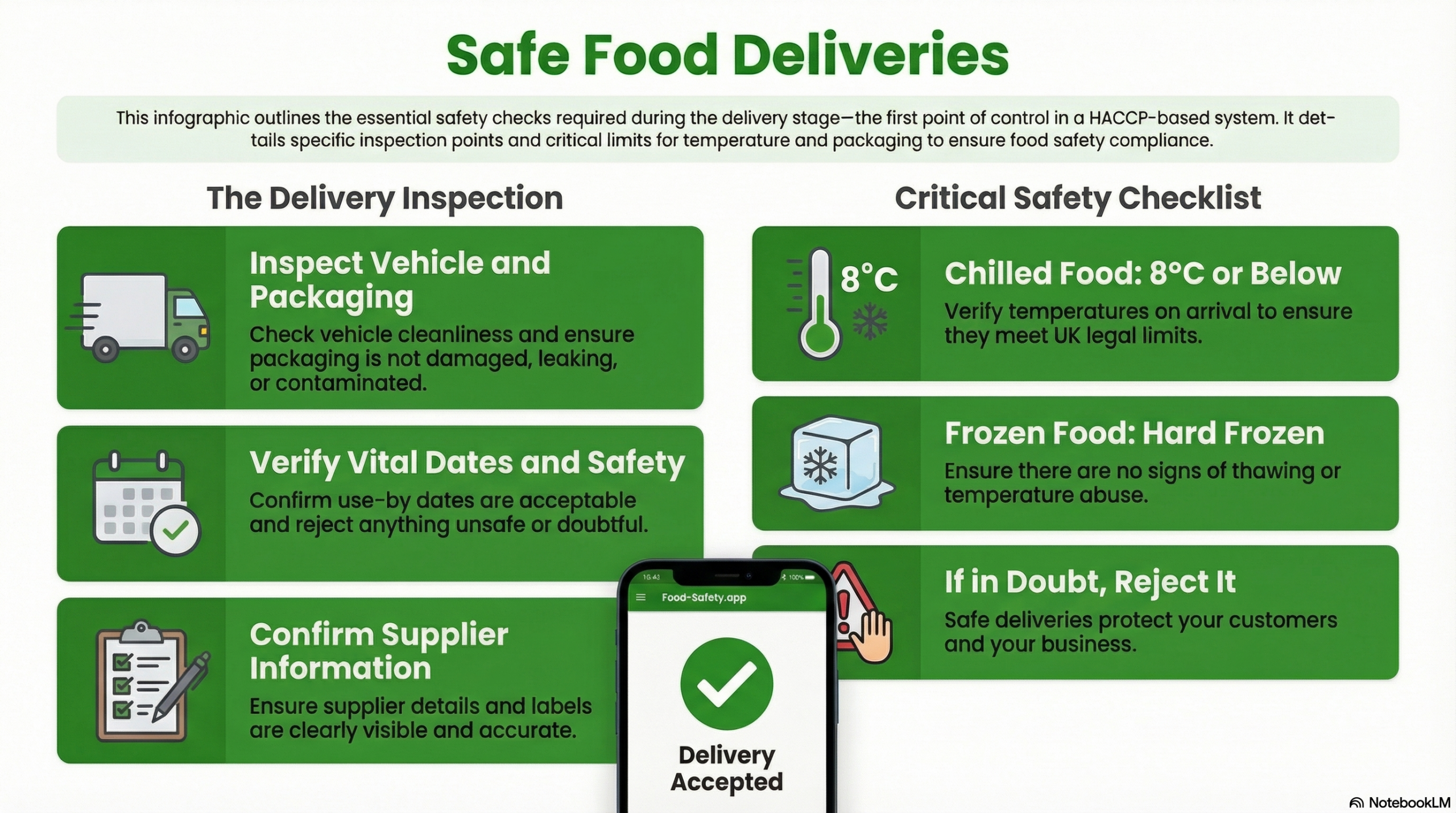
Deliveries and Receipt of Food
Getting food safety right at the door When a delivery arrives, it’s easy to feel rushed. The driver’s waiting. The kitchen’s busy. You just want to get on with the day. But this moment matters more than most. Deliveries are the first real food safety check…
Stock Rotation Made Simple:
FIFO, FEFO and Safe Storage Explained If stock rotation slips, food safety slips with it. It’s one of the most common things Environmental Health Officers pick up during inspections. Out-of-date food, poor labelling and messy fridges are all signs that stock control isn’t working. The good…
Preparing for Official Inspections and Your Food Hygiene Rating
Running a food business in the UK means inspections are part of the job. For many owners, they’re also one of the biggest worries. You might wonder what the inspector will ask, what they’ll look at and how one visit can affect your reputation. The good…