
Small kitchens often reveal risk in a glance. This guide flags the first signals inspectors notice, the records that carry the most weight, and practical steps you can take to tighten controls before an audit. Expect site-specific, actionable tips that project cleanliness, organisation and confident everyday safety.
First impressions in a small kitchen
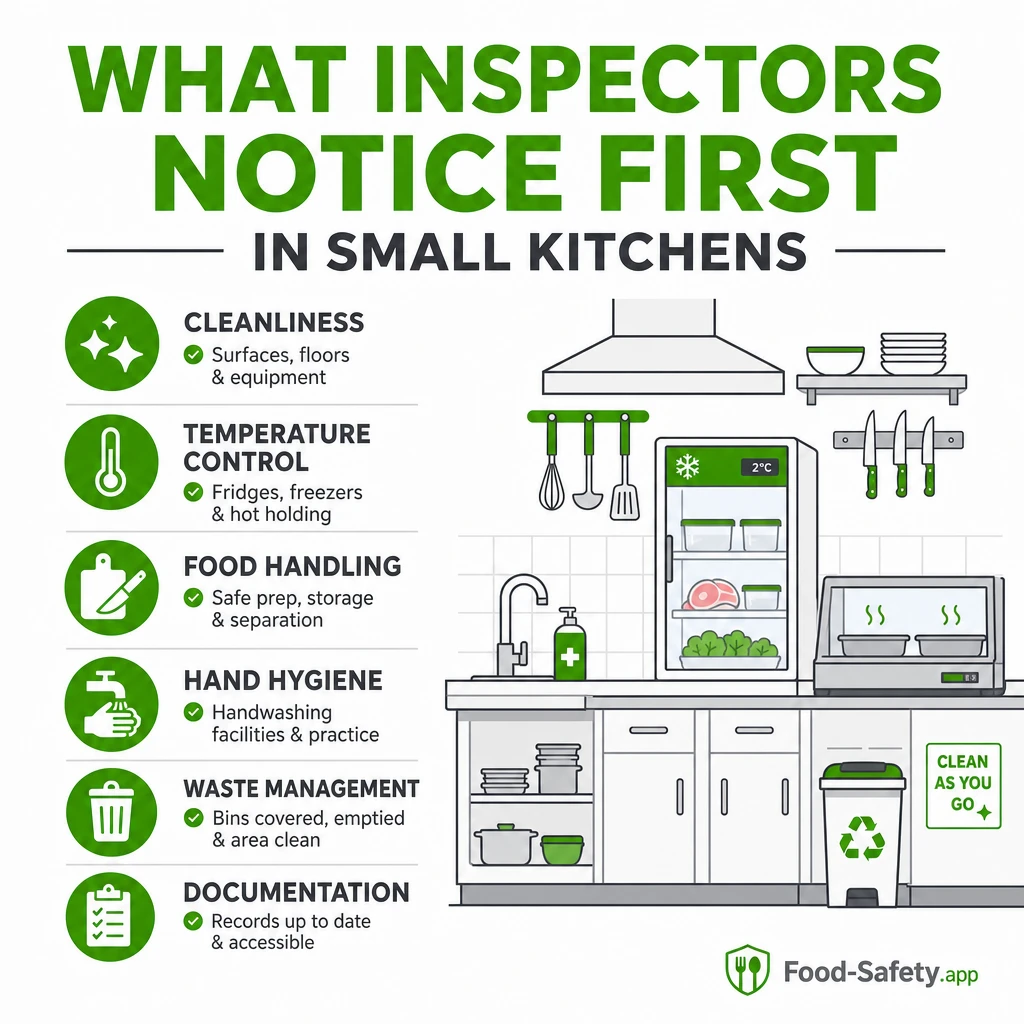
A strong first impression is practical control. Cleanliness, organisation and staff confidence communicate steady hands before any questions are asked.
When a door opens on a small site, inspectors tend to notice immediately how well the team runs the space. A clean, orderly environment signals reliable routines and effective supervision. It’s just as important that duties are clearly handed over and staff appear in command rather than reactive.
Key cues include clean surfaces, well-organised storage, visible sanitising checks and a pass area that looks ready for service. A supervisor who can point to a live record, show who is on duty, and explain what happens when a task is handed over often wins instant credibility with an inspector.
In practice, focus on the pass area: keep it tidy, label containers, and ensure a brief daily handover that covers who is on shift, what was done yesterday, and what remains to be done today. Small kitchens benefit from short, repeatable routines rather than long, complex ones.
Records that matter most
Keep records current, structured and easy to find; automated timestamps and full history views improve traceability during an inspection.
Records are the backbone of visible control in any kitchen. The most scrutinised items are those that prove ongoing management rather than one-off activity. The aim is to provide a clear, easily navigable history that demonstrates what happened, when, and why.
Core record types to keep current and accessible:
- Temperature logs for all cold and hot storage
- Opening and closing checks for the shift
- Cleaning schedules and defect logs
- Allergen records and customer allergen inquiries
- Delivery checks and supplier verification
- Calibration records for thermometers and probes
- Documented corrective actions and instances of deviation
Here’s a compact way to present these in practice: a simple folder or digital record with a current date and a quick reference index. Clarity and ease of access matter more than volume.
A practical tip is to export a single calendar week of records as a PDF for internal reviews or audits. This makes it easy to demonstrate recent activity without paging through folders.
| Record type | Purpose | How to verify |
|---|---|---|
| Temperature log | Demonstrates ongoing temperature control | Entries are current, cover each shift, and show targets |
| Opening/closing checks | Evidence tasks done at start/end | Signatures or timestamps confirm completion |
| Cleaning schedule | Shows routine cleaning and problem areas | Date, area, and initials; attach evidence if possible |
| Allergen records | Maps menu items to allergens | Quick lookup on use or a dedicated allergen sheet |
| Delivery checks | Verifies incoming goods meet spec | Temp checks at receipt and labelled, intact packaging |
| Calibration records | Validates thermometer accuracy | Calibration certificates stored with probe data |
The little details tell the whole story: seals, gaps, and properly dated labels reveal whether controls are truly in place.
To make this easier, pair every record with a brief note on any action taken and the responsible person. A concise, linked trail helps during inspections and internal reviews alike.
Dirty details often missed
The little details reveal risk: fridge seals, under equipment, handles, drain areas and label dates tell the truth no one can mask.
Inspectors quickly spot neglected corners and overlooked surfaces. These areas are low-cost, high-impact indicators of overall hygiene discipline.
Common misses include:
- Fridge and freezer door seals that are cracked or dirty
- Gaps under equipment where dust, mould or spills accumulate
- Handles, knobs and light-switch plates that are greasy
- Drain areas and splash zones around sinks
- Bins with liners not changed or outside of bins marked
- Dated labels on ready-to-eat foods and leftovers
Attention to these details often differentiates a routine inspection from a more demanding one. Proactive attention to these zones helps prevent recurring problems and shows a culture of cleanliness.
Small actions add up. A quick weekly walk-round to check these zones, plus a short daily cleaning log focused on problem areas, can keep them under control.
Staff behaviour clues
Staff who can explain delivery, storage and cooling processes show that procedures are understood and normalised, not just followed by chance.
People matter as much as processes. A kitchen team that communicates clearly, follows routines, and can answer basic questions about procedures demonstrates true control. Behaviour clues are often more telling than a formal policy.
- Consistent handwashing habits at defined moments
- Correct use and disposal of gloves where required
- Ability to explain what happens during delivery, storage, cooling and reheating
- Procedures followed without prompting or reminders
- Confidence in locating policy documents and allergen information
If staff can explain the flow from order to plate with small, site-specific details, you’re seeing embedded training rather than memorised scripts.
A practical improvement is to run micro-training moments, such as 90-second refreshers on glove use or handwashing steps, during quieter periods. Quick wins like this reinforce good habits without lengthy sessions.
Weak controls inspectors spot quickly
Some issues jump out almost immediately if teams aren’t keeping up with routine checks. These weaknesses are often procedural, not one-off errors, and can indicate gaps in management oversight.
Common signs inspectors notice:
- Gaps in monitoring, such as missed temperature checks or late entries
- Missing signatures or initials on critical records
- Inconsistent temperatures across days or shifts
- Poor stock rotation leading to outdated ingredients or mislabelled items
- Unclear corrective actions when problems are found
- A lack of auditable trails for when things go wrong
These signals suggest the need for immediate, site-wide tightening of records, responsibilities, and escalation paths.
Addressing this means aligning monitoring with clear ownership, ensuring every critical record has a responsible person, and creating a simple corrective-action workflow that becomes part of daily routines.
Quick wins before trouble
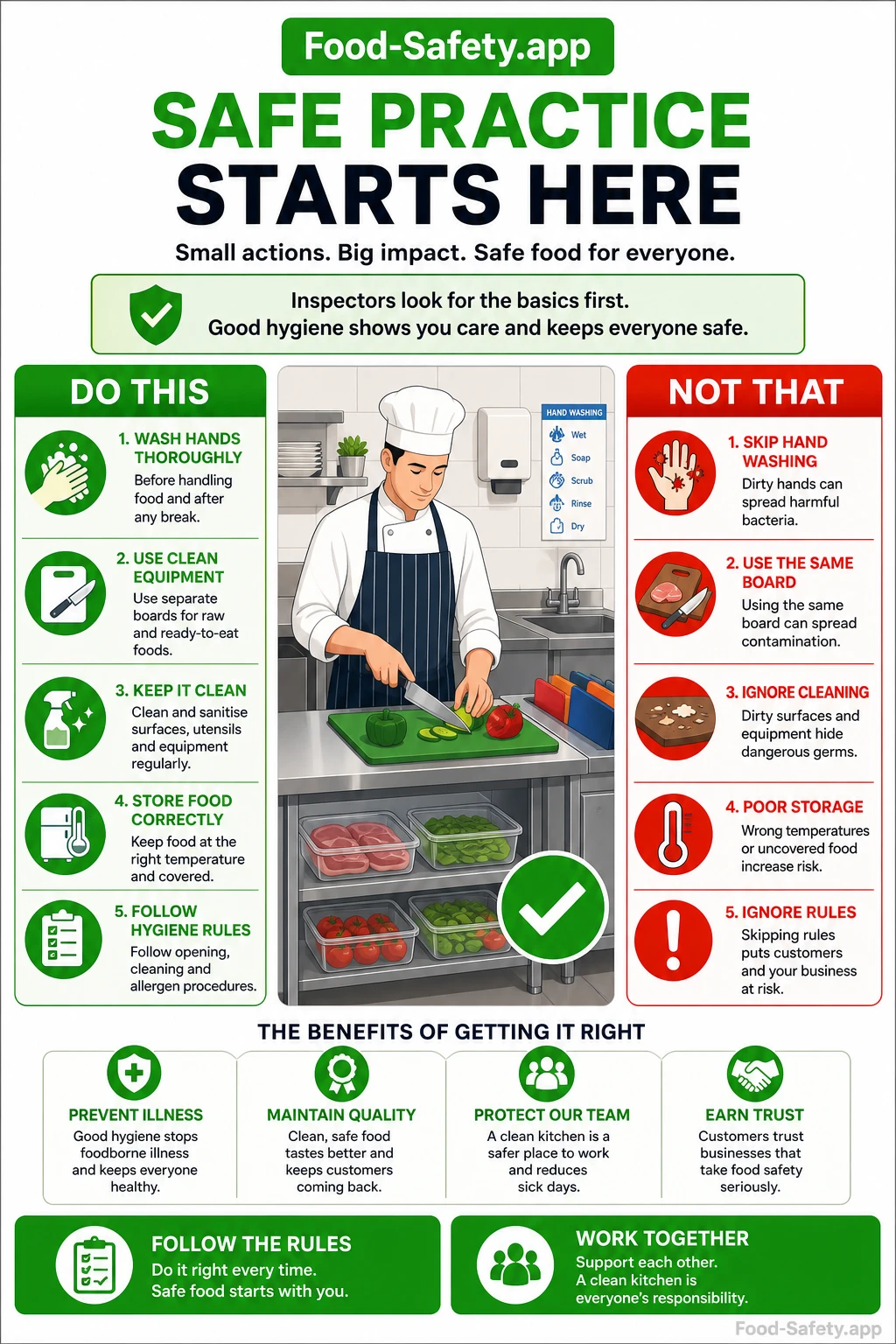
Quick wins create an audit trail and a ready-to-show picture of control; tidy the pass, export records and verify probes.
If a visit is looming, several low-effort improvements can substantially improve the picture of control. These aren’t cosmetic; they create visible evidence that the kitchen is managed and ready for inspection.
Practical quick wins:
- Tidy the pass and ensure ready-to-plate foods are properly stored
- Print or export current records for an on-the-day review
- Check thermometer probes and fridge temperatures; replace or calibrate as needed
- Review allergen information and ensure it’s linked to the current menu
- Complete overdue cleaning tasks and log them with dates
If you can implement a focused, regular “records review” moment at the end of each shift, you’ll boost consistency and confidence. A short checklist for these end-of-day tasks helps staff stay on track and makes inspections smoother.
The safest procedure is the one that can be followed consistently during a busy service.
Notes for readers
- The guidance above is practical for small kitchens and aims to help you spot and fix weak points before an inspection.
- All recommendations emphasise visible control, traceability and clear ownership.
- Jurisdictional rules vary; use these principles as good practice, not legal advice.