
A weekly hygiene self-check helps small UK kitchens spot drift before it becomes a breach, keeps standards steady and backs up inspections with clear evidence. This guide links routine checks to real kitchen duties, showing what to verify each week and how to build a practical habit that supports safe food service.
Why weekly food hygiene self checks matter
Regular weekly checks create a verifiable record of monitoring and action, reducing risk when inspectors arrive.
A consistent weekly rhythm also distributes workload more evenly across shifts, so you’re less likely to miss tasks during busy periods. They emphasise that food safety is a lived process, not a paperwork exercise.
The safest procedure is the one that can be followed consistently during a busy service.
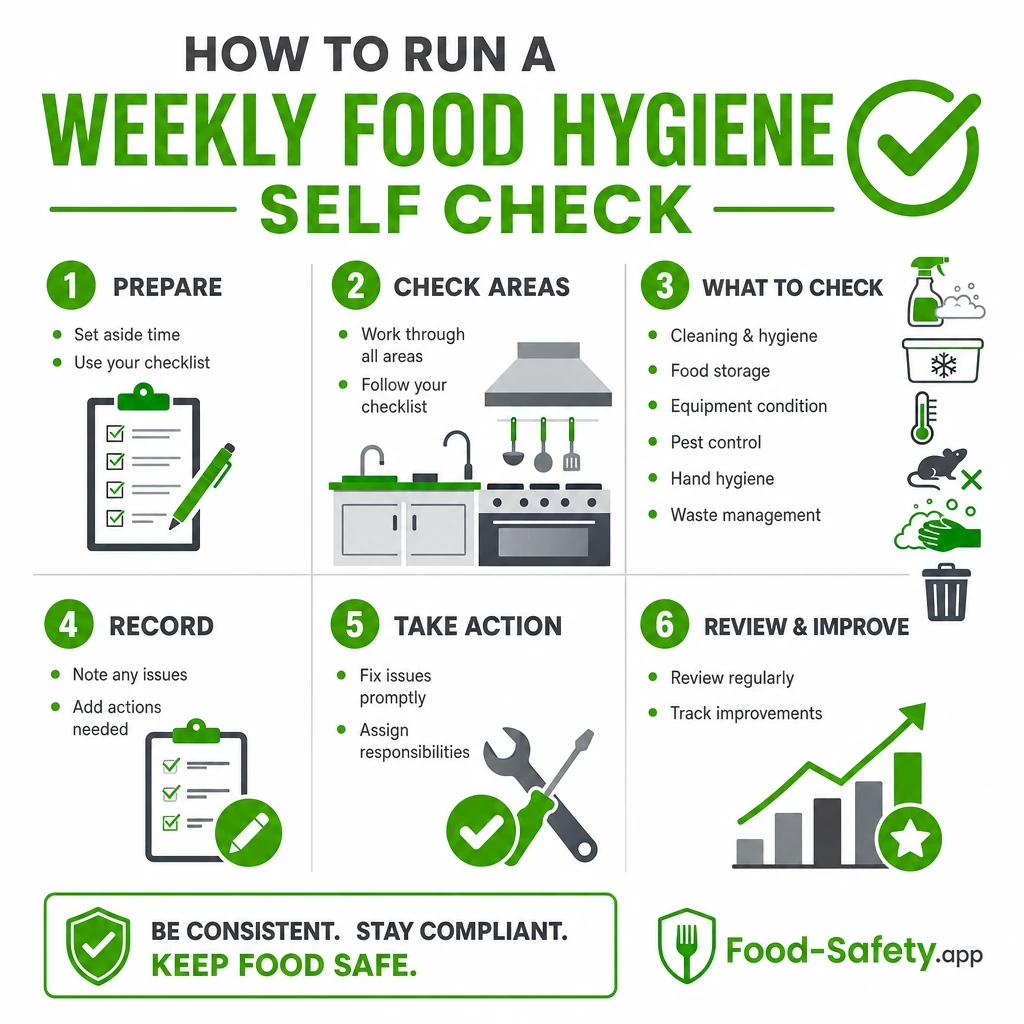
What to check each week
The weekly check should be practical, not a paperwork chore; it should map to daily tasks and help staff stay vigilant.
Fridges, freezers, hot holding and cooked food temperatures
Check that temperature readings are within safe operating ranges for the items held or prepared. Use a calibrated thermometer and record readings with time stamps. If any unit shows out-of-range results, take immediate corrective action and log the fix.
Cooking, cooling and reheating records
Verify that cooking, cooling and reheating steps are completed according to your procedures. Keep logs of start and finish times, temperatures reached, and any deviations. Ensure cooling methods meet your standards and that reheating restores safe temperatures before service.
Cleaning schedules and high-risk areas
Review when cleaning tasks were completed, focus on high-risk zones (such as prep surfaces and reach-in areas), and confirm tasks are signed off. Look for buildup, missed corners, or dampness that might hide contamination.
Opening and closing checks
Confirm opening routines (equipment powered on, temperatures checked, stock accounted for) and closing tasks (all surfaces clean, doors secure, records updated). A tidy handover helps next-day staff start with confidence.
Goods in checks for delivery temperature and condition
Inspect deliveries on arrival: temperature, packaging integrity, and labeling. Reject items that aren’t received in acceptable condition and ensure the reason is logged for supplier follow-up.
Pest control signs and monitoring points
Review pest control documentation, signs of activity, and the status of bait stations or traps. Note any new droppings, damage, or unusual odours and escalate as needed.
Probe calibration records
Check that temperature probes and thermometers have current calibration records or validation checks. If a probe drifts, mark it for calibration or replacement and document the action taken.
Defects, breakdowns and corrective actions
Record any equipment faults, waste, or breakdowns observed during the week. Note the corrective steps taken, the responsible person, and when the action was completed.
Allergen controls and menu changes
Verify that allergen information on menus, boards and packs matches what’s being prepared and served. If there are menu changes, check that staff awareness and cleaning routines reflect updates.
Staff training and hygiene practices
Review whether staff have completed required training and demonstrate good personal hygiene practices during service. Note any refresher needs or gaps in knowledge.
How weekly checks align with legal duties
Well-maintained records of monitoring and action help demonstrate due diligence to inspectors.
Weekly self-checks support safe food production by maintaining hygiene controls, ensuring proper temperature management, and providing evidence of ongoing monitoring and action. While regulations vary by jurisdiction, a documented weekly routine helps demonstrate due diligence and a proactive approach to food safety management. Use them to show inspectors that hazards are being identified, assessed and addressed promptly, and that corrective actions are tracked to completion.
Practical examples or scenarios
A practical, timely response to small faults reduces the chance that they become bigger problems.
- A fridge runs slightly warm for two days before a full breakdown is detected; after the issue is found, you log the fault, implement a temporary cooling plan and schedule a repair, with evidence of checks while awaiting repair.
- A prep-area cleaning task is missed, leading to surface dirt build-up; the weekly check flags the lapse, triggers a re-clean, and notes the potential risk for cross-contamination.
- A delivery arrives at an incorrect temperature and is rejected; the incident is recorded, the supplier is notified, and future orders are adjusted to prevent recurrence.
- A temperature probe is found out of calibration before a busy service; the device is quarantined, recalibrated or replaced, and readings are re‑logged for the week.
- An allergen update is issued but not reflected on the printed menu until a weekly review; the change is updated across menus, boards and online listings to prevent cross-contact.
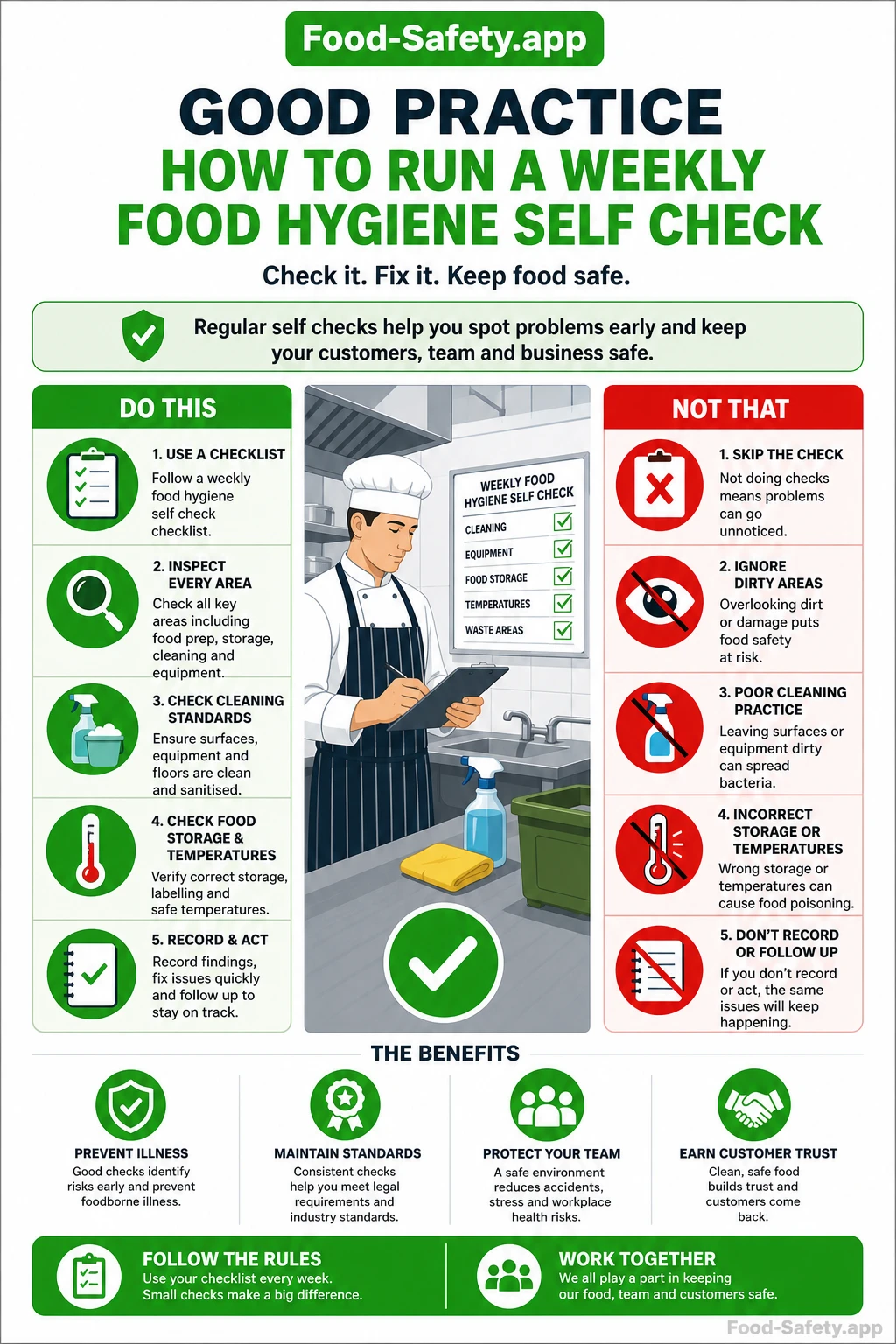
Getting started and next steps
- Create a one-page weekly checklist covering the items above, with space for date, time, who, and outcomes.
- Assign a named person for weekly sign-off and set a regular time (e.g., last Friday before closing).
- Integrate automatic timestamps where possible, and require action notes for any non-conformity.
- Review the week’s records briefly with the team to spot recurring issues and plan preventive measures.
- Store records securely and prepare them for inspections or internal audits without last‑minute scrambling.
Start with a simple one-page form and a fixed day; complexity can grow as confidence builds.
Getting started is the key. A straightforward weekly self-check built into the kitchen routine lays the groundwork for safer food, smoother service and a smoother inspection experience.