
Effective due diligence in food safety isn’t about busywork; it’s a reliable trail showing you followed the right checks at the right times.
This guide translates the concept into practical steps for catering and small food businesses, outlining which records matter, how to standardise them, and how to use them to defend your process during audits and inspections.
What due diligence means in practice
Important: The clearest defence is a documented method, followed consistently, with timestamps and sign-offs that prove it was done as intended.
Due diligence in a food business means more than completing a task; it means performing the right checks at the right times and capturing proof that those checks happened and followed the approved method. It’s about a repeatable process that can be traced from daily routines to corrective actions. When inspectors or auditors look for defensible evidence, a well-maintained record set shows you actively managed food safety, not merely that things were done.
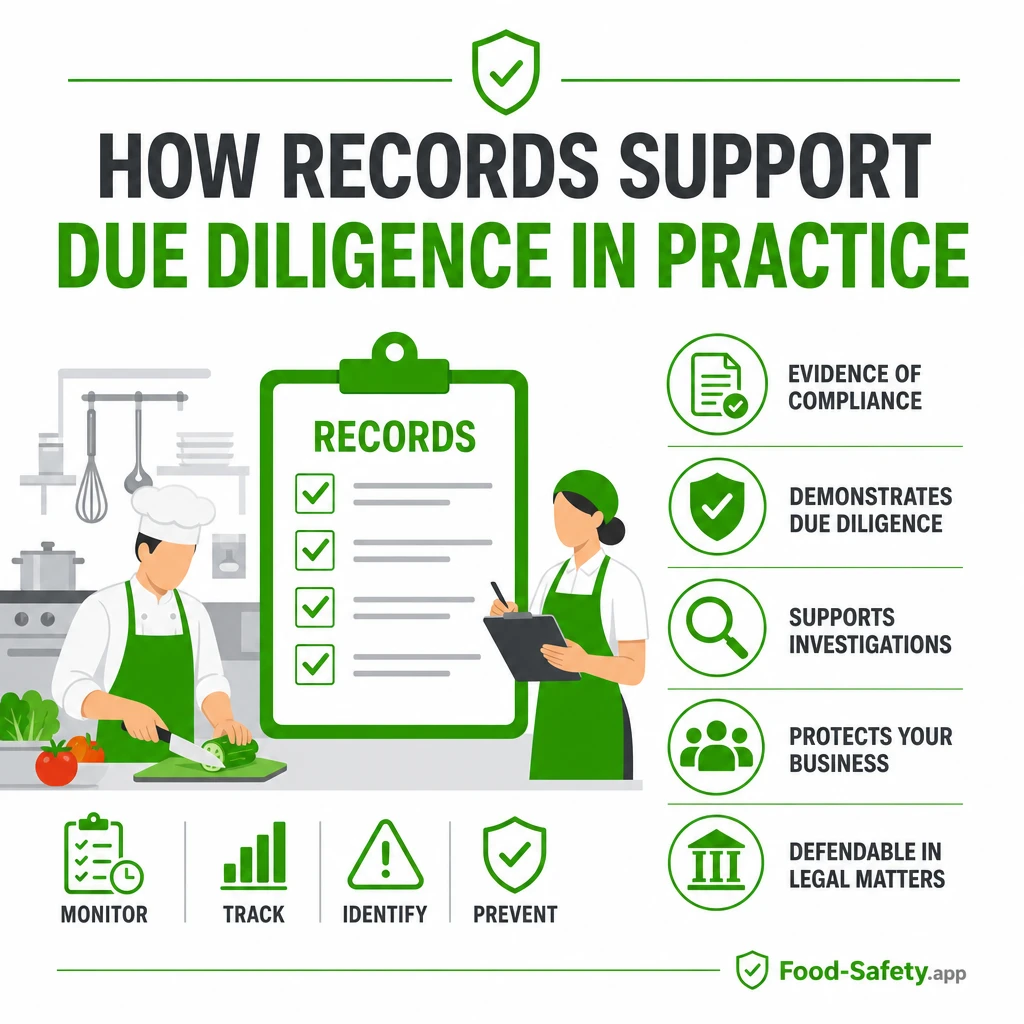
Which records matter most
Temperature logs, cleaning checks, deliveries and opening and closing checks form the backbone of traceability. They are your quickest path to showing a safe sequence of events.
A strong records strategy centres on the core controls that support safe operation. Prioritise:
- Temperature logs for chill and hot storage
- Cleaning and sanitation checks
- Delivery checks and supplier verification
- Opening and closing checks
- Defect reports and corrective actions
- Allergen records and menu/item reviews
- Training records and staff accountability
Focusing on these areas gives you a practical, auditable trail of daily control. For ongoing readiness, align every record with your HACCP-based plan and ensure entries are clear and attributable.
Operational focus you can adopt today:
- Standard templates across sites to avoid missing fields
- Consistent naming conventions for items and actions
- Quick reference tags for urgent issues (e.g., “rapid-cooling deviation”)
- Retention and easy export of historical data for audits
Practical scenarios
- A chilled delivery arrives warm: record the temperature, note the condition, reject or quarantine, and log the supplier action.
- A fridge runs above safe limits overnight: capture the defect, the corrective action, and the follow-up check after repair.
- A cooling log shows food was cooled too slowly: record the deviation and what was changed to prevent repeat failure.
- A cleaning task is missed during a busy service: document the gap, complete the task, and note who checked it.
- An allergen review is needed for a menu change: update the menu item record and keep evidence ready for inspection.
The best records are proactive: they anticipate what inspectors will want to see and provide a ready-made narrative of control, not a last-minute recap.
How records show a safe method was followed
A record that shows the method was followed is stronger than a note that a task was completed.
A record only proves a task happened if it reflects the method you’re enforcing. Use structured forms that prompt for the exact steps, sequence, and responsible person. Include fields for date, time, location, equipment, operator, and outcome. Where possible, attach supporting evidence (photos, thermometer readings, or batch numbers) to strengthen the entry. The aim is to demonstrate that your process—not just the action—was followed.
In practice, build your forms to capture:
- The specific control point and its target (e.g., “cooling from 60°C to 5°C within 90 minutes”)
- The actual measurement and the acceptable range
- The operator and supervisor sign-off
- Any deviations and immediate containment actions
Why automatic timestamps and structured entries strengthen evidence
An auditable sequence of events is easier to defend than a pile of unstandardised notes.
Automatic timestamps remove ambiguity about when actions happened, creating an unbroken sequence of events. Structured entries—consistent fields, drop-down options, and mandatory data points—reduce free-text gaps and inconsistencies that can undermine a defense during inspections. A well-organised history enables quick searches, reliable export to PDFs, and clear demonstrations of compliance during audits.
To implement, adopt digital forms with:
- Predefined fields (date, time, location, item, action, result)
- Mandatory sections (e.g., “reason for deviation,” “corrective action taken”)
- Timestamped entries and automatic reviewer sign-off
- Exportable history views for audits
Keeping records consistent across shifts, teams and sites
Consistency across shifts builds trust with supervisors, chefs and owners, who rely on a coherent evidence trail.
Consistency is essential when multiple people handle records, or when you operate across several sites. Achieve it by:
- Using the same templates everywhere
- Providing brief training on how to complete each field
- Implementing a clear handover process with a short records checklist
- Assigning accountability for data quality on every shift
A common practice is to maintain a central repository or cloud-based logbook where templates, glossaries and examples live, so everyone uses the same language and structure. Consistency reduces misinterpretation and makes inspection reviews smoother.
Linking issues to actions and full history
An issue is only truly closed when there’s evidence of effective resolution and a traceable history for future reference.
Recording an issue without tying it to an action and a follow-up is a missed opportunity. For each problem, capture:
- a clear description of the issue
- the potential risk or impact
- the responsible person and target completion date
- the corrective action taken (and why)
- the follow-up check to verify effectiveness
- links to relevant records (e.g., the affected batch, supplier notes, revised menu item)
Full history views and the ability to export a time-ordered report help internal reviews and external inspections. Being able to show “issue → action → verification” demonstrates a proactive approach to continuous improvement.
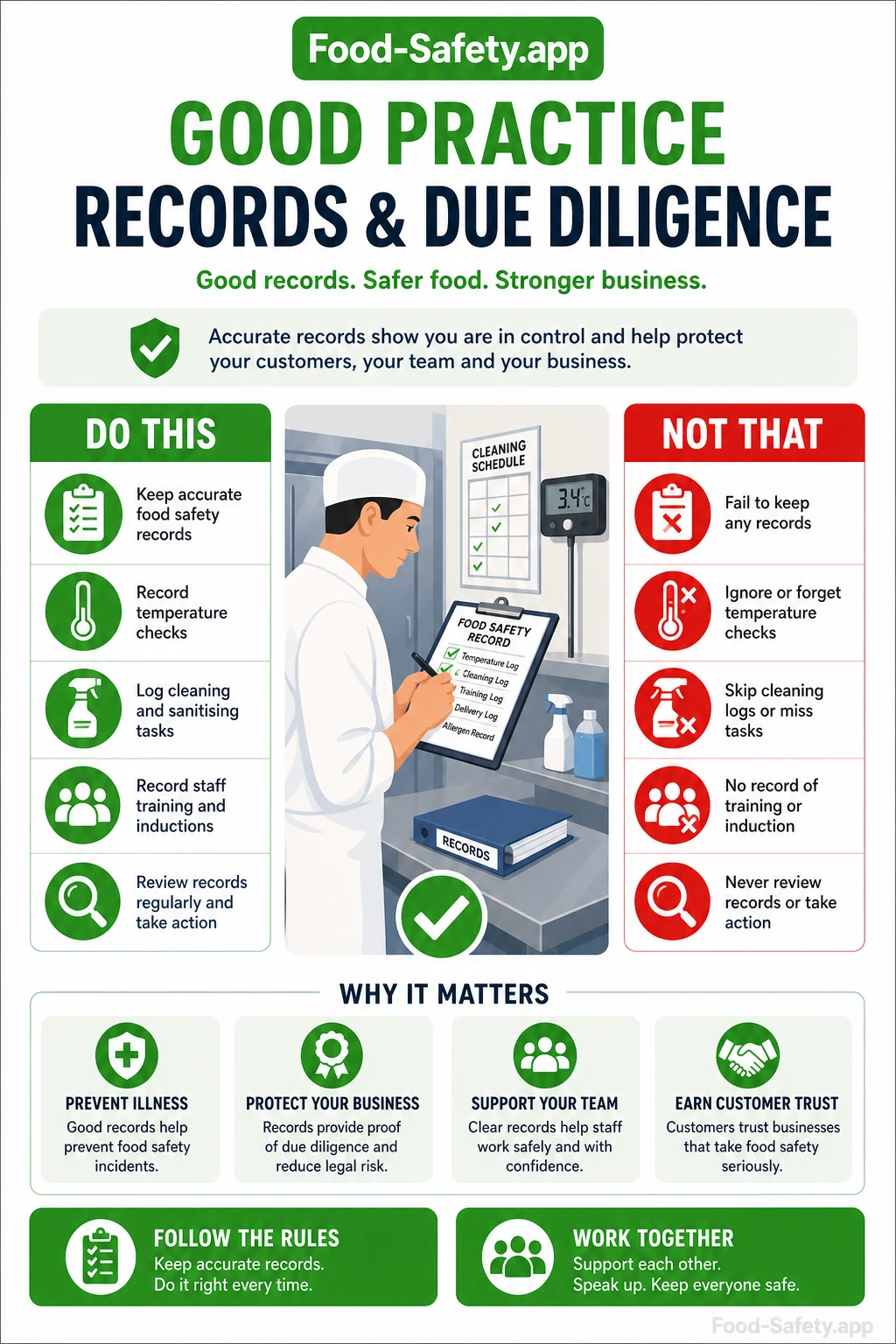
Practical summary: turning records into defence-ready evidence
- Define the core records you will keep and align them with your HACCP plan.
- Use standard templates everywhere, with mandatory fields and clear owners.
- Ensure each entry shows the method used, not just the completion of a task.
- Enable automatic timestamps and structured data to strengthen sequencing and readability.
- Document deviations with immediate containment and clear corrective actions.
- Maintain a single source of truth for audits, with easy export to PDF or other formats.
The safest procedure is the one you can follow consistently, and prove it you did.
If you’d like to explore a ready-to-use digital records framework, consider how a centralized, date-stamped logbook can streamline your daily controls, improve accountability, and stand up to inspection without guesswork.