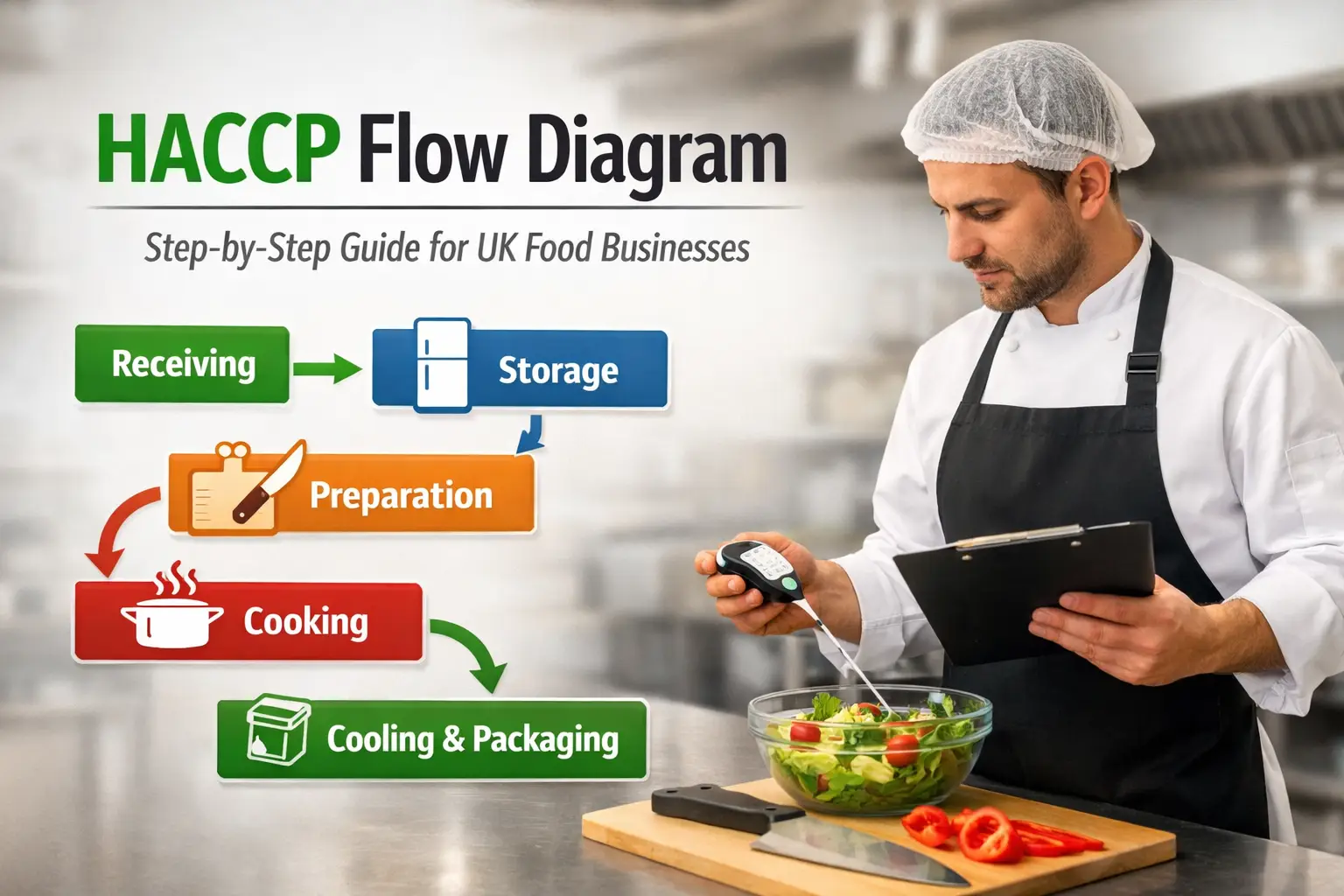
A simple HACCP flow diagram helps catering teams map a dish from delivery to service, spot where hazards can arise, and pin practical checks that staff can perform daily. This guide walks small UK kitchens through building a one-page diagram, with real-life dish examples and clear steps to connect daily practice with HACCP records and inspections.
Why a HACCP flow diagram matters in a small kitchen
Important: A diagram that mirrors real work reduces confusion and strengthens daily safety checks.
A flow diagram is a simple map of the path a dish takes, with hazards, controls and checks at each stage. In busy catering environments, it helps staff understand who does what and when, and it provides a clear record of what’s been monitored. For inspections, a well-made diagram can demonstrate a practical, documented safe system that staff actually follow.
In any commercial kitchen, starting with a single dish makes the process tangible and easier to maintain as the menu evolves. The goal is clarity, not complexity.
Practical takeaway: A one-page diagram should feel like a quick reference, not a maze of paperwork.
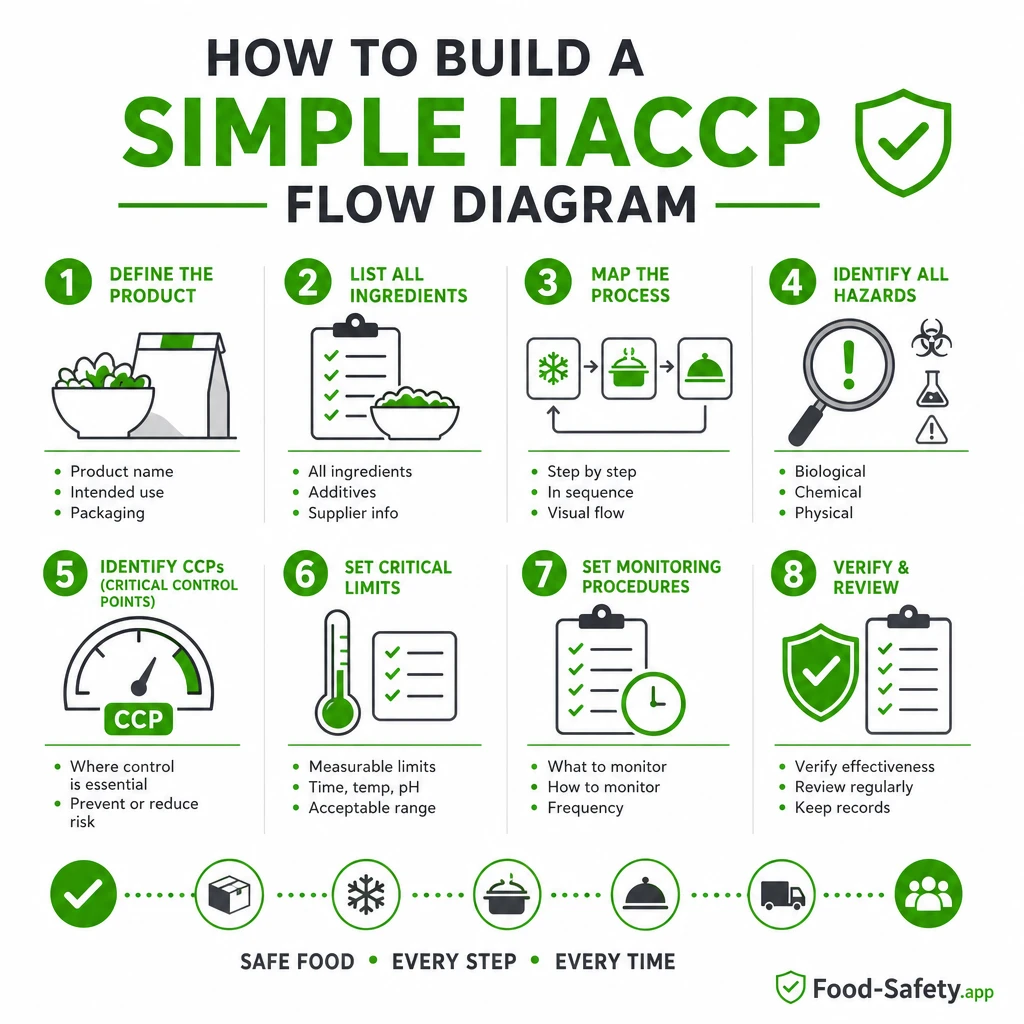
Start with one dish to keep it practical
Guiding rule: If staff can follow the diagram for breakfast or a lunch special, they’ll adapt it for full menu items.
Focusing on one dish at a time builds confidence and helps you reflect real workflow. Choose a dish that’s representative of service and has multiple steps, such as a chicken curry or a pantry-friendly soup. Once the pattern works for one dish, you can adapt it to others.
Key reminder: Keep language simple, action-based, and free of unnecessary jargon.
Example dish paths you might map first
- Chicken curry: chilled delivery, fridge storage, prep, cooking, hot holding, service
- Pasta salad: delivery, washing and prep, cooling, chilled storage, assembly, service
- Soup for later service: cooking, rapid cooling, cold storage, reheating, hot holding
- Small café breakfast item: one-page map for the item that changes most often
Delivery storage and prep steps
Operational tip: Link the diagram to day-to-day HACCP records and monitoring logs so checks feel familiar.
- Delivery and receipt: check for intact packaging, identify any temperature concern, segregate from ready-to-eat ingredients.
- Storage: place in appropriate storage (refrigeration or dry store) and label with dish name and date.
- Preparation: wash hands, separate cutting boards, and avoid cross-contamination between raw and ready-to-eat components.
Practical note
Keep the sequence tight and avoid adding steps that aren’t performed in your kitchen. If a step isn’t done, it doesn’t belong in the diagram. Food safety is most effective when the diagram reflects what staff actually do, not what the paperwork says.
Cooking cooling and holding
Operational tip: For busy service, a one-page diagram helps the team decide what needs attention before the dish reaches service.
- Cooking: ensure the dish reaches a safe internal state for its ingredients; record time and appearance of key cues (e.g., simmering, bubbling).
- Cooling: cool promptly and store in the correct container and lid setup to minimize time outside refrigeration.
- Reheating and hot holding or service: reheat to a safe temperature for service if needed and hold hot as required, or serve promptly.
Include straightforward checks that staff can perform without special training, such as visual cues and simple time logs.
Hazards and controls at each stage
Key distinction: The diagram should tell staff exactly what to do at the moment, not what the policy says in theory.
A compact table keeps hazards focused and linked to simple, practical controls. Use it as a quick reference during service.
| Stage | Common hazards | Simple controls |
|---|---|---|
| Delivery and storage | Contamination from packages, temperature abuse, cross-contamination | Inspect packaging, separate raw from ready-to-eat, place in correct storage; label with date and use-by cues |
| Preparation | Cross-contact, poor personal hygiene, utensil contamination | Wash hands, use clean utensils and boards for each ingredient, prep raw and cooked items on different surfaces |
| Cooking | Undercook or uneven cooking, equipment inconsistency | Cook to clear cues; monitor with a timer and thermometer where available; avoid rush-driven shortcuts |
| Cooling | Slow cooling, clumping in containers, post-cooling contamination | Use shallow containers; spread food to cool fast; refrigerate promptly |
| Reheating and holding | Insufficient reheating, long cold-hold time, contamination during holding | Reheat to service level; limit holding times; check that lids and covers stay clean |
| Service | Recontamination during plating or serving | Use clean utensils; separate raw and ready-to-eat items on service lines; maintain clean surfaces |
Food safety is most effective when the diagram reflects what staff actually do, not what the paperwork says.
Keeping the diagram practical and current
Important: The safest procedure is the one that can be followed consistently during a busy service.
A flow diagram remains useful only if it stays aligned with real menus, equipment and incidents. Use it as a living document that staff can reference and that your HACCP records support.
- Reflect menu changes, new equipment, or new processes in the diagram promptly.
- Involve front-line staff in updates to keep wording clear and actionable.
- Tie the diagram to daily monitoring, logs, and corrective actions so inspections can be evidenced easily.
- Keep it concise: one readable page per dish or per small menu group.
In practice, a single, well-constructed diagram can become a reliable foundation for your HACCP system, especially in small kitchens with limited resources.
Explore the Food-Safety.app HACCP Flowchart Generator and see how quickly you can turn a food process into a clear, structured HACCP flowchart. It’s designed to make the process simpler, more consistent and easier to review as part of your food safety management system.