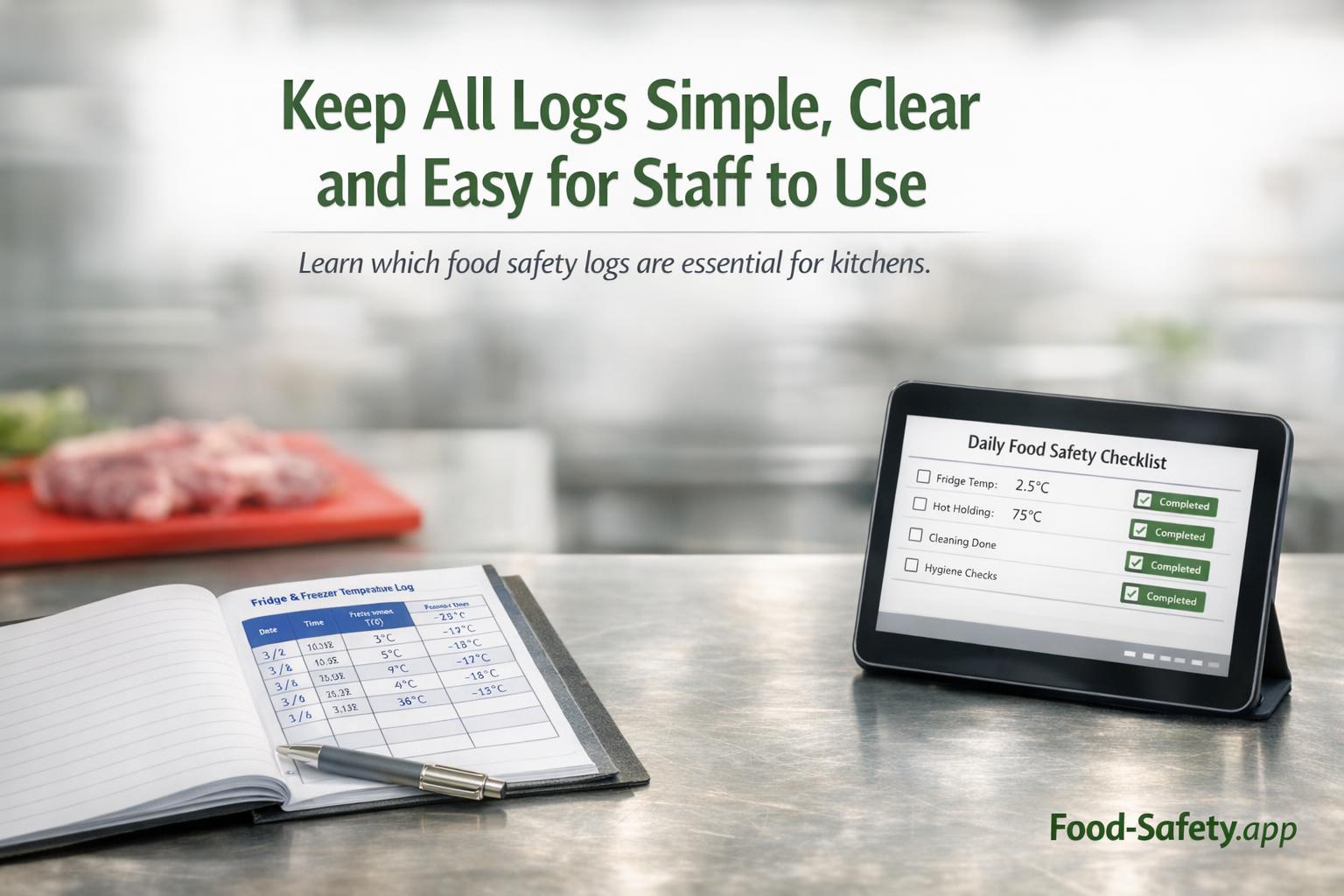
Keeping the right food safety logs is one of the simplest ways to show that a catering or hospitality business is managing food hygiene properly. In a busy professional kitchen, good records help you spot problems early, keep staff on track, and prove what happened if something goes wrong. The exact paperwork you need can vary by business type and by country, but for UK food businesses the core idea is the same: keep clear, useful records that support safe food handling every day.
If you are wondering what food safety logs every kitchen should keep, the short answer is that you need records for temperatures, cleaning, deliveries, training, allergen controls, maintenance, and anything else that affects food safety. The best logs are simple enough for staff to use during a busy service, but detailed enough to be helpful if you need to investigate a problem later.
Why food safety logs matter
Food safety logs are not just paperwork for the sake of it. In a restaurant, hotel kitchen, café, school canteen or takeaway, they help you keep control of the daily basics: cold storage, hot holding, cleaning, stock rotation and staff practice. They also make it easier to prove that checks are being done consistently, not just when someone remembers.
Good records are especially useful in professional kitchens where teams change shifts, service can be hectic, and one missed check can affect a whole batch of food. If a fridge warms up, a delivery arrives in poor condition, or a member of staff is unsure about an allergen request, logs help you act quickly and accurately. You might also review HACCP principles.
In the UK, food businesses are expected to manage food safety in a way that is suitable for the risks in their operation. The Food Standards Agency provides practical guidance on food hygiene and record keeping, which is a sensible starting point for most businesses. You can also check official guidance at Food Standards Agency.
The core food safety logs every kitchen should keep
If you only put a few logs in place, start with these:
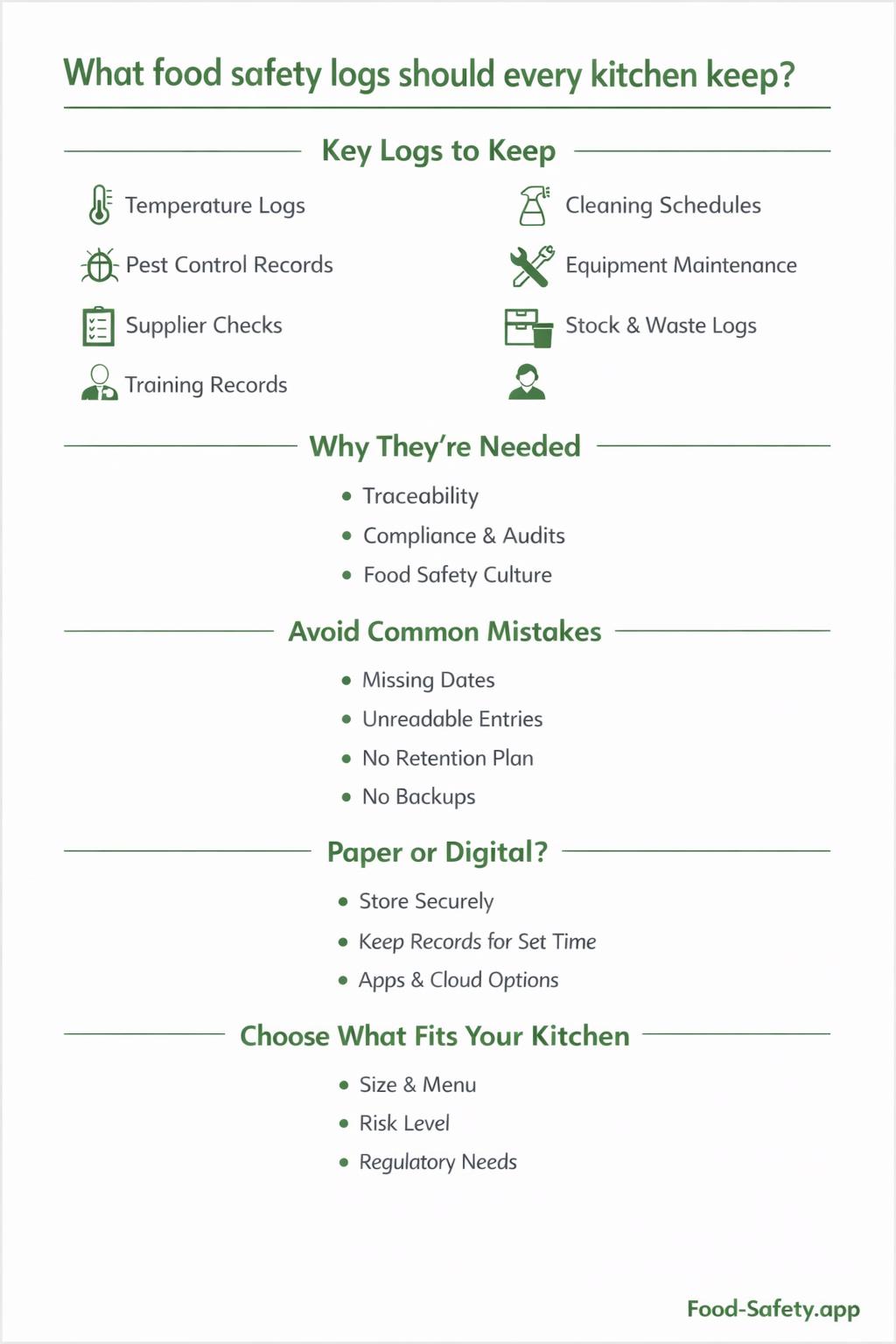
- Fridge, freezer and hot holding temperature logs
- Cleaning schedules and sign-off sheets
- Delivery checks and stock receiving records
- Allergen control and menu change records
- Equipment maintenance and calibration logs
- Staff training and refresher records
- Incident and corrective action records
Those seven areas cover most day-to-day food safety risks in a commercial kitchen. You may also need extra logs for opening and closing checks, pest control visits, water safety, waste disposal, or high-risk processes depending on your business. For practical guidance on allergen management in busy kitchens, see allergen management.
Food temperature logs
Food safety logs for temperature control are usually the first ones inspectors want to see, because temperature is one of the easiest ways to control food safety. These logs should cover fridges, freezers, hot holding units, reheating checks, cooling records, and any cooked food that is held before service.
What to record
- Date and time of the check
- Equipment or food item checked
- Actual temperature reading
- Staff member initials or name
- Action taken if the reading is outside your normal control
Practical kitchen routine
In a busy service, assign temperature checks to a named person on each shift. For example, the morning prep chef can check all chilled storage before prep starts, while the duty manager checks hot holding before lunch service. If a fridge is struggling, do not just write the number down and move on. Move high-risk food to another unit, reduce loading, check the door seal, and report the fault immediately. For more on temperature control in kitchen, see our guidance.
Corrective action example
If a fridge reading is higher than expected, your log should show what happened next. That might include moving food to another fridge, calling maintenance, isolating the unit, and noting any food that needs to be discarded. The value of the log is not only the temperature reading, but the action taken.
Cleaning and hygiene logs
Cleaning logs show that your kitchen is keeping surfaces, equipment and food contact areas under control. They are especially important in operations that run long hours, such as hotel kitchens, school canteens and takeaways with a steady flow of service through the day.
What to include
- Daily, weekly and monthly cleaning tasks
- Who completed each task
- When it was completed
- What products were used, where relevant
- Any defects or missed areas
Make the schedule realistic
Overcomplicated cleaning logs tend to fail because staff rush them or fill them in at the end of a shift from memory. Build your log around the way the kitchen actually works. For example, front-of-house pastry prep may need a midday clean-down, while a prep-heavy catering kitchen may need separate cleaning points for raw meat areas, vegetable prep, and end-of-day deep cleaning.
Don’t forget high-risk touchpoints
Handles, taps, fridge seals, slicers, chopping boards, probe thermometers and ice machines are easy to miss. A good cleaning log reminds teams to cover those details, not just the obvious worktops and floors. For practical guidance on cleaning schedules, see kitchen cleaning schedule in action.
Delivery and stock receiving logs
Food safety starts when goods arrive. Delivery logs help you check that ingredients are in acceptable condition before they are put away. This is one of the most useful food safety logs for any kitchen because poor stock decisions at the back door can create problems later in service.
What to check on delivery
- Packaging condition
- Use-by dates and batch details where relevant
- Temperature of chilled and frozen items, if part of your procedure
- Signs of contamination, damage or spoilage
- Correct quantities and product matches
- Any rejected items and why they were rejected
Why it matters in practice
A busy chef may be tempted to accept a delivery and sort it out later, but that can lead to poor stock being stored with good stock, or missing the chance to reject items properly. A clear receiving log gives you a structured check, even when the loading bay is hectic and the driver is waiting.
Corrective action example
If chilled food arrives poorly packed or warm, record the issue, refuse what is unsafe, and tell the supplier straight away. If you decide to keep any part of the delivery, make sure the reason is clear in the log and that the goods are safe to use.
To reduce cross-contamination risk at receiving, see How cross-contamination happens and how to stop it.
Allergen and menu control logs
Allergen mistakes are a serious risk in catering and hospitality, so your food safety logs should include a clear system for allergen control. This is not just about ingredients lists. It is about keeping menu information current, making sure staff understand what is in each dish, and recording changes when recipes or suppliers change.
What to record
- Current allergen matrix or dish information sheet
- Recipe changes and supplier substitutions
- Special meal requests and how they were handled
- Staff briefings on allergen updates
- Separate preparation or service controls, where used
Professional kitchen example
If a café swaps a bread supplier, the ingredients and allergen information may change without the team realising. A simple update log can prevent old menu folders, printed boards or online listings from staying in use after the change.
Keep it live, not dusty
The best allergen records are easy to update and easy to find. If your menu changes often, keep a single version-controlled file or board, and make one person responsible for updating it. In a busy kitchen, that responsibility should sit with someone who can actually action changes quickly.
Equipment, maintenance and calibration logs
Faulty or badly maintained equipment can undo good kitchen practice very quickly. Maintenance logs help you track planned servicing, urgent repairs and calibration checks for probes or other measuring equipment. They are especially useful in kitchens with multiple fridges, combi ovens, blast chillers, dishwashers and holding units.
What to include
- Equipment identity or location
- Service or inspection date
- Fault reported
- Action taken and by whom
- Return-to-use date, if relevant
- Calibration check results for temperature probes
Why calibration matters
If a probe thermometer is out of calibration, your temperature checks are not trustworthy. A calibration log helps you confirm that the tool you are using is accurate enough for the job. Many businesses do this routinely with a simple ice-point or boiling-point check, or by following the manufacturer’s guidance.
Operational benefit
Maintenance logs also help managers spot repeated problems. If the same fridge keeps failing on hot days, or a door seal keeps splitting, the log makes the pattern visible before it becomes a food safety incident.
Staff training and competence logs
Training records are one of the most overlooked food safety logs, but they matter because a kitchen is only as strong as the people working in it. Staff training logs should show what each person has been taught, when they were trained, and whether they need refreshers.
What to capture
- Induction topics completed
- Food hygiene and safety training completed
- Allergen awareness training
- Temperature control and cleaning training
- Refresher dates and follow-up coaching
- Any competency checks completed on the job
Use the log to support the team
A training log should not be treated as a box-ticking exercise. If a new commis chef keeps forgetting handwashing steps or a front-of-house team member struggles with allergen communication, the record should lead to extra coaching. In a professional kitchen, that is much more useful than simply noting that training happened once months ago. For a quick starter, see our training records guide.
Incident, corrective action and complaint logs
Even good kitchens have problems. What matters is how quickly they are recognised and dealt with. Incident logs are where you record issues such as a power cut, fridge failure, contamination concern, suspected food poisoning complaint, pest sighting, or a serious cleaning lapse.
What to record
- What happened
- When and where it happened
- Who noticed it
- Food or equipment affected
- What action was taken immediately
- Who was informed
- How you prevented a repeat
Why this log is so valuable
This is the record that shows whether your business learns from mistakes. A brief, honest note about a problem and the corrective action taken is far more useful than trying to hide or gloss over an issue. In a hotel or school setting, where more people may be affected, clear incident logging is particularly important.
Paper or digital logs?
Both paper and digital systems can work well. The right choice depends on how your kitchen operates. A small café may prefer simple paper sheets clipped to a wall folder, while a multi-site catering operation may need digital records for consistency and easier oversight.
Paper logs work well when
- Checks happen in one place
- Staff need a quick, visible process
- Internet access is unreliable
- Managers want an easy prompt on the wall or clipboard
Digital logs work well when
- You manage several sites
- You need alerts for missed checks
- Records must be reviewed remotely
- You want one clear version of menus, schedules and corrective actions
Some businesses use a mix of both. For example, a printed cleaning rota may be signed in the kitchen, while temperature logs are recorded on a tablet. The important thing is not the format, but whether staff actually use it correctly during service.
How to make logs work in a busy kitchen
The best food safety logs are the ones that fit smoothly into the daily rhythm of the kitchen. If a record is too long or too complicated, staff will rush it or skip it. Keep your logs practical by following these rules:
- Use simple, clear headings
- Keep each log close to the task it supports
- Limit the number of boxes staff need to complete
- Assign each check to a named role or shift
- Review logs daily, not just when an inspection is due
- Act on problems straight away and write the action down
It also helps to train supervisors to look for patterns. A single missed cleaning entry may be a one-off, but repeated missing entries can mean the process is too awkward for the team. In that case, the log needs improving, not just the staff. For additional guidance on cleaning practices, see cleaning stages for food safety management.
Common logging mistakes to avoid
Many kitchens have logs, but they are not always helpful. The most common mistakes are easy to fix if you know what to look for:
- Filling logs in at the end of the day from memory
- Using the same generic sheet for everything
- Leaving no space for corrective action
- Not reviewing the records after completion
- Allowing old menu sheets or outdated procedures to stay in use
- Making logs so complicated that staff stop using them
If your records are not helping you make decisions, they are probably too vague or too hard to use. A good log should tell a clear story: what was checked, what was found, and what was done next. For an overview of good kitchen habits, see good kitchen habits.
To improve your training approach, see our training resources: training records and related materials.
Final thoughts
The food safety logs every kitchen should keep are the ones that support safe day-to-day decisions: temperature checks, cleaning records, delivery checks, allergen control, maintenance, training and incident reporting. In a professional kitchen, these records help you protect customers, support staff, and stay in control during busy service.
Keep the system simple, make responsibilities clear, and review records often enough to spot issues early. If you want more consistency across sites or shifts, a food safety management system for catering businesses such as Food-Safety.app can help bring those records together without overcomplicating the process.
When logs are practical, up to date and actually used, they stop being paperwork and become part of how the kitchen runs safely every day.
For further guidance on building a strong training and induction framework, see training records and related materials.