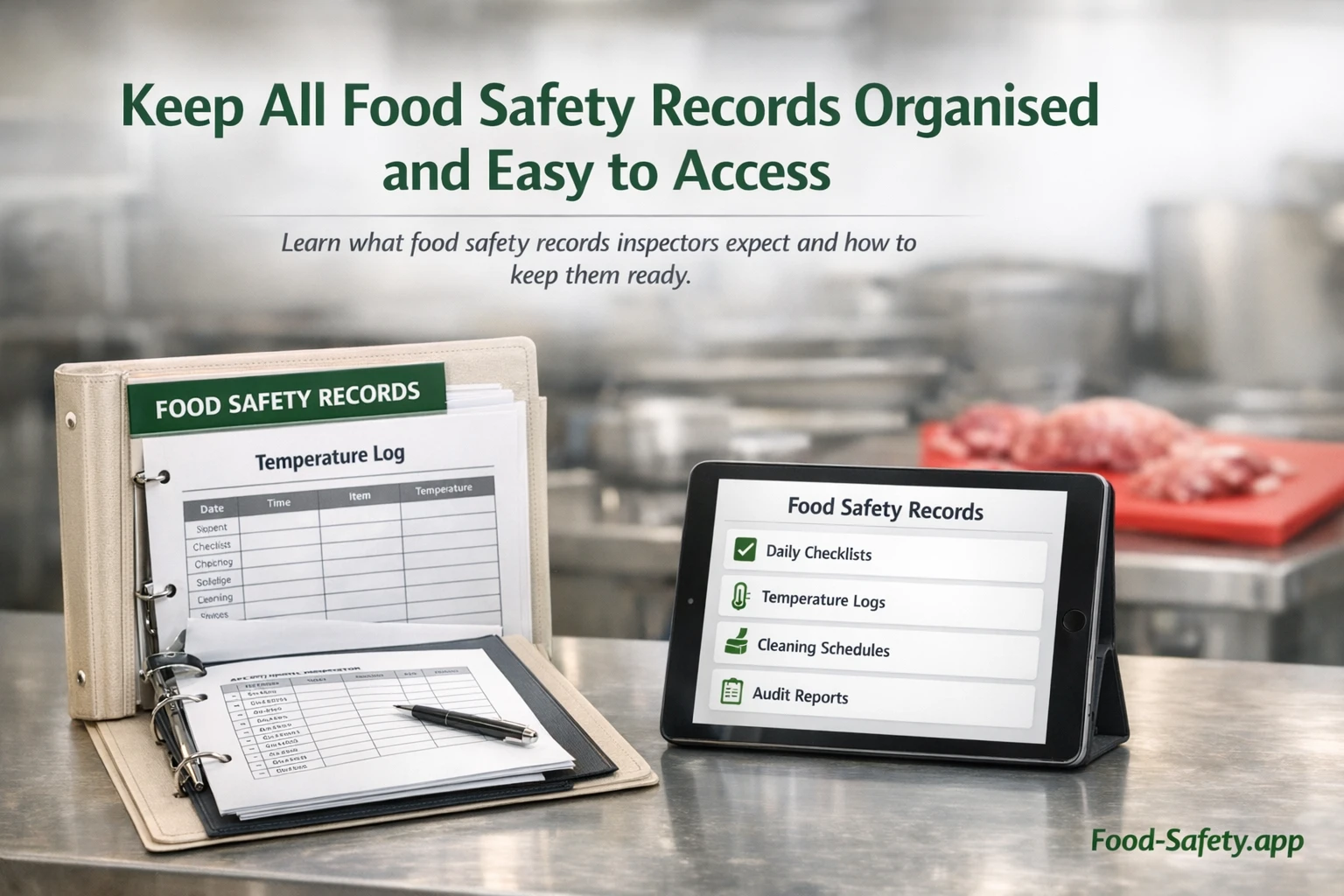
Learn what food safety records inspectors expect and how to keep them ready, with clear Due dilligence steps to stay compliant and confident.
Table of contents
- Key records inspectors expect
- Temperature records and Due dilligence
- Cleaning schedules and verification
- Allergen management records
- Staff training and competency
- Storage and stock control logs
Key records inspectors expect
Food inspectors look for clear, consistent records that demonstrate Due dilligence in managing food safety risks. At a minimum, this includes your HACCP-based procedures, daily checks, corrective actions, and verification logs. These documents show that hazards have been identified, controls are in place, and issues are dealt with promptly. For example, if a fridge fails, inspectors expect to see what action was taken, not just the temperature reading. Good records tell the story of how your business keeps food safe every day.
In practice, this means keeping documents organised, accessible, and up to date. Paper folders can work, but many businesses now use digital systems to reduce errors and ensure nothing is missed. A tool like Food-Safety.app, a food safety management system for catering businesses, helps maintain timestamped records and instant reports, making inspections smoother and less stressful.
Temperature records and Due dilligence
Temperature control is one of the first things inspectors review because it directly affects food safety. You’ll need logs for cooking, reheating, hot holding, cooling, and cold storage. These records show that food is kept out of the danger zone and handled safely at every stage. Missing or inconsistent temperature logs can quickly raise concerns about your Due dilligence and operational control.
For example, a catering kitchen should record fridge temperatures at least daily and verify cooking temperatures for high-risk foods like poultry. If a reading falls outside safe limits, corrective action must be documented. Guidance from authorities such as the World Health Organization highlights temperature control as a critical factor in preventing foodborne illness.
Understanding safe ranges is essential, and you can explore this further in temperature control and the danger zone to strengthen your daily checks.
Cleaning schedules and verification
Cleaning records prove that your premises, equipment, and utensils are hygienic and safe to use. Inspectors expect to see scheduled cleaning tasks, assigned responsibilities, and confirmation that work has been completed. This goes beyond a checklist—there should be evidence of verification, such as supervisor sign-off or periodic deep cleaning records.
For instance, a restaurant should document daily surface sanitising, weekly equipment cleaning, and periodic deep cleans. If cleaning isn’t recorded, inspectors may assume it hasn’t been done. Strong Due dilligence means showing consistency, not just intention. Digital reminders and logs can help ensure nothing is overlooked during busy service periods.
Allergen management records
Allergen control is a critical legal and safety requirement. Inspectors will check how you identify, manage, and communicate allergen risks. This includes ingredient lists, supplier information, and records showing how allergen information is kept accurate and up to date. You should also document how staff handle allergen requests and prevent cross-contact.
For example, if a customer asks for a gluten-free dish, your records should support that claim with clear ingredient tracking and preparation procedures. Maintaining Due dilligence in allergen management protects customers and your business reputation. It’s also important to regularly review menus and update allergen information when recipes or suppliers change.
Staff training and competency
Training records demonstrate that staff understand their food safety responsibilities. Inspectors will look for evidence of induction training, refresher courses, and role-specific instruction. This includes allergen awareness, hygiene practices, and safe food handling procedures. Without training records, it’s difficult to prove that your team is competent.
For example, a new employee should receive basic food hygiene training before handling food. Ongoing training should also be documented, especially when procedures change. Keeping clear records supports Due dilligence and helps maintain consistent standards across your team. You can strengthen your approach by reviewing training and staff development practices tailored to food businesses.
Storage and stock control logs
Storage records help demonstrate that food is kept safely and used within its shelf life. Inspectors often check stock rotation systems such as FIFO (first in, first out), date labelling, and delivery checks. You should also record how you handle damaged or out-of-date items, including disposal or corrective actions.
For example, a café receiving daily deliveries should log supplier checks, temperatures on arrival, and product condition. If issues are found, these should be recorded along with the action taken. Strong Due dilligence means showing that risks are identified early and controlled effectively, reducing the chance of unsafe food reaching customers.
Overall, well-maintained records make inspections faster and less stressful. They provide clear evidence that your business is managing food safety responsibly, protecting both customers and your reputation.