-
Every food business and catering service uses chemicals. Cleaning products, sanitisers and maintenance chemicals are part of daily work in kitchens, vans, units and production spaces. When they’re used correctly, they help keep food safe. When they’re not, they can harm people and contaminate food. COSHH exists to manage those risks. It’s about protecting staff…
-
Running a food business means juggling a lot. Orders, staff, stock, cleaning and customers all at once. Date marking can feel like just another task, but it’s one of the most important ones you do each day. Get it right and you protect your customers and your business. Get it wrong and the risks are…
-
This training’s for food business owners, managers, supervisors and food handlers. It’s written as a toolbox talk style guide you can use in short sessions with your team or on your own. The aim is clear. Help you understand what UK food safety law means in day to day work and what enforcement officers expect…
-
Food safety isn’t just about keeping things clean or following routines. Some of the most serious risks come from foods that look, smell and taste completely normal. You won’t always get a warning when something has gone wrong. One of the most dangerous examples is Clostridium botulinum. Botulism is rare in the UK, but when…
-
Overview Sanitisers play a big part in keeping food safe. They reduce harmful bacteria on food contact surfaces. When they’re used the right way, they protect customers, staff and your business reputation. When they’re used the wrong way, they can quietly increase risk without anyone noticing. In busy kitchens, it’s easy to rush. That’s why…
-
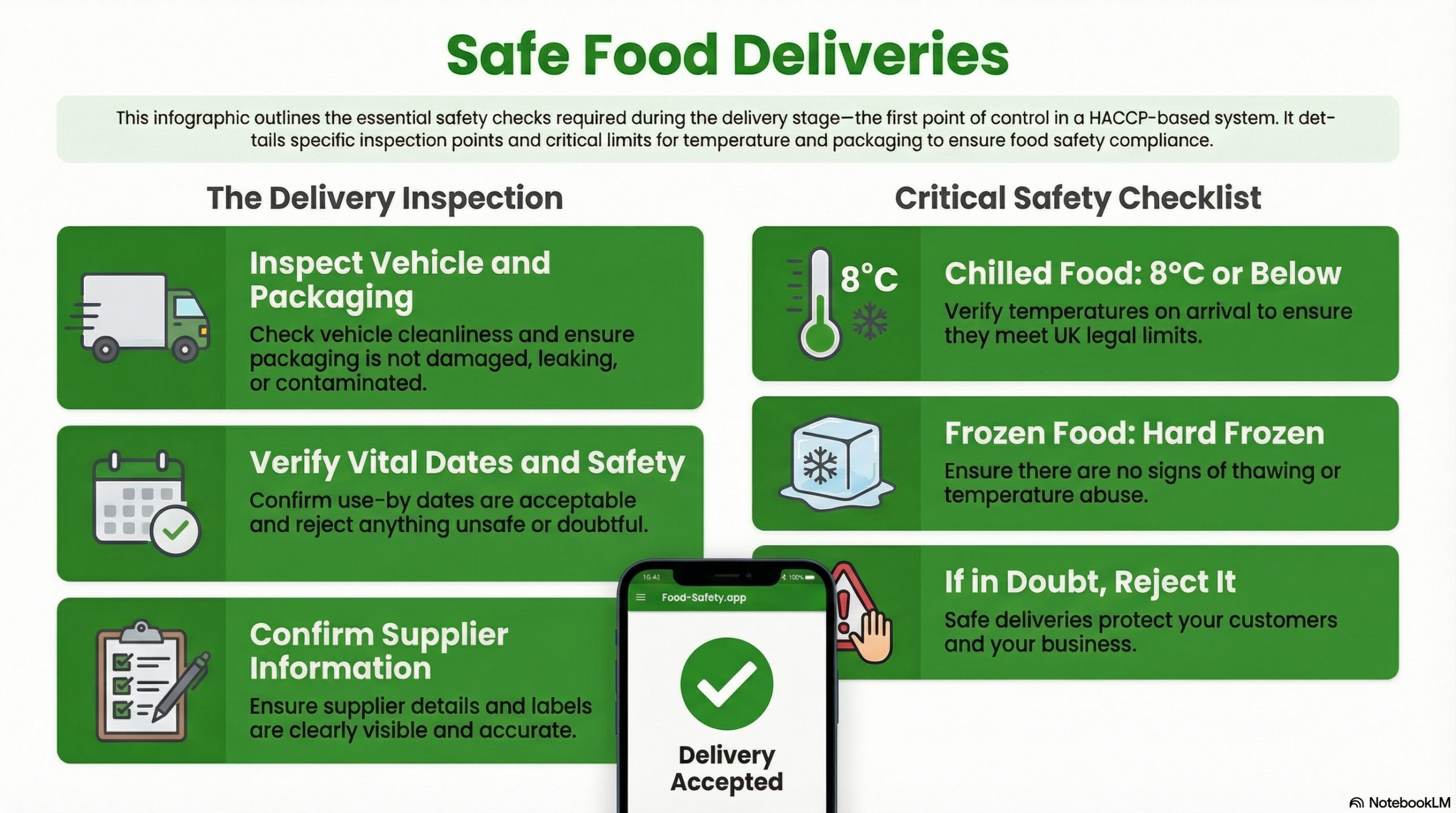
Getting food safety right at the door When a delivery arrives, it’s easy to feel rushed. The driver’s waiting. The kitchen’s busy. You just want to get on with the day. But this moment matters more than most. Deliveries are the first real food safety check in your business. If unsafe food comes through the…
-
FIFO, FEFO and Safe Storage Explained If stock rotation slips, food safety slips with it. It’s one of the most common things Environmental Health Officers pick up during inspections. Out-of-date food, poor labelling and messy fridges are all signs that stock control isn’t working. The good news is this. Stock rotation doesn’t need to be…
-
Running a food business in the UK means inspections are part of the job. For many owners, they’re also one of the biggest worries. You might wonder what the inspector will ask, what they’ll look at and how one visit can affect your reputation. The good news is inspections don’t need to feel scary. With…
-
Running a kitchen is fast paced, noisy and often stressful. It’s also one of the highest risk workplaces in the UK. Burns, cuts, slips and fires can happen in seconds if controls aren’t in place. That’s why kitchen health and safety isn’t just paperwork. It’s about keeping your people safe and your business open. Whether…
-
If you run a café, restaurant, takeaway, food truck or small production kitchen, temperature control is one of the biggest food safety risks you deal with every day. It’s also one of the most common reasons Environmental Health Officers raise concerns. The good news is this. Once you properly understand the Temperature Danger Zone and…
-
Why personal hygiene matters so much Personal hygiene is one of the biggest controls in food safety. Many cases of food poisoning don’t start with spoiled food. They start with people. Hands, hair, clothing and illness can all spread harmful germs. Once these get into food, they can cause serious illness, complaints and inspections. Common…
-
Running a food business means doing lots of small things right every day. One of the most important is hand washing. It sounds basic, but it’s one of the biggest ways to stop germs spreading. When hand washing slips, food safety slips with it. Whether you run a café, takeaway, restaurant, food truck or production…
-
Cross-contamination is one of the most common causes of food poisoning. It affects every type of food business and every food handler, from large factories to small kitchens. It doesn’t matter what food you prepare or where you work. If food isn’t handled safely, contamination can happen. This guide explains contamination vectors in a clear…
-
Why food risk levels matter day to day Not all foods behave the same way. Some allow bacteria to grow very quickly. Others don’t support bacterial growth at all. Treating all foods the same can lead to mistakes, especially in busy environments. Most food poisoning cases come from a small number of foods that weren’t…
-
Food safety often feels simple on the surface. Food looks fine. It smells fine. It tastes fine. So it must be safe. Sadly, that’s where many food businesses get caught out. The biggest risks in food safety are invisible. Bacteria and viruses can be present in food without any warning signs at all. If you…
-
Food-Safety.app Compliance Confidence for Busy Kitchens Food-Safety.app is designed for food businesses that want food safety done properly, without unnecessary complexity or high costs. It focuses on efficiency, affordability, and clear digital records that make day to day compliance easier to manage. Many food businesses don’t need Bluetooth probes, cloud dashboards, or extra hardware. They…
-
It’s All About the C’s Food safety can sound complicated. There are rules, records, checks and inspections to think about. When you’re running a café, takeaway, restaurant or food business, it can feel like just another thing on an already long list. But here’s the truth. Good food safety doesn’t come from doing everything at…
-
If you run a café, restaurant, takeaway or food truck, your fridge works hard every day. It keeps food fresh, safe and ready to serve. But many small businesses don’t check fridge temperatures as often as they should. It’s an easy job to forget when you’re busy, but it really matters. This guide takes a…
-
Physical contamination is one of the most damaging food safety risks in any kitchen. It’s the kind of problem customers spot straight away and never forget. A hair in a sandwich. A bit of plastic in a curry. A chip of glass on a plate. Even one small slip can undo years of hard work.…
-
In busy kitchens, shortcuts can feel normal. You’ve got orders piling up, staff asking questions and food that needs prepping now. So when frozen meat looks like it’ll thaw quicker on the counter, it’s easy to think it’s no big deal. But this one shortcut is one of the most common food safety mistakes in…
