During busy service, hand washing often drops off the radar as prep rushes, plate-ups and cross-area movements compete for attention. This article explains why lapses happen, and how to cut them without slowing the kitchen. You’ll learn practical layout tweaks, supervision cues and quick checks that improve compliance when it matters most.
Peak time pressure points
During peak service, staff rotate quickly between raw prep, cook, garnish, and delivery checks. If the sink isn’t part of a clearly visible workflow, it’s easy to skip hand washing. Make the hand wash step unavoidable by placing the sink within the line of sight of the task.
Peak periods put hygiene routines under real strain. Typical pinch points include prep rushes, service spikes, plate-up, delivery checks, and staff moving between raw and ready-to-eat tasks. When several tasks converge, hand washing can feel like a time sink, even when it’s only a few seconds.
Effective responses don’t require extra queues or slower service. They require tighter integration of hygiene into the workflow.
Practical measures you can apply now:
- Position a dedicated hand-wash sink at or immediately beside the prep and pass areas.
- Build a simple hand-wash step into every “handoff” between raw and ready-to-eat tasks.
- Use color-coded towels and soap bottles to reduce confusion during rushes.
- Implement short, repeatable checklists for opening, service, and closing that explicitly include hand washing.
Quick wins come from visibility and simplicity. If staff can see a clear path to wash hands, they’ll take it.
Bad sink locations
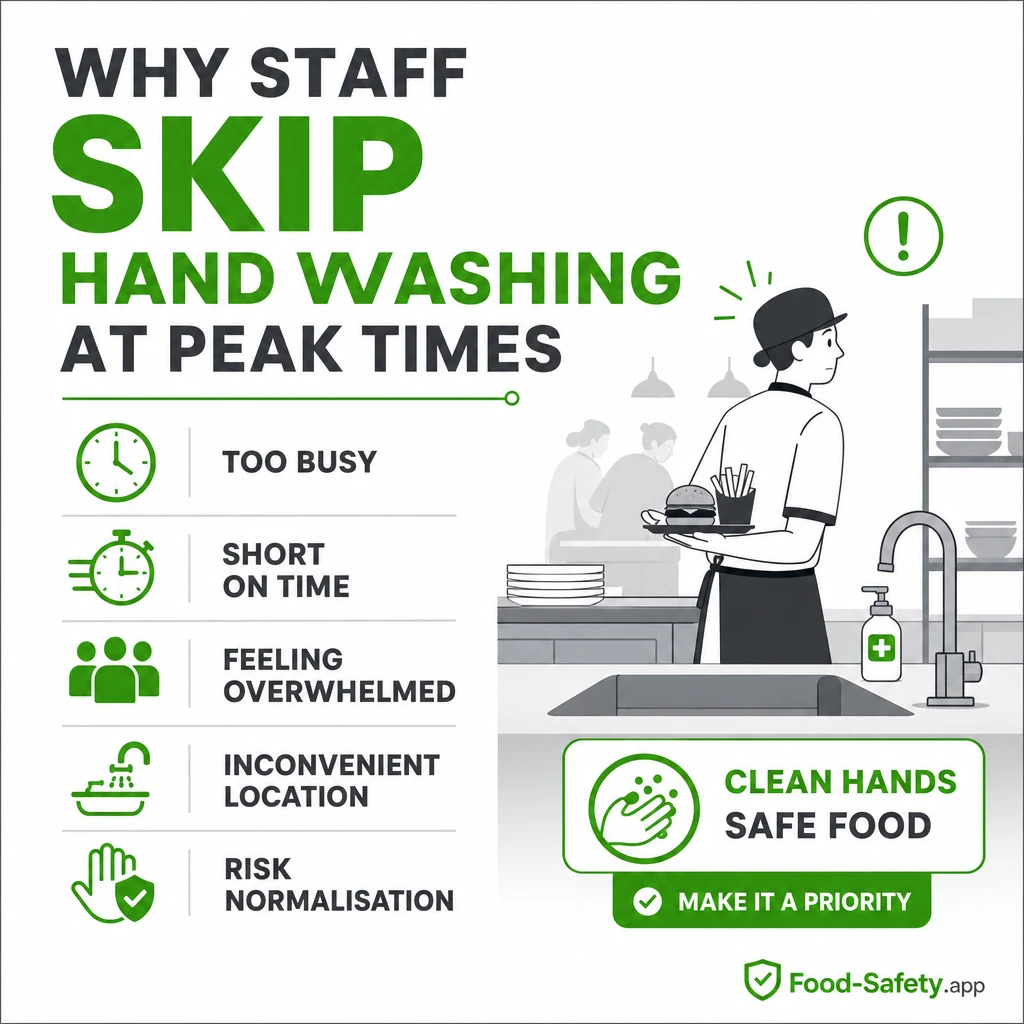
Bad sink placement forces a choice between flow and hygiene. If the sink is blocked by stock, too far from prep, or shared with dishwashing, lapses rise. Rework layout to keep the sink near where hands are most likely to clean.
Where a sink sits can make hygiene either easy or a chore. Common issues include sinks blocked by stock, sinks too far from prep areas, awkward access, shared use with dishwashing, or poor signage. Each of these reduces the perceived convenience of washing hands and increases the chance of skipping it during busy moments.
Layout fixes that pay off:
- Move or add a sink so it’s within arm’s reach of the main work zones, not at the far end of the kitchen.
- Separate hand-wash stations from dishwashing sinks with clearly labeled zones and separate waste streams.
- Ensure unobstructed access: clear paths, no trolleys or stock in front of the sink.
Practical tip:
Install a small secondary sink at the pass or near the prep station used for raw-to-cooked transitions.
Soap and towel failures
Empty dispensers or missing towels teach staff to avoid the sink. A simple refill routine and a dedicated fill log reduce mid-service outages and normalise the habit.
If dispensers are empty, towels are missing, or refill routines are lax, staff will avoid the sink even when they intend to wash hands. Mid-shift stockouts teach a habit of skipping hygiene. This is particularly common when stations are shared or when opening/closing procedures don’t include proactive replenishment checks.
Ways to stabilise supply:
- Implement a visible refill log at each sink and assign a responsible person per shift.
- Create a simple, short open-and-close check that confirms soap, water, and towels are present.
- Use auto-flush or quick-fill dispensers where feasible to reduce handling steps.
- Keep a small overstock of hand towels near each station to prevent mid-service runs dry.
Practical example:
- A catering team runs low on paper towels during service, and staff start bypassing the sink. A station log with a morning “refill” tick ensures towels are topped before service, avoiding mid-service shortages.
Weak prompts
Visual prompts work far better than verbal reminders. Clear posters, colour-coded stations, and quick-check cards help new starters learn expected routines within the first shift.
If there’s no visual cue or clear rule, new starters and temporary staff won’t intuit the expected routine. Verbal reminders alone fail under noise and bustle. Clear, fixed prompts help everyone perform the same steps consistently.
What works well:
- Post simple, station-specific hand-wash posters near each sink.
- Use quick-reference cards or laminated checklists at the station.
- Include a one-line policy in shift briefs: “Wash hands after handling raw food and before touching ready-to-eat items.”
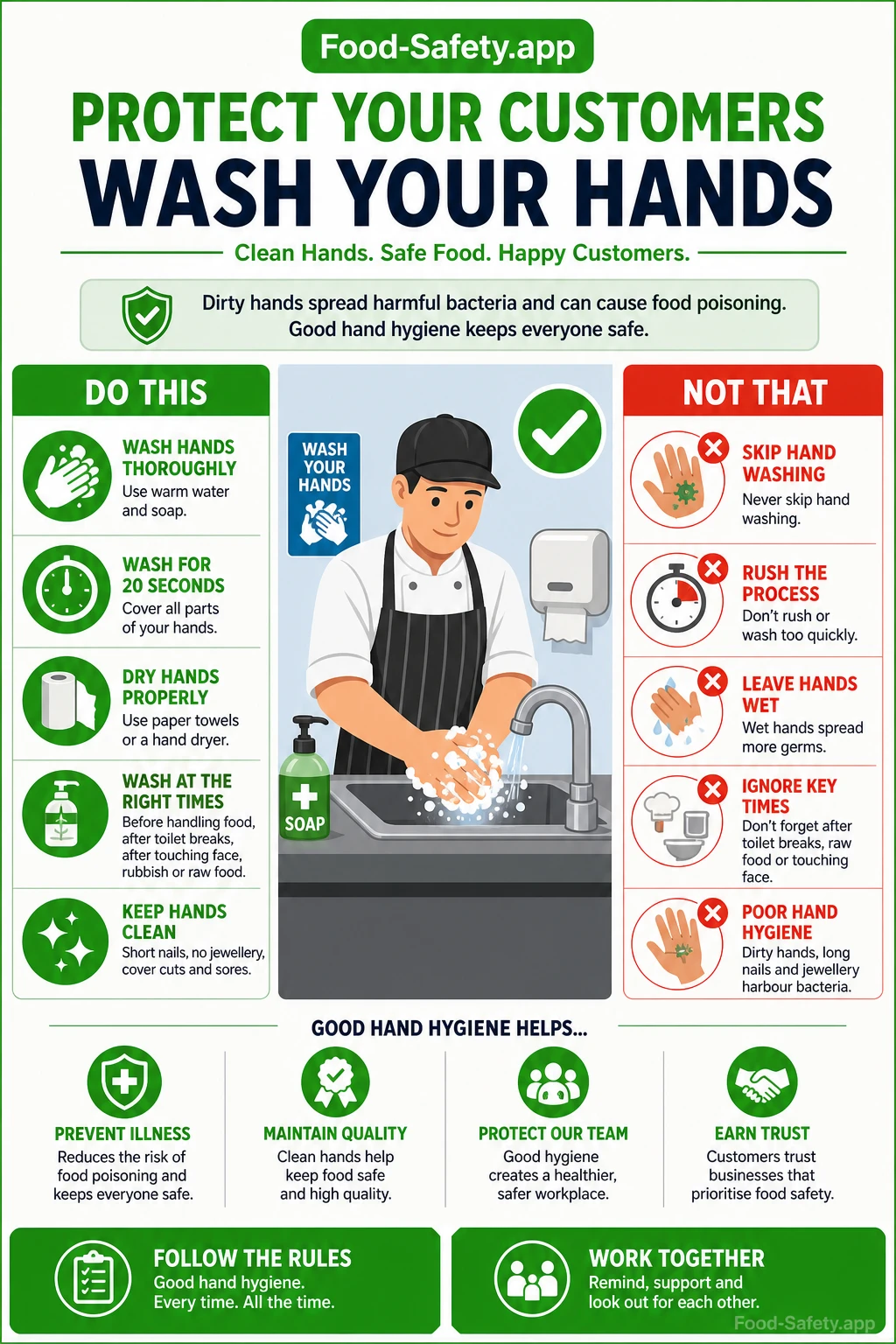
- Onboarding for new staff should recap the sink locations and the expected sequence (wet hands, apply soap, scrub for 20 seconds, rinse, dry).
Implementation detail:
Train supervisors to point to the sink when a task change occurs and to verbally reinforce the sequence only briefly, then rely on the visual prompts.
Manager supervision
Immediate correction is powerful. A supervisor who spots a missed wash and calmly resets the moment reinforces hygiene as non-negotiable during service.
Supervision sets the tone for hygiene discipline. It answers who watches compliance, when spot checks happen, and how to address misses on the spot. Without timely feedback, lapses become accepted as normal during peak times.
Effective supervisory practices:
- Schedule short, unannounced spot checks during peak periods to verify hand washing before critical steps.
- Use a simple corrective approach: calmly remind, pause the task if needed, then resume with the new steps confirmed.
- Record corrective actions and follow up in team huddles to reinforce expectations.
- Tie hand-wash monitoring to broader HACCP controls and personal hygiene procedures, so it’s part of the formal system rather than a lone rule.
Quick fixes that stick
Quick fixes are most effective when they’re small, testable, and assigned to a person. A visible hand-wash checklist at each sink and a brief morning huddle set the standard.
Practical scenario illustrating a successful fix:
- A small café places a laminated hand-wash checklist at every sink and runs a 90-second morning briefing. Breakfast rush remains fast, but hand washing steps are consistently completed before pastry plating, reducing cross-contamination risk and improving inspections.
Final note on compliance and continuous improvement:
- Link hand washing to HACCP controls and personal hygiene procedures.
- Record opening checks and corrective actions where hand wash facilities fail.
- Use temperature and delivery logs alongside hygiene checks to demonstrate control during busy periods.
- Keep evidence of staff training, supervision, and task completion to support inspection readiness.
The safest procedure is the one that can be followed consistently during a busy service. Put the person responsible for each sink in the spotlight, and the habit will follow.