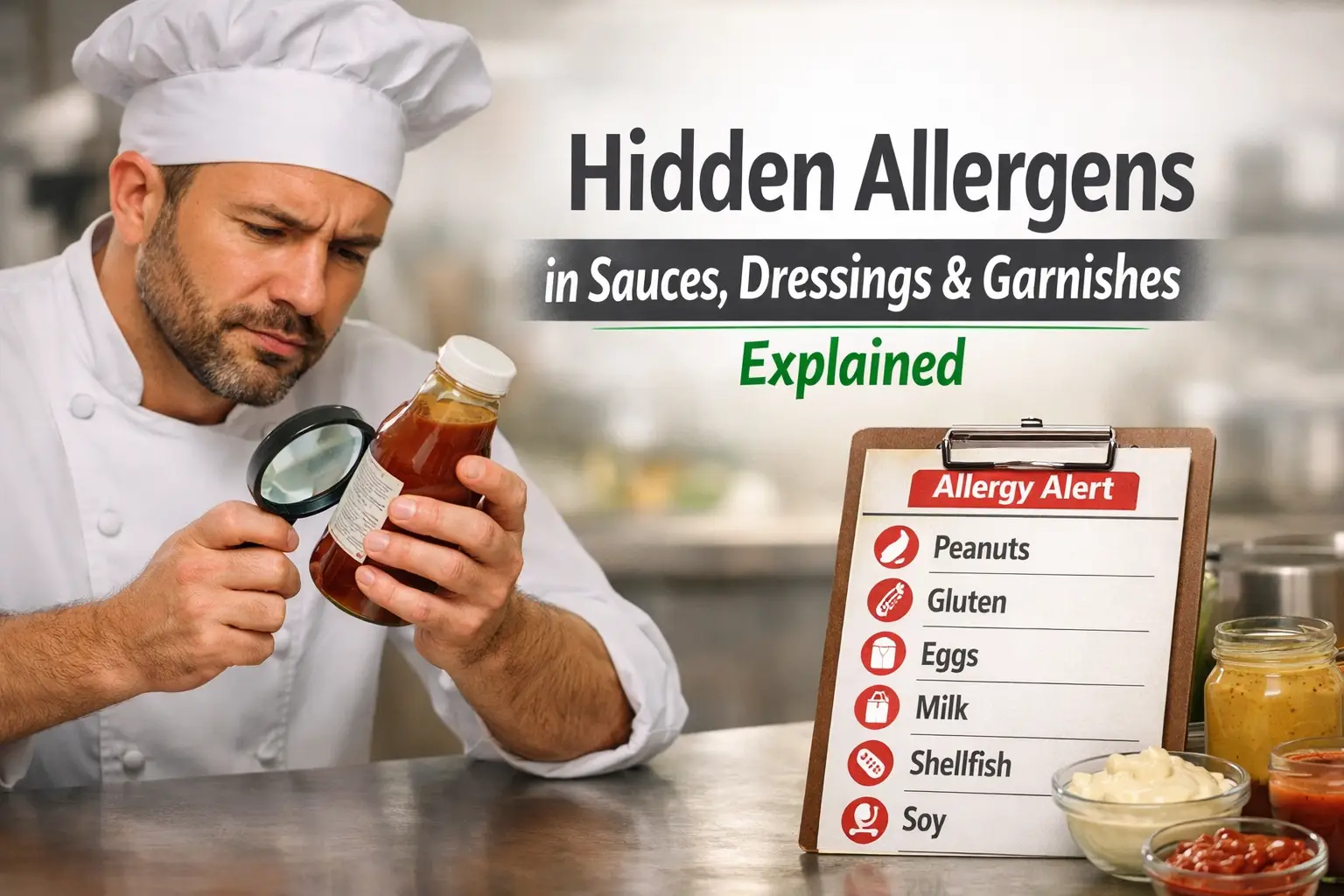
Hidden allergens often hide in plain sight—shared prep, house-made blends, supplier changes, and last-minute substitutions can turn a sauce or garnish into an allergy risk. This guide shows why they’re missed, how to tighten checks, and how to write clearer menus and train staff. It’s practical for small caterers and kitchens who need reliable, day-to-day compliance.
Why hidden allergens get overlooked
The safest menu is the one that clearly communicates what’s in the dish and what could affect a guest with allergies.
In practice, a few repeat patterns create blind spots:
- Emulsions and gravies finished with stock or dairy can carry multiple allergens without obvious signals.
- Garnishes—croutons, seeds, or toasted nuts—may be added during service, bypassing pre-service checks.
- “House” or “chef’s special” items are often treated as variants of a core recipe but may include new ingredients.
Supplier changes aren’t just paperwork—they can alter a dish’s allergen profile overnight.
Common problem ingredients
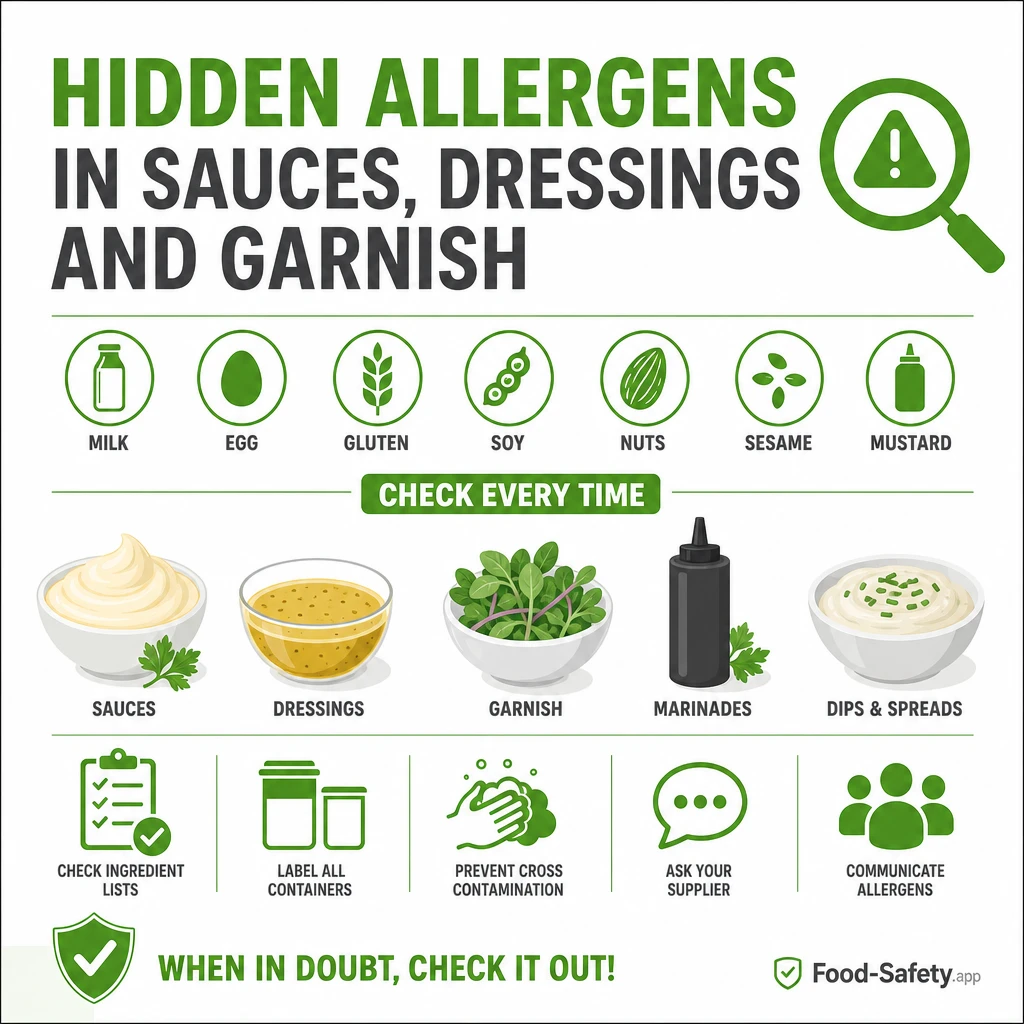
Mustard, celery and sesame often slip into emulsions and garnishes without obvious signals on the plate.
Several ingredients routinely appear in sauces, dressings and garnishes and carry allergen risks. Being aware of them helps prevent surprises on service.
- Mustard: a common flavoring agent in dressings and marinades.
- Celery: appears in stocks, seasoning blends and certain spice mixes.
- Milk and cream: used in sauces, soups, and finishing garnishes.
- Egg: central to many emulsions (mayonnaise, aioli, Caesar-style dressings).
- Soy: found in sauces, thickeners and flavor enhancers.
- Sulphites: used in some processed ingredients and dried seasonings.
- Nuts: almonds, walnuts, or pistachios show up in pestos, crusts, and garnishes.
- Sesame: used in oils, pastes and sesame-based dressings.
- Fish and shellfish: found in emulsions, anchovies in dressings, or stock-based finishes.
- Gluten-containing thickeners: certain emulsifiers, breadcrumbs, or thickened sauces.
Recipe review: check every ingredient
The safest procedure is the one that can be followed consistently during a busy service.
Before service, review every recipe that ends up on a plate or in a serving dish. Include sauces, dressings, marinades, crumbs, toppings and garnish components. A systematic check reduces surprises even when recipes are updated or scaled.
- List all ingredients in the sauce, dressing or garnish, including any spice blends and finishing liquids.
- Check each ingredient for potential allergens, including those that are hidden in blends or labeled as “natural flavors” or “spices.”
- Verify emulsifiers, thickeners, and stock bases for allergen content.
- Confirm cross-contact controls for all equipment used in the preparation.
- Review any last-minute substitutions or substitutions during service.
- Record the review and the exact version of the recipe used for service.
A practical example: a Caesar-style dressing often contains egg and may include anchovies (fish) and mustard in flavorings. If the kitchen uses a house-made blend or a ready-made emulsifier, those ingredients must be checked for all potential allergens, not just the primary components.
Supplier labels and ingredient changes
Supplier changes aren’t just paperwork—they can alter a dish’s allergen profile overnight.
Supplier labels are a frontline barrier against hidden allergens. Relying on old specs or trusting a product’s “may contain” statements without validating the exact compound ingredients is risky. A clear process helps catch changes quickly.
- Verify compound ingredients on every label and update internal specs when suppliers change formulations.
- Recheck all recipes after any ingredient substitution, reformulation, or product replacement.
- Maintain an auditable trail of supplier checks, recipe reviews, and approval dates.
- When a product is replaced (even with a similar item), re-evaluate allergen content as part of the substitution.
Menu wording and descriptions
A clear description reduces the chance of guests with allergies selecting an unsafe option.
Menu descriptions must reflect what’s actually served, especially for items described as “house,” “signature” or “chef’s special.” A mismatch between description and content invites allergy risk and guest complaint.
- Use exact ingredient terms where possible (for example, “Caesar dressing containing egg, anchovies and mustard” instead of a generic “Caesar dressing”).
- Update menus immediately after recipe changes and train staff on the updated content.
- Avoid vague statements like “may contain traces” unless you can define what that means in practice.
Final notes for day-to-day practice
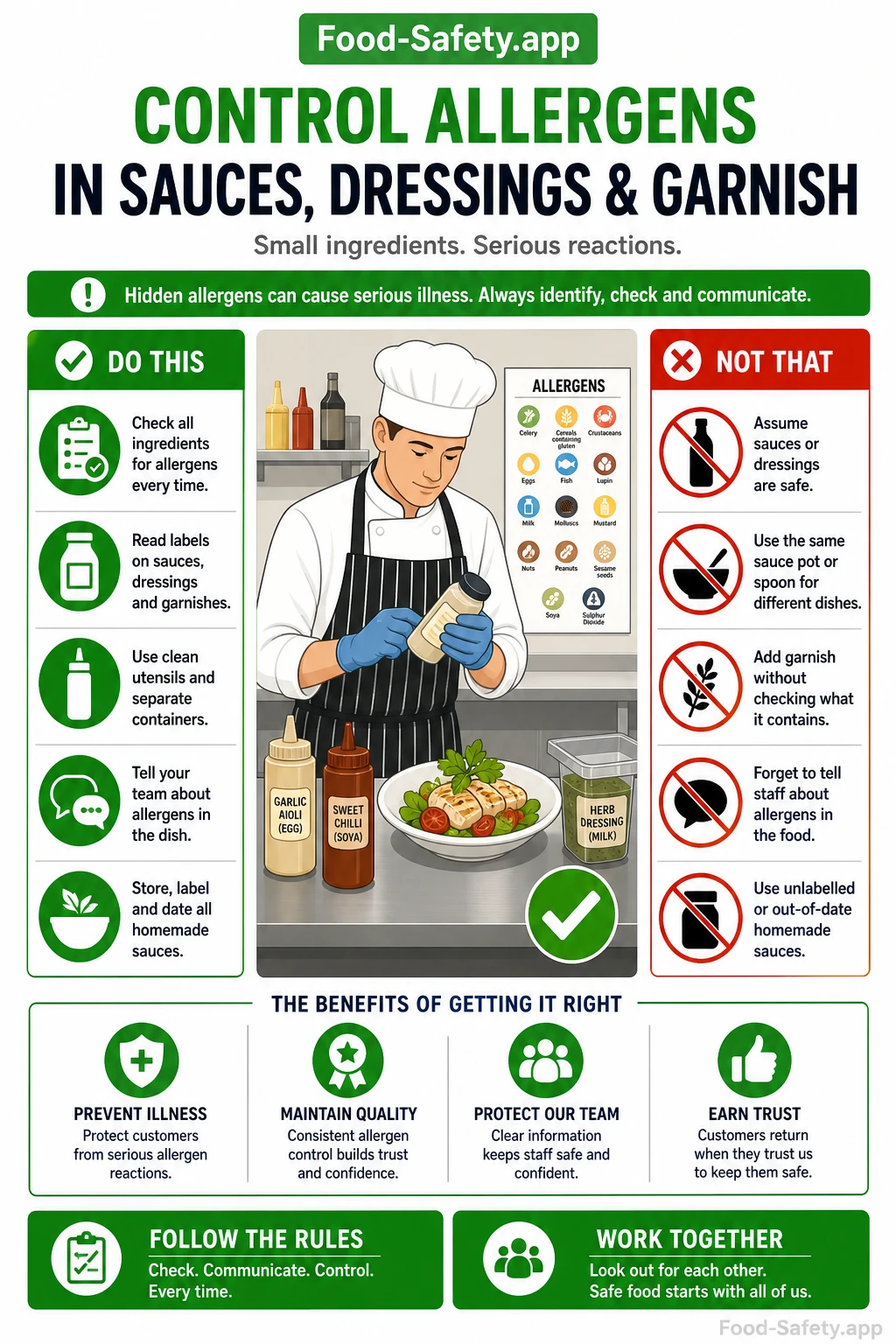
- Keep an up-to-date allergen matrix for all recipes and menu items. Update it whenever a recipe changes or a supplier is swapped.
- Record supplier checks and recipe reviews after any ingredient change.
- Use clear service procedures for allergen requests and dish substitutions.
- Store evidence of reviews, staff briefings and menu updates as part of your daily operations.
Food safety isn’t a one-off task; it’s a continuous discipline. Clear communication, regular review, and dependable records help ensure diners with allergies can trust what you serve.
For teams looking to streamline this process, consider how a digital allergen management tool can fit into your existing workflow. Food-Safety.app offers a practical way to maintain accuracy, consistency and readiness for inspections. Explore Food-Safety.app