Defrosting isn’t just a prep task—it’s a critical food safety control. If food thaws at unsafe temperatures, bacteria can multiply quickly, putting customers at risk. This guide explains why defrosting matters, highlights common shortcuts to avoid, and gives practical fridge-thawing steps, drip-containment tips, plan-change procedures, and use-ready checks with an eye to traceability and inspections.
Why Defrosting Matters
Important: Defrosting is a control point, not a cosmetic step. The way you thaw determines whether subsequent cooking and handling are effective at keeping food safe.
Thawing food safely is a core control for keeping pathogens at bay. If thawing occurs in temperatures where bacteria thrive, growth can reach levels that are unsafe by the time the product is cooked or served. Proper defrosting helps maintain the cold chain and reduces the risk of cross-contamination during later preparation.
- Focus on controlled methods rather than quick fixes.
- Integrate defrosting into your daily checks and HACCP plans.
- Train staff to recognise when thawing has gone off plan.
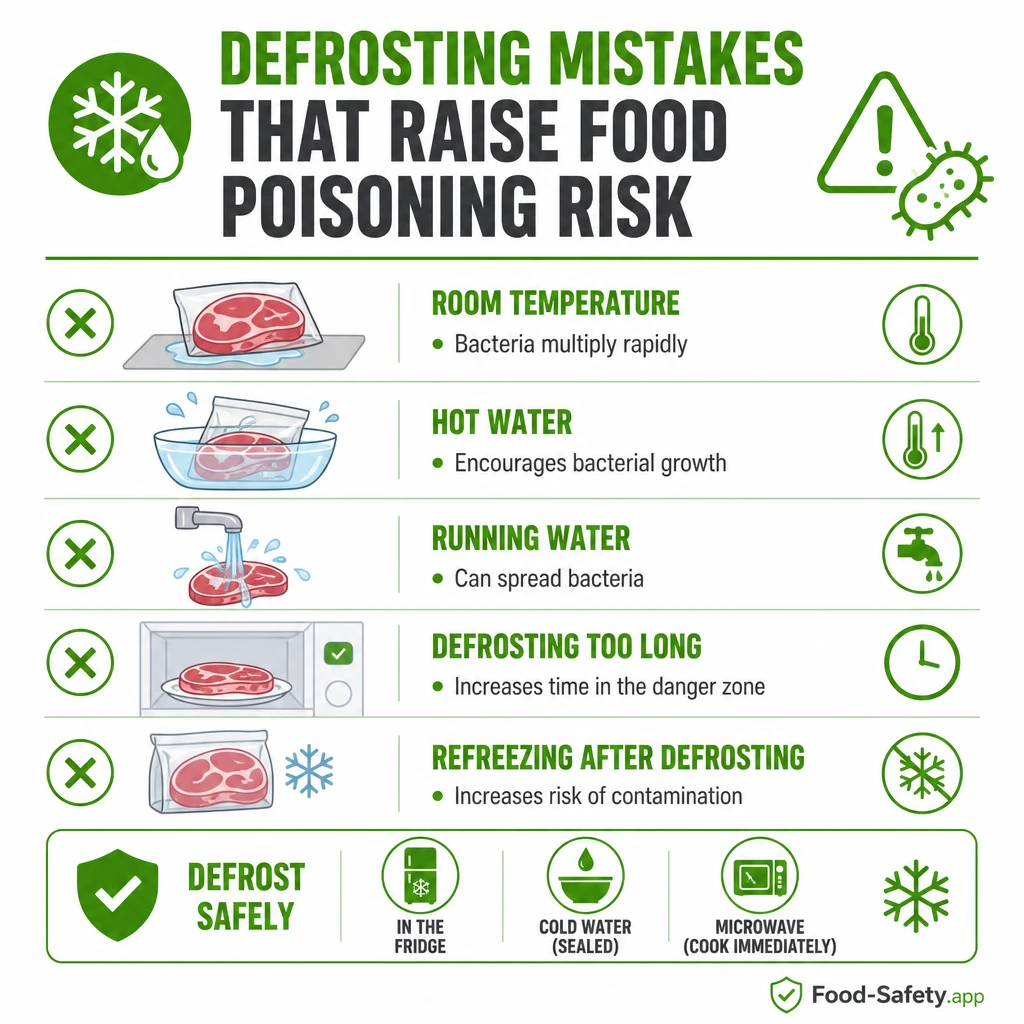
Risky Shortcuts Staff Take
Don’t rely on a passed-service “cool-off” period or a partially thawed centre to judge safety. Bacteria can multiply during any thaw phase.
Scenarios to learn from:
- Frozen chicken left on the counter overnight, then moved to the fridge in the morning.
- Fish thawing on a prep shelf and dripping onto ready-to-eat greens.
- Frozen deliveries arriving partially thawed after a freezer fault.
- A microwave defrost cycle followed by a long stand time before cooking.
- Establish defrosting as a scheduled, monitored part of service.
- Use dedicated equipment and spaces for thawing to avoid cross-contact.
- Record any deviations promptly in the food safety log.
Safe Fridge Thawing
The safest approach is fridge thawing: use a leak-proof container, keep it on the bottom shelf away from ready-to-eat foods, and ensure the fridge remains cold enough.
Fridge thawing is the default safe method when possible. Use a covered, leak-proof container and place it on the bottom shelf to prevent any drips from contaminating ready-to-eat foods. Keep raw items separated from cooked or ready-to-eat products, and allow enough time for a full thaw. Regularly verify fridge temperature and door seals as part of routine checks.
Practical steps:
- Plan thawing in advance during quieter periods to avoid pressure.
- Update the opening/closing checks with explicit thawing tasks.
- If space is tight, move thawing items to designated zones or use water-assisted methods that are controlled and monitored.
- Record fridge temperatures and any equipment faults to support traceability.
Preventing Drip Contamination
Store thawing foods below ready-to-eat items to catch drips; use sturdy trays and clean spills immediately to prevent cross-contamination.
Drips from thawing product can contaminate salads, garnishes, and other ready-to-eat items. Prevent this by storing thawing items below the level of ready-to-eat foods, using leak-proof trays, and cleaning any spills immediately. This reduces cross-contamination risk and supports confident inspections.
Examples:
- A tray collects thaw drips from chicken, preventing contact with lettuce.
- Spilled thaw water is mopped promptly and the area cleaned before service starts.
- A thawing fish container is kept in a dedicated zone with a lid to minimise splash.
- Include drip-tray cleaning in daily tasks and spill-response protocols.
- Check that thawing containers are intact and properly sealed.
What to Do When Plans Change
If service plans shift, switch to a controlled thaw method, record the delay, and assess whether the product remains safe to use.
Tools and records to use:
- A clearly defined “defrost change” log entry with time and cause.
- Quick checks for signs of partial spoilage or unusual odours.
- A decision trail showing corrective actions taken.
- Use defect reporting if a freezer, fridge, or prep area creates a risk.
- Keep thawing records with delivery and inspection notes for full history views.
When Defrosted Food Is Ready to Use
Thawed products should be used promptly and cooked thoroughly where required; confirm the centre is thawed and inspect for spoilage before cooking.
Once fully thawed, verify the centre is thawed and free from freezer burn or spoilage signs. If the item is to be cooked, plan for prompt cooking or further handling in line with your procedures. For items needing cooking, ensure the cooking step accounts for any residual temperature variations from thawing. Document the status in your safety logs to support traceability and inspections.
Key checks:
- Centre thaw is complete before cooking.
- Look for off smells, slimy textures, or discolouration.
- Record cooking start times and batch numbers to support traceability.
- Update the full history view with thaw and cook records for inspection readiness.
- Store procedures for safe thawing in HACCP and safe systems of work.