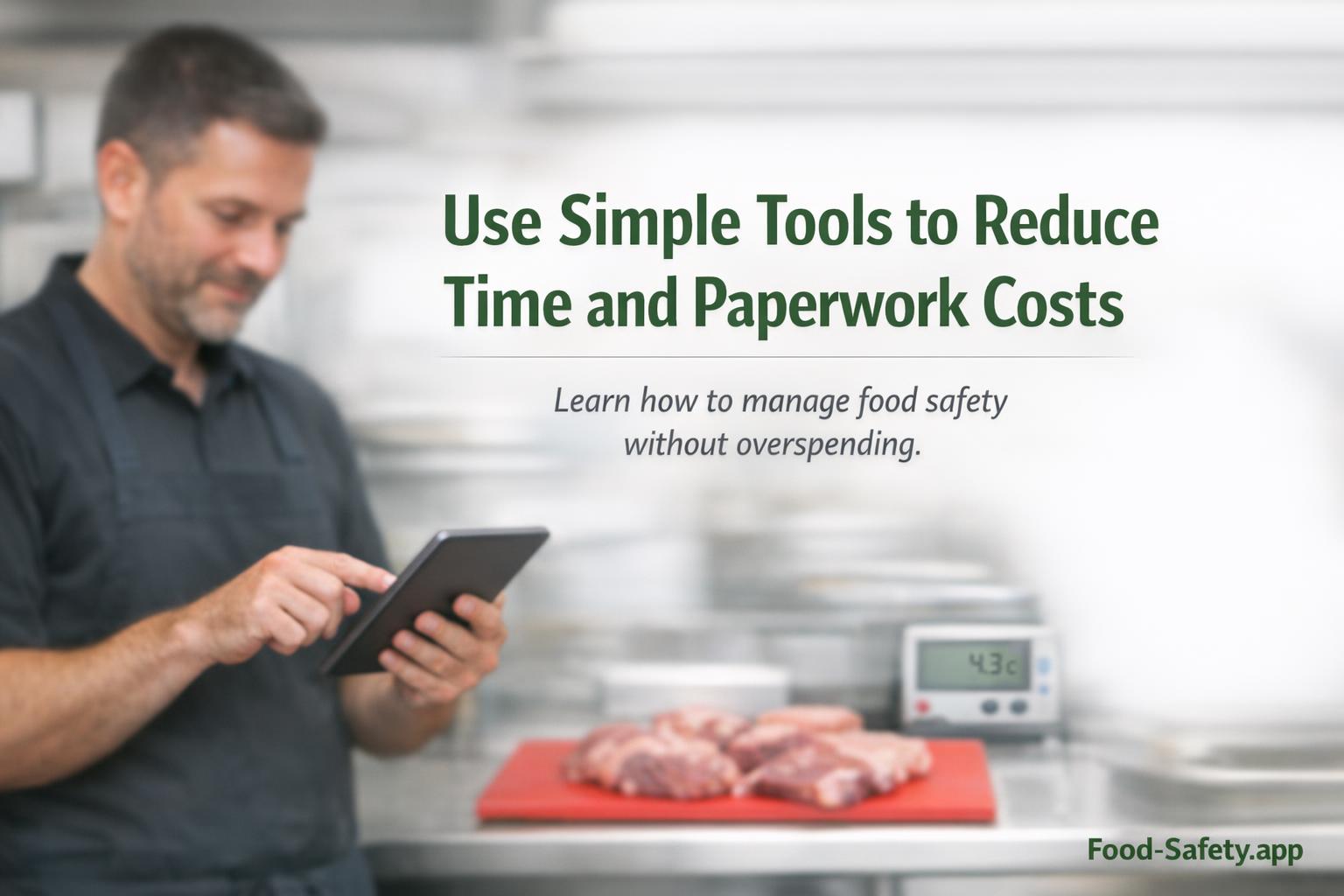
Maintaining a 5-star food hygiene rating does not require expensive consultants or high-end tech. In a busy service where margins are tight, food safety relies on disciplined routines rather than costly equipment. By focusing on high-risk areas and using free resources, you can ensure compliance without increasing overheads.
Prioritise high-risk controls to save time
Labour is often the biggest cost in a professional kitchen. Don’t waste it on low-risk tasks. Focus your team’s energy on the “big six” that environmental health officers (EHOs) look for most closely: chilled storage, cooking temperatures, cooling, hot holding, allergens, and cross-contamination.
Daily opening routines
- Verify fridge temperatures are below 5°C immediately upon arrival. If a fridge is struggling, you can move high-risk stock before it spoils, saving hundreds in potential food waste.
- Check that handwash stations are fully equipped. A lack of soap or paper towels is an immediate point deduction during an inspection.
- Calibrate your probe thermometer using the ice-point method (it should read between -1°C and 1°C in melting ice). This ensures accuracy without needing to buy a new device every few months.
Efficient service checks
- Instead of probing every single chicken breast, probe the thickest part of the largest piece in a batch. If that is safe, the rest are likely safe.
- Use a “clean as you go” policy. It is cheaper to wipe a surface immediately than to pay a porter for two hours of heavy scrubbing at the end of a shift.
- Keep raw and ready-to-eat (RTE) boards in separate, clearly marked zones to eliminate the need for constant deep-cleans of shared areas during service.
For a deeper dive into the logic behind these checks, read our guide on HACCP principles explained.
Low-cost staff training strategies
Formal off-site training is expensive and often forgotten. Practical, on-the-job training is more effective for maintaining standards in a busy service.
- Five-minute toolbox talks: Every Monday, pick one topic (e.g., “How to use a sanitiser correctly”) and brief the team for five minutes. It’s free and keeps safety top-of-mind.
- Visual prompts: Print and laminate your own signs. A “Don’t forget to date-label” sign on the walk-in door is more effective than an expensive training manual sitting in the office.
- The buddy system: Pair new starters with your most diligent chef for their first three shifts. This embeds your specific kitchen culture immediately.
Keeping track of these informal sessions is vital for an EHO. Use simple training records to prove your team is competent.
Record keeping: use free tools effectively
You do not need paid software to satisfy an inspector. The Food Standards Agency (FSA) provides the “Safer Food, Better Business” (SFBB) pack for free. If you use it correctly, it is all you need for a 5-star rating.
The “exception reporting” method
To save time and paper, move toward exception reporting where possible. If your fridges are consistently at 3°C, a simple tick box or a single daily entry is often enough, provided you have a clear section for corrective actions when things go wrong.
| Problem | Corrective action (what you did) | Outcome |
|---|---|---|
| Fridge at 9°C | Moved high-risk food to walk-in; called engineer. | Food saved; fridge repaired. |
| Probe battery dead | Swapped for backup probe; replaced battery. | Temp checks completed on time. |
Inspectors value honesty over “perfect” records. A log that shows a problem and a fix is more believable than one where every temperature is exactly the same every day for a year.
Smart cleaning: concentrates vs. ready-to-use
Buying “Ready-To-Use” (RTU) trigger sprays is the most expensive way to clean a professional kitchen. You are essentially paying for water and plastic shipping.
- Switch to concentrates: One five-litre bottle of concentrated sanitiser can make up to 100 trigger sprays. This can reduce your chemical spend by over 60%.
- Dosing pumps: Install simple manual dosing pumps on your sinks to prevent staff from glugging expensive chemicals down the drain.
- Microfibre power: Invest in high-quality microfibre cloths that can be laundered and reused. They pick up bacteria more effectively than cheap blue roll, which is a significant recurring cost.
To see how to structure these tasks efficiently, look at our kitchen cleaning schedule in action.
Allergen management without the price tag
Managing allergens is about communication, not expensive tech. Under Natasha’s Law, accuracy is non-negotiable, but the tools can be simple.
- The master matrix: Create a simple grid with your dishes on one axis and the 14 regulated allergens on the other. Update it every time you change an ingredient.
- Chef-to-server confirmation: Implement a “double-check” rule. The server writes the allergen on the ticket, and the chef must verbally confirm they have seen it before starting the dish.
- Ingredient storage: Keep allergenic ingredients (like flour or nuts) in lidded tubs on the bottom shelves to prevent accidental spills onto other foods.
For a step-by-step implementation, see allergen management made practical for UK food businesses.
Equipment maintenance to prevent costly failures
Emergency call-outs for broken fridges or ovens are budget-killers. Routine maintenance costs almost nothing but saves thousands.
- Clean fridge condensers: Vacuum the dust off fridge coils every month. This allows the motor to run cooler, using less electricity and extending the life of the appliance.
- Check door seals: A split fridge seal can cause temperatures to rise and energy bills to spike. Replacing a seal costs £40; replacing a compressor costs £500.
- Descale regularly: If you are in a hard-water area, descale dishwashers and combi-ovens weekly to prevent heating element failure.
Frequently asked questions
Do I need a digital food safety system to get 5 stars?
No. A well-maintained paper system like the FSA’s SFBB pack is perfectly sufficient for a 5-star rating. Digital systems are helpful for multi-site businesses but are an optional extra for single sites.
What is the cheapest way to train staff in food hygiene?
Level 2 Food Safety certificates are required for food handlers and are relatively inexpensive online. Supplement this with free “Toolbox Talks” and supervised practice to ensure the knowledge is applied in your specific kitchen.
Can I use domestic cleaning products?
It is not recommended. Professional-grade chemicals are formulated to kill bacteria faster (usually 30-60 seconds contact time) than domestic products. Because they are more concentrated, they are also cheaper per dose.
Next steps for your kitchen
Start by auditing your current spending. Are you buying RTU sprays? Is your staff training documented? By tightening these simple areas, you protect your customers and your profit margins simultaneously. For more information on what the EHO is looking for, see our guide on understanding food hygiene ratings.