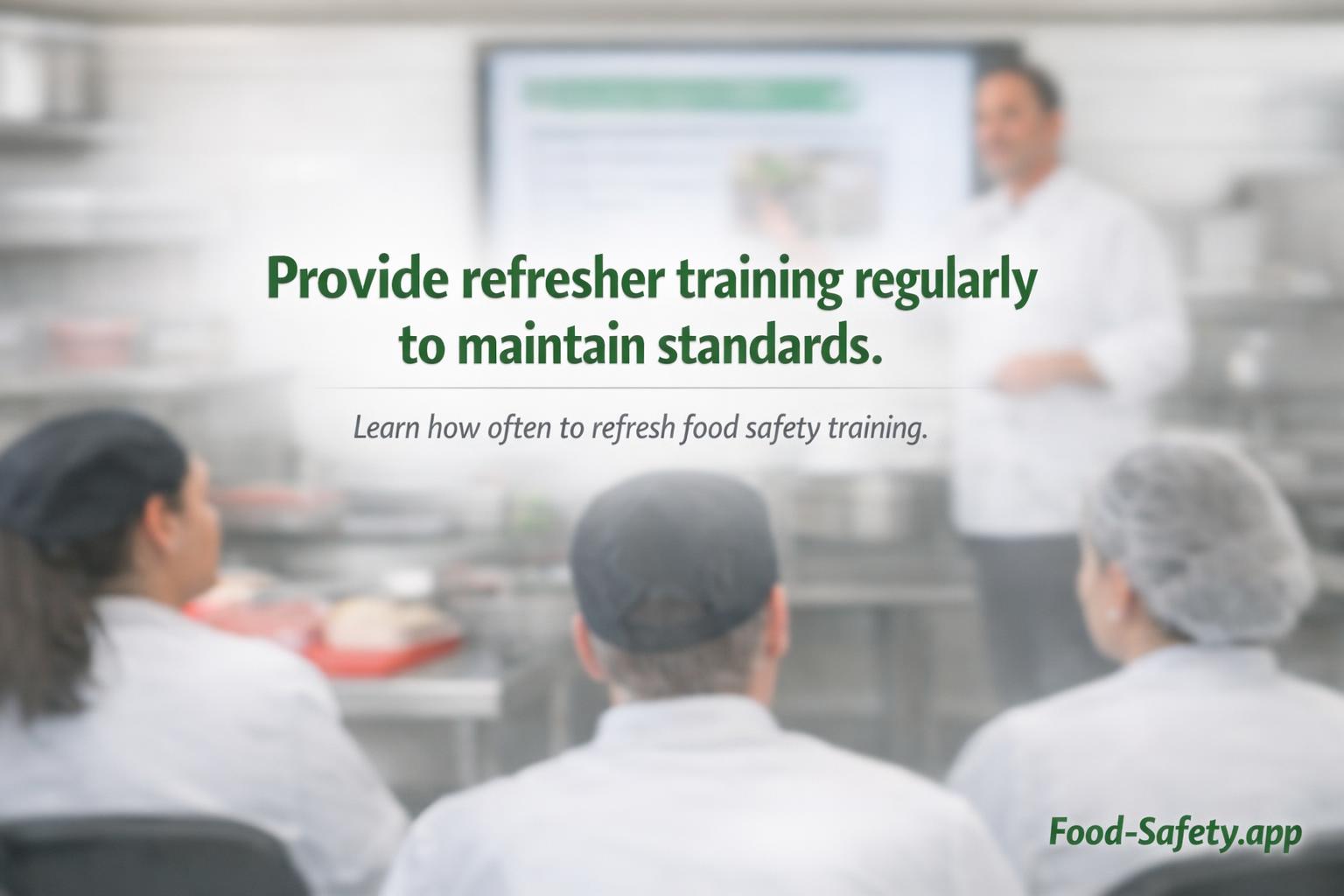
Managing food safety refresher training: schedules, triggers, and practical delivery
Effective food safety refresher training prevents “procedural drift”—the gradual slide into bad habits that occurs during a busy service. While initial certification provides a foundation, it is the regular reinforcement of standards that ensures compliance and protects customers from foodborne illness and allergen cross-contact.
Legal requirements
In the UK, there is no fixed legal expiry date for food hygiene certificates. However, Retained EU Law (Regulation 852/2004) requires food business operators to ensure that staff are supervised and instructed and/or trained in food hygiene matters commensurate with their work activity. If an Environmental Health Officer (EHO) finds a chef using a probe incorrectly or failing to manage allergens, a three-year-old certificate will not provide a due diligence defense. Competency must be maintained and demonstrated in the professional kitchen.
Recommended frequency for food safety refreshers
A risk-based approach is more effective than a blanket annual retraining policy. Use the following schedule as a baseline for a commercial kitchen:
- High-risk handlers (Chefs and prep cooks): Full refresher every 12 months; practical competency checks every 3–6 months.
- Low-risk handlers (Wait staff and baristas): Allergen refresher every 6–12 months; general hygiene refreshers every 2 years.
- Supervisors and managers: Level 3 refresher or HACCP review every 3 years, supplemented by annual internal audits of their verification skills.
- New and returning staff: Full induction on day one, followed by a competency sign-off after 4 weeks of service.
Triggers for unscheduled refresher training
Routine schedules should be interrupted when specific “triggers” increase the risk of a food safety failure. Do not wait for the annual review if any of the following occur:
- Menu or supplier changes: New allergens entering the kitchen require an immediate briefing for front-of-house and kitchen teams.
- Equipment upgrades: The introduction of a blast chiller, sous-vide water bath, or a new type of combi-oven requires specific technical training.
- Audit or inspection failures: If an internal check or EHO visit identifies a gap in knowledge, such as poor date labeling or cooling records, a targeted refresher is mandatory.
- Staff absence: Any team member returning from an absence of more than four weeks (e.g., parental leave or long-term sick) should undergo a “re-induction” to align with current kitchen protocols.
Role-specific refresher checklists
Refresher training is most effective when it focuses on the tasks a specific team member performs daily. Use these checklists to verify competency during a busy service.
Kitchen and prep teams
- Probe calibration: Can the chef demonstrate the ice-point method to check thermometer accuracy?
- Cooling protocols: Can they explain the time and temperature limits for cooling high-risk foods in your specific kitchen?
- Cross-contamination: Are they following the specific colour-coded board system and raw/ready-to-eat separation for the current menu?
- Cleaning verification: Can they explain the contact time required for the current sanitiser in use?
Front-of-house and bar teams
- Allergen communication: Can the server explain the “ask the chef” process and identify the 14 legal allergens?
- Glass and ice hygiene: Are they using scoops (never glasses) and following the ice machine cleaning schedule?
- Service hygiene: Are they avoiding touching “food contact” surfaces of plates and cutlery during a busy service?
The 10-minute toolbox talk framework
Long classroom sessions are difficult to schedule in a professional kitchen. Instead, use “toolbox talks”—short, focused briefings delivered during a pre-service meeting. A successful 10-minute refresher follows this structure:
- The “What”: Identify one specific topic (e.g., “managing gluten-free orders”).
- The “Why”: Explain the consequence of failure (e.g., “preventing an anaphylactic reaction and maintaining our 5-star rating”).
- The “How”: Demonstrate the correct procedure (e.g., using dedicated equipment and purple kits).
- The “Check”: Ask a team member to demonstrate or explain the process back to you.
- The “Record”: Log the names of attendees and the date on a simple training matrix.
Common pitfalls in refresher training
Many businesses fail because their training is a “tick-box” exercise rather than a practical tool. Avoid these common mistakes:
- Over-reliance on e-learning: Online courses provide theory but do not prove a chef can use your specific blast chiller. Always pair digital training with a practical observation sign-off.
- Ignoring “agency” or “temp” staff: If someone is working in your kitchen, they are your responsibility. They must receive a condensed food safety induction before their first shift.
- Poor record-keeping: If a training session isn’t logged, it legally didn’t happen. Maintain a simple matrix showing which staff have completed which refreshers.
- Failing to update for “hidden” allergens: When a supplier changes a brand of mayonnaise or bouillon, the allergen matrix changes. Refreshers must happen immediately upon recipe changes.
Refresher training FAQ
Do food hygiene certificates expire?
Technically, no. However, industry best practice and most local authorities recommend a formal refresher every three years to prove ongoing competency.
What is the best way to record 10-minute briefings?
Use a single sheet for each month with a grid. List the date, the topic, and have staff initial it. This provides a clear “audit trail” of continuous training for EHO inspections.
Should I retrain staff after a near-miss?
Yes. If a staff member almost serves an allergen-containing dish to the wrong customer, a full team “re-calibration” briefing is the best corrective action to prevent a future incident.
Internal link opportunities
- To understand the core legal framework for your kitchen, see our guide on understanding the core HACCP principles.
- If you are updating your safety protocols, learn more about developing your HACCP plan.
- For specific advice on training staff for menu changes, read about managing allergens during service.
- To organize your compliance evidence, see our tips on maintaining digital training records.
A structured approach to food safety refresher training ensures that high standards are not just a one-off achievement, but a consistent part of your kitchen’s culture. Focus on short, frequent, and practical sessions to keep your team sharp and your customers safe.