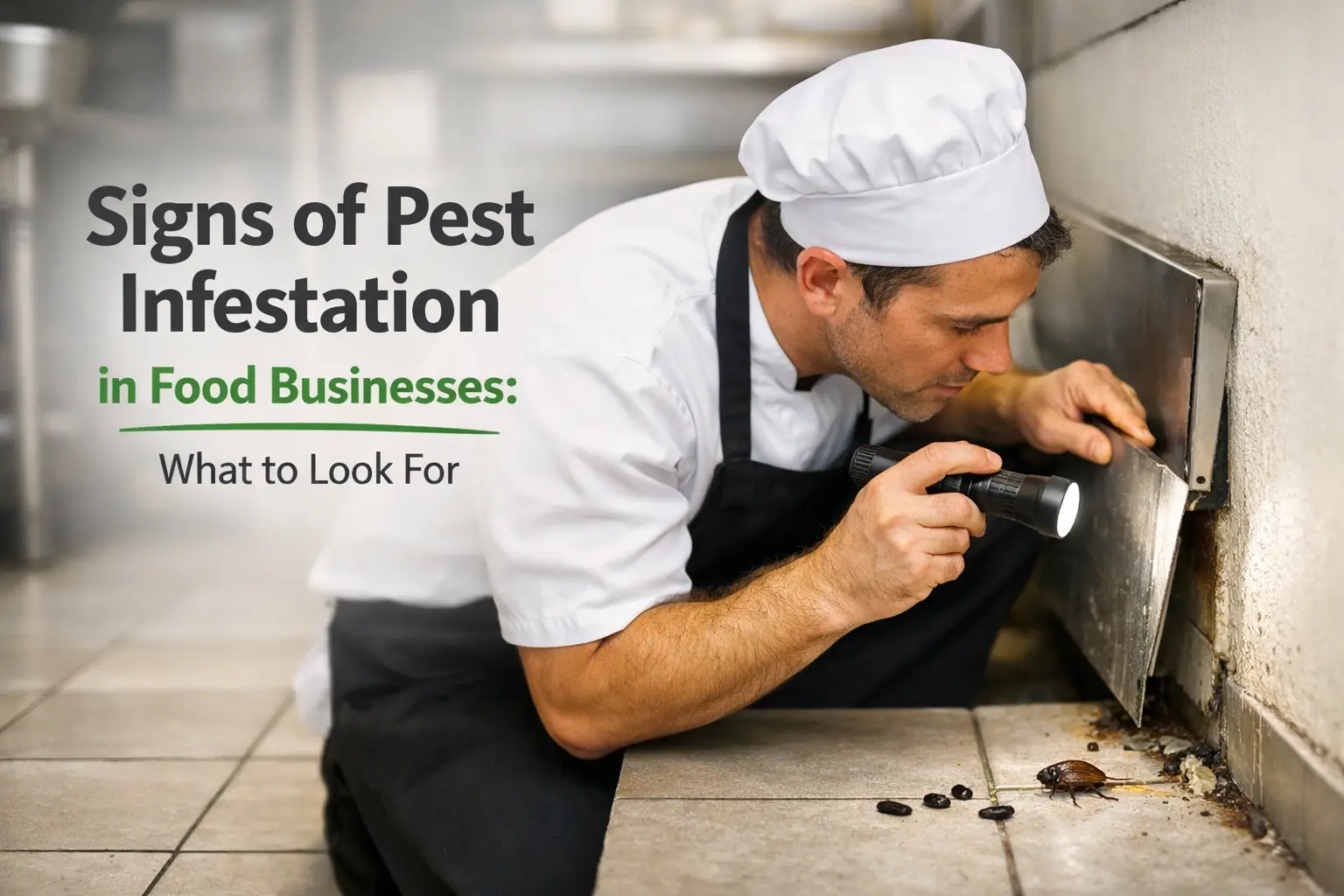
Spotting pest activity early helps keep hygiene compliant and inspections smooth.
This guide helps catering teams recognise warning signs, understand where proofing can fail in busy kitchens, and act quickly to protect records and compliance.
It covers practical indicators, failure points, reporting routines, roles, and a clear post-sighting action plan.
Early Warning Signs
Early warning signs are your first line of defense. Spotting them quickly limits bigger issues.
Look for direct indicators like droppings, gnaw marks, shed skins, or damaged packaging. Indirect clues include odd smells, grease trails, and unusual insect activity near sinks, drains, bins, dry stores and staff areas. Quick recognition matters because a small issue can become a bigger hygiene or inspection problem if left unchecked.
Practical scenarios
- Mouse droppings found behind a fridge after a busy weekend service
- Fruit flies gathering around a bar drain and waste area
- Rats seen near rear bins when lids are left off overnight
- Cockroach evidence in a dry store with cardboard boxes on the floor
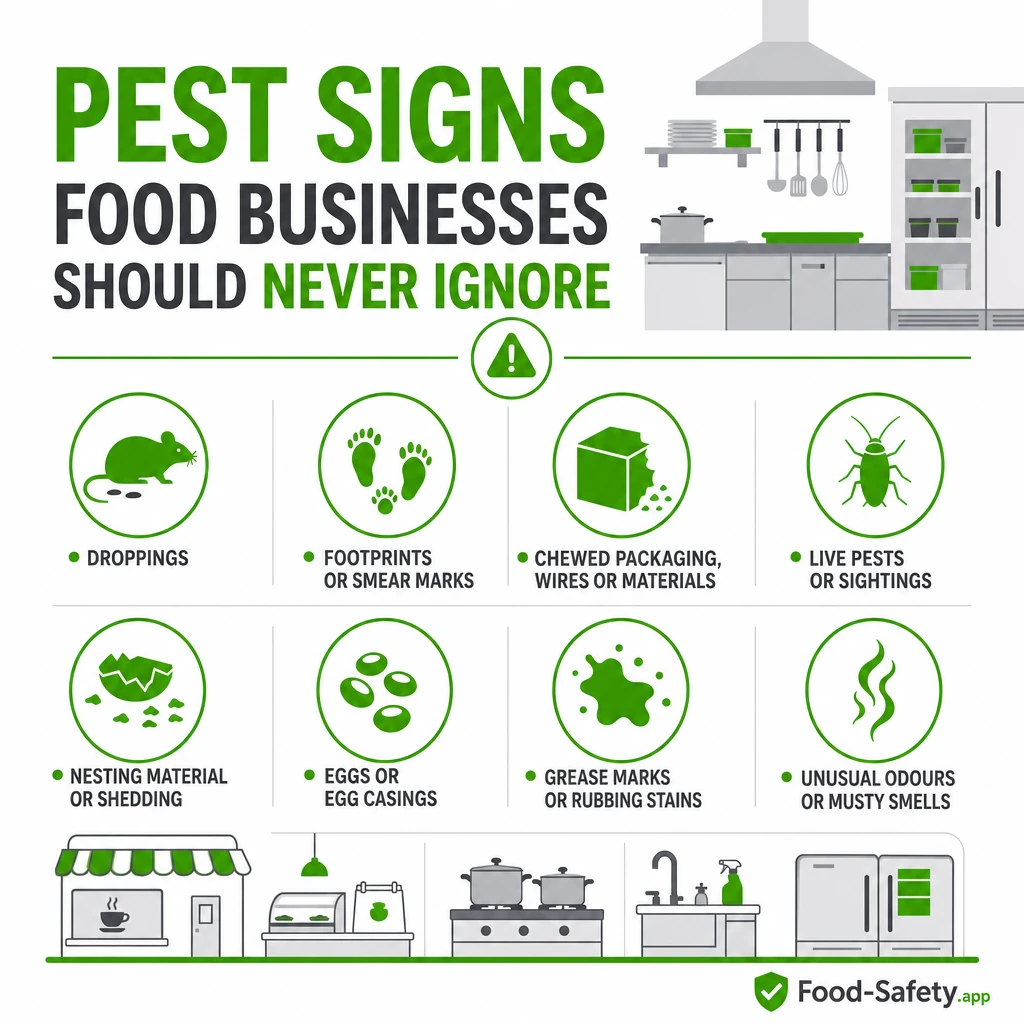
Why Proofing Fails in Real Kitchens
Proofing gaps often hide in plain sight: open doors, stray waste, cluttered backrooms.
Written controls don’t always translate into daily practice. Real kitchens see failures from open doors during service, broken seals on fridges or waste systems, poor waste control, gaps around pipes, damaged drains, clutter, food left out, and weak night-time shutdowns. These conditions create routes and opportunities for pests to enter, hide, breed, or feed.
Waste and Cleaning Weak Points
Cleaning and waste controls must align with risk areas; a missed spill can become a rodent-friendly attractant.
Waste handling and cleaning routines must align with risk areas. Common weak points include overflowing bins, missed spill clean-ups, dirty compactors, food debris under equipment, and blocked access to cleaning areas. When waste streams aren’t controlled or cleaning isn’t thorough, pests are drawn to lingering leftovers and hidden grime.
Staff Reporting Habits and Escalation
Timely reporting is a team responsibility. If staff don’t escalate, problems grow and regimes fail.
Staff play a pivotal role in catching issues early. Establish clear reporting channels, fast escalation paths, and a simple log for sightings. What to report, who to tell, and how quickly to act should be straightforward so staff aren’t hesitant to raise concerns. Delays tend to compound risks and complicate records.
Roles of Contractors and Owners
The action plan should be systematic: isolate, inspect, record, escalate, verify, and re-check.
Contractors and venue owners share responsibility for turning sightings into action. Escalation should follow documented lines, with evidence kept and reviews tracked. Keep simple, auditable records of visits, findings and follow-up actions, and ensure there’s a clear mechanism to close loops after each service.
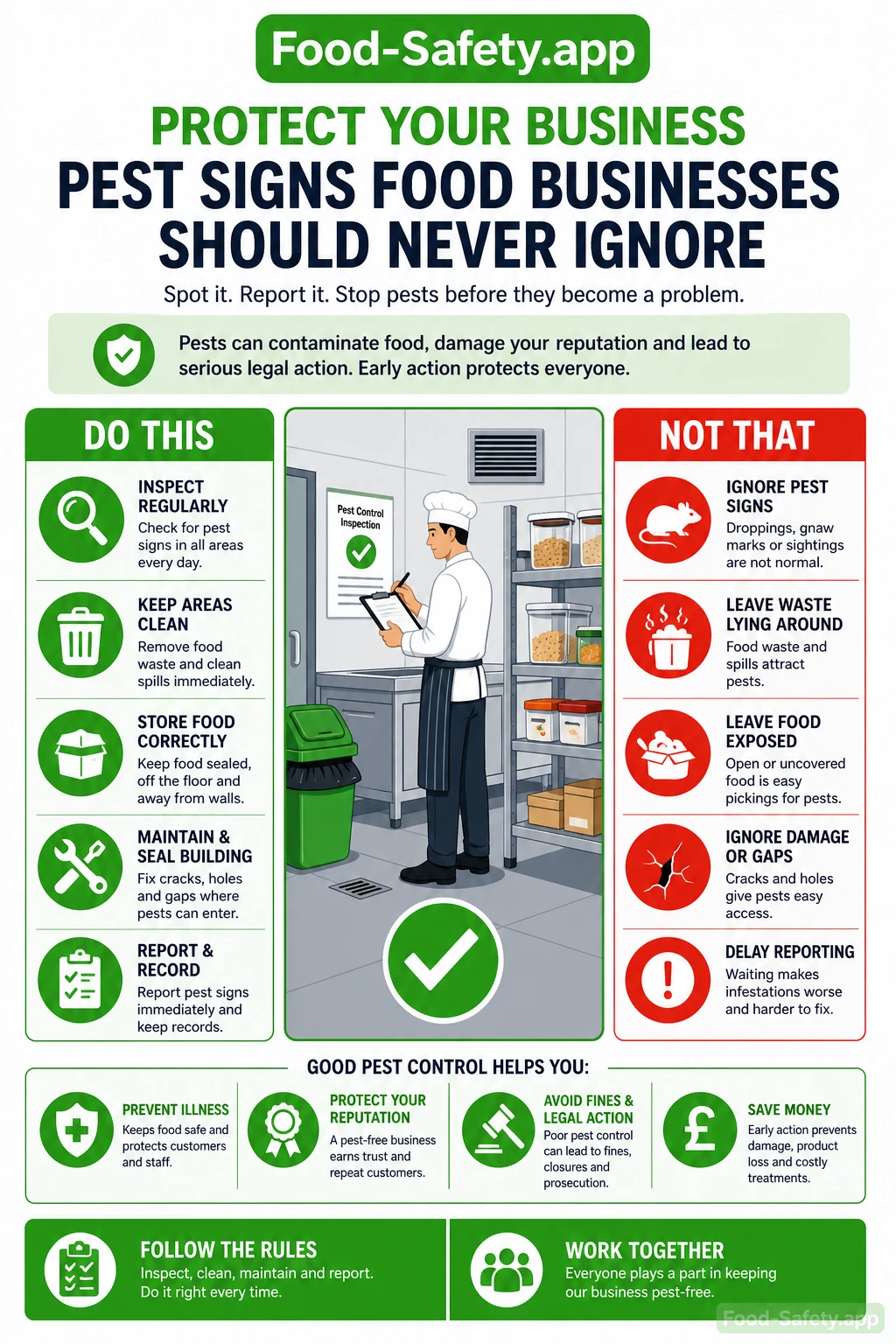
Action Plan After a Sighting
When a sighting occurs, act in a orderly sequence to protect products and records:
- Isolate affected food and packaging to prevent cross-contact.
- Check stock for potential contamination; set aside items with uncertainty.
- Clean and inspect the area, including nearby drains, waste staging, and adjacent equipment.
- Record the issue in the pest log with date, time, location, and observed signs.
- Arrange pest control support or escalation to an approved provider. Schedule treatment if required and confirm completion.
- Review controls, retrain staff if needed, and re-check the affected areas to verify effectiveness.
The action plan should be systematic: isolate, inspect, record, escalate, verify, and re-check.
Ready to modernise pest management? Use Food-Safety.app to log sightings, corrective actions, cleaning checks and follow-up in one place. It creates an audit‑ready pest control register, with custom cleaning tasks, defect reporting and automatic timestamps. It also supports offline recording, PDF exports and full history for audits and inspections. Explore Food-Safety.app