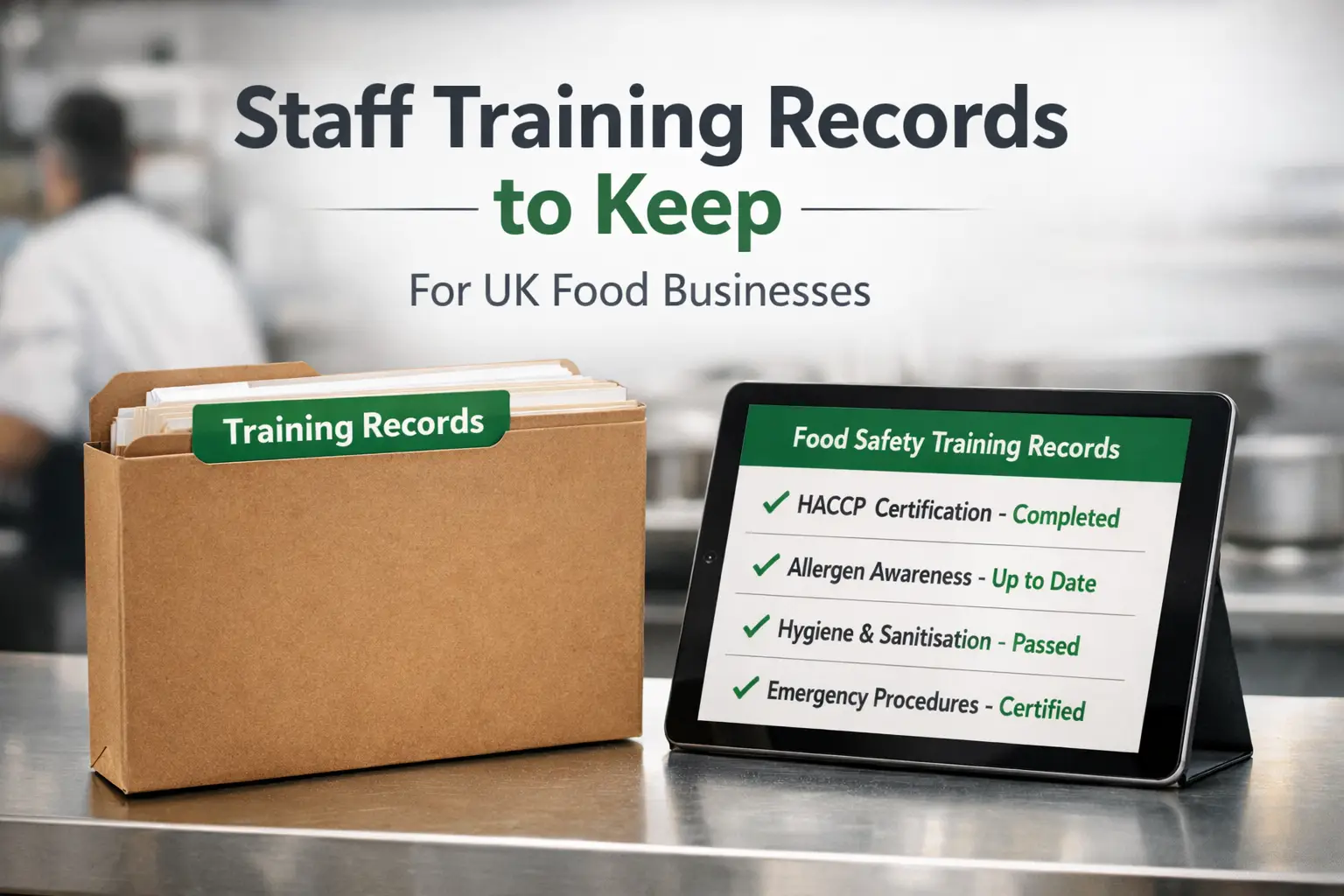
Keeping reliable staff training records isn’t just admin. It’s how you prove competence, track refresher needs, and prepare for inspections. This UK-focused guide explains which records matter, how to structure them by role, and practical ways to keep them up to date.
What training records to keep
Keep records structured, dated, and linked to each staff member’s actual role. This makes audits faster and helps you spot gaps when roles shift.
Keep records that cover both initial onboarding and ongoing proficiency. Key areas include induction, food hygiene basics, allergens awareness, cleaning procedures, temperature control, using probes safely, opening and closing checks, pest awareness, corrective actions, and role-specific training (front of house, kitchen, delivery, and cleaning).
Practical examples to capture:
- A new chef completes an induction and signs off a competency record after a supervised kitchen tour.
- A server is trained on allergen handling before first shifts on the till, with notes filed for future reference.
To keep things consistent, store each staff member’s file with separate sections for each training category and a final competency sign-off for their current duties.
Why refresher training matters
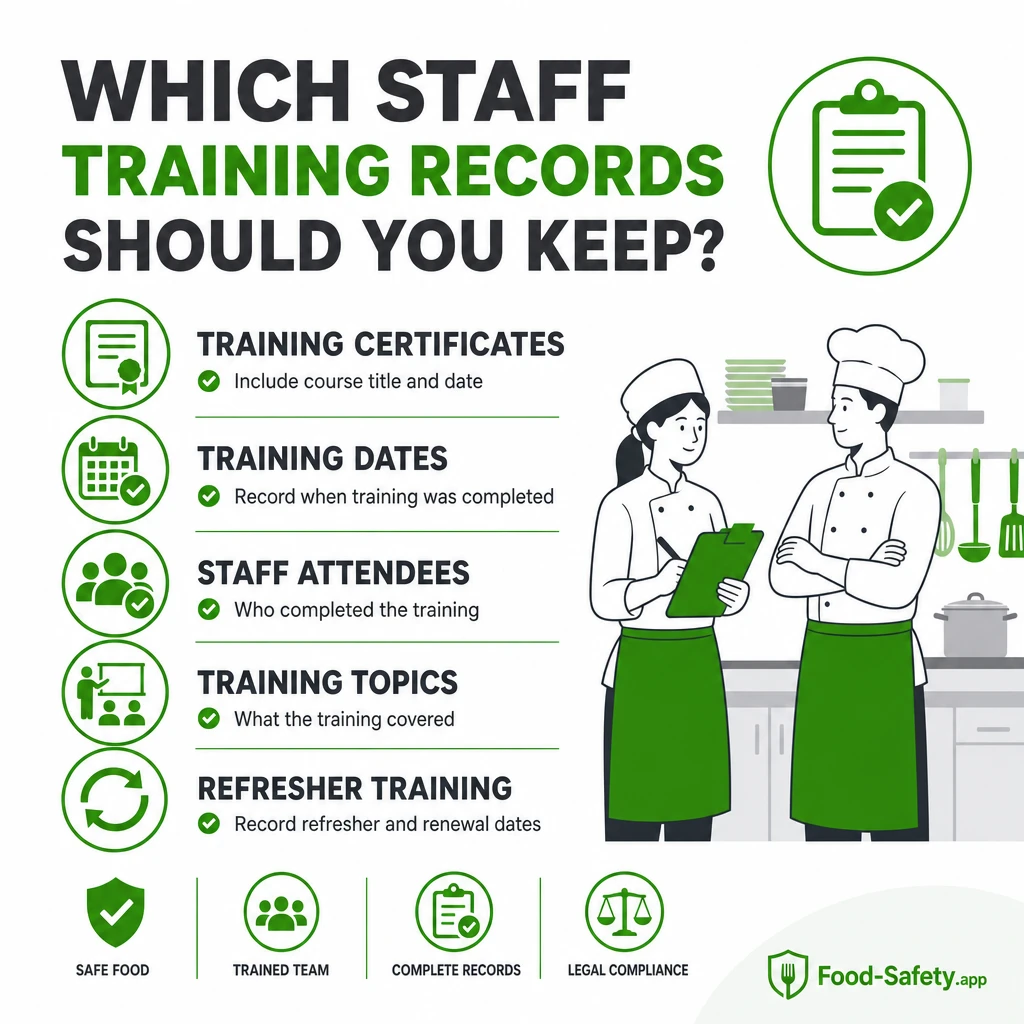
Refresher training should be scheduled promptly after any change, and records updated to show who completed it and when.
Refresher training matters whenever there are changes to menus, equipment, procedures, or after any incident. It helps ensure that staff stay aligned with current practices and reduces risk of non-compliance or mistakes on the shop floor.
Key triggers for refresher training:
- Menu changes introducing new allergens or preparation methods
- New equipment or updated cleaning chemicals
- Revised procedures after an incident or fault finding
- Staff turnover or role changes
Document the outcomes: who attended, what was reviewed, and any evidence of competence (demonstrations, checks, or sign-offs).
Linking training to duties
Link training records to duties to avoid confusion and ensure clear accountability during service checks.
Training should map directly to each staff member’s actual duties to ensure clarity during checks and audits. Create role-based training bundles and tie each bundle to a named staff member.
Examples of practical mappings:
- Front of house: allergen awareness, portion control guidance, serving temperatures, and customer safety procedures.
- Kitchen: temperature control, correct use of probes, safe storage and meat handling, and HACCP-related checks.
- Delivery checks: transport temperature monitoring, hygiene considerations for handover, and clean vehicle practices.
- Supervisors: coaching and assessment records, routine checks, and corrective action logging.
- Cleaning staff: chemical handling, dilution ratios, and cleaning schedule adherence.
Recordkeeping tips:
- Use a simple cross-reference so a supervisor can pull up a staff member’s role-related training in one place.
- Periodically review role assignments to ensure training stays current with duties.
Certificates vs practical proof
A course certificate alone isn’t proof of day-to-day competence; practical records show how staff perform during real tasks.
Don’t treat certificates as the sole proof of competence. In addition to course certificates, collect in-house sign-offs, coaching notes, and competency checks that demonstrate real-world performance.
What to include:
- Course certificates showing completion dates
- In-house sign-offs after observed task performance
- Coaching records with a brief on-the-job observation
- Competency checks and calibration demonstrations (e.g., thermometer use, chemical handling)
- Shadowing or peer-review notes linked to specific duties
Scenarios to illustrate:
- A supervisor signs off a practical competency after calibrating a probe and demonstrating correct technique.
- A server’s allergen training is complemented by observed service checks and a signed competency note.
On-the-job coaching and records
On-the-job coaching builds competence where it matters most and should be captured with dates and signatures.
On-the-job coaching is where skills truly become routine. Record toolbox talks, live demonstrations, shadowing sessions, and formal supervisor assessments. Each entry should include who delivered the coaching, what was demonstrated, the date, and whether the staff member demonstrated competence.
Common coaching activities to log:
- Toolbox talks on safe chemical use and cleaning schedules
- In-work demonstrations of critical tasks (e.g., checking fridge temperatures)
- Shadowing during peak service periods
- Supervisor-led competence assessments with a clear pass/fail note
Example: A cleaner is coached on chemical use and cleaning schedules, with the task marked complete in a digital record.
Remember to keep a rolling log of coaching events and attach any supporting notes or photos where appropriate
Keeping records accessible
Learn how a centralized system can streamline training records, certificates, and role-based evidence in one place, with automatic timestamps, offline access, and easy export for inspections.
Record accessibility is essential for audits, inspections, and staff reviews. Structure records so they’re easy to locate, export, and review. Consider a centralized system that stores:
- Individual staff training histories
- Role-based training bundles
- Dates of refresher training
- Evidence of practical competence and coach signatures
Operational tips:
- Use consistent file naming (surname_role_trainingDate)
- Tag records by current role and department
- Ensure offline access for areas with poor connectivity
- Maintain a clear retention policy and review cycle
Promoting easy export helps during inspections and internal audits. For teams using digital tools, ensure quick export formats (PDF/CSV) and the ability to filter by staff member or role.
Practical demonstration and CTA
If you’re evaluating solutions, consider a platform that supports role-based templates, real-time updates, and export-ready reports. For many UK food businesses, having a reliable digital record keeps you prepared for day-to-day checks and official inspections alike.
Call-to-action and closing note
- The article highlights practical, role-based recordkeeping that supports day-to-day checks and inspections.
- A digital solution can centralize records, attach practical evidence, and streamline reporting for staff reviews and audits.
Accessibility speeds up inspections; ensure records are easy to export and present.