Food safety for small food businesses means practical, low-cost controls that fit into a busy service while protecting customers and staying compliant. This article outlines the core concepts, from clean premises and temperature control to allergen handling, safe deliveries and clear record-keeping, with actionable routines you can implement today without overhauling daily workflows.
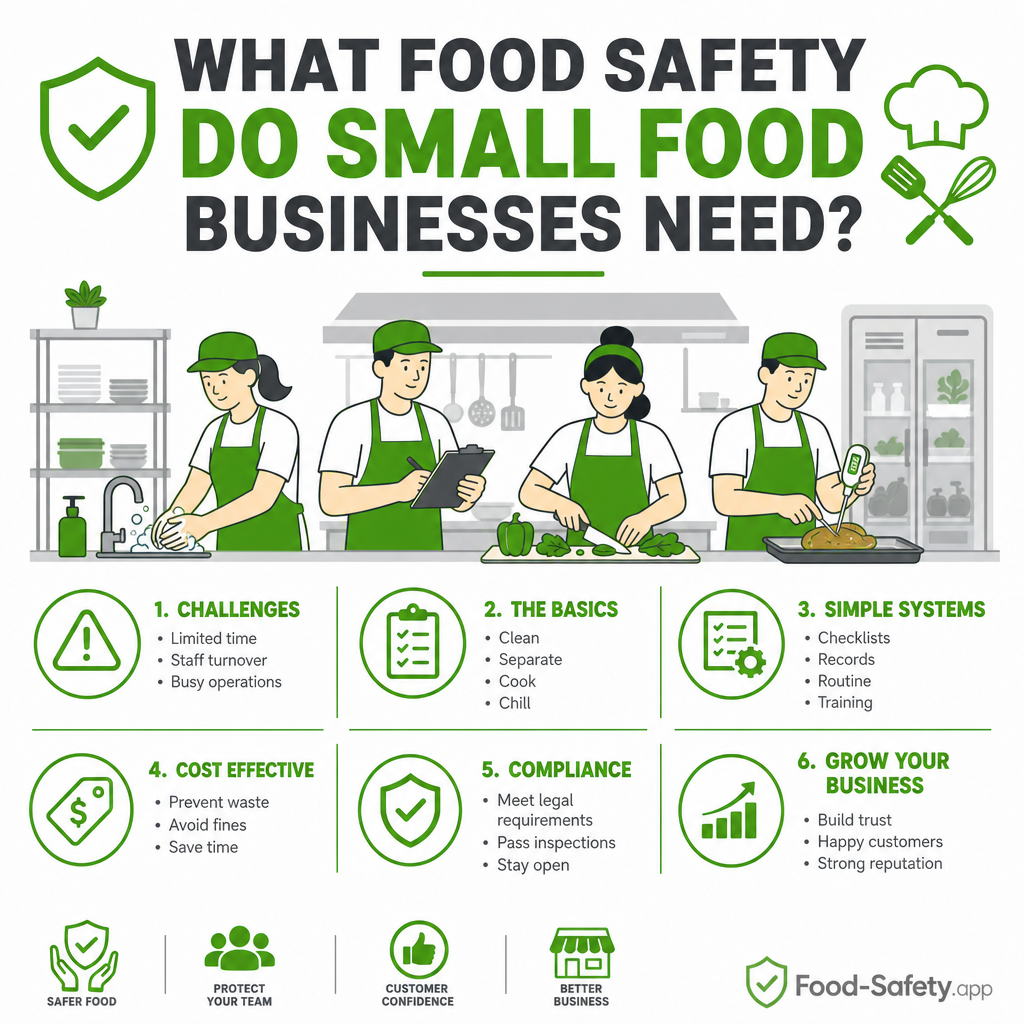
- What good food safety for small food businesses looks like in a kitchen
- Temperature control basics
- Why formal controls matter for food safety in small businesses
- Simple controls that work for small teams
- The most common weak spots in small kitchens
- Keeping compliance practical with short daily checks and logs
What good food safety for small food businesses looks like in a kitchen
In a small kitchen, practical food safety starts with tidy premises and clear routines. Good food safety for small food businesses means temperatures are monitored, allergens are managed, deliveries are checked, staff are trained, and records are kept with minimal fuss. The aim is a reliable, auditable baseline that supports busy service and reduces risk rather than adding complexity.
Temperature control basics
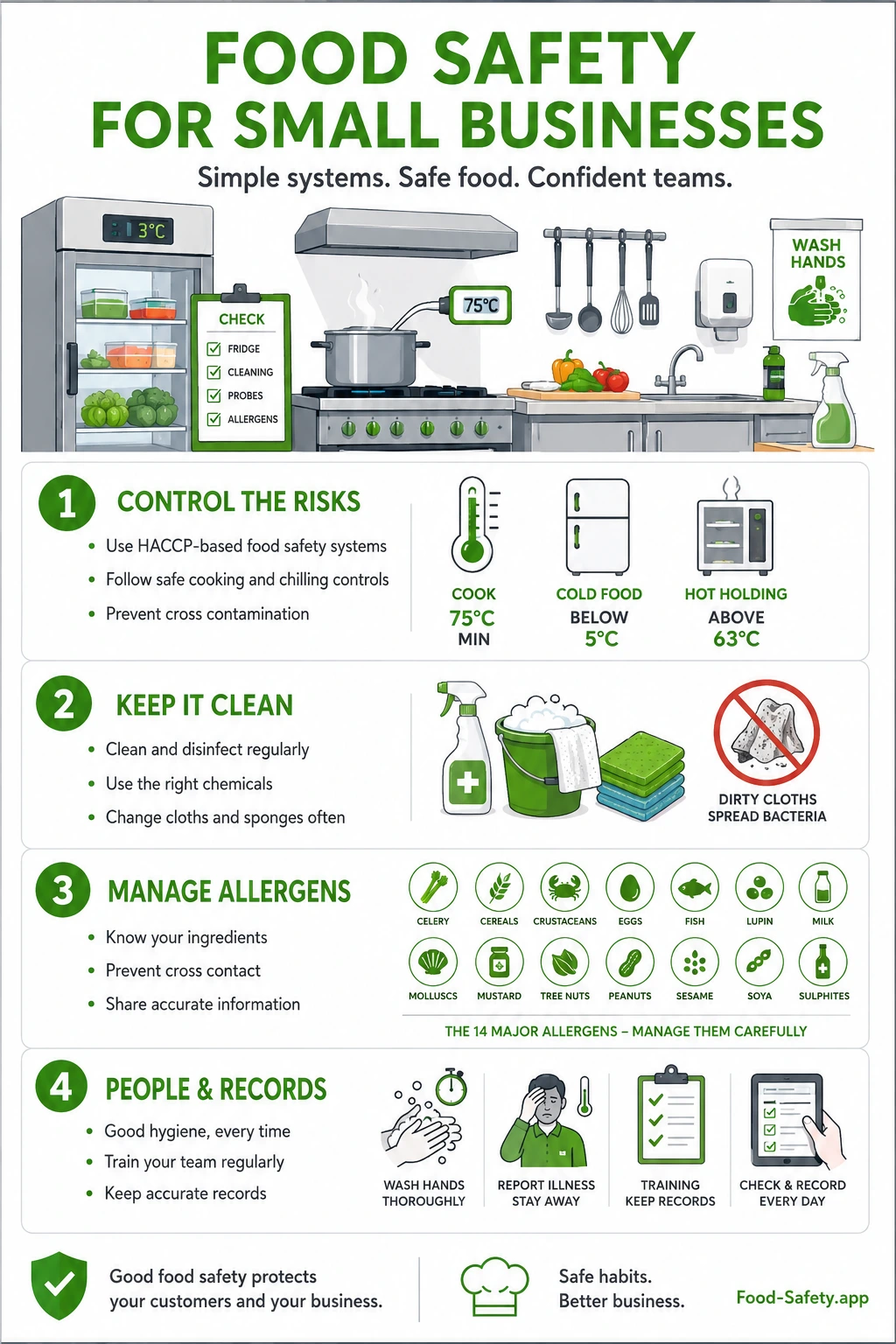
- Record fridge temperatures at opening, during service and at close; ensure fridge ≤5°C and report any variance.
- Record hot holding temperatures, ensuring cooked foods stay above 63°C during service.
- Address any out-of-range readings immediately and document corrective action.
Example: a café uses a simple log to capture opening fridge and hot-holding checks, noting any exceptions and the corrective steps taken. See the practical table below for a snapshot of how this works in real life.
| Time | Fridge temp °C | Hot hold temp °C | Notes |
|---|---|---|---|
| Opening | 4 | 72 | OK |
| During service | 3 | 74 | OK |
| Close | 5 | 69 | OK |
Allergen handling and records
Allergen control should be clear and accessible to all staff. Keep an allergen matrix and map dishes to the 14 allergens, and share basic information on request. This reduces the risk of cross-contact and helps front-line staff respond confidently.
Practical example: a café, when asked, can provide allergen details for a dish by referencing the up-to-date master sheet. This supports service staff and boosts customer trust.
Why formal controls matter for food safety in small businesses
Even with small teams and tight budgets, formal controls create an audit trail, support staff accountability and reduce the chance of repeated mistakes. Clear procedures, a simple log system and defined responsibilities help couples of staff share tasks and maintain consistency during busy periods. In practice, the cost is time saved and less risk of a service disruption or a failed inspection.
For official guidance on food safety hygiene, see Food Standards Agency.
Simple controls that work for small teams
Key controls include opening and closing checks, a basic cleaning schedule, a simple goods-in log, and a record of staff training. These are compact enough to fit into a daily routine but effective at reducing risk.
The most common weak spots in small kitchens
- Missed temperature checks
- Inconsistent cleaning and sanitising
- Poor allergen communication
- Missing paperwork and records
Fixes are practical: assign a single person to daily checks, use short, visible logs, and store records where staff can access them quickly. For instance, a takeaway can implement a goods-in check for chilled deliveries and reject unsafe stock on the spot, with a simple note of the incident.
Keeping compliance practical with short daily checks and logs
Rather than a sprawling HACCP plan, use brief, shift-friendly routines. Start with an opening check before service, a quick service check during peak hours and a closing check when the doors shut. A clean, predictable pattern reduces risk and makes audits simpler.
Opening and closing checks
- Open: verify fridge and freezer temperatures, confirm cleaning tasks completed, and log any issues.
- During service: monitor temperatures, record any adjustments to cooling equipment, and maintain an accessible log for staff.
- Close: record final fridge temperatures, dispose of any waste per policy, and file the day’s logs.
Cleaning schedules and tasks
Use a simple weekly cleaning schedule for prep areas, fridges and probes. Include task owner and expected frequency to maintain consistency.
| Area | Task | Owner | Frequency |
|---|---|---|---|
| Prep areas | Wipe surfaces, sanitise | Kitchen lead | Daily |
| Fridge interiors | Clean and check seals | Assistant | Weekly |
| Thermaprobe | Calibration check | Shift supervisor | Monthly |
Allergen records for all 14 allergens should be maintained and accessible; maintain the master list and attach it to menu items where possible. If requested, staff should be able to relay allergen information quickly and accurately.
How food safety systems support growth and inspection readiness
A practical system keeps records fast, structured and review-ready. It helps you trace actions, confirm corrective steps and demonstrate due diligence when an inspector asks for evidence. Simple compliance reduces service disruption and gives staff confidence, especially during peak periods when errors are most likely.
In busy kitchens, the ability to generate a quick PDF of the day’s logs or export a defect report can save hours of admin and keep the audit trail intact.
Practical scenarios and starter checklists
A café recording fridge and hot holding temperatures at opening, during service and at close
Implement a compact daily log that captures opening, service and closing readings, plus any corrective actions. This discipline minimises risk and builds a clear history for audits.
A takeaway logging goods in checks for chilled deliveries and rejecting unsafe stock
Require a simple goods-in check for every delivery: confirm cold chain integrity, log arrival temperatures and reject items that do not meet requirements with a quick note.
A small restaurant using a cleaning schedule for prep areas, fridges and probes
Adopt a straightforward cleaning schedule with responsible staff, including calibration checks for probes. Keep a visible board and a brief weekly review to close gaps.
A catering team recording allergen details for menu items and sharing information on request
Maintain a master allergen sheet and attach it to all menus. Train front-of-house and kitchen staff to answer questions accurately and to update the sheet when recipes change.
A supervisor logging a fridge fault, taking corrective action and keeping a full record for audit trail
Use a small fault log: note the fault, immediate actions taken (manual cooling or disposal), and the follow-up verification once repaired. Save the entry for audit and trend analysis.
Food-Safety.app is a food safety management system for catering businesses.
Protect your kitchen with practical safety systems
Build consistent, audit-ready records with simple daily routines and clear responsibilities that support growth and help you pass inspections without disrupting service.