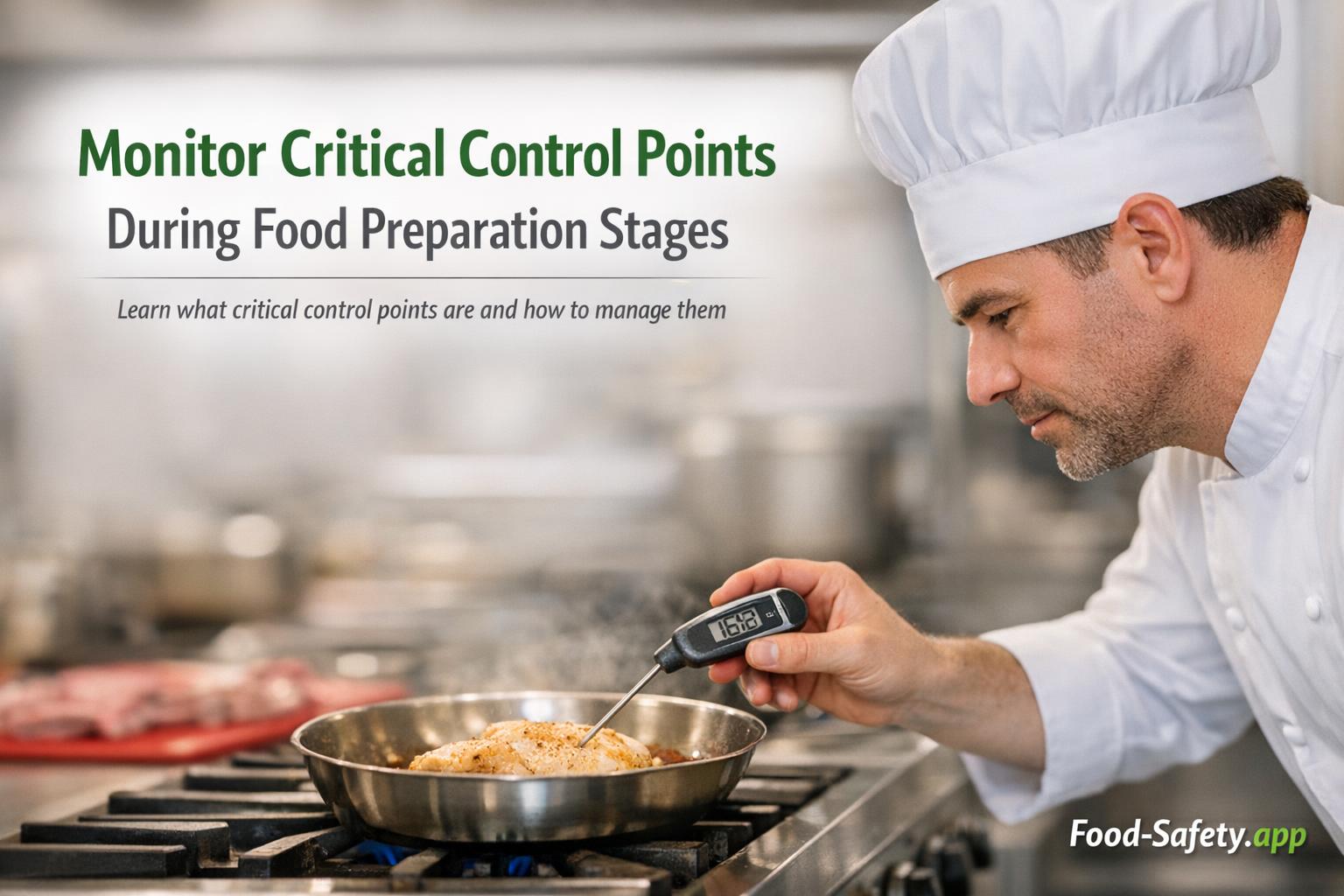
Learn what critical control points are and how to manage them so your team can stay confident, compliant and in control.
What are critical control points in HACCP?
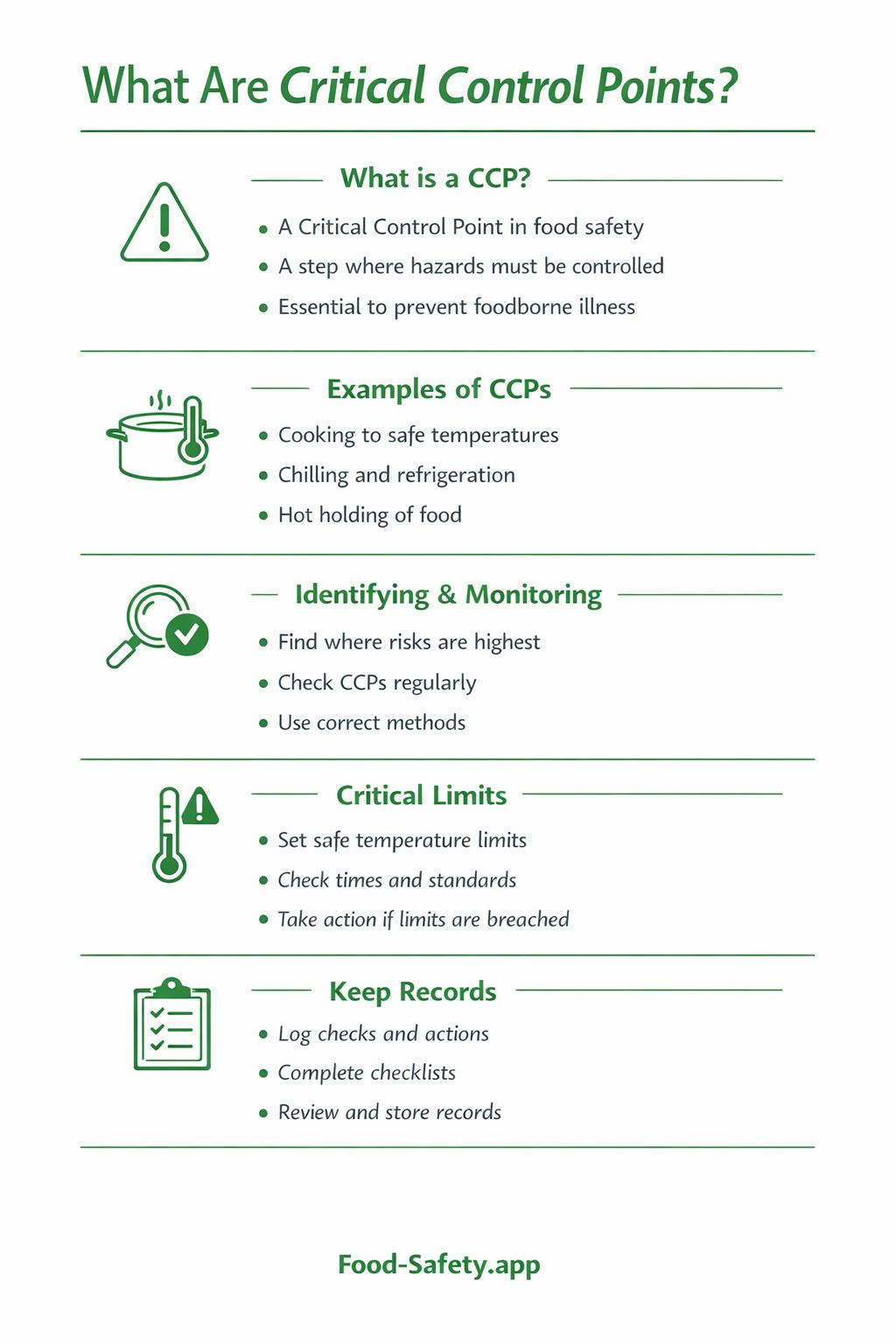
In HACCP, critical control points are the specific stages in your process where control is essential to prevent, eliminate or reduce a food safety hazard to an acceptable level. In simple terms, they are the steps that matter most for keeping food safe. For many catering and hospitality businesses, this often means cooking, cooling, chilled storage, reheating or hot holding. If these points fail, unsafe food can reach customers, so they need clear controls, checks and action when things go wrong.
Under food safety law and recognised good practice, businesses must understand their hazards and apply controls that are suitable for the risks they handle. The Food Standards Agency HACCP guidance explains the principle well: identify the critical control points, set limits, monitor them and act quickly if they drift out of control. That approach helps you protect customers, reduce waste and prove due diligence during an inspection. It also makes day-to-day management far easier because the team knows exactly what to watch.
Common examples of critical control points in a food business
Critical control points look different depending on the menu, equipment and service style, but many catering businesses share the same key stages. Cooking poultry thoroughly is a classic example because it must reach a safe core temperature to destroy harmful bacteria. Chilling cooked food quickly is another, as food left warm for too long can allow rapid bacterial growth. Hot holding soup, curry or gravy before service is also a critical control point because the food must stay hot enough to remain safe.
Other examples include reheating food for service, checking delivery temperatures for chilled or frozen goods and controlling cross-contamination during preparation. For instance, a sandwich shop may need strict controls for ready-to-eat foods handled alongside raw ingredients, while a school kitchen may focus on cooking, cooling and holding bulk dishes safely. If you want a broader refresher on safe day-to-day practice, see food safety fundamentals and temperature control danger zone.
How do you identify critical control points?
Identifying critical control points starts with mapping your menu and process from delivery to service. Ask where a hazard could reasonably be prevented or controlled by one specific step. For example, if raw chicken is cooked for a roast meal, cooking is a critical control point because it directly affects safety. If a rice dish is cooled for later use, chilling becomes critical because it controls bacterial growth. The aim is not to label every task as critical, but to find the steps where control truly matters most.
When building a HACCP plan, each critical control point should be backed by a clear reason, a hazard it controls and a practical method for checking it. This is where simple, well-documented systems work best. A busy kitchen doesn’t need a complicated file if staff can’t use it. Many businesses find it easier to use Food-Safety.app, a food safety management system for catering businesses, because it keeps checks, limits and corrective actions in one place. That can be especially useful for teams that want inspection-ready records without extra paperwork.
How should critical control points be monitored?
Monitoring means checking that the critical control point stays under control at the right time and in the right way. In catering, this often includes using a calibrated probe to confirm cooking, reheating or hot holding temperatures, or watching cooling times to make sure food moves through the danger zone safely. Monitoring must be regular enough to catch problems before unsafe food is served. If you only check at the end of service, you may miss the point when the process first went wrong.
Good monitoring is simple, consistent and done by trained staff. It should tell you what was checked, when it was checked and who checked it. If a temperature is out of range, the team needs to know the next step immediately, whether that means continuing to cook, reheating, rapid chilling or discarding the food. If you’re improving team awareness, training staff development is a useful support area, while running a food business safely helps connect controls to daily operations.
What are critical limits and why do they matter?
Critical limits are the minimum or maximum values that tell you whether a critical control point is still safe. They must be measurable, realistic and based on the hazard being controlled. For example, cooking limits may require a specific core temperature, chilled storage needs to stay within a safe range and hot holding must remain hot enough to stop harmful bacteria multiplying. Without clear limits, staff have no firm reference point, and different people may make different decisions about the same food.
Your limits should match the food, equipment and process you actually use. They also need to be written down in a way staff can understand quickly during service. If a limit is missed, the food must not just be sent out because the kitchen is busy. The corrective action has to be clear in advance. This is one reason businesses often benefit from digital tools and well-organised paperwork, especially when they need to show that procedures are followed consistently across shifts.
Why are records so important for critical control points?
Records show that your critical control points were monitored and controlled properly. They also help you spot patterns before they become recurring problems, such as a fridge that keeps running warm or a prep team that struggles to cool food fast enough. For managers, records are proof that checks were done. For staff, they act as a reminder of the standard expected. In a food safety inspection, good records can quickly demonstrate that your controls are working and that issues are dealt with promptly.
Useful records may include cooking and cooling logs, cold storage checks, reheat and hot holding temperature records, delivery checks, cleaning tasks, probe calibration and corrective actions. Digital systems make this easier because entries can be timestamped automatically and saved in full history. If you want a practical way to keep checks organised, Try Food-Safety.app for FREE. For businesses that are building stronger systems, paperwork and digital food safety can help reduce admin while keeping records easy to review.
Putting critical control points into daily practice
The best HACCP systems are the ones staff can actually use during a busy service. Keep your critical control points limited to the real control steps that matter, then make each one easy to check, record and review. Use simple limits, train the team to understand why they matter and make sure managers follow up on any failures straight away. That way, the system becomes part of the workflow rather than an extra burden. Over time, this reduces risk, improves consistency and helps protect your customers every day.
If your operation needs more help with safe systems, compliance law inspections and real world food safety tips are useful places to build confidence and keep standards high.