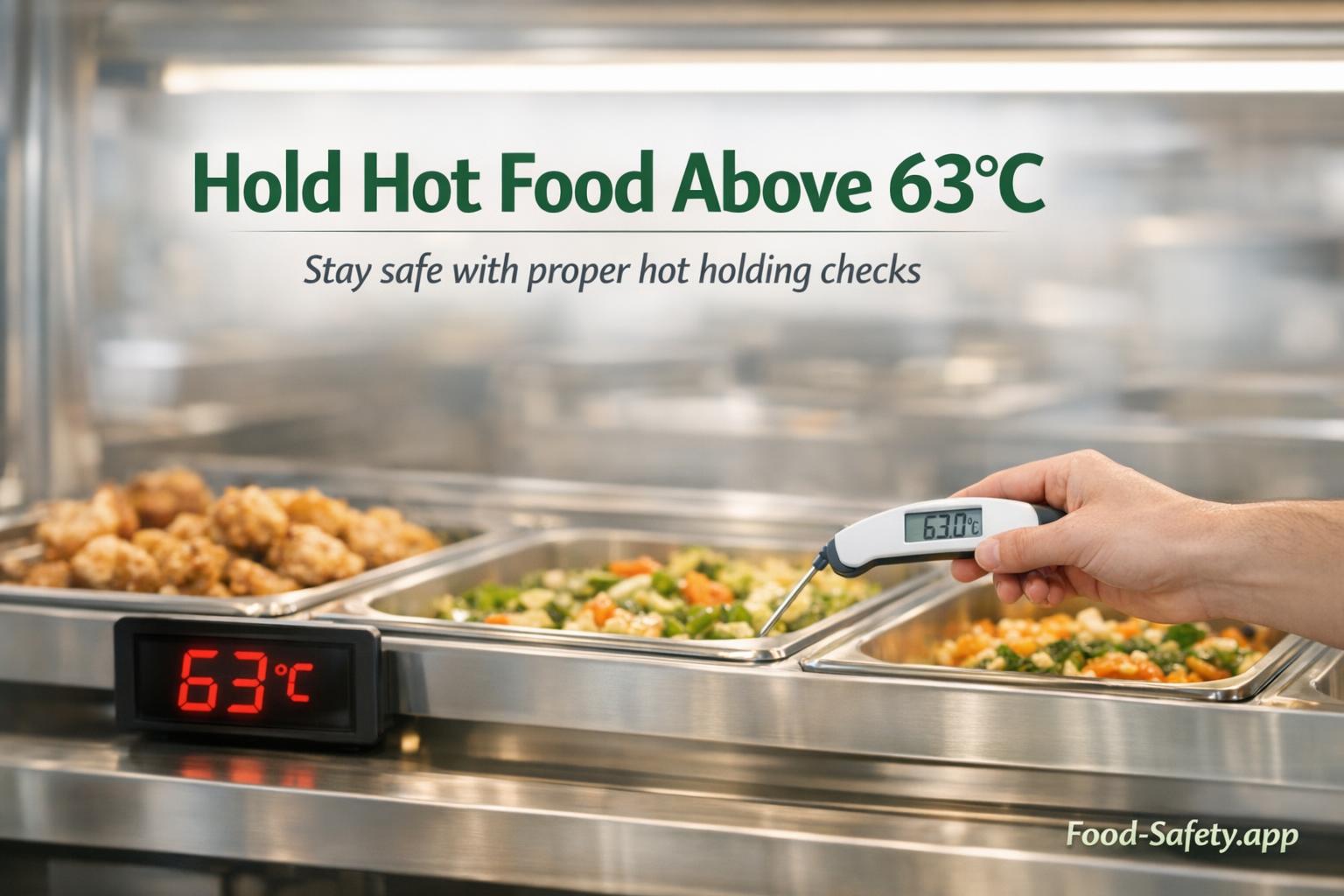
Hot holding at 63C is one of those topics that sounds simple until service starts, the bain marie plays silly beggars, and someone asks whether the curry on the corner of the buffet is still fine. The short version: if you are managing hot holding at 63C, you need a routine that is quick, consistent, and easy for busy teams to follow without guesswork. This guide gives practical checks for restaurants, cafés, hotels, school canteens, takeaways, and caterers so staff can keep food safe and service moving.
Table of contents
- What hot holding at 63C means
- Why hot holding goes wrong in busy kitchens
- Hot holding at 63C without guesswork
- A practical check routine for service
- Corrective actions when food drops below target
- Buffets, takeaway lines, and delivery collections
- Common mistakes to avoid
- Records, training, and daily discipline
- Trusted guidance and a final word
What hot holding at 63C means
Hot holding means keeping cooked food hot enough to stay safe after cooking and before service. In UK food businesses, 63C is the key reference point commonly used for hot holding. The practical aim is simple: once food is fully cooked, it should be held hot and monitored so it does not drift into the temperature danger zone where bacteria can multiply. This aligns with HACCP principles explained.
That does not mean every dish behaves the same way. A deep tray of shepherd’s pie, a shallow gastronorm of rice, and a pan of gravy all cool at different speeds. Sticky sauces, dense meats, and mixed dishes can be trickier than they look because the surface may read hot while the centre is lagging behind. Food safety is rarely impressed by appearances. Neither, frankly, is a probe thermometer.
Why hot holding goes wrong in busy kitchens
Hot holding problems usually start with a service pressure, not a dramatic disaster. The most common causes are:
- Food going into hot holding too early before the centre is properly hot
- Containers being too deep or overloaded, so heat is uneven
- Lids left off for too long during refills or display
- Equipment set too low, or not preheated properly
- Staff relying on touch, steam, or “it looks fine” instead of a temperature check
- Long buffet runs where top-ups keep going but checks do not
In a commercial kitchen, the biggest problem is often drift. A dish may start safely hot, then lose temperature slowly while everyone is focused on orders, tills, allergies, or the one fryer basket that has decided to live a difficult life. That is why hot holding at 63C needs a system, not a hunch. This is why Cross-contamination and food safety management is important to consider as part of your overall control strategy.
Hot holding at 63C without guesswork
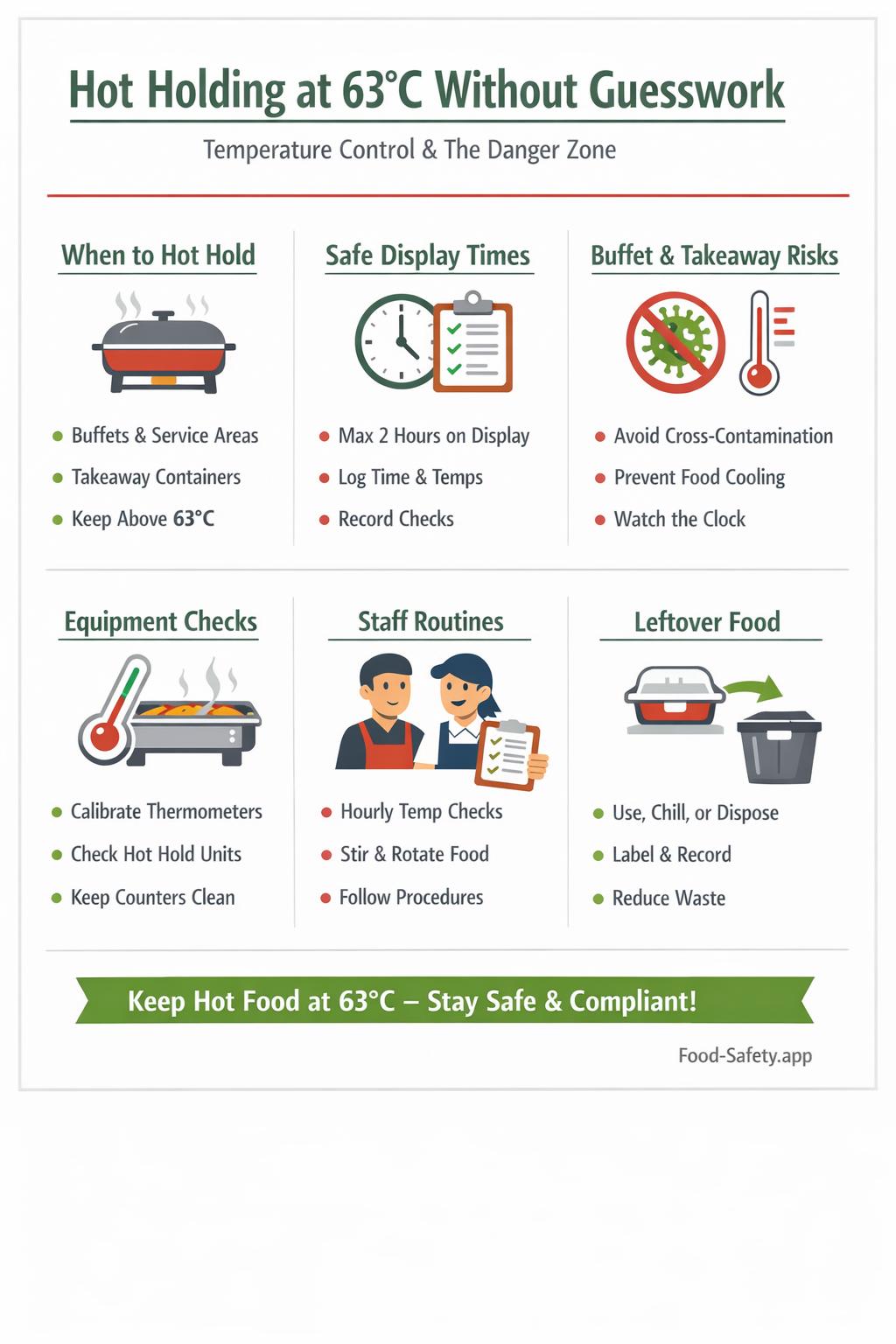
The safest approach is to build a repeatable routine: cook food fully, transfer it promptly into suitable hot holding equipment, and verify temperatures at set intervals. For many businesses, that means using a calibrated probe thermometer and clear staff responsibility for each station. For context on temperature controls, see Temperature control in kitchen.
Start with the right equipment
Hot holding only works well if the equipment is fit for purpose. Bain maries, hot cupboards, heated displays, soup kettles, and heated pass units all need to be clean, working properly, and preheated before service begins. A hot cabinet that is still warming up when the food arrives is basically asking for trouble with a polite label on the front.
Use sensible portion sizes
Smaller, shallower containers hold temperature more reliably than oversized, packed trays. If you are running a school canteen or busy buffet, it is usually better to replenish little and often than to cram one enormous tray full and hope for the best. Shallow containers help heat stay even through the food, not just on the top layer.
Keep food covered when practical
Lids and covers help retain heat and reduce contamination risk. That said, staff still need to check food safely and serve it neatly. If lids are kept off for long periods because service is hectic, temperature loss can happen fast. “Just a second” has a funny way of becoming ten minutes.
Check the food, not just the machine
The display unit may be warm while the food inside is not. The only reliable way to know is to check the food temperature with a clean probe. Measure in the thickest part of the food, avoiding bone, tray edges, and obvious cold spots. For mixed dishes, check more than one point if needed.
A practical check routine for service
A good hot holding routine should be simple enough that staff actually follow it during busy service. Here is a practical approach many teams can build into daily checks, and it aligns with Food safety induction training for new staff.
Before service
- Preheat hot holding equipment fully
- Check probes are clean and ready to use
- Make sure cooked food is placed into suitable containers
- Label the time the food entered hot holding if your system uses time controls
- Assign responsibility for temperature checks to named staff
During service
- Probe at set intervals, not only when someone remembers
- Check the centre of food, especially denser items
- Record temperatures in a simple log or digital system
- Refill containers only when needed and avoid excessive topping-up
- Stir foods like soups, sauces, and curries before checking if safe to do so
After service
- Discard anything that has not been held safely
- Clean and sanitise probes, lids, trays, and holding equipment
- Review any temperature dips and why they happened
- Replace faulty equipment or retest it before the next shift
If you want staff to keep up with checks during a lunch rush, make the process boringly easy. Good food safety systems are not glamorous. They are dependable, which is much more useful when the dining room is full and the chip fryer is making that ominous sizzling sound again. This approach is easier to implement when you align with Cleaning schedules for better food safety management.
Corrective actions when food drops below target
Even with a good system, food will sometimes dip below the expected hot holding temperature. What matters is how quickly the team reacts.
If the food has only just dropped
Check whether the equipment is performing properly, stir if appropriate, and recheck promptly. If the food can be safely reheated and your process allows it, it should be brought back to a safe hot state quickly before returning to holding. Always follow your business procedures and food safety plan.
If you cannot confirm it stayed safe
If there is any doubt about how long food has been below the correct temperature, discard it. That may feel annoying in the moment, especially during a busy service, but guessing is not a control measure. It is just expensive optimism.
Investigate the cause
Repeated failures usually point to a practical issue such as:
- Equipment not reaching temperature before service
- Overfilled containers
- Door openings or lids left off too long
- Cold product added to hot food
- Insufficient staff training or unclear ownership
Fix the cause, not just the symptom. Otherwise, the same issue will pop up again on Friday night when the team is already running on caffeine and goodwill.
Buffets, takeaway lines, and delivery collections
Hot holding at 63C gets more complicated when food is sitting out for customers to serve themselves or waiting for collection.
Buffets
Buffets need extra attention because food is handled more often and exposed for longer. Use smaller batches, refill regularly, and keep a close eye on both temperature and presentation. A tidy buffet is not just for looks; it helps staff notice when food is drying out, running low, or cooling at the edges.
Takeaway collections
If meals are waiting for customers to collect, timing matters. Food should not sit around in the warm cabinet long enough to lose quality or safety. Clear order management, fast dispatch, and accurate labelling all help. If customers are delayed, your hot holding controls need to cope with that reality.
School canteens and hotel service
In large-volume service, the temptation is to load the counter and hope the lunch rush behaves itself. It rarely does. Build checks into each tray change, use designated staff to watch hot holding points, and keep an eye on the first and last dishes on the line, which are often the ones most likely to drift. To minimize cross-contamination risk on busy buffets, see Cross-contamination and food safety management.
Common mistakes to avoid
- Assuming steam means the whole dish is safely hot
- Checking only one tray and assuming the rest are the same
- Leaving lids off while chatting, plating, or restocking
- Using uncalibrated or dirty probes
- Overfilling hot holding units
- Forgetting to preheat equipment before service
- Letting staff rely on “common sense” instead of a documented routine
Most of these mistakes are fixable with better habits, not heroics. The aim is not to create more paperwork for the sake of it. It is to stop food safety depending on who is on shift and how busy they happen to be.
Records, training, and daily discipline
Good records make hot holding easier to manage because they show what was checked, when it was checked, and what happened next. A short temperature log, cleaning schedule, and equipment check list can save time when something goes wrong and help managers spot patterns before they become a problem.
Training matters too, but it should be practical. New starters need to know how to use a probe, where to check the temperature, what to do if food is below target, and who to tell immediately. That is especially important in hospitality teams where staff may move between prep, pass, and front-of-house within the same shift.
If you run multiple sites, standardising your checks helps reduce variation. A food safety management system for catering businesses like Food-Safety.app can help teams follow the same hot holding routine across sites without turning every shift leader into a detective.
Trusted guidance and a final word
For general UK guidance on food safety and temperature controls, the Food Standards Agency is a useful place to start: Food Standards Agency. Requirements and best practice may differ in other countries, so if you operate outside the UK, check your local guidance too.
The main lesson is straightforward: hot holding at 63C should not be left to guesswork. Use proper equipment, check food temperatures during service, keep records simple, and act fast if anything slips. That approach protects customers, reduces waste, and keeps service running more smoothly when the pressure is on. In other words, fewer surprises, fewer bin bags, and a much calmer end to the shift. For allergen management specifics, see Allergen management made practical for UK food businesses.
Improve hot holding discipline today
In busy service, consistent hot holding protects customers, reduces waste, and helps teams stay calm under pressure. Implementing a simple, repeatable routine with clear responsibilities creates reliable results across shifts and sites, while simple records help you spot trends and improve training for staff.