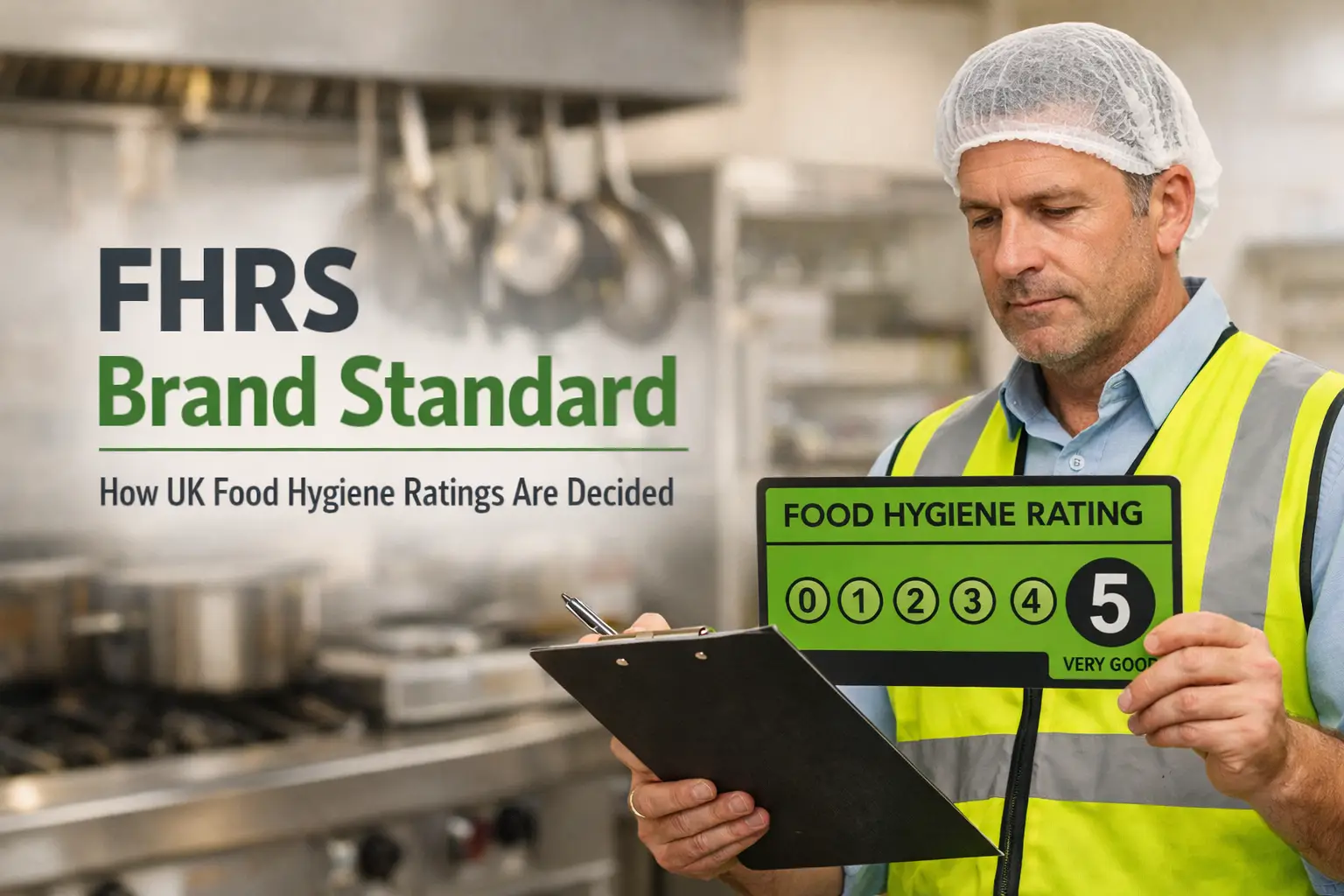
What the FHRS Brand Standard is and why it matters to local authorities
The Brand Standard translates everyday kitchen practice into a clear, inspectable framework that officers apply consistently.
The FHRS Brand Standard is a guidance framework used by local authorities to assess and rate food businesses. It standardises how inspectors score your operation across three core domains and ties the rating visible to customers to consistent evidence gathered during a visit. While it is not itself a legal statute, it underpins how rating decisions are made and helps ensure fairness, traceability and public protection.
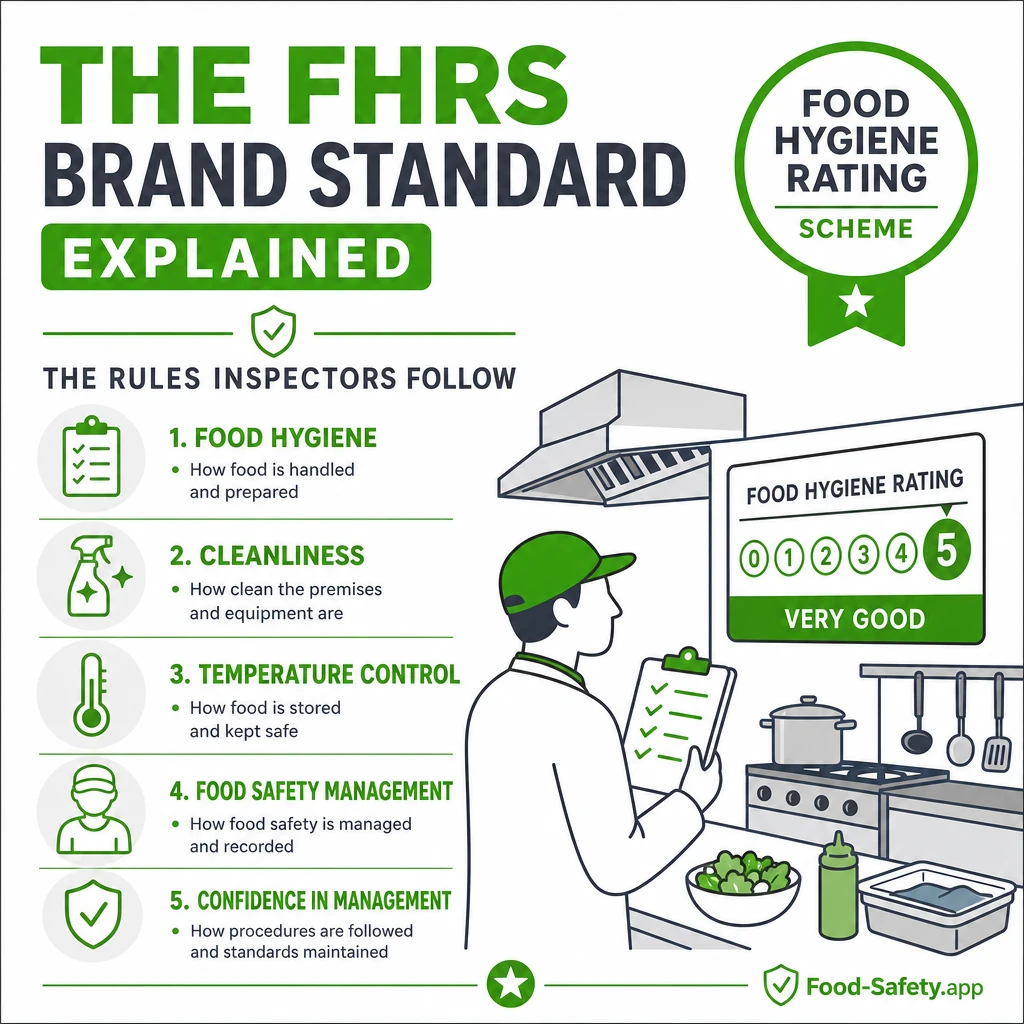
The three scoring elements: hygiene handling, structure and cleaning, and confidence in management
The elements are interdependent: strong management makes hygiene and cleaning more reliable, and reliable records support confident judgments.
Ratings are built from three interlinked elements. Understanding them helps you prioritise actions.
- Hygiene handling: how food is handled to prevent contamination (cross-contamination controls, personal hygiene, correct thawing and cooling, correct storage).
- Structure and cleaning: the premises, equipment, cleaning schedules, maintenance, waste management and overall cleanliness.
- Confidence in management: leadership, staff training, HACCP awareness, record-keeping, and timely corrective actions.
| Element | Focus areas | Evidence inspectors look for |
|---|---|---|
| Hygiene handling | Food handling, cross-contamination controls, cold/hrozen storage, personal hygiene | Clean working practices, correct use of gloves and hair restraints, segregation of raw and ready-to-eat food, calibrated thermometers present |
| Structure and cleaning | Premises design, equipment condition, cleaning frequency, pest controls | Cleanable surfaces, functioning fixtures, routine cleaning records, maintenance logs, pest control notices |
| Confidence in management | HACCP, training, records, corrective actions | Documented HACCP plan, shown staff training records, timely action logs, evidence of monitoring and review |
How ratings are decided in day-to-day inspections
A well-kept set of records can help inspectors see what’s been done, even when a busy service makes daily operations look tight.
Inspections are built on real-time observations and documentary evidence. The process generally follows these steps:
- Observe conditions and behaviours across the three elements.
- Check records and proof, such as opening/closing checks, cleaning logs, calibration records, and delivery documentation.
- Score each element against its criteria, then combine the evidence into an overall rating.
- Communicate clear corrective actions where gaps are found, with follow-up or a re-inspection if needed.
- Use past records and recent improvements to determine whether the rating should change at the time of inspection.
What counts as good control in kitchens cafes takeaways and mobile catering
Practical records that are easy to export and review help prove you’ve got this under control.
Good control means predictable, verifiable practice across all service types. Key points include:
- Opening and closing checks that cover temperatures, equipment status, and handwashing facilities.
- Temperature control for perishable foods and proper cold-chain management, with clear logs and action when readings drift.
- Cleaning schedules tied to equipment use and high-risk areas, with evidence of routine maintenance.
- Accurate records for deliveries, goods-in checks, and traceability to suppliers.
- Clear allergen records and menu documentation to prevent cross-contact.
Practical scenarios
Scenario: missing opening checks and incomplete cleaning records
Without opening checks, it’s hard to prove that fridges were at safe temperatures before service, and gaps in cleaning records suggest inconsistent hygiene. Fixes include a simple opening checklist and a daily cleaning log that are timestamped and stored centrally.
Scenario: a fridge running above safe limits during a busy service
If a fridge’s temperature creeps up, record the event, recheck the thermometer, move foods quickly to safe storage, and document corrective actions. Regular calibration and alarm testing help prevent recurrence.
Scenario: an allergen query but lacking clear menu records
Allergen information should be documented and accessible. If records aren’t clear, the inspector will question cross-contact controls; update the menu or allergen matrix and train staff to communicate clearly.
Scenario: a delivery arriving warm or damaged and how goods-in checks support traceability
Goods-in checks verify quality and traceability. Damaged or warm deliveries should be logged with corrective actions, and supplier follow-up should be recorded so issues can be reviewed later.
Scenario: a supervisor logging a defect, corrective action, and follow-up before inspection
Defect logs with corrective action plans, responsible persons, deadlines and verification steps demonstrate ongoing control and learning from issues.
Rating limits and when a business may not receive the rating it expected
Remember, a rating isn’t a personal verdict on a business—it’s a reflection of current controls and evidence available at the time of inspection.
Ratings range from 0 to 5, with higher scores indicating stronger compliance. A business may not receive the rating it expects if the inspection finds gaps in any of the three elements, or if records and corrective actions demonstrate weak or inconsistent control. It’s common for ratings to reflect a snapshot of current practice; repeated improvements and timely follow-up can lead to a higher rating on a later inspection.
If issues are addressed promptly and verifiably, a re-inspection can result in a revised rating. Conversely, unresolved gaps, poor record quality, or missing corrective actions are likely to keep a lower score.
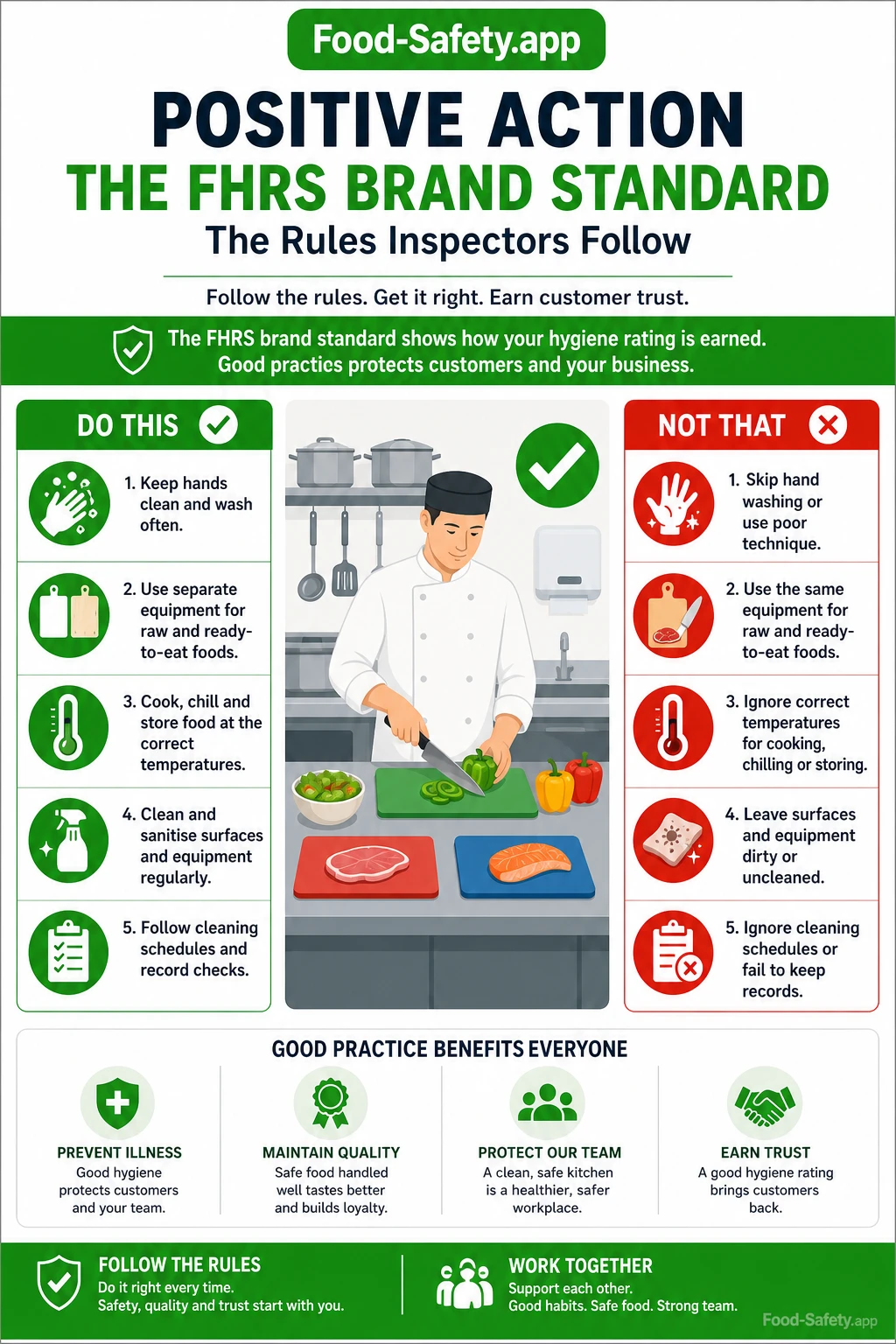
Business rights and how to respond or appeal
You have options if you disagree with an inspection outcome or want to strengthen your position for the next visit.
- Right to reply: submit a formal response to accompany the inspection report, detailing context, actions taken and dates. This can help inspectors understand circumstances that influenced the rating.
- Right of appeal: if you believe a procedural error occurred or you have new evidence, you can appeal through the local authority’s process, following their guidance.
- Right to request a re-rating: after implementing corrective actions and updating records, you may request a re-rating or a re-inspection to reflect improvements.
Practical compliance focus
- Keep structured records for temperatures, cleaning, deliveries, defects, calibration and training.
- Use a simple daily checklist for opening, closing and hygiene controls.
- Maintain clear corrective action logs with dates and responsible staff.
- Review HACCP controls regularly and keep team responsibilities clear.
- Ensure records are timestamped and easy to export for inspection.
- Use digital record-keeping to store evidence, support inspections, and build confidence in management.
If you’d like to improve your FHRS readiness, focus on consistent record-keeping, clear ownership of corrective actions, and visible HACCP controls. A simple, timestamped system that captures opening/closing checks, temperatures, and cleanup tasks makes inspections smoother and supports a stronger hygiene reputation.