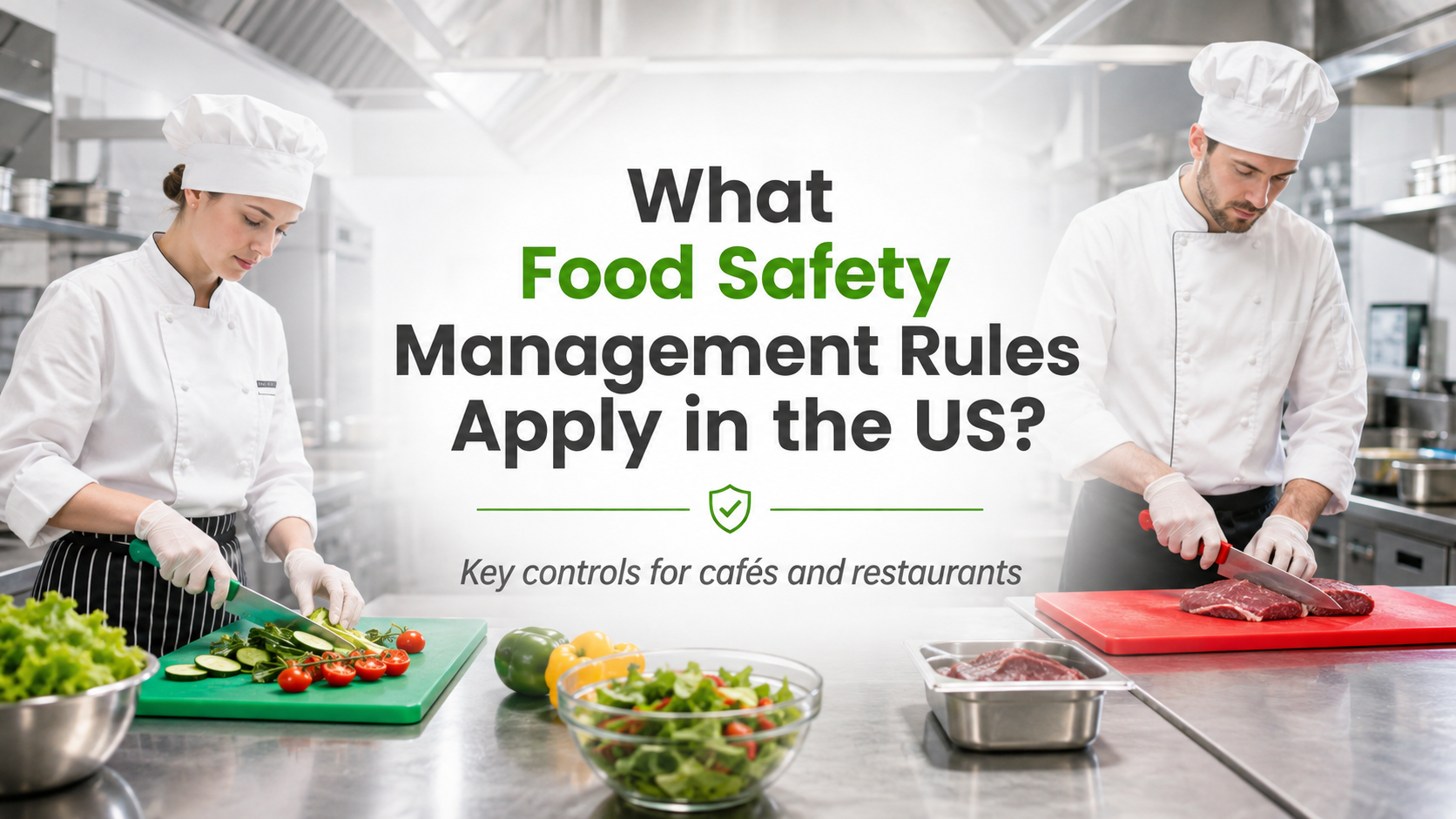
Food safety management rules vary across the US, but this guide explains the controls most cafes and restaurants are expected to follow.
Who sets food safety management rules for restaurants?
Restaurants, cafes, takeaways and other food service businesses in the US are mainly regulated by state, county, city, tribal or territorial authorities. There isn’t one identical set of legal requirements covering every food business in every location.
The Food and Drug Administration publishes the FDA Food Code, which provides a model for safe food handling in restaurants and retail food businesses. States and local authorities can adopt the Food Code, use an earlier version or amend its requirements.
A business should therefore identify its regulatory authority before relying on any national guidance. The FDA provides a useful directory of state food codes and regulators.
Which food safety controls are usually required?
Although the details vary, most authorities expect food businesses to control the same main causes of foodborne illness. Effective food safety management means identifying these risks, checking that controls are working and taking action when something goes wrong.
Does a restaurant need a person in charge?
A person in charge will normally need to be present during operating hours. They’re responsible for supervising food handling, checking staff practices and responding to food safety problems.
Many jurisdictions also require a certified food protection manager. The precise training, certification and attendance requirements depend on the state or local authority.
What employee health controls are needed?
Food workers should know which illnesses and symptoms they must report. These commonly include vomiting, diarrhoea, jaundice, a sore throat with fever and infected wounds.
The person in charge may need to restrict an employee’s duties or exclude them from the business. Many authorities also expect written procedures for dealing with vomiting or diarrhoeal incidents on the premises.
What handwashing and hygiene rules apply?
Food employees must wash their hands at suitable handwashing sinks before preparing food and after activities that could contaminate their hands. This includes using the toilet, handling raw food, touching waste, cleaning and handling dirty equipment.
Bare-hand contact with ready-to-eat food is generally restricted. Staff may need to use tongs, deli paper, spatulas or single-use gloves.
What temperature controls should be followed?
Cooking, cooling, reheating and holding food safely are central parts of food safety management. Under the current FDA model Food Code, common controls include:
- Holding cold food at 41°F or below
- Holding hot food at 135°F or above
- Cooking poultry and stuffed foods to 165°F
- Cooking ground or non-intact meat to at least 155°F for 17 seconds
- Cooking fish, intact meat and eggs for immediate service to at least 145°F for 15 seconds
- Reheating food for hot holding to 165°F for 15 seconds within two hours
Cooked food should generally be cooled from 135°F to 70°F within two hours and then to 41°F or below within a total of six hours.
These are model Food Code figures. Businesses must check the limits adopted by their own regulatory authority. Good digital food safety records can help managers show when checks were completed and what happened when a limit wasn’t met.
How should cross-contamination be controlled?
Raw meat, poultry, seafood and eggs must be kept separate from ready-to-eat food. Controls may include separate storage, suitable preparation areas, clean utensils and effective cleaning and sanitising between tasks.
Food should also be protected from chemicals, pests, damaged packaging, dirty equipment and other possible sources of contamination.
What allergen controls are expected?
The US recognises nine major food allergens: milk, eggs, fish, crustacean shellfish, tree nuts, peanuts, wheat, soybeans and sesame.
Effective allergen management includes knowing what’s in each dish, answering customer questions accurately, preventing allergen cross-contact and checking that packaged food is labelled correctly.
Requirements for written allergen information in restaurants can vary, so businesses should check their local food code and any applicable federal labelling rules.
What cleaning and sanitising controls are needed?
Food-contact surfaces must be cleaned and sanitised at suitable intervals and whenever contamination may have occurred. Cleaning removes food debris and grease, while sanitising reduces microorganisms after cleaning.
Businesses may need to check sanitiser concentration, dishwasher temperatures, cleaning frequencies and the accuracy of food thermometers. Equipment, floors, walls, plumbing and waste areas must also be maintained in a clean and suitable condition.
Are food safety records legally required?
Not every state requires restaurants to record every fridge temperature, cleaning task or cooking check. However, particular records may be compulsory for specialised processes, shellfish, date marking, employee illness, time used instead of temperature control or an approved HACCP plan.
Routine records remain useful even where they aren’t specifically required. They help managers spot missed checks, investigate problems and demonstrate active control during an inspection.
When does a restaurant need HACCP records?
An ordinary cafe or restaurant won’t normally need a formal HACCP plan simply because it prepares and serves food. A regulator may require a plan or variance for processes such as sous vide cooking, vacuum packaging, curing, smoking for preservation or using additives to make food shelf stable.
These activities shouldn’t begin until the relevant authority has reviewed and approved the process. Any required HACCP records must then match the approved plan.
How can digital food safety management help?
Busy kitchens need a practical way to manage daily checks without creating unnecessary paperwork. Clear digital records can make it easier to monitor temperatures, cleaning, deliveries, allergens, staff training, probe accuracy and corrective actions.
Food-Safety.app is a food safety management system designed to help smaller food businesses organise these routine checks and produce accessible records. It doesn’t replace state or local legal advice, and each business must set its controls to match the requirements in its location.
By understanding your local food code, training staff and keeping reliable records, you’ll be better placed to manage everyday risks and show an inspector how food safety is controlled within your business.
Make daily food safety checks easier
Food-Safety.app helps smaller food businesses organise routine checks, maintain accessible digital records and monitor corrective actions. Use it to support temperature control, cleaning, deliveries, allergens, staff training and other everyday food safety responsibilities while keeping your procedures aligned with local requirements.