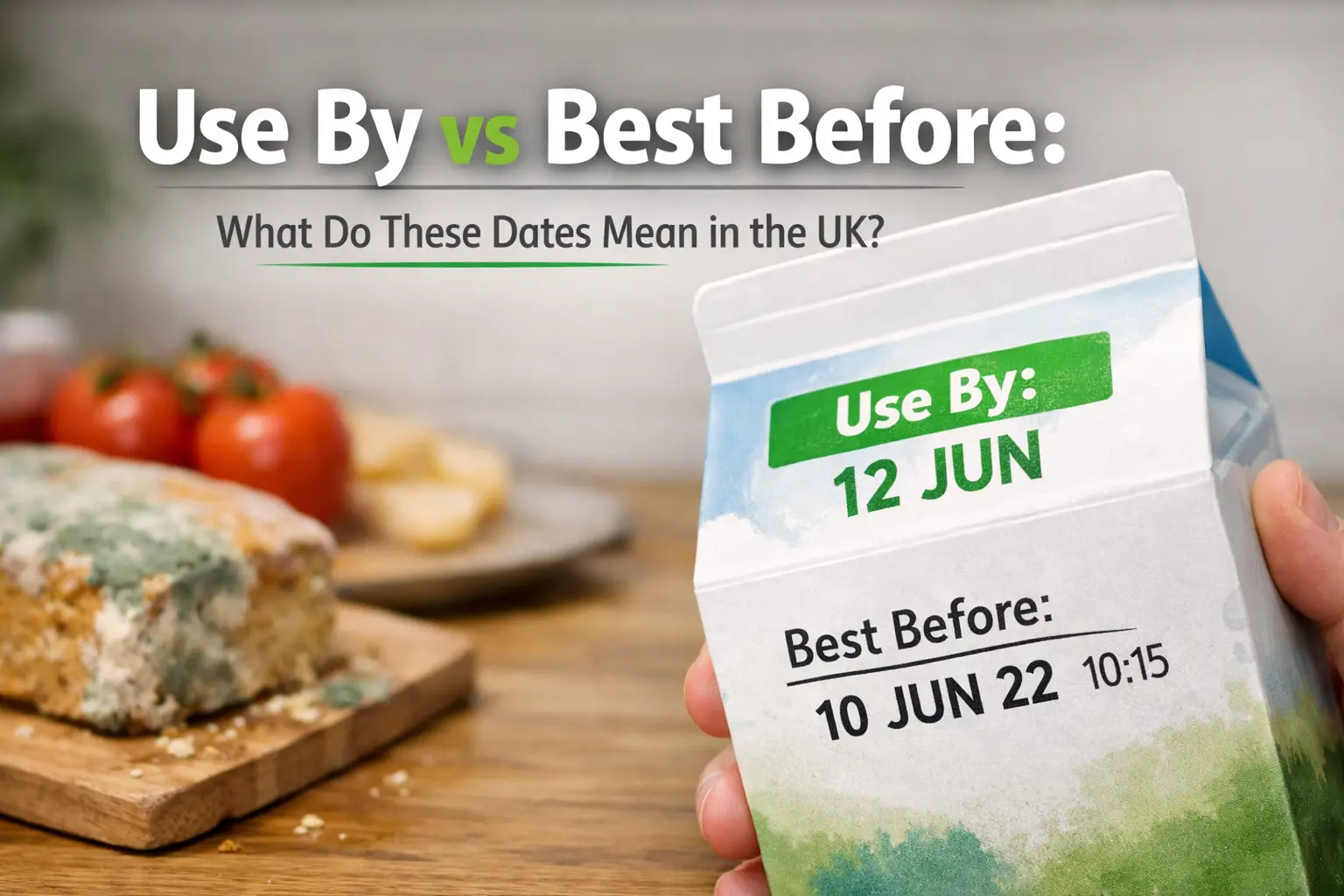
Date marks help kitchens manage safety and quality. Use-by dates are safety deadlines for perishable foods; you must not use or serve them after the date. Best-before dates indicate peak quality; foods may still be safe after this date if stored well and in good condition. This article explains the difference, which foods fall into each category, and practical checks for dating, freezing, stock control and decision making in UK catering.
Understanding use-by vs best-before dates in the UK
Important: Treat use-by dates as non-negotiable safety cut-offs; never gamble on a past-use-by item.
To stay compliant and reduce waste, integrate date checks into opening, closing and cleaning routines. Pair date control with temperature monitoring and clear labeling, so staff can act quickly when stock nears expiry.
The safest procedure is the one your team can follow consistently during busy service.
Quick distinctions
- Use-by: safety critical, do not use after the date.
- Best-before: quality, may be usable after the date if in good condition.
Which foods typically carry use-by dates and which carry best-before
Best-before dates focus on quality rather than safety; use-by dates focus on safety.
Keep a clear division in storage: use-by items in dedicated, clearly labelled chilled space with front-facing stock, and best-before items in their normal storage but checked for integrity and date accuracy during stock checks.
Practical takeaway
Keep a clear division in storage: use-by items in dedicated, clearly labelled chilled space with front-facing stock, and best-before items in their normal storage but checked for integrity and date accuracy during stock checks.
How to check date labels packaging temperatures and product condition
Always check packaging integrity, label legibility and storage temperature as part of every date check.
- Read the label carefully on arrival and on opening. Ensure the date is legible and matches the product.
- Inspect packaging integrity. Swollen, leaking or damaged packs should be set aside.
- Confirm storage temperature remains appropriate for the item (for example, chilled foods kept cold; ambient items stored as directed).
- Check appearance, odour and texture before use. If anything seems off, discard rather than risk safety.
- Apply FIFO, bringing the oldest stock to the front and using it first.
Quick example
Quick example
A tub of mayo with a use-by date on the lid is in the fridge. If the lid is bulging or the smell is odd, discard even if the date hasn’t passed.
Freezing and thawing when to freeze label and track
Freeze promptly while still within the use-by date and label with the freezing date and the expected use-by after thawing.
- When to freeze: ideally freeze before the use-by date for items you cannot use in time. Freezing after the use-by date does not make the product safe.
- Labeling: every frozen item should be labelled with the freezing date and a planned use-by date after thawing, plus a quick note about the original date if helpful for traceability.
- Thawing: thaw in a controlled environment (eg fridge or specified defrost setting) and use thawed foods promptly. Do not refreeze thawed foods unless advised by the supplier.
- Reheating: reheat until piping hot throughout before service; ensure safety practices, including clean utensils and avoid cross‑contamination.
Practical scenario
If a batch of prepared chicken is nearing its use-by date, freeze the surplus portion with a clear label showing the freeze date and an estimated post-thaw use-by date. This supports traceability and limits waste.
Stock control rotation and recording for a compliant kitchen
Clear labeling and traceability reduce risk during both service and inspections.
Effective stock control lowers waste and keeps you inspection-ready.
FIFO practiced
Opened items labeled with date
Fridge/freezer temps recorded daily
Items reorganised to front-load expiring stock
Handling damaged uncertain or expired items decision pathways and audits
When items are damaged, uncertain, or past dates, follow a clear decision pathway.
- If packaging is damaged or labels are illegible, discard or return for credit if possible at once.
- If a best-before item shows signs of spoilage (off smell, unusual colour, texture change), discard.
- If a use-by item is near the date but looks and smells fine, do not rely on this; treat as past-date and discard if you’re unsure.
- For near-expiry stock, prioritise usage in the next service window or rework into acceptable dishes where permitted by policy.
- Record all decisions and the rationale; review procedures in team briefings to prevent recurrence.
When in doubt, discard rather than risk a food safety incident. Documentation supports audits and training.
What to do after discarding
Update stock records, review supplier traceability, and use the learning to refine date checks and rotation rules. Regular team briefings reinforce consistent practice and build confidence during busy periods.
If you follow these practices, your team will handle use-by and best-before dates consistently, reduce waste, and stay prepared for inspections.