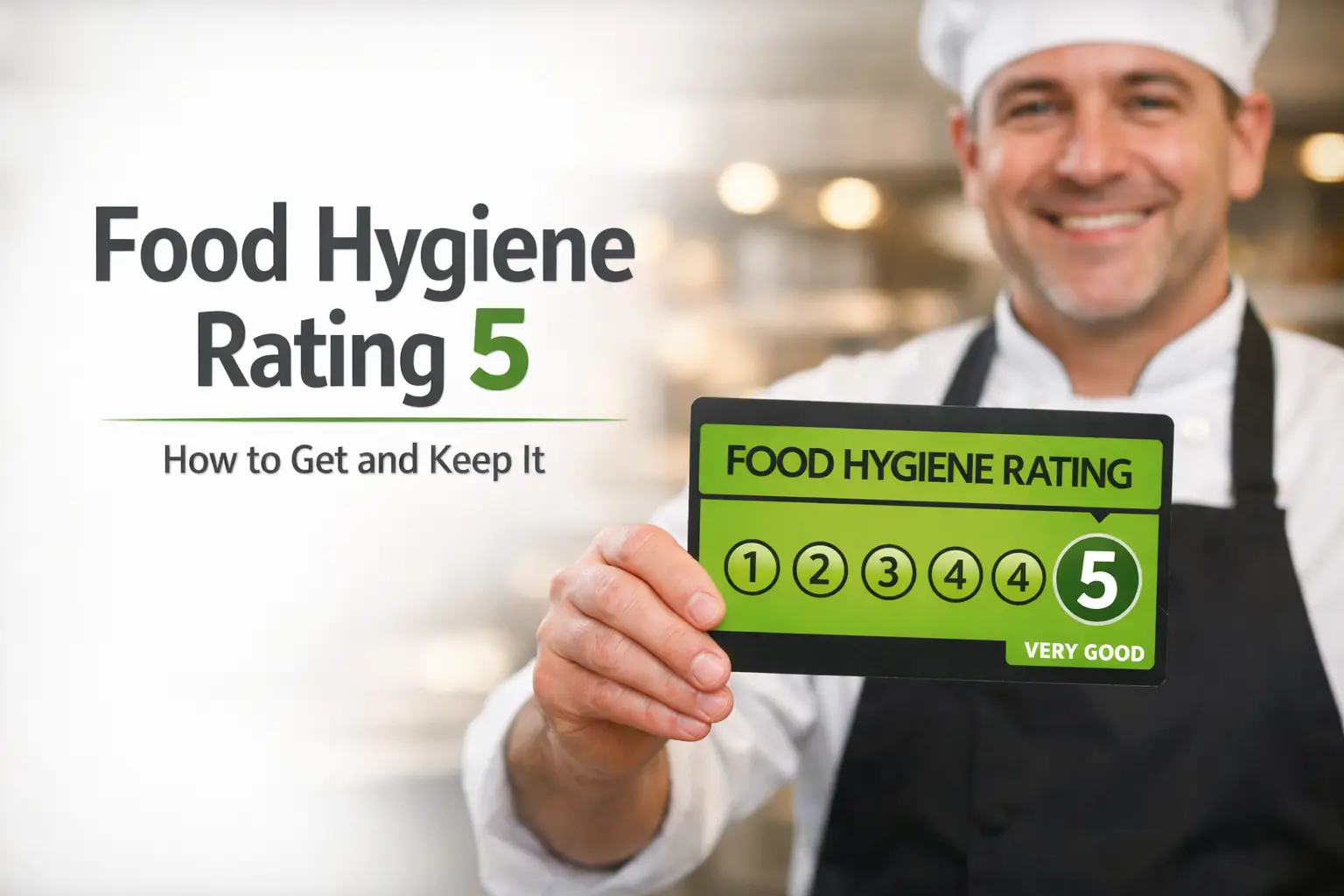
Understanding a Food Hygiene Rating of 5 helps you know what it reflects and what it doesn’t guarantee. This guide explains the meaning under the scheme, what areas are considered, why a high rating can change after inspections, and practical steps to keep standards steady day to day. You’ll find real-world scenarios and a practical checklist that links daily routines, staff training, records and corrective actions.
What a Food Hygiene Rating of 5 Means
Important: A 5 rating recognises current compliance, not a guarantee of ongoing perfection.
- It communicates to customers that the business generally manages food safety well.
- It relies on documented practices as well as observed behaviour during the visit.
- A single lapse, such as accepting a warm delivery without goods-in checks, can jeopardise the next assessment.
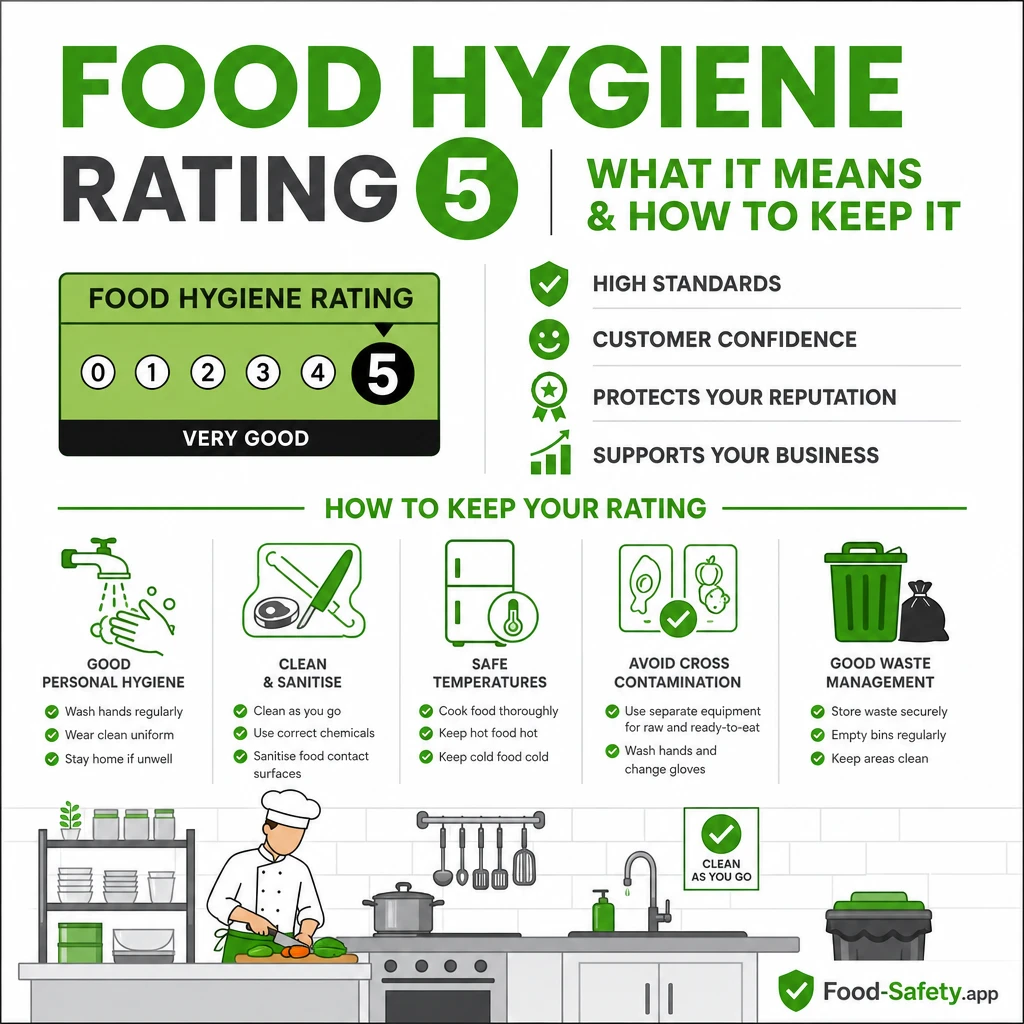
What the Rating Covers: Handling, Cleanliness, and Management
Keeping routines visible matters as much as the routines themselves. If it’s not recorded, it didn’t happen in the eyes of inspectors.
- Handling: safe cooking, rapid cooling, hot holding, and minimising cross‑contamination; goods‑in controls; correct use of utensils and separate areas for raw and ready‑to‑eat foods.
- Cleanliness: the state of the premises and equipment, cleaning effectiveness, and the reliability of cleaning schedules and logs.
- Management and records: a HACCP‑based approach, staff training, monitoring, calibration of thermometers, and traceability records.
| Area | What inspectors look for | What it means for the rating |
|---|---|---|
| Handling | proper separation of raw and cooked foods, correct storage, routine temperature checks | strong handling practices support a high rating |
| Cleanliness | cleanliness of surfaces, equipment, waste segregation, cleaning schedules | gaps here can drag the rating down if persistent |
| Management | documented procedures, staff training, defect reporting, supplier controls | shows overall control and readiness for action |
What it does not prove: ongoing day-to-day performance, staff consistency, or future compliance
A high rating today doesn’t absolve a business from maintaining vigilance tomorrow.
The FHRS rating is a moment in time. It does not guarantee that every shift will be perfect, that every staff member is consistently competent, or that future inspections will be equally lenient. Ongoing performance depends on the day‑to‑day discipline of the team, equipment reliability, and how well issues are detected and corrected.
- A busy service can lead to shortcuts if there isn’t a robust daily routine.
- Staff turnover can affect how well procedures are followed between visits.
Why Businesses Lose a Top Rating on Reinspection or Routine Visits
The most effective ratings rely on proactive management and timely documentation, not occasional compliance.
- Temperature records are incomplete or missing during peak service.
- Cleaning gaps emerge in high‑traffic areas or after busy shifts.
- Allergen controls aren’t clear to front‑line staff or aren’t linked to menu items.
- Storage practices become unsafe (overcrowding, poor labeling, or incorrect shelving).
- Goods‑in checks aren’t consistently performed, affecting traceability.
- Defect reporting or corrective actions aren’t logged after equipment faults.
- A broken fridge is repaired, but no defect report or corrective action is logged, signalling weak oversight.
- Allergens aren’t traceable to a specific dish, leaving guests uncertain about safety.
Common Weaknesses Inspectors Notice
Strong systems are visible in both action and record. If it’s not in the records, it’s not controlled.
- Inadequate daily temperature monitoring across cooking, cooling, storage, hot holding, and reheating.
- Missing or inconsistent opening and closing checks.
- Incomplete or poorly maintained cleaning schedules and completion records.
- Poor allergen management linked to menu items and staff awareness.
- Insufficient goods‑in procedures for supplier control and traceability.
- Failure to log defects and follow up with corrective actions.
- For example, a delivery that arrives warm without an approved goods‑in check undermines trust in controls.
- A failing probe that isn’t calibrated or recorded can skew temperature readings and decisions.
How to Keep Standards Steady Between Inspections
A practical checklist keeps you audit-ready and reduces last-minute scrambles.
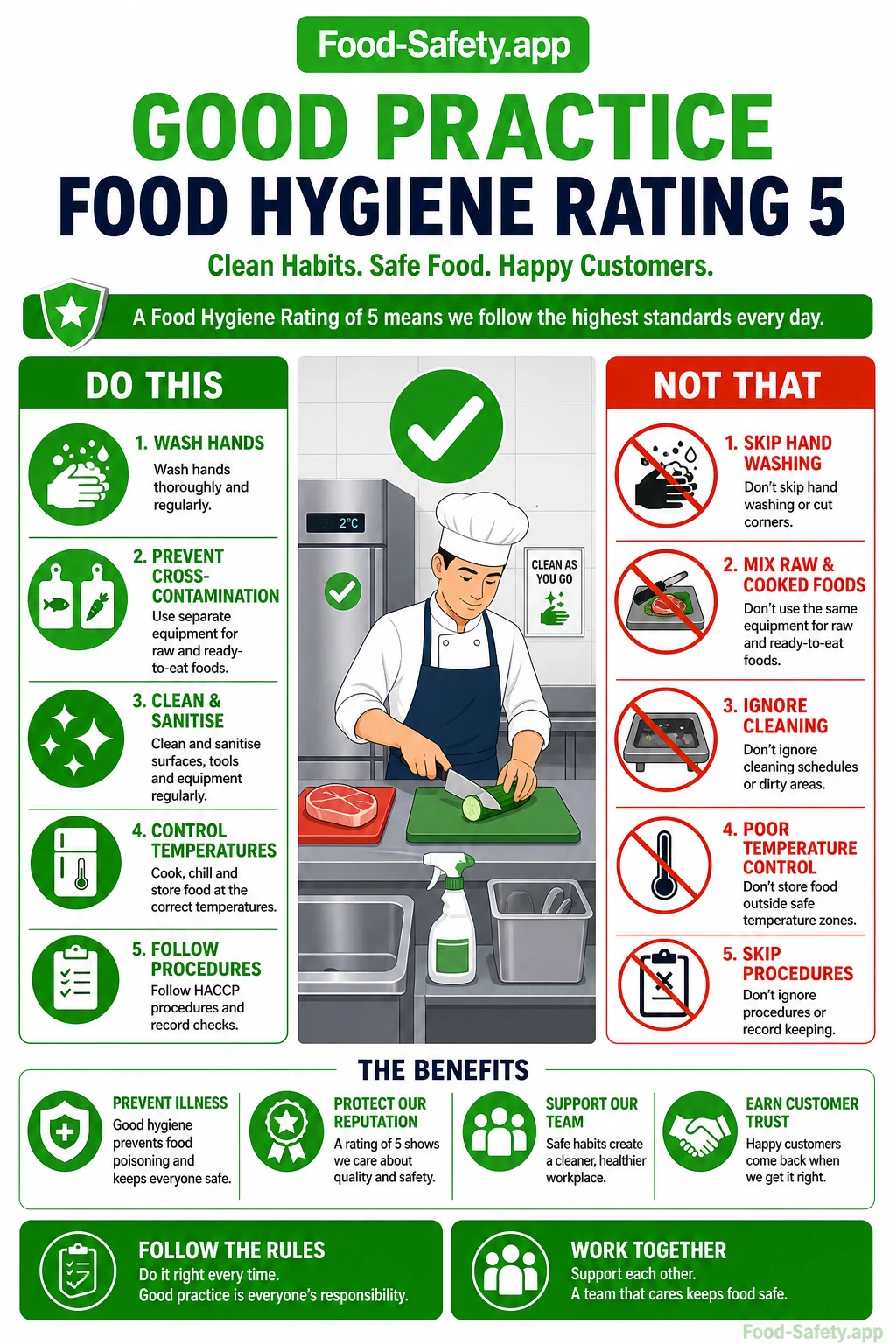
- Daily temperature monitoring for cooking, cooling, chilled storage, hot holding and reheating.
- Opening and closing checks tailored to the site, with clear sign‑offs.
- Cleaning schedules with explicit completion records and spot checks.
- Allergen management linked to menu items and staff awareness.
- Goods‑in checks for supplier control and traceability, with records kept.
- Defect reporting and corrective actions for any equipment or process issue.
- Probe calibration records and regular validation of temperatures.
- Staff training records and HACCP‑based controls.
- Audit‑ready PDFs and full history records kept for inspections.
- Regular reviews of records help catch drift before it becomes a problem.
- Clear ownership and defined action timelines improve accountability.