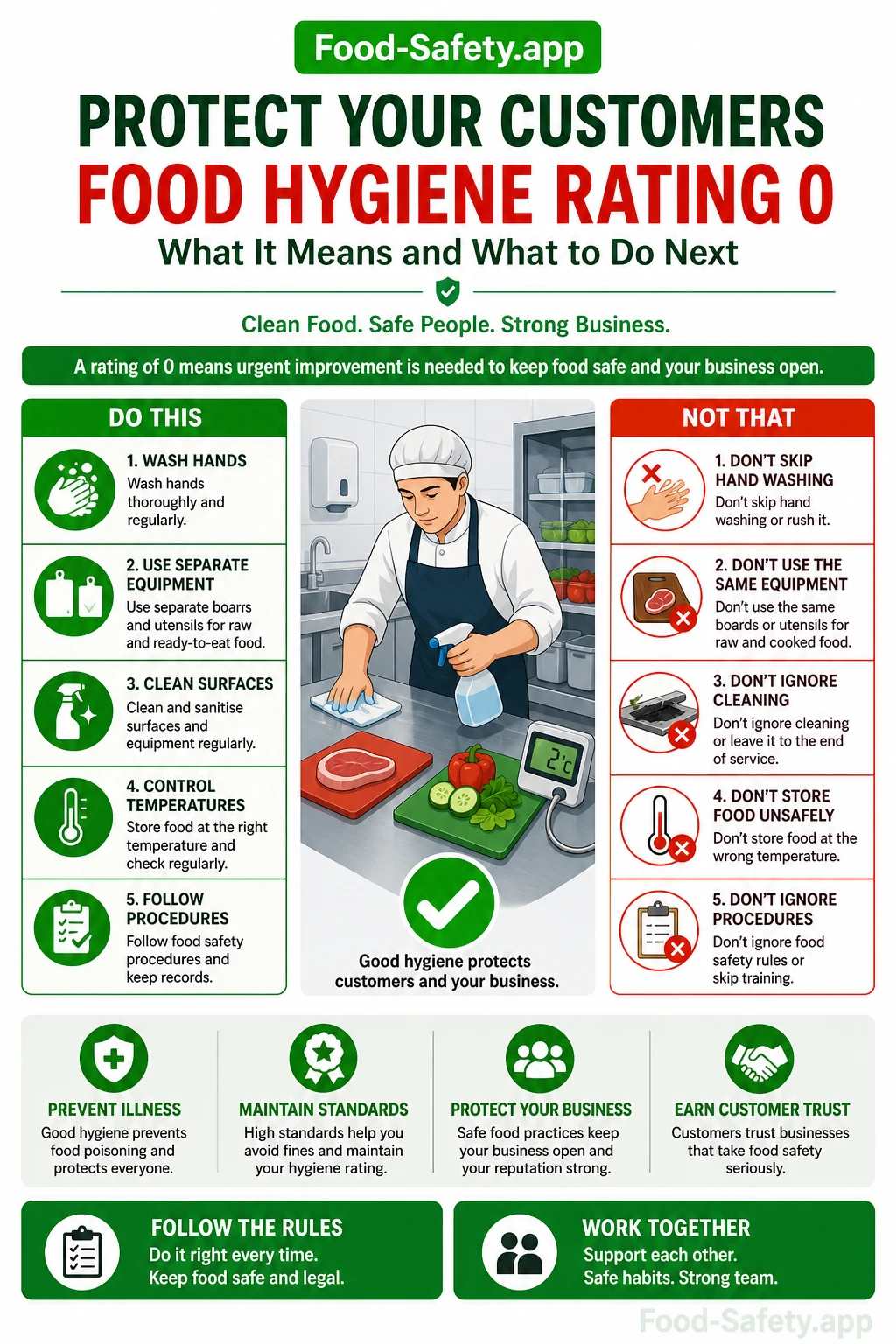
A Food Hygiene Rating of 0 signals serious concerns that require urgent action. This guide explains what a 0 means in practice, how it differs from formal enforcement, common causes, when you can still trade, and the immediate steps to regain compliance. It also outlines how to plan a recovery with clear owners and deadlines to restore confidence with your customers and inspectors.
What a rating of 0 means in practice
Important: A 0 rating is a signal to act quickly, not a verdict that can’t be recovered with immediate improvements.
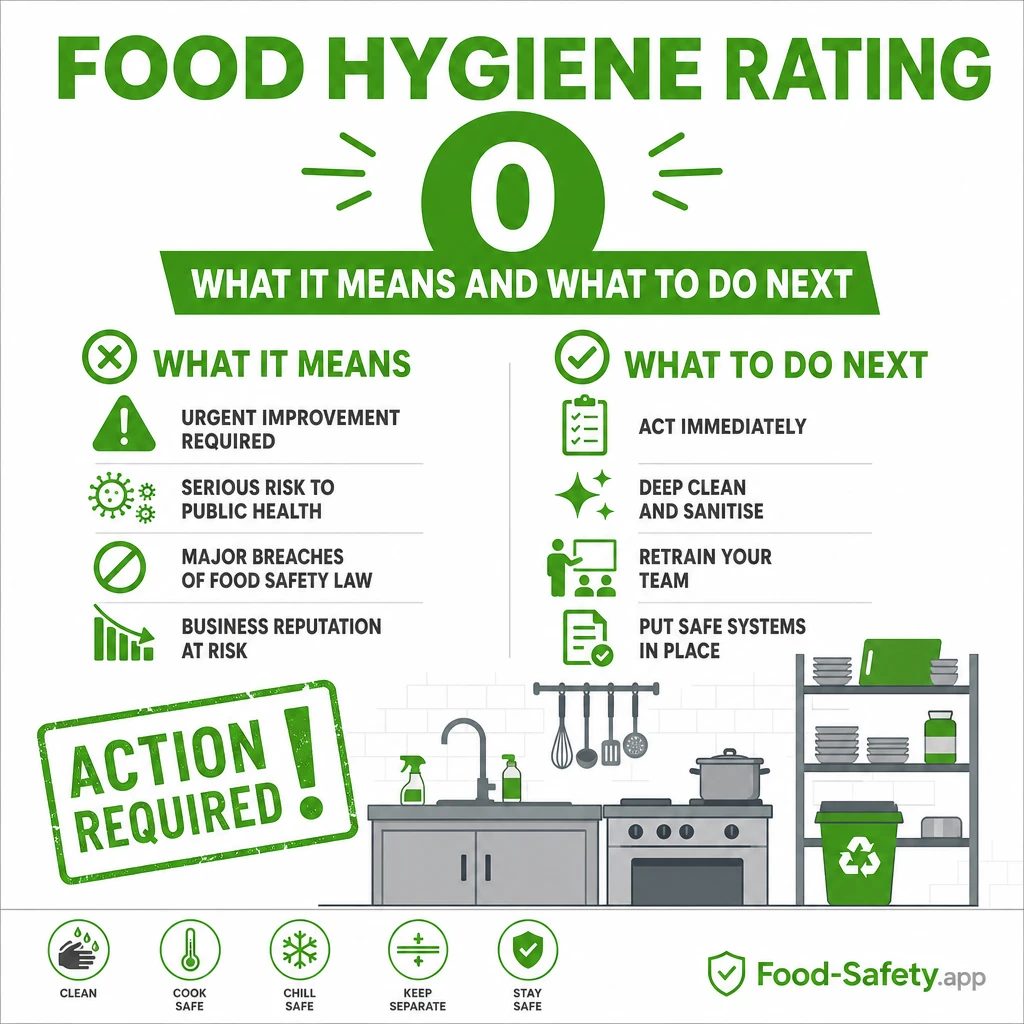
A zero rating indicates the inspector identified significant hygiene and safety failings on the day of inspection. It does not automatically imply the business must close, but it does require rapid, demonstrable action to reduce risk and protect customers. Food safety should become the top priority in the days following the visit, with a clear plan to address high-risk failures and to communicate progress to staff and customers.
Key practical implications include: prioritising temperature control, preventing cross-contamination, finishing essential cleaning, and ensuring proper records are in place for traceability and accountability.
Blockquote after this section can help emphasise the urgency of addressing high-risk issues.
- Temperature management
- Cross-contamination prevention
- Cleaning discipline and record-keeping
- Pest control adequacy
- Allergen management
- Documentation and traceability
Keep raw food physically separated from ready-to-eat food throughout storage and preparation.
The difference between hygiene rating and legal enforcement action
The rating provides a snapshot of current controls; enforcement addresses persistent or organised non-compliance.
A hygiene rating assesses how well a business complies with the general food safety standards at the time of inspection. Enforcement action, by contrast, refers to formal regulatory steps authorities may take if improvements aren’t made after the rating. A low rating can trigger a required action plan or conditional trading arrangements, while enforcement actions address ongoing or significant risk after assessment.
This distinction matters because trading status and customer confidence hinge on both the rating and the speed and thoroughness of subsequent improvements. You’ll want to show ongoing, verifiable progress, not just a one-off fix.
A proactive corrective action plan and timely follow-ups are usually looked on favourably by inspectors.
Common reasons for a zero rating
A practical recovery starts with fixing the high-risk items first: temperature control, cross-contamination, cleaning, pest control, and allergen management.
Zero ratings typically arise from several high-risk gaps. Addressing them quickly can set the trajectory back toward compliance.
- Poor cleaning records or inconsistent cleaning routines
- Unsafe or improperly recorded fridge and cold room temperatures
- Pest sightings or evidence of pest activity
- Weak HACCP controls or missing safe-operating procedures
- Poor personal hygiene among staff or inadequate handwashing facilities
- Inadequate allergen controls, including lack of separation and labeling
- Missing or incomplete documentation, including logs and corrective actions
Practical examples you might recognise:
- Fridge temperatures not recorded and stock held too warm
- Cleaning schedule exists but no evidence tasks are completed
- Open food stored with no allergen separation or labels
- Pest sightings reported but no follow-up action logged
- Probe thermometer used, but no calibration record available
- Delivery accepted despite damaged packaging or unsafe temperature
When a business may still be allowed to trade, and when restrictions, closure, or urgent action may follow
The safest approach is to implement provisional controls quickly, communicate openly with staff and customers, and document progress for the revisit.
In many cases, authorities allow continued trading with conditions while improvements are put in place. Restrictions may apply to specific areas (e.g., kitchen, cold storage) or to certain activities (e.g., open food handling) until fixes are verified. Urgent action may be required, including temporary closures of facilities, enhanced cleaning, or halted service in hot or cold zones. The exact outcome depends on the inspector’s findings and the risk to public health.
Key actions to plan for:
- Identify high-risk areas and set temporary controls
- Restrict access to any compromised zones
- Communicate expected improvements to the team and suppliers
- Collect and keep evidence of changes for the follow-up inspection
What environmental health officers typically look for during a revisit
A revisit looks for sustained improvements and reliable record-keeping, not just a one-off fix.
On a follow-up, EHOs assess whether prior failings have been addressed and whether new practices are embedded. Expect checks across core food safety pillars:
- Temperature monitoring and corrective actions for out-of-range readings
- Demonstrable cleaning and sanitation outcomes with dated records
- Pest control measures and absence of pest activity
- Proper separation of raw and ready-to-eat foods
- Allergen management, labeling, and avoidance of cross-contact
- Hygiene facilities: hand wash basins, soap, drying facilities, and PPE
- Documentation quality: logs, action plans, staff training records
- Evidence of staff understanding and adherence to safe procedures
- Visible standards: cleanliness, organisation, and clear safe-work routines
How to build a recovery plan with clear priorities, owners, and deadlines
A recovery plan that’s owned, timestamped, and visible to the team travels faster toward compliance.
A practical recovery plan turns findings into action. Use a simple, action-oriented structure:
- Prioritise high-risk fixes
- Temperature control, cross-contamination prevention, cleaning discipline, pest control, allergen management
- Assign owners
- Designate a named person for each corrective action and set a realistic deadline
- Create robust records
- Opening/closing checks, daily cleaning logs, goods-in checks, corrective actions, and training logs
- Review HACCP and safe systems
- Update critical control points, monitoring, and verification procedures
- Prepare for the follow-up
- Ensure evidence is timestamped, exportable if needed, and easily retrievable
- Daily progress checks
- Short, end-of-day reviews to confirm actions taken and plan for the next day