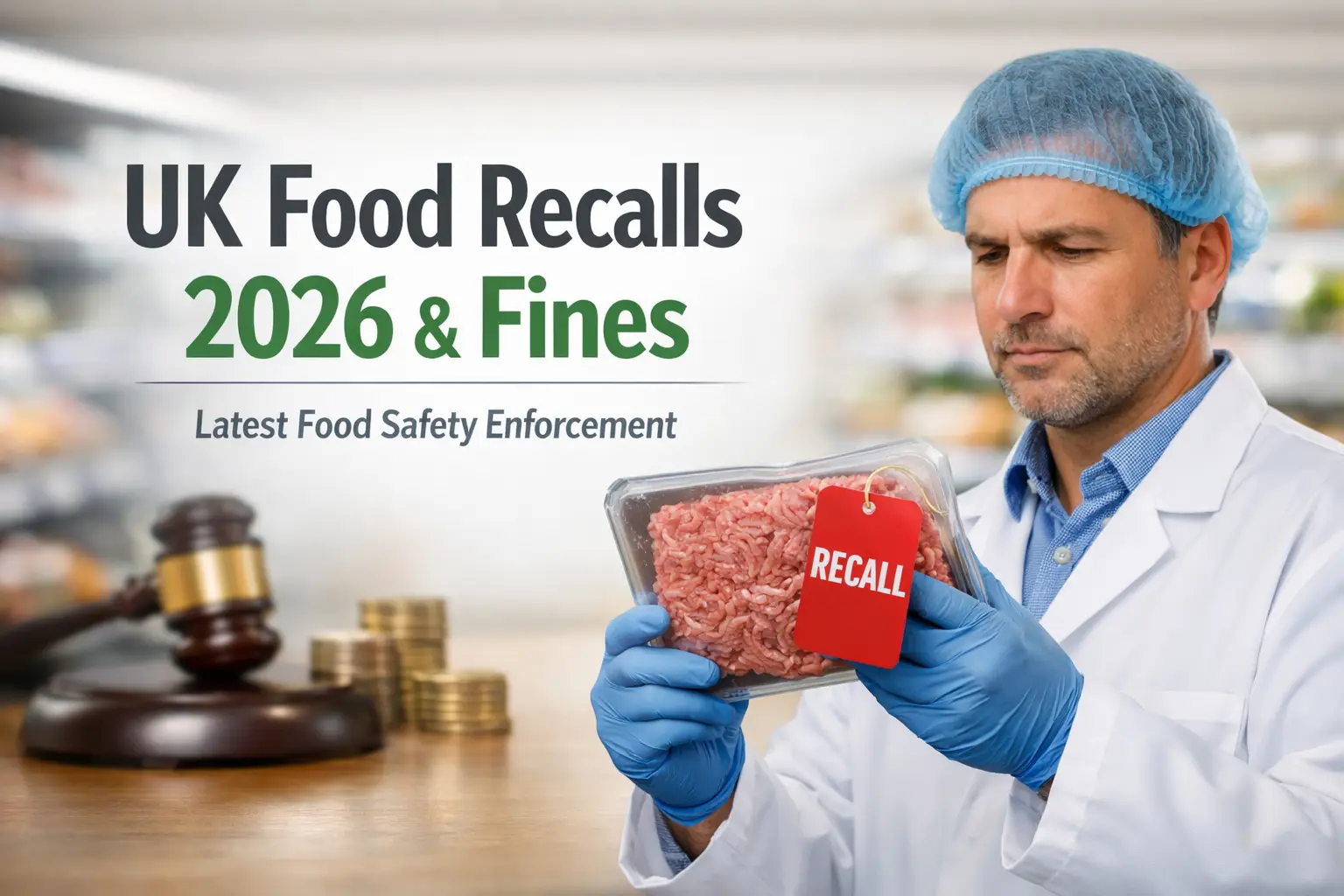
Regulators are tightening up in 2026, with allergens, temperatures, cleaning and traceability high on the agenda. This article maps the current enforcement landscape in the UK, explains why recent recalls and fines matter for small operators, and translates trends into practical actions for kitchens, cafés, pubs, care settings and caterers. You’ll find concrete guidance to strengthen controls and make compliance a day-to-day habit.
Current enforcement landscape in 2026 and regulator focuses
In practice, regulatory focus follows real-world risk: allergen mislabelling, poor fridge temperatures, weak cleaning, and gaps in traceability.
In 2026, UK enforcement remains focused on reducing explicit risks to public health. Local Environmental Health teams and trading standard officers work alongside national bodies to identify and act on rising hazards. The main pressure points for enforcement are allergen control, temperature management, cleaning and sanitation, traceability, pest issues and unsafe handling. For small operators, this means more proactive inspections, clearer expectations and a push to demonstrate controls in practice, not just on paper.
Pacing and response have a practical rhythm: detect non-conformances early, request corrective actions, and monitor progress. This makes robust daily records and easy-to-audit systems essential. The outcome for compliant kitchens is fewer surprises during visits and quicker, targeted remediation when issues do arise. The aim isn’t punishment alone but ensuring ongoing protection for customers and staff.
The safest procedure is the one that can be followed consistently during a busy service.
Common triggers for recalls, improvement notices and fines
Documentation that shows controls were in place can limit penalties, but only if it’s complete and readily auditable.
Most enforcement actions stem from a small set of recurring problems. The most common triggers include:
- Allergen control failures, such as incorrect or incomplete allergen information on menus or in ingredient lists.
- Temperature mismanagement, including fridge temperatures that drift outside safe ranges and inadequate monitoring of hot or cold holding.
- Cleaning and sanitation shortcomings, especially in high-risk prep areas where cross-contamination can occur.
- Pest activity or insufficient pest-control measures, often identified after a sighting or during follow-up checks.
- Weak traceability, making it hard to trace ingredients and respond to a recall.
- Unsafe handling and packaging, including improper cooling of large batches or reheating foods incorrectly.
- Incoming goods not checked for quality, temperature or packaging integrity, leaving unsafe products in circulation.
Typical scenarios the industry recognises include a dish being recalled due to incorrect allergen labelling on a menu item and a fridge check being missed, leading to discarded stock after an inspection. A late pest sighting or missing cleaning records for a high-risk area can trigger formal action or improvement notices.
The role of record-keeping in inspections and prosecutions
The chain of evidence matters as much as the outcome. A missing file can undermine a strong defence.
Good records are often the first line of defence when inspectors review a business after a concern is raised. Clear, timely records help demonstrate that controls are real and applied, not just written on a sheet of paper.
Key record areas to maintain:
- Allergen records for all 14 regulated allergens, linked to specific menu items and suppliers.
- Temperature logs for cooking, cooling, cold storage, reheating and hot holding.
- Cleaning schedules, defect logs, corrective actions and pest sightings.
- Incoming goods checks, packaging condition notes and supplier control evidence.
- Staff training records and evidence of refresher sessions.
- HACCP plans and safe systems of work aligned to actual kitchen practices.
A practical example: if a supervisor cannot show cleaning records for a high-risk prep area, the inspection may view this as a significant gap, even if cleaning happened informally. That is precisely why daily, timestamped entries matter—they provide an audit trail that supports or challenges what happened in practice.
Good evidence is timely, complete and auditable, and it shows consistent practice rather than occasional effort.
How weak controls drive repeated non-compliance
The chain is only as strong as its weakest link.
If controls aren’t embedded, problems tend to recur. Weak temperature monitoring, inconsistent cleaning, or poor allergen traceability create a feedback loop where small issues escalate into formal enforcement actions. Repeated non-compliance often signals deeper system weaknesses—insufficient training, poor supervision, or gaps between written procedures and actual practice.
A common pattern is breaking the chain: a pest sighting is recorded late, a corrective action is only partially implemented, and subsequent inspections find the same gaps. Fixing the root causes—training, supervision, timely documentation and a practical, fit-for-purpose HACCP—reduces the risk of repeat offences and the severity of potential enforcement.
What constitutes good evidence in day-to-day operations
The simplest system with reliable timestamps often delivers the strongest protection in an inspection.
“Good evidence” isn’t a museum of paperwork; it’s a efficient, reliable record of how you run the operation day to day. It should be easy to verify, traceable and representative of typical practice, not a best-case outlier.
Characteristics of good evidence:
- Clear, timestamped entries that cannot be backdated.
- Links between records and real actions, such as a specific batch, a menu item, or a supplier.
- Accessible records that can be exported as PDFs or shared with inspectors.
- Consistent use of standard forms or a digital system that mirrors HACCP controls.
- Evidence of corrective actions and verification that they were effective.
Useful everyday evidence examples:
- Temperature logs showing cooking to the correct core temperature, rapid cooling within target times, and hot holding at safe temperatures.
- Allergen data mapped to each menu item, with changes logged and supplier confirmations where relevant.
- Cleaning logs for high-risk prep areas, including time, responsible person and any defects found.
- Pest sighting logs with dates, locations and follow-up actions.
Record keeping is not about blame; it’s about proving that controls exist and work.
By aligning daily operations with these proven practices, you’ll be better placed to meet enforcement expectations in 2026 and beyond. The result isn’t just reduced risk of penalties; it’s safer food and a more confident frontline team.
Practical actions to align with enforcement trends
To translate enforcement trends into everyday practice, focus on simple, repeatable routines that fit into a busy service. The aim is to make compliance the easiest path, not the hardest.
- Keep daily temperature records for cooking, cooling, cold storage, reheating and hot holding. Use a small, time-stamped log that’s easy to audit.
- Use structured opening and closing checks so nothing is missed. Include temperature checks, cleaning tasks, and stock checks.
- Record cleaning tasks, defects, corrective actions and pest sightings as soon as they occur. Do not wait for the end of the day.
- Maintain allergen records for all 14 allergens and link them to menu items. Ensure any recipe change updates the allergen data.
- Check incoming goods and keep supplier control evidence. Record packaging condition, delivery temperature and any deviations.
- Train staff regularly and keep records ready for inspection. Short refresher sessions count; track attendance and outcomes.
- Use a simple digital system that timestamps entries, stores history and can export PDFs. If you can’t invest in a full system, a well-organised spreadsheet with clear fields is better than paper chaos.
- Review HACCP and safe systems of work so controls match real kitchen practice. Update procedures when daily practice reveals gaps.
| Area | What to record | Why it helps |
|---|---|---|
| Temperature | Core cooking temps, cooling times, cold-hold and hot-hold temps | Demonstrates control and reacts quickly if out of range |
| Allergen data | All 14 allergens linked to each menu item | Supports accurate labelling and safer choice when ingredients change |
| Cleaning | Tasks performed, responsible person, defects and corrective actions | Shows ongoing sanitation and traceability of issues |
| Incoming goods | Delivery temperature, packaging condition, supplier notes | Prevents unsafe products entering service |
| Training | Attendance, topics covered, outcomes | Ensures staff are competent and ready for inspections |