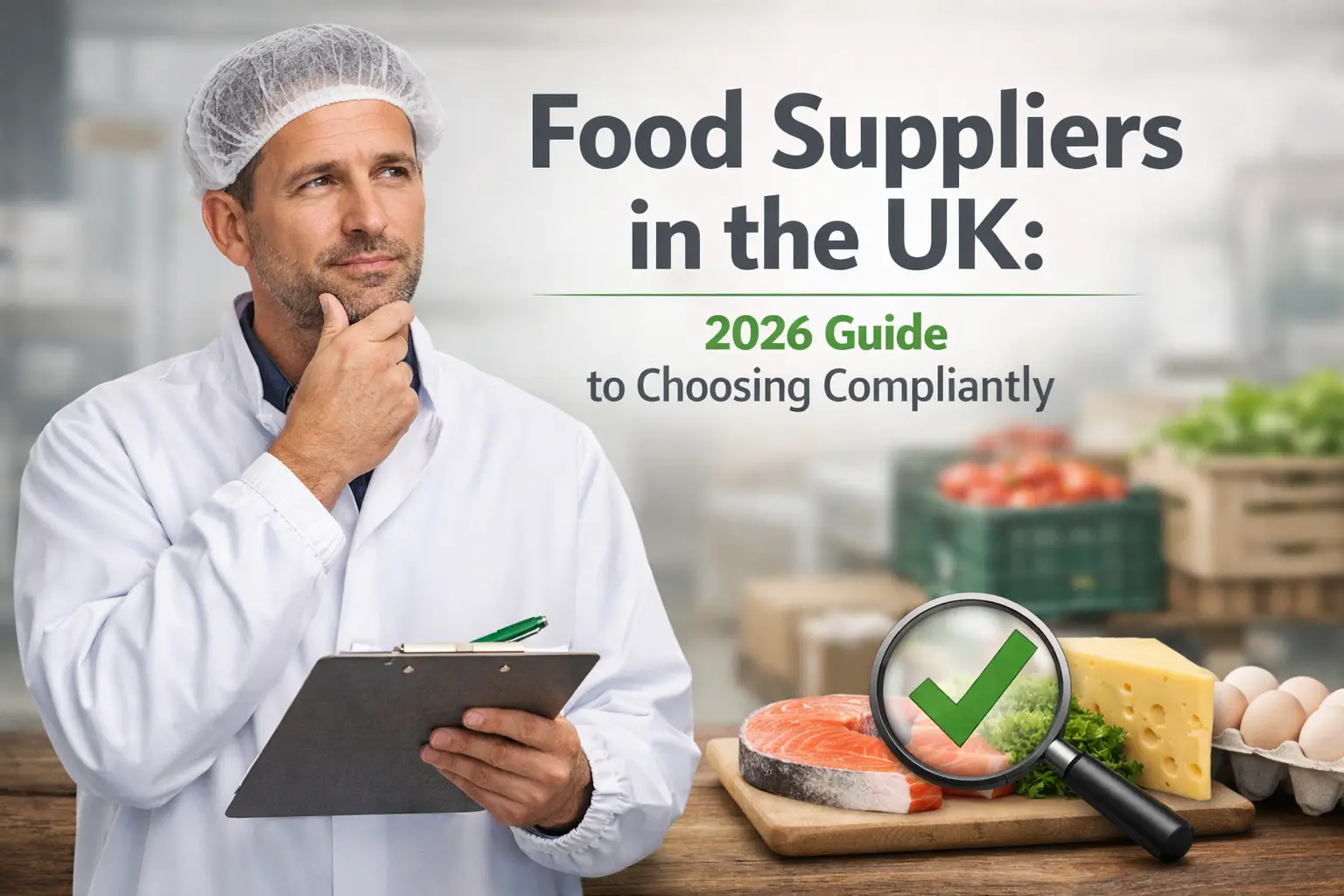
Choosing the right supplier is essential for a busy UK kitchen. This guide focuses on food safety, traceability, and practical controls that work in practice, helping catering and hospitality pros approve suppliers confidently. You’ll learn what good suppliers look like, which checks to run before onboarding, how to set clear specifications, how to assess risk, and how to keep records that support recalls and inspections.
What a good food supplier looks like
A strong supplier relationship is built on predictable performance, not fleeting discounts.
A reliable supplier demonstrates consistent delivery standards, clear communication, and steady product quality. You should also see evidence of robust food safety controls, not just a bargain price. The supplier needs to be suitable for your business type, whether you run a café, pub, school kitchen, care setting or takeaway operation.
Ideally, you’ll notice:
- Clear delivery windows, reliable scheduling, and accurate order fulfilment
- Documented food safety controls (training records, HACCP plans, recalls procedures)
- Tailored suitability for your operation, including packaging and portion sizes
Consider asking for recent performance metrics or a short supplier quality report as part of onboarding. In busy kitchens, reliability saves time and reduces waste as much as it protects safety.
Reliability and safety have to come first; price is not the whole story.
Supplier approval checks before onboarding
Never accept a delivery if temperature logs, batch codes or labelling are missing; hold, investigate, and document why.
Before you place orders, run a practical set of checks to verify compliance and readiness for service.
Key checks include:
- Food hygiene rating certificates or equivalent evidence
- Current applicable certifications (traceability, allergen control, temperature management)
- Public liability and product liability insurance details
- Clear allergen information and accurate ingredient lists
- Traceability documentation: batch codes, delivery paperwork, product labelling that matches orders
- Transport standards for chilled, frozen and ambient goods (valid temperature control, clean vehicles, correct packaging)
- A practical delivery test or a documented exception process for deviations
In practice, you should reject a delivery if chilled goods arrive above safe limits, or if batch codes don’t match the order. A robust onboarding process minimises downstream problems.
Using supplier specifications
Clear product specs save waste and protect allergy control; they align purchasing with menu needs.
Clear supplier specifications set expectations and protect you from mislabelled or unsafe products. Specifications should cover:
- Temperature requirements (e.g., ambient, chilled, frozen) and how to verify them
- Packaging standards and minimum/maximum acceptability
- Shelf life and used-by dates, with acceptable storage conditions
- Origin or provenance where important (country of origin, farm/source)
- Allergen declarations and cross-contact controls
- Compliance with relevant regulatory and commercial needs
Match specs to your menu and storage capacity; they should reflect how you actually use and store ingredients.
Scenario: for prepped salads, you might specify ready-to-eat format, maximum shelf life on arrival, packaging moisture control, and allergen statements. For meat or dairy, you’d emphasise cut, portion size, origin, and temperature stability during transport.
Risk assessing suppliers
High risk items deserve more frequent audits and more stringent controls.
Not all items carry the same level of risk. Distinguish high-risk from low-risk categories and tailor controls accordingly. Consider:
- Distance and delivery frequency: longer journeys or less frequent deliveries increase risk of temperature excursions
- Seasonality and potential supply disruption: seasonal peaks may require extra contingency
- Dependency on a single supplier for critical items
- Specific vulnerable foods: ready‑to‑eat items, raw meat, seafood, dairy
A simple risk map can help you prioritise supplier visits and sampling.
Due diligence and certification schemes
Audit evidence helps defend your practice; keep the records and action logs up to date.
Do not assume all suppliers are equal. Look for recognised standards and audit evidence that align with your risk level and sector. Keep records of checks, visits, complaints and corrective actions. Useful focus areas include:
- BRCGS or other recognised food safety schemes for manufacturers and distributors
- SALSA for smaller suppliers and retailers
- Red Tractor or Organic certifications where they are relevant to your ingredients
- Sector-specific assurance schemes (organic, Halal, Kosher, etc.) where needed
In all cases, demand evidence of recent audits or third‑party verification and a clear corrective action history.
Onboarding and ongoing review
Traceability is your safety net in a recall; fast access to records limits risk.
Create a simple, live approved supplier list and embed ongoing review into routine practice. Regular checks should cover:
- Delivery quality against agreed specs and packaging integrity
- Temperature records and compliance with transport standards
- Paperwork accuracy, including invoices, delivery notes and batch information
- Recurring issues or complaints and timely corrective actions
Reassess suppliers after incidents, significant menu changes or sustained poor performance. Continuous improvement relies on documented feedback loops.
Traceability and recall readiness
To ensure traceability, keep invoices, delivery notes and product details in a single, accessible system. Check how quickly a supplier can provide information in a recall scenario. Practically, you should be able to trace a contaminated ingredient from supplier to dish quickly, using stored records and batch codes.
Traceability is your safety net in a recall; fast access to records limits risk.
Practical record keeping for compliance
A simple record-keeping approach supports inspection readiness and allergen control. Key practices include:
- Store supplier checks, specs, issues and review notes in one central, retrievable place
- Document every delivery deviation, corrective action and follow-up
- Maintain a log of supplier performance over time, with dates and outcomes
This focused system helps you make safer purchasing decisions without drowning in paperwork.
Document everything; absence of documentation is a risk in itself.